The history of India’s independence is often told through a familiar set of stories: the end of the British Raj, the trauma of Partition, Nehru’s “tryst with destiny” speech, and the birth of two new nations at the stroke of midnight on August 15, 1947.
But the India that emerged eight decades ago was far from a finished product.
In the final weeks before independence, the subcontinent remained a patchwork of British provinces and more than 500 princely states, many of whose rulers were weighing whether to join India, accede to Pakistan, or become independent.
Behind the public celebrations was a frantic struggle over what India would actually look like—and whether a unified Indian state would come into being at all.
A decade ago, investigative journalist Josy Joseph stumbled upon hundreds of thousands of pages of uncatalogued archives gathering dust. Those documents eventually helped inspire his new book, The Birth of a Nation: Twenty-One Days That Changed India, which reconstructs the dramatic three weeks leading up to August 15, 1947.
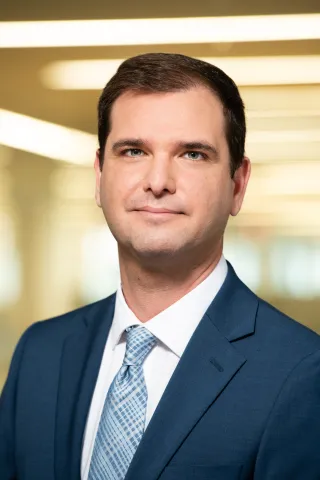
Josy joins Milan on the podcast this week to talk about his best-selling new book. Josy is one of India’s best-known journalists and founder of Confluence Media, an investigative journalism outfit. He is author of two acclaimed books, A Feast of Vultures: The Hidden Business of Democracy in India and The Silent Coup: A History of India’s Deep State.
Josy previously served as the national security editor at The Hindu, special projects editor at The Times of India, and held key roles in many other leading publications.
Josy and Milan discuss the serendipitous encounter in the archives that led to the book’s creation, the heroic behind-the-scenes efforts of V.P. Menon’s States Department, the machinations of India’s princely rulers, and the chaos and uncertainty that followed Indian independence.
Episode notes:
1. “India’s Hidden Treatise on Statecraft” (with Rahul Sagar), Grand Tamasha, November 2, 2022.
2. “The Forgotten Origins of Indian Liberalism” (with Rahul Sagar), Grand Tamasha, July 1, 2026.
3. “The Downfall of India's Princely State” (with John Zubrzycki), Grand Tamasha, November 22, 2023.
4. “The Forgotten Partitions That Remade South Asia” (with Sam Dalrymple), Grand Tamasha, October 29, 2025.
Transcript
Note: this is an AI-generated transcript and may contain errors
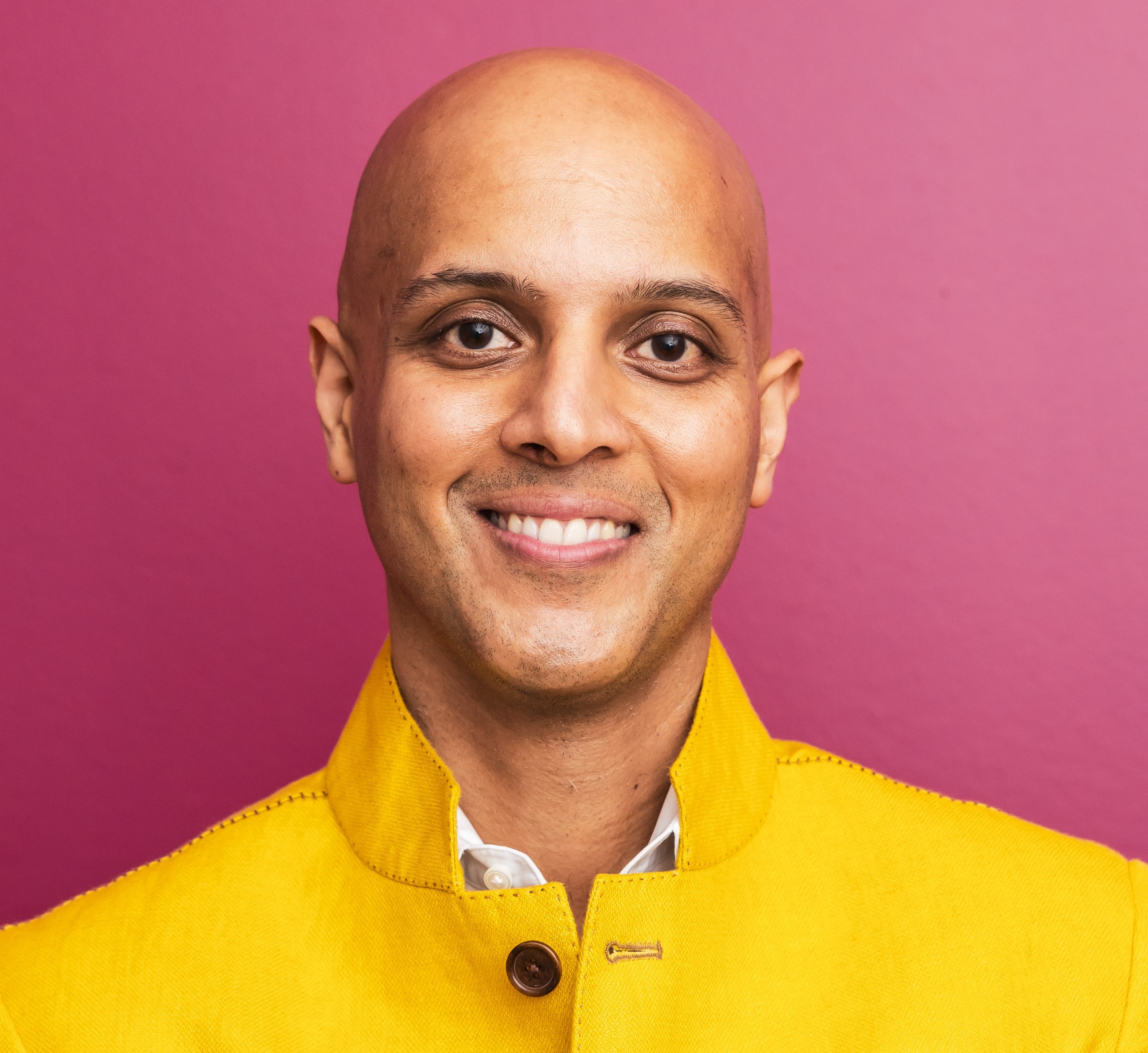
Milan Vaishnav [00:00:11] Welcome to Grand Tamasha, a co-production of the Carnegie Endowment for International Peace and the Hindustan Times. I'm your host, Milan Vaishnav. The history of India's independence is often told through a familiar set of stories. The end of the British Raj, the trauma of partition, Nehru's “tryst with destiny” speech and the birth of two nations at the stroke of midnight on August 15th, 1947. But the India that emerged eight decades ago was far from a finished product. In the final weeks before independence, the subcontinent remained a patchwork of British provinces and more than 500 princely states, many of whose rulers were weighing whether to join India, accede to Pakistan, or become independent. Behind the public celebrations was a frantic struggle over what India would actually look like and whether a unified Indian state would come into being at all. A decade ago, investigative journalist, Josy Joseph, stumbled upon hundreds of thousands of pages of uncatalogued archives gathering dust. Those documents eventually help inspire his new book, The Birth of a Nation, 21 Days that Changed India, which reconstructs the dramatic three weeks leading up to Independence Day. Josy is one of India's best known journalists and founder of Confluence Media, an investigative journalism outfit. He is the author of two acclaimed books, A Feast of Vultures, The Hidden Business of Democracy in India, and The Silent Coup, A History of India Deep State. He previously served as this national security editor at The Hindu, special projects editor at the Times of India and held key roles in many other leading publications. To talk more about his book, I am pleased to welcome him to the podcast for the very first time. Josy, welcome to the podcasts and thanks so much for taking the time.
Josy Joseph [00:01:41] Thank you, Milan. It's a great privilege to be on Grand Tamasha.
Milan Vaishnav [00:01:45] So I want to start with the origin story of this book, which is quite unique and I think involves a fair amount of serendipity. About a decade or so ago, you were hanging out in the National Archives and there was an official there who made this kind of offhand comment to you in which he said, there are hundreds of thousands of pages of archival files that are lying in the dump somewhere in a corner and there is no one around to catalog them. And that comment, many years later, resulted in this new book. Tell us how one led to the other.
Josy Joseph [00:02:20] Yeah, I used to be part of the mainstream media in those days and India was going through the India Against Corruption public movement. There was too much of anti, I mean, this high level of anti-government protest and a lot of active democracy. So, I was told by the newspaper to go slow with my investigations and I found a lot of time and ended up at the National Archives, which I found fascinating because I was never, I was not a history student, I have never been a history student professionally. So anyway, while there, one of these retiring, almost retiring officer told me about this hundreds of thousands of files as you said lying, not cataloged, not organized, etc. And it's very interesting because under Dr. Manmohan Singh, the government…we thought that India is witnessing this irreversible wave of transparency, which began with the Right to Information Act in 2005. And to me, it looked all part of that transparency wave, who knew that it can be easily reversed. So anyway, so from there, I began searching and initially it was quixotic and idiotic search without any aim and I hired two researchers and they kept telling me sir why do you waste your money because you don't know what you're looking for. But it took me a few years to figure out what I'm looking for and what we could find and from archives it spread then to the Nehru Memorial. It spread to private archives. It spread across to Hyderabad and Travancore, Trivandrum and Chennai and Oxford and various locations. And finally, we collected this massive amount of data. I would want to believe we are sitting on one of the largest database on the emergence of Indian democracy. And then the question came, what do you do with it? And then I started. you know, like you write books, you know how it is, right? So, then I began the journey of how to tell the story. Luckily, I had some great editors I've only published with Karthik Ajitha and had this wonderful former colleague [inaudible].
Milan Vaishnav [00:04:54] Legendary writer and editor.
Josy Joseph [00:04:56] That's right. So, you know, we were able to, they helped me. We would, I think it went through five or six different structurings before we got a grip and I could, I was confident. And that's what the book came about. And it's, I just happened to be the writer. There is also a large team of researchers who have been in this project over a decade now. Some have come in, go out, PhD students, post-graduates who, some have gone on to become professors and various walks of life. So, it's collective effort, and from there we have tried to distill it down to a readable, engaging book. That was what I was doing.
Milan Vaishnav [00:05:34] You know, when you were in the archives and you heard this offhand comment about all of these documents gathering dust, what did you actually find there? I mean, what was it that was held there that maybe other people hadn't seen, maybe people didn't even know existed?
Josy Joseph [00:05:49] So you know what struck me was and which I think was what actually seriously led me into the journey of a book or this research was I realized that sometime in, you know, the Nehru's Indian government began in September ‘46 and as the summer progresses by June in June 1947 after Mountbatten lands in Delhi, the last Viceroy. And there is a moment when there's a meeting where Nehru really goes ballistic against Sir Conrad Corfield who is the head of the political department which handles all the relationships of the crown with princely states. Nehru's accusation is that you are burning and destroying all the princely state secrets of last few centuries. And it is one of those last moments where Jinnah actually agrees with Nehru and towards the end of the meeting, Mountbatten who was quiet through the meeting, agrees to set up a state's department and thus for the first time, ordinary Indians become responsible for a part of the dealings with the princely states and this department comes to life on 5th of July 1947. So what I found was files from the very day, the beginning of the department and as the department keeps diversifying, getting a phone, getting an office address, getting a telex number, to getting more officers, more typists, opening field offices and as it begins to expand, you can see the frenzy, madness and almost the improbable drama of the world’s largest network of hereditary power ever in history, pushing back against a few Gandhians, few non-violent political leaders and few bureaucrats. And that is what the files contained. To figure that out was the effort.
Milan Vaishnav [00:08:05] You know, people who know you, Josy, and who know your work, know you first and foremost as being an investigative reporter. In your previous books, a lot of your reporting has focused on very difficult, complicated, controversial subjects: corruption, state failure, criminality, the underbelly in some ways of Indian democracy. How hard was it for you to kind of pivot to a completely different genre? I mean, you know, there were a fair amount of kind of underhanded backroom deals in this book as well, but of a very different nature. Was that a difficult adjustment for you?
Josy Joseph [00:08:43] It makes you far more insecure; doesn't mean that you are not insecure when you are doing any investigations. So that made me very cautious. So, I think luckily till date I don't think any critic has or anyone has pointed out an error in the book or footnotes. And I think we have about for a 220 page book, there is 40 pages of footnotes, so it made me be very cautious. Second, because you are trying to write book about that part of history which so many people have written about, to get that narrative, not making it a boring book was the biggest challenge. Research was challenging, but this was a bigger challenge. Third is, you know, in non-fiction, so there are three different kinds of works that I have attempted over the last three decades. One is purely journalistic investigations where it's a lot dry, to the fact. It's understanding complex finances, complex relationships and explaining it without being judgmental nor adding too much of color. Then I have written a couple of books. Both the books are investigative in nature. But those books, because it's non-fiction books where a lot of my personal reportage comes in, have been a very active participant in the book and I think readers do want to see the small writer walking around and, you know, giving the feel and look and feel of the scenario. But this book is, did not allow me that freedom. I can only be on the very fringes saying where I found a file or how I found it. Nothing more than that. I can't overdramatize same thing. I cannot beyond a point, use techniques of novel and say that Patel was sweating, Gandhi was smiling, you know, beyond that. Those freedoms that I know that lot of non-fiction writers do take even when writing history. I had to be careful because I was overcautious and extremely insecure about writing history, so in a nutshell, I think this book made me feel far too humble and far too insecure and still every morning when I get up my one concern is easier, a mistake that I have made, has someone pointed out something, is a question. But on a serious note, Milan, I think investigative journalism and academic research are both so similar and so important. So, you will find there are two kinds of societies in the world. One, every thriving democracy has very strong academic research and debating culture. They've got very strong investigative, journalistic culture. If you look at the autocratic regimes, if you look the illiberal democracies like India that we have, all these states, the powers are pushing back against great academics, great investigative journalism. So, these two actually are symbiotic twins, they exist together or they do not exist or they are both suffocating. So, in many ways, what I did was applying investigative journalism on a historic book. On a historic context. People like you what you do is you apply your investigative academic skills on the same context. So, it's not very different we are all so similar in what we do except that investigative journalism usually have immediate repercussions. Academic investigations take some time before…
Milan Vaishnav [00:12:22] I think it helps that not very many people read academics.
Josy Joseph [00:12:26] So true, as my friends in civil service keep telling me that don't worry, whatever you want to write in books, do write because those in power don't read your books, you know.
Milan Vaishnav [00:12:37] Exactly. You know, I want to kind of come to the setting of the book, because it's a book that covers just three weeks in time, and the book ends with the stroke of midnight August 15, 1947, when, as you put it, “entrenched powers clashed with idealistic ambition.” Now, I think most of our listeners, many of our listeners would be familiar with this time period, but I wonder if you could just help set the stage for us, right? As the book starts off, the kind of opening scene, what exactly is happening in India?
Josy Joseph [00:13:13] Number one, I think we should say two lines about what India was then. We are talking about almost 20% of the, 17 to 20% the world population, right? We are talking about some of the world's most populous, at least three of the countries that are together. And we are talking about the world's largest concentration of hereditary power, you know, 565 princely states and many of their principalities, the smaller kingdoms within them. That's almost 40% of the Indian land. The rest is governed by the British Empire. The crown is ruling them. So together, we are talking about almost, I think every fifth or sixth citizen of man, a person alive on this earth is in this part and we are seeing three, four things coming together in that summer of 1947. Number one the British government, the empire has already decided to leave India and they have indicated that they would be leaving in 1948 sometime in August, sorry sometime in June-July. Second, we have a very powerful sectarian politics of the Muslim League which suddenly rises up against the Gandhian, non-violent Congress political movement for freedom. The third is the little-known part about the fact that India is home to the world's largest concentration of hereditary power and some of the world richest people, some of the world most stunning palaces, some the worlda largest number of World War trained soldiers are all in India with these princely states. So, and finally, because of the sectarian politics they are going to be partitioned in June by the third of June when Mountbatten presents his plan after the first week of June, India is being partitioned, the state of Punjab is already in upheaval, people are being killed, people are being uprooted, uncertainty. You have the Muslim League trying to create as much trouble as possible across the subcontinent, especially in princely states where Muslims are in good, good, percentage. You have princely states doing a large part of maneuvering in a very organized manner which has not been really captured in many books and that's what I was trying to do. So, you could… To sum it up in very simple terms, there are three, four things. One, we are witnessing the rise of the world's largest nation-state coming out of non-violence. For the first time in history, you have a large nation-state rising out of the non-violent movement. And for that, forever changes the global history of decolonization. And over the next several decades, the Gandhian formula becomes the de facto, almost the template, and almost 14 more nation-states emerge across the continent. Second, is the largest constant of hereditary power trying to hold on to their power with blessings of large part of the British Empire. Third is the world's largest partition…partition and exodus of millions of people and butchering and killing and rape of thousands of them. So, all of this is beginning to happen, or the drumbeats are beginning in the last three weeks and that is where the book begins and book actually begins on the 25th of July.
Milan Vaishnav [00:17:13] So I want to talk about one of the first scenes of the book, which is this attempted assassination of C.P. Ramaswami Iyer, who is the princely ruler of Travancore. And one of the things you say in the setup is that this attempt on his life, the failed attempt on his life, had far-reaching ramifications, not only in changing the particular trajectory of this one princely state in southern India, but it also played a significant larger role in shaping the future of India itself. Explain to us why this event had such wide-ranging repercussions.
Josy Joseph [00:17:48] So in 1946, the British Empire sends the cabinet commission and conversations begin about an India free of colonialism and Travancore under, of course, they had its rulers, but it's Diwa and the Prime Minister, Sir C.P., one of the most brilliant minds around. He was already advising and in collaboration with the rulers of Bhopal, Hyderabad, etc. They were prepping for their own independent existence. And come June 1947, within hours of the Indian Independence Act being approved in London, the ruler of Travancore goes live on his radio and announces the independence of Travancore as an independent country. Argument of the Travancore rulers is very simple. We are bigger than Thailand. We are one of the richest financially princely states. We are a maritime state. We have a maritime relationship. Historically, we are also sitting on a great amount of monocytes, which because of the nuclear age, suddenly it is in great demand. And we have got coconuts and other farms and we are modernizing etc. And they genuinely had a surplus budget. Militarily, Sir C.P., the Prime Minister, has a very interesting argument. He says, you know, I really need to defend a small part of the hillside and rest of this that I'm facing the Arabian Sea, which I can... So, he's talking about militarily defending Travancore, if need be. He is preparing for printing his currency, I mean, he's preparing for expanding his financial autonomy. He's sending his diplomats to Pakistan, London, etc. And he has an American model of constitution where the divan, the prime minister, would be like the president. And the ruler will be like a de facto, I mean, he will be more silent. Everything is in place. On July 25th in Delhi, Mountbatten, the last Viceroy, has invited all the princely states and the representatives to assemble for his only one annual meeting with them, where he is going to tell them to sign the instrument of accession and join the Indian Dominion or Pakistan Dominion, telling them that you know you will have to only surrender your power on three specific topics which is military defense, foreign affairs and communications. But many of the important rulers and their reps have kept away from that. Among them is Sir C.P., the Divan of Travancore, who in the evening goes for a Carnatic music recitation. And in the middle of the, while this great singer is on stage singing, Sir CP gets up accompanied by a policeman. He's leaving the specially erected tent on the grounds of the music college. And as he is near the ears of the audience, electricity goes off for a moment and parallelly, simultaneously you see a there's a young man who pulls off his wrap around and pulls a long knife, a machete from the khaki shorts that he's wearing and targets CP's jugular vein. Luckily for CP, he had a silk shawl, and he also waves his hand as an instinct reaction and so jugular veins are saved but his ear gets sliced, he gets very grievously injured. Now from the hospital bed a day later, Sir C.P. rights to his ruler, saying that, look, our lives are in danger if we go forward with independence. Now this much of history is known in Travancore at least, and among the historians. What I was able to find was that after the attack, information that we were able to gather from Nizam of Hyderabad's records, from Navav Bhopal's reports, Junagadh, et cetera, was that Sir C.P. Was the key brain advising and coordinating with all these princely states that wanted to be independent. So, the attack had far more repercussions than even historians have acknowledged is what my argument and finding is. In fact, the Gopal ruler who is leading the coordination of all the rulers who want to be independent called Sir C.P., our chief advisor. And that attack had repercussions and impacted the confidence of the princely states and many of their supporters, and added to the chaos which helped India emerge as a union.
[…]
Milan Vaishnav [00:23:23] You know, one of the key players in the book, well, there's kind of an institutional key player which you've already mentioned, which is the States Department, and then the individual key player, which was V.P. Menon, the highly regarded diplomat who headed this bureau. Tell us a little bit about the mission of the States Department, kind of what was its remit, and what was the prehistory, what was its kind earlier connection to British Raj?
Josy Joseph [00:23:50] So, V. P. Menon is actually one of the most fascinating, most, I would say, not well-celebrated individual of that period. He is an improbable human being. He burns down his village school, runs away from home, becomes a miner in Kolar Goldfield. From there he lands in Bombay to sell clothes on the streets, then lands in Simla to become a typist for the British Empire. From there, through sheer brilliance, he climbs the ranks, ends up being the senior most Indian official of the British Empire. He becomes a constitutional advisor to the Viceroy in the 40s. And in ’47… We spoke about the meeting in June when Nehru got angry about the political department burning down records, destroying records of their relationship with princely states. So political department was the direct agent of the Crown from London, which was coordinating the relationship with all these princely States. So, the political department had its agents. Representatives in most of the princely states and it was completely a world in itself. That was a department that was coordinating the relationship of the British Empire with the princely states since Queen Victoria became the Queen of India a few years after the 1857, the first war of independence. In June 1947, when Mountbatten agrees to hand over some of these dealings with the princely states to Indians, he agrees to set up the States Department. Mind you, in that summer 1947, Nehru is the most angry and aggressive guy when it comes to the idea of India being a republic. In fact, in December of 1946, when Nehru moves the first resolution about the purpose of the constituent assembly. He doesn't use the word democracy. He says India will be nothing but a republic. And he, for years, as you know, was a leader of the movements, various people's movements in princely states. So, Mountbatten maneuvers his way and gets Patel, who is a pragmatic lawyer from, you know, and then much more mature person, to head the States Department and Patel gets Menon and I would suppose Mountbatten obviously whispered to head, to assist him as Secretary. Now, V.P. Menon, because he was been the constitution advisor and such a brilliant man, he had already foreseen the fact that India will be partitioned and he had already been preparing a map of how in South Asia should look like after ‘47 and it is a Menon plan that gets implemented by Mountbatten. Not Mountbatten’s plan. Mountbatten’s plan did not work. It was Menon's plan which actually finally gets implemented. Parallelly, Menon who was preparing to retire from the government after independence, is forced to head the states department, and then Menon under Sardar Patel begins to assemble this group of bureaucrats. And mind you in this, Patel and Menon looks up to Nehru to guide them and approve them. It's not that there is any clash or tension. Nehru is more charismatic and they and then it's very clear. So, they play a great game of friendship, deception, you know, cajoling, whatever you call it, with all the rulers. And V.P. Menon gets his number two, called C.C. Deshai, who is an ICS officer, who happened to be a classmate of Subhash Chandra Bose in Cambridge. Then they get his third one, and you see a group of about half a dozen middle-aged men come around V. P. Menon, in South Block to set up the States Department. And it begins to grow. And as something that many people, at least some of the feminists have pointed out to me, that the book is largely about men, because unfortunately, because my focus was on the States Department, it is mostly, at the senior level, is mostly led by middle-aged men. And to me that also became a very fascinating part of the entire narrative that, you know, you have these, you know, graying, balding men who are taking on this, you know, superbly rich well-dressed, well-guarded rulers.
Milan Vaishnav [00:28:26] I mean, we talked a little bit about the situation in Travancore. I think another focus of the book, obviously, from a book of this type, is on Hyderabad. And it occupied such an important role in this period and in just kind of princely India. I mean you talk about how, in geographic terms, it was larger than England and Scotland combined. The Nizam was, by some measures, thought to be one of the wealthiest men in the world. But you also describe Hyderabad as quote, “a living threat to the very idea of a democratic integrated Indian Republic.” And I wonder if you could just explain to us a little bit the shadow that Hyderabad cast on the broader independence push.
Josy Joseph [00:29:10] So, Hyderabad is actually the heart of India, both physically and culturally in many ways. And you have this ruler, landlocked, but who is negotiating to buy Goa to have sea access, who is one of the most powerful rulers in the world. So, you know, if you look at the Second World War surrender photographs in Tokyo Bay, you will see that behind the, when the Japanese and the British the commanders are signing the surrender documents, behind them stand the ship called HMS Nizam. So, Nizam, yeah, so he gifted the ship. He was, he funded the British Empire significantly and he gifted them ships and aircraft. He has got gold kunda mines where diamonds are coming…
Milan Vaishnav [00:30:01] I mean, you know, you say he was negotiating with everybody. I mean he was making deals, trying to make deals left and right.
Josy Joseph [00:30:09] And he has a lot of well-wishers because he had so much money, so much money and Hyderabad is one of the most thriving cultural, educational and political cities of the world in those days and he's one of the richest people in the world. He has got troops, baluts, and patans who were back from second world war. You know, he's well settled. And he on June 2nd week, it's 12th, formally he announced issues of firm and saying that I'll be independent. So, what you see is, if you look at the Indian map, we have Travancore, we had, you know, it almost runs like a track through the heart of India till Pakistan. And at the heart it is Nizam of Hyderabad, the richest, the strongest, the most powerful guy. And coordinating with him is Navabop Bhopal. The ruler of Junagadh, Travancore, the ruler of Hindor and many others. Now there is no Hindu Muslim here. They are all people who are wanting to retain their power. Both Hindu and Muslim rulers, they all come together and mind you, all of them make the same argument. One of the common arguments across all of them is two arguments are very common. One is that we are a secular princely state. Our friends, our Hindus and Muslims are brothers, we will live peacefully within princely center. Second, they always talk about the communist menace as a big concern and Congress being probably partially communist or influenced by that. So it is, we're sitting at the heart of it. So Hyderabad is not an isolated existence in a landlocked situation, he's actually the heart off a chain of princely states across up the north and down south who are all planning to be independent. And if not for Travancore giving up on…despite Travancore giving up an independence, Nizam doesn't give up easily, but if Travancore had not given up, you know, I don't want to speculate about an alternative history, I think we would have seen a different kind of India probably.
Milan Vaishnav [00:32:16] Wow. That's fascinating. I mean, what I found so interesting about your account of the princely states is not that they were simply hell-bent on independent status, right, and there's all this talk about forming a third dominion that was separate and apart from India and Pakistan. It's not so much that. It's that as this was going on, right at this pivotal moment, they were, many of them, secretly trying to expand their territories, right? So, it's not just about protecting themselves. They were also looking outward. Tell us a little bit about, what were their ambitions about kind of growing?
Josy Joseph [00:32:50] Yeah, I mean, see Nizam, let's come back to Hyderabad. Nizami is bargaining over Berar, which he had leased to the British Empire. He is building railway to the mining areas in present-day Chhattisgarh. He is formally, he has approached the Portuguese asking to buy Goa and to build a dedicated railway line and the negotiations are happening. So, he is definitely expanding, he's definitely planning strategically and he also is shopping for weapons. He begins to, is beginning to shop for weapons to add to his armory. That's one. Travancore is negotiating diplomatic relationships with British Empire standalone and they have got support within the empire, in the cabinet in London. They are entering into conversations with other countries, sending diplomats. Navav Bhopal, for example, hires Safarullah Khan, who later becomes foreign minister and UN representative of Pakistan, as his advisor. Indore Maharaja Holkar is also on an aggressive footing to expand his capability. So, they are not shrinking. At that point of time, they are all expanding. And they also have a secret kitty, to which we know that the ruler of Junagadh had donated I think three lakh rupees those days. So, they have a secret kitty to assist them in their efforts and they also have advisors. Nizam has one of Britain's most respected lawyers of the day, Walter Monkton and there are other people, Ginnorgarh has a former British representative in that region and others advising them. So, they’re expanding, they’re making their chess moves and a lot of it is unknown to Delhi. And it is some of those heroes in my book who helped Delhi in the last moments understand what those moves were.
Milan Vaishnav [00:34:59] You mentioned the rule of Junagadh, so I have to ask you about this because Junagadh happens to be my father's ancestral home. It's where he was born and where his family was. And famously, as you talk about in the book, Junagadh was a kind of Hindu majority territory in Gujarat, which had a Muslim ruler. And the leadership in Junagadh was keen to join Pakistan. Of course, geographically is closer to Pakistan in many ways than some of the other princely states. But you write that Jinnah could only offer them words, quote unquote, while London had looked the other way. And I'm wondering if you could just describe for us the kind of sticky situation that the Nawab of Junagadh found himself in.
Josy Joseph [00:35:49] Two things, one is we will first speak to Junagadh, second about Jinnah and one of the big accidents of history is that Jinnah wasn't sure what he was going to inherit and what he could exercise. So, whether it is Junagadh, whether is Nizam of Hyderabad, Bhopal, Nawab, he is only able to offer them kind words and support. He is not able to promise military support. So that is one of the big, big unknown or little discussed blessings of Indian Republic, how it came about. If Jinnah had offered military support and he could have probably moved some, then the game would have been different. Coming to Junagadh and your ancestral place, you know Katiabad, that region is actually India's most complex geographical location. You have very powerful rulers, we have got hundreds of smaller principalities, you know, few villages and a chieftain kind of thing. And in, you know, as one of the journalists wrote, in one day, your train will pass through several jurisdictions kind of thing. And Junagadh also, mind you, is also home to one of India's most revered Hindu shrines. It has got several strategic ports for the Arabian Sea. As July progresses, the ruler sends the Prime Minister, Diwan, to London to negotiate and make a plan. But what he does is, he actually doesn't sideline, but he's actually hiring a new Diwan who is from the Bhutto family, whose son and granddaughter both became Prime Ministers later.
Milan Vaishnav [00:37:36] Right, so this was essentially the father of Zulfikar Ali Bhutto and the grandfather of Benazir Bhutto, both future prime ministers, of course, nobody would know that at the time, but it turned out that way.
Josy Joseph [00:37:47] Yeah, and he hires him and then, till the 14th, the last public meeting in Junagadh is with the ruler and the local representatives, with Bhutto, the Diwan and the people is on the 12th of August. So even on 12th August, Bhutto and the ruler is telling the world, we are going, we are joining India, we will not go to Pakistan. So, it is on 15th of August morning. Suddenly, the news breaks that actually Junagadh has joined Pakistan on 11th and 12th of August and India had no clue. Delhi had no Clue. In fact, in Delhi, you see States Department files where they are saying that, oh, we have telegrammed the instrument of accession for them to sign, it should be coming and this is the discussion happening in Delhi. Among the freedom fighters there or the local activists, they seem to believe the ruler and his Prime Minister, but they carry out a flip that was very dramatic and strategic. And as you know, months later, the military action happens and you also have the majority of the population want to be part of India, and all the drama happens. One of the things which I found useful for writing about that my book was they had recovered a large number of at least a few files from the palace of Junagadh after it became part of India. And those files contain these stories of the secret donations he did to the coalition of princes to secure their freedom. I don't know, I mean, you know more about the ruler because he was also obsessed with dogs. He had a huge...
Milan Vaishnav [00:39:30] I mean, that's, I always find the most fascinating part, in fact, I had Sam Dalrymple on the podcast several months ago talking about his book, Shattered Lands, which goes into this a little bit. It turns out there's a bit of an exaggeration in some cases about the dogs, but the dogs were very central. And without any doubt, a lot of the silver and treasure of that principality was devoted to canine care, let's call it.
Josy Joseph [00:40:01] Yeah. And in February 1948, when the plebiscite, there was a plebiscite where majority of the Junagadh people said we want to be part of India. And what happens is Bhutto months earlier had almost driven away, Kanji, the ruler and his family had moved to Pakistan. And a few years later One of Kanji's wives, I think, ends up murdering one of their servants in Pakistan. So, the drama continued in his life.
Milan Vaishnav [00:40:41] Josy, I want to bring this conversation to an end by asking you about the kind of end of the book. So, the book ends on August 15th. We don't get to see how the full story ends. Although, you know, if you are familiar with history, you kind of know how the story ends, but I want to just pause for a second on this day, right, you have this passage and I want to quote where you say, “freedom had been won,” referring to August 15, “However, the Republic was still a distant dream. Across the land, chaos jostled with celebration.” And, you know, if you did not know anything about what came after August 15th, how would you describe the scene at the end of the book of the kind of overarching kind of feeling, mood, sentiment in India on that day, kind of looking into the unknown?
Josy Joseph [00:41:39] Yeah, of course, the book ends while open-ended, there is a hindsight there, we knew what came about. But if we were standing on that night of the August 15th evening, if both of us were on Raisina Hill in the States Department, mind you, we would have been slightly worried about the future of India, because we are yet to get instrument of accession from Junagadh, Hyderabad Nizam is independent. Bhopal Ruler has 10 more days to give up his independence. Indore Ruler is actually absent. And Jammu and Kashmir is silent. So, we are talking about a large, significant geographical part of India being absent from this map of India. So, India is not the map that we see today, it's a torn map with the big hole called height.
Milan Vaishnav With massive holes and pock marks.
Josy Joseph Right. Now, you know, if we would be discussing that evening, we would actually be as a journalist and as someone who has studied geopolitics, you would be, we will be discussing about, hey, you, know, what do you think of Jinnah now that he has got a military of his own? What will you do? And man, you could have taken a call, it would have had a different chaos in South Asia. If Jinnah had decided to militarily help Nizam of Hyderabad or Junagadh or beyond Kashmir, yeah, probably we would have different story to narrate. So, I think there's a lot of like that. Walks in despite all the tragedy of partition etc. This greatest human experiment called India which is the greatest human experiment ever to take place I think along with this very unusual idea of pulling up the concept of ahimsa from your Hindu civilizational beliefs to take on the most powerful empire by a man who at one point of time wanted to be like a British elite. To the happenstance and the lucky moments that we have been discussing, and you know more, I think it's a lot of luck, but it's also that few weeks later, a few months down the line, if we were to again meet up, we would probably say, hey man, we were wrong. We should have been more optimistic about humanity, about people, and they want to be living together and be peaceful. And we should not underestimate the power of the public and ordinary people and unsung heroes. And there will always be heroes. And that is something that every time our rulers forget. And if you see the recent youth protests, he tells again that our rulers end up forgetting the fact that this republic is held on the shoulders of that unknown heroes, that young man, that young girl who doesn't do it for his credit or for his medals. He does it because he believes in basic dignity. He believes in the idea of India. He believes that we can all exist peacefully under a written constitution. And I think rulers repeatedly make the mistake of misjudging, of thinking that that fear is a [more] powerful weapon than the ambition and our dreams for freedom. So, I think I think that is what we would be discussing Maybe if we were in ’48-‘49 and or let's say 52. We are both covering the general elections. We would say man, you know, we were so wrong. We were so wrong. Let's not be fearful and this country will never be frightened into slavery by anyone, anytime, anymore.
Milan Vaishnav [00:45:31] That's a poignant way to end. I can't do any better. My guess on the show this week is the journalist Josy Joseph. His new book is called The Birth of a Nation: 21 Days that Changed India. It is leading the non-fiction best-seller best-selling charts right now in India and I can having read the book this past weekend understand Why it is a it is the kind of page-turner. You will not feel like you are reading a history book; you will feel like your reading a novel. And you know, I think sometimes there's a tendency for people who are from India, who study India, to say, well, yeah, I kind of, you know I've read books already about partition at this time and what more is there to know? I'm here to tell you that there's a lot more to know. And I learned a great many things about people, about kind of institutions like the States Department. And crucially, I'd think about this kind of third force in the form of the princely states, who had a lot of agency, who had to take decisions and, as you said just moments ago, had they take different decisions, we would be perhaps having a very different conversation. Josy, congrats very much on the success the book is having and thanks for taking the time.
Josy Joseph [00:46:40] Thank you, Milan, it's always…it's a great privilege to be on Grand Tamasha.