Few subjects are as central to the functioning of government—or as likely to make the average citizen’s eyes glaze over—as how governments collect and spend the public’s money. But public finance shapes nearly every interaction Indian citizens have with the state.
How much tax revenue will my state receive from the Centre? Will my local government have the resources to invest in the urban amenities I value? And how can I distinguish between an expensive freebie and a purposeful, targeted cash transfer?
A new book, Fiscal Fables: A Citizen’s Guide to Public Finance, demystifies India’s public finances for a lay audience—and explains public finance concepts using relatable stories and examples.
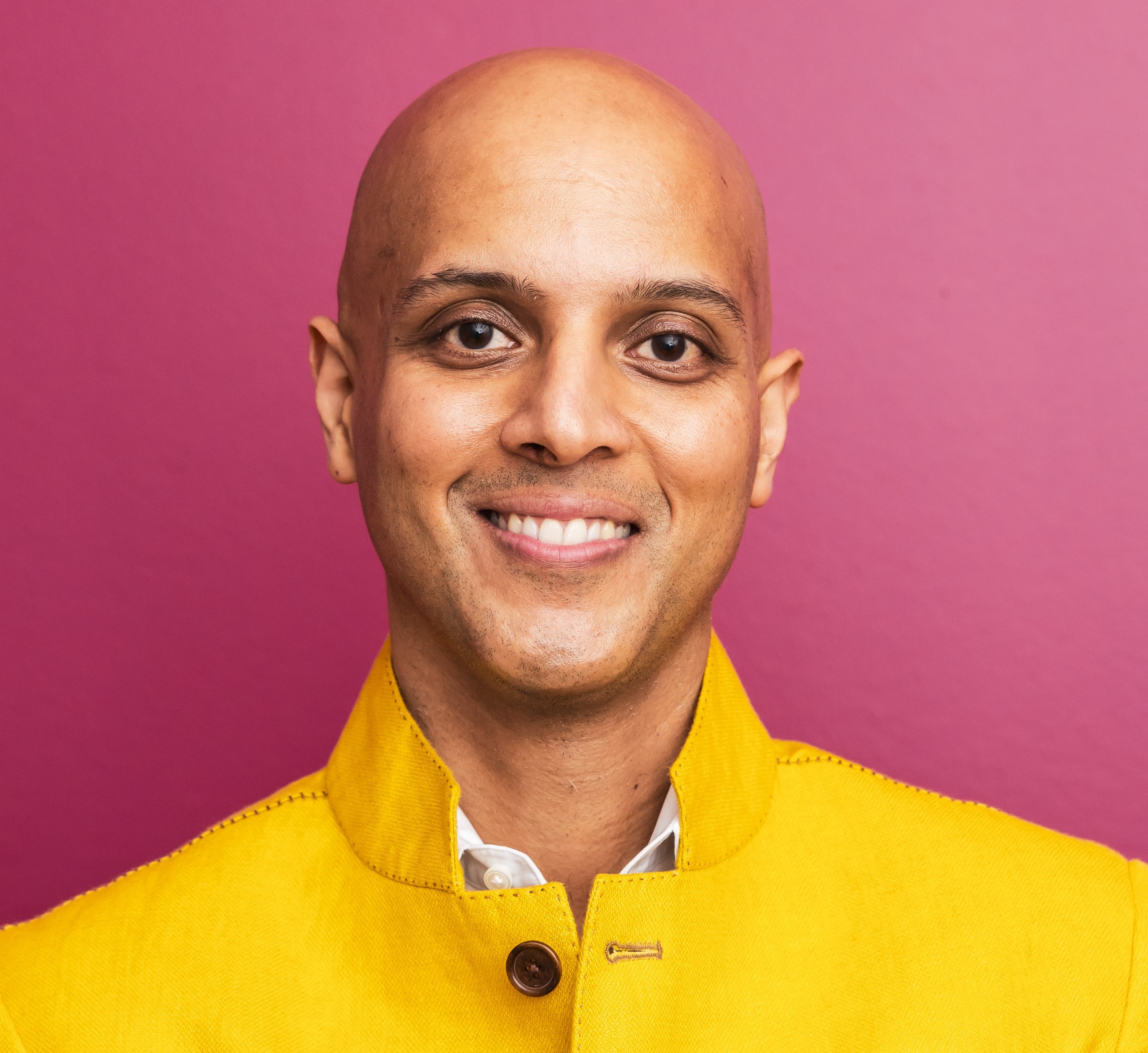
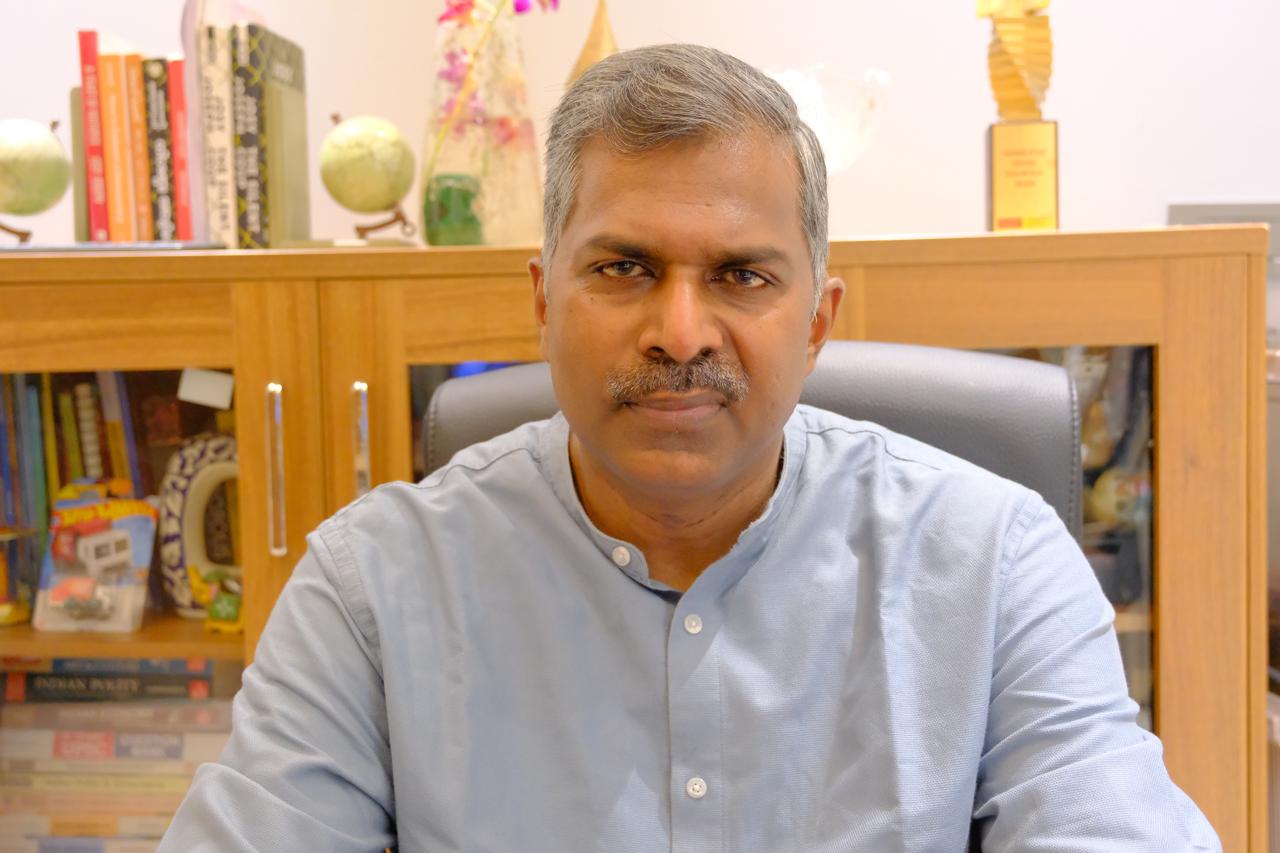
The book is co-written by two public policy researchers, Sarthak Pradhan and Pranay Kotasthane. They join Milan on the podcast this week to discuss their joint work.
Sarthak is a fellow at the Takshashila Institution, an independent centre for research and education in public policy. He also serves as assistant editor of the Indian Public Policy Review.
Pranay is deputy director at Takshashila, where he chairs the High-Tech Geopolitics Programme. He also co-writes Anticipating the Unintended, a weekly newsletter on public policy, and co-hosts Puliyabaazi, a Hindi–Urdu podcast on politics, policy and technology.
Sarthak, Pranay, and Milan discuss why every active citizen should care about public finance, the competing visions in India of the purpose of government, and the vagaries of the Indian tax system. They also talk about the much-maligned Goods and Services Tax, the tensions in India’s fiscal federalism, and the rise of ‘competitive populism.
Episode notes:
1. “India's Tryst With Policymaking” (with Pranay Kotasthane), Grand Tamasha, January 25, 2023.
2. “India and the Emerging Chip Race” (with Pranay Kotasthane), Grand Tamasha, January 30, 2024.
3. Khyati Pathak, Anupam Manur, and Pranay Kotasthane, We, The Citizens: Strengthening the Indian Republic (New Delhi: Penguin, 2024).
Transcript
Note: this is an AI-generated transcript and may contain errors
Milan Vaishnav Welcome to Grand Tamasha, a co-production of the Carnegie Endowment for International Peace in the Hindustan Times. I'm your host, Milan Vaishnav. Few subjects are as central to the functioning of government or as likely to make the average citizen's eyes glaze over as how governments collect and spend the public's money. But public finance shapes nearly every interaction Indian citizens have with the state. How much tax revenue will my state receive from the center? Will my local government have the resources to invest in the urban amenities that value. And how can I distinguish between an expensive freebie and a purposeful targeted cash transfer? A new book, Fiscal Fables, A Citizen's Guide to Public Finance, demystifies India's public finances for a lay audience and explains public finance concepts using relatable stories and examples. The book is co-written by two public policy researchers, Sarthak Pradhan and Pranay Kotasthane. Sarthak is a fellow at the Takshashila Institution, an independent center for research and education in public policy. He also serves as assistant editor of the Indian Public Policy Review. Pranay is deputy director at Takshashila, where he chairs the high-tech geopolitics program. He co-writes, Anticipating the Unintended, a weekly newsletter on public policy, and co-hosts Puliyabaazi, a Hindi-Urdu podcast on politics, policy, and technology. To talk more about their new book, I am pleased to welcome them to Grand Tamasha. Sarthak, Praney, congrats on the book, and thanks for taking the time.
Sarthak Pradhan Thanks, Milan, for having us here.
Pranay Kotasthane Thanks, Milan, glad to be back. It is good to be back.
Milan Vaishnav We were joking before we started that we've had Pranay on I think three or four times, each time for a new book, which is setting some kind of record. I want to ask you about this new book, Fiscal Fables, because it starts with, I think, a very simple premise, right? Which is every active citizen in India, I mean, for that matter, really anywhere in the world, should care about public finance. So, if you have one of our listeners in an elevator and you have to make your kind of entry-level elevator pitch, how would you make the case that this matters to them? Sure.
Pranay Kotasthane Sure. Yeah, so the first reason is because it is your money, and that's really the most important reason. But despite it being our money, it's a well-documented fact that there is something called opportunity cost neglect. So, this is a study by two Scandinavian researchers where they asked public health experts that will you spend some x euros, x thousand euros on a particular public program. Most of them said, yes, of course, I mean, who will say no to a well-meaning public health program? But then they were asked in the second round that, you know, this is the actual cost of that particular public health program. Would you still spend this? And then you see a 10% drop in the number of people who were going to say yes to this public health program, right? So, in our private spending, we understand opportunity cost very well. So when you say I'll buy a one lakh rupee new iPhone you instantly know that there goes your next Goa trip, right? Because it's opportunity cost. But we don't do that when it comes to public spending. When government is spending, we think this money is there somewhere, the government can spend. But when people are reminded that there are opportunity costs for this, then people do change their preferences. So that's really the core reason why we need to know public finance. Broadly public finance just means the quantity and quality of government spending and seeing how that impacts outcomes, what are the results of that, so on and so forth. So that particular idea is about something which is underappreciated. The other reason is Milan, you follow Indian politics very closely and most of the political discussions are also related to public finance in one way or the other. So, whether it is, you know, Sarva Shiksha, Abyaan Funds, not going to Tamil Nadu or it might be a fiscal federalism issue or it might be the spending on NREGS, they are all related to public financial issues. But many of these discussions happen without public finance principles being used. And that is something which really irks both of us, Sarthak and I. So we thought we should. Be having a public finance discussion using those principles, right? For example, public finance is able to tell us that if you want to increase spending on a particular domain, this kind of transfer works better, whether a cash voucher works better or whether a direct transfer works, better all these are well identified in public finance. So those are the things that we wanted to surface. And that's why [we wrote] this book.
Sarthak Pradhan So I also have a few points to add here. Now, when it comes to public finance, it applies government's spending on different kinds of things. As citizens, many times you cannot exit a government's fiscal choices. So again, that is also one of the reasons why you should be using your voice because whatever the government is providing, you have to deal with it. In many instances, the private players might not provide for it. The markets will not provide it. Additionally, governments typically have an incentive to not make the true cost of something transparent. They will have an incentives to keep it opaque. Every politician would like to spend more. But it has consequences. It has consequences on you. It might have consequences on future generations. Irreversible consequences in some cases. So if we understand public finances better, we can deal with these kinds of things. We can understand these things better. And also, we have repeated this again and again in our book, when government spends one rupee, the cost of that is around three rupees for the entire society. This is what Dr. Vijay Kalkar, Dr. Ajay Shah, they also talk about in their book.
Pranay Kotasthane So we were just looking at the total government spending. If you include all levels of government, roughly we spend 100 lakh crore rupees a year, which means it is around 68,000 rupees per person. Right. So every year you're giving 68,00 rupees to the government. So we better identify what that money is going to. And the other favorite stat I have is many people in India think US is a capitalist country. And you know China is a communist country or so on and so forth so US must not be spending a lot on their citizens right but which is absolutely not the case because as a Wagner rule which that actually the per the government spending as a percentage of GDP increases is almost directly proportional to the GDP per capita of that country. So, as you become richer, citizens demands change, citizens demand more of the government and despite it being a communist country or a socialist country or capitalist country, government spending as a percentage of GDP only grows. That is the empirical observation over the last 100 years. US, for example, is roughly 38 percent of the GDP of the US. That's why we need to be worried because India is in that trajectory where we are moving from 27% GDP is the total government spending. So we need be very cautious about how this spending increases or whether that spending is even required or not. So this is the right time I thought for us to think of these questions.
Milan Vaishnav I mean, I think just to go back to where you started in the kind of origins of this book, right? I mean presumably one reason that you wrote this book is because you feel like this understanding isn't there and in part perhaps that stems from a belief that ordinary Indians have that it's not really their money to begin with, right? It's someone else's money and it's kind of monopoly money and then the government is kind of playing with it and they get what they get and they don't get what they get. You know, Arvind Subramanian Mothers have talked about this, and I think they've called it something like representation without taxation, right, because the income tax, direct tax paying base is so small. Is that what you would attribute this sense of apathy or ignorance, if I could call it that too, that, you know people just don't see in their day-to-day lives given it's a vast population and such a small pool of direct taxpayers that this is really something that is, affects them at a kind of one-to-one level.
Pranay Kotasthane Possibly, I think the reason might more be related to so in any ways people do understand they are being indirect taxes, right? So they know they feel the GST impact or any indirect tax impact whenever they are filling petrol on a daily basis, but I guess the the chain breaks because our local governments are fiscally not empowered at all and hence people are not able to connect How does my spending connect with what is happening in my ward or my locality? So, that this in public finance, we call it the Vixelian connection. So, how much does the overlap between who decides who benefits and who pays? So, if you imagine three circles, the more the overlap between the three, the better public finance deliveries. I think that is sort of broken in India at various levels. So because of that people only rely then on no public service provision there, we are only relying on government to provide private transfers or private goods and we settle at that low level equilibrium.
Milan Vaishnav I want to, before we get into some of the main chapters, I want to just ask you, and Sarthak, maybe I'll start with you. The book talks about these four competing visions of the purpose of government, and it argues that, you know, these visions exist in theory, in books, and in articles, but on any given day you can actually see all four visions of the Purpose of Government on display in India. And I wonder, as a of getting into the conversation. If you might tell us kind of what these visions are and concrete ways in which they show up in everyday life.
Sarthak Pradhan Yeah, so the book talks about four different visions. The first one is the Gabbar Singh theory. Now what it implies is in this particular model or vision of the government, the government is more of an extraction machine and the role of the Government is quite limited. Just like what Gabbar Singh in Sholay used to do, used to go from one place to another, will loot people. The same thing, it has been, this is something which we have derived from Mankar Olson's concept. In this kind of a vision, the government provides some services. For instance, it might be providing safety to its people and it is going to protect people in its jurisdiction from other bandits, from other gabbarziks. And the government for it to sustain, for it to flourish, thrive, it will require resources. So it extracts resources from its people in the form of taxes. So this is one theory. Where the government provides some minimal services, and they are basically extracting from the people. The second theory is the Robin Hood theory. Just like Robin Hood used to take resources from certain section of the population, and it used to give it to those who were maybe from the poor socioeconomic background, the same thing applies here. Progressive taxation can be an example of this. You are basically taxing the poor, texting the rich more. And the resources are being given to people who are at the bottom of the social hierarchy or the economic hierarchy. But in reality, that might not be the case. Often what happens is those who are well off, they have different kinds of ways to avoid paying taxes. So maybe in reality it will be the people who aren't able to evade taxes, the middle classes, they are the ones who are taxed and not necessarily they get the benefit. The third kind of vision is more of an academic vision, I would say. This is what Musgrave talks about. Musgraves says that there are three things governments typically do. One is allocation of goods and services. But again, it should not be any type of good. Those goods which markets can't provide for, for instance, public goods, law and order, national defense, these are public goods. Markets do not have any incentive to provide for these goods. So government allocate these goods. There are certain goods which have societal benefits. I mean, the individual who is consuming that good benefits, but it also benefits others in the society. For instance, if I take a vaccine, I am benefiting myself, I am getting protected from a virus, but others also tend to benefit because of that. So these kind of goods, again, government should allocate or it should finance. Private players can provide for it, government can subsidize this. So allocation is one function. The second function is redistribution. Every society has some notion about what is fair. So based on those notions, what is fair, it can redistribute incomes, maybe from the rich to the poor, from states which are doing, from regions which are going well to regions which are not doing well. And the third role is stabilization. So Musgrave talks about these three things. So government should be doing these things. And the last one is the Buchanan's objective or Bukharan's vision. Here, he identifies government not as just one entity, government constitutes of different kinds of actors. There are politicians, there are bureaucrats, there again voters also, they all have their own incentives. So they all, have their incentives, they have their own self-interest, they work as per their own interests. And again, not necessarily what all the other roles that we thought about, right, that government should be, will ensure redistribution in this particular manner, that might not happen. There might be regulatory capture, there might be rent seeking. So these are the four different visions we talk about and on any given day, you will find all these things playing out in the Indian context. For instance, there will be a welfare scheme, which is basically the Robin Hood theory. There may also be a highway being constructed, which is part of allocation of meritorious goods. There can be different kinds of subsidy targeted towards certain pressure groups, this is how that self-interest
Milan Vaishnav I'm wondering who in the scenario, since you brought it up, Sarthak, who is the roving bandit in the Indian case?
Pranay Kotasthane Actually, what we are saying is that Gabbard Singh, for example, in the Sholay movie was actually not smart enough because if he were smart enough, he would have transformed himself from a rowing bandit to a stationary bandit, which is the Indian state, right? Or any state for that matter, right. So this is a sort of a cynical view of the state. And generally the state in this view, it just means that the state figures out that instead of looting money, it's better that you provide some public goods and keep raking money through taxes because dead villagers don't pay taxes. So you have the villagers living producing some goods. You provide some basic goods and then you get taxes in return. So that's the view. And I think in our cases, the Indian state often behaves like a stationary bend it many times, right? So, If you see the rates of taxes on petrol, if you see Indian corporate taxes are also very high compared to global comparisons. So all those mean that the state does extract hafta sometimes. So that's one view. Exactly the opposite view is what the Robin Hood view is, which is we believe sometimes Some people believe that. The only thing the state should do is take money from the rich people and we often have these reports coming every year that just tax 2% for the wealthy and we will transfer that money to the poor. So that's the Robin Hood vision.
Milan Vaishnav You know, I think that for most listeners, if you think about revenue generation, right, I mean, most people understand sort of the taxes and how that system works. Most people understand what government borrowing looks like and how, you know, governments. They have to pay back with interest and so on and so forth. But in the book you write that, you know, every government going back all the way to ancient Rome raises revenues in three ways. So there's taxes, there's borrowing, there is also something called kind of non-tax. And I wonder if you could just tell us a little bit about how would you explain to an ordinary citizen of India what goes in the category of non taxes. So when it comes to
Sarthak Pradhan So when it comes to taxes, it is quite intuitive. Everyone has to pay taxes. If you are earning a certain amount of money beyond a particular threshold, you have to pay tax as you file the ITR returns, you get to know about it. If your buying something on the receipt, you will see the GST amount. So you have a sense of that. When it comes to borrowing, again, that is intuitive. Credit card, for instance, helps you borrow. And we have given the credit analogy in our book. But non-taxes can be sometimes difficult to understand, but it refers to those kinds of revenue which includes fees, fines, dividends from government-owned entities, charges for different kinds of services government provide. Government in India conducts different kinds exams for jobs or for admission into different education institutions, IITs, IMs. So when they conduct the exam, they might charge a fee. So that's a kind of non-tax revenue. If you are Speeding. And you are caught, or if you're violating some traffic rules and you're caught, you have to pay a fine. So that's also part of non-tax revenue. There are so many public sector entities, the union government, state governments run these entities, dividends from these entities. The government would have invested the dividends that they make, it is also part of non tax revenue. Governments do provide different services. For instance, in some places, power distribution, health services. In some places it can be waste management. So, they provide services in return. Those who are availing those services, they pay for it. So that is also a charge for the specific services. It is also non-tax. Now, how it is different from a tax? Taxes are compulsory. They're involuntary. You have to pay for. If there is a good which is taxable, it will be taxed, and you have to play for it if you're earning an income which is beyond a particular threshold, then you have pay income tax. However, Non-Taxes large extent are voluntary. If you are using those services, if you are availing those services you will pay for it. And they are also equitable to a large extent in the sense that those who avail more of that service will pay it. Those who don't avail it might not pay for it. But this also makes it slightly unpredictable. I mean, for instance, you cannot rely on fines as a major source of revenue. So typically non-tax revenue tends to be a very small portion of the overall revenue. Some states which are naturally endowed with certain kind of minerals, they might be benefited because of non-tariff revenues. Right now the debate discussion is going on with respect to mineral revenue. Odisha, Jharkhand and some other states, they typically were able to raise a lot of revenue from non-taxes. So yeah, this is what non-taxes are.
Pranay Kotasthane If I can come in here, the basic differences in taxes, the government is not promising you what you will get in return. You just have to give it. That's the tax. That's why it's called tax rate. So it's taxing on you. You don't have an option and there's nothing promised in return in a non-tax. There is some promise in return generally if it is provided for a service rate. So, for example, a toll road is what Indians are familiar with. There you are being saying that if you want to use this good road, you pay this through your fast tag and you will get a good road in return. So it is very immediate benefit that you get by paying this and you can take a non-tolled road also, but that it will not give you the kind of benefits that you want. So that's basically the difference. I think non-tax revenues are very important in a local government context, because if there are parking charges, if there electricity, water etc. Are charged according to their scarcity, then you will also have more better use of those resources and you will have governments who can raise their own revenue much better. But at a national level, roughly taxes account for 80% of India's revenue receipts and non-tax revenues are a smaller portion around 11% of the union government's receipts.
Milan Vaishnav I mean, I said at the outset that most people listening to this would understand kind of how taxes and borrowing works, but taxes are not actually that straightforward in India. And I want to just read a passage from the book where you write, a tax system should have one primary straightforward goal, which is to raise maximum revenue for the government with minimum distortions to the economy. But in India... We've loaded our tax system with many other objectives, thus blurring this primary goal, much like how Michael Scott of The Office tried to run his branch. I'm hoping that most of our listeners have listened, or excuse me, watched at the office. If not, then they know what they need to do for homework. But tell us a little bit about what does this fictional character from a popular sitcom actually tell us about how India's tax system works?
Pranay Kotasthane So, yeah, I mean, we know how Michael Scott, what a great character, right? He was trying to be so many things at the same time, right. He wanted his branch to be profitable and he wanted to be everyone's best friend and be funniest guy in the room and be inspirational, right, so he's trying to do many things at once and often he ends up achieving none of those goals, right! So, Indian tag system is identical in that sense. So what the uh the sentences that you mentioned. They are a common feature of India's taxation. So any person who's listening if they have filled their income tax return know what we are talking about, right? The income tax returns are so complicated because there are various exemptions, there are various kinds of rules which come up because the government is trying to achieve many things with this instrument called tax policy, right. So the government it's using it to promote exports sometimes to incentivize savings, sometimes to drive infrastructure investment, sometimes to ensure balanced regional development happens, sometimes to boost employment. So all those instruments, so we can call this hyper multi objective optimization rate. So you're trying to achieve so many objectives with one and hence the tax policy ends up not achieving the goal, which it is meant to, which is get the maximum revenue. With minimum economic distortion. So we have many examples of this. The clearest example is wealth tax. Again, this is something which very commonly anyone in India will say, what's the solution put a wealth tax, but we know that wealth tax has already been used in India. It was there for a good 30-40 years in India, it was introduced during the high tide of socialism and it was entirely very complex. So any tax system has largely three kinds of costs. One is compliance costs. You have to comply, it is a cost to society. There's an administration cost because you need to have administrators to do this. You need to go and check whether taxes are paid, etc. So you need to have the machinery. And the third cost is market distortionary cost, right? Because every tax has some deadweight loss because of the tax, some transactions don't happen. So these are the three costs a wealth tax is a tax in which ranks poorly in all of them, right? So and we have again examples from movies in this, the movie, 2013 movie Special 26 portrayed this about how income tax raiders, which used to be a common thing. You used to have fake income tax officers in 1980s and that was picturized there. At one point of time, wealth tax was also there on cars. So, you needed tax administrators who could know and discern the value of a car. So those kinds of things. Just say how if you don't think about the costs of taxation, despite doing all this wealth tax could never be a meaningful source of revenue because market distortionary costs were high, compliance costs were high. People just were able to get their money in some other way and administrative costs were really high because you didn't have a tax administrators who could judge the value of a great painting or a great car and then that led to corruption and things that, right? So, These are the features which make tax policy really complicated and that's not what we should do.
Milan Vaishnav So, I mean, I want to switch over to talking about the indirect tax side, right? And I think a couple of times already in this conversation, the GST, or the goods and services tax has come up. And this was a major reform finally implemented in 2016. I think it was debated for at least two decades. I would say the vast majority of economists in India thought that in principle was a good idea. Many of them have taken issue with the way in which it's been implemented. But you write that the GST, in essence, is a consolidated nationwide indirect system of taxation, which has many absurdities embedded in it, which make it a very easy target for mockery. But we shouldn't lose sight of the fact that the system or the regime that it was replacing was what you call a hydro-headed monster, right, in its own right. So you have to really compare what we have with the counterfactual. I'm wondering, you know, now that we've had several years, almost a decade of experience, how do you think the GST stacks up against the expectations surrounding its introduction, as well as the system that it's replaced? So, we do.
Sarthak Pradhan Mention that the regime it replaced, it was a hydra headed monster. In fact, many people generally criticize the GST without forgetting what kind of situation it was before GST. Different states had their own taxes on sales and consumption. And many states, instead of trying to improve their business environment, they used to compete on tax rates led to a race to the bottom thing.
[…]
Milan Vaishnav And let me just say, I think there's an analogy here, sorry to interrupt, on the expenditure side, right? I think a lot of people who wanna criticize direct benefits transfers and so on and so forth often lose sight of the fact that in the previous era, there was a lot leakage, corruption, middlemen who used to get involved that led to a lot wastage, right. So you're always comparing the problems of the current regime, or should, with the problems of the old regime. Sorry to interrupt.
Sarthak Pradhan Definitely. So, in the pre-GST era, you used to have every interstate checkpost. So, basically, if you're moving goods from one state to another, it used to take time. There have been some news reports. In fact, you can just Google these news reports from 2014-15. You'll find that there used to be four or five days waiting time along certain state borders. There have have been instances where exporters found it... Cheaper to route goods through Colombo than across the state border to Cochin, that kind of thing. And on top of that, you had the state taxes, you have the union taxes, it was leading to cascading effects. So overall, the effective tax was quite high. And to dodge some of these things, firms will be figuring out ways, they will set up a warehouse in different states or they will setup local branches, branch offices. Now, after GST came into being. What did GST essentially do? It merged some 11 union tax, state taxes, indirect taxes. So it reduces the cascading effect, input credit, tax credit mechanism. You don't see these check posts, and because check posts no longer exist, or at least the number of check posts that existed before, so you have seamless movement of goods. In fact, there was one Ministry of Road Transport report which said that, the transport time has reduced by 20%, which is a massive reduction in transaction costs. Apart from that, the GSD council that has been formed as part of this mechanism, it is also a very interesting thing. You have the union government, the state government, they are coming together, they're bargaining. You don't have many such institutions in India right now. And also, Because you have the input tax credit mechanism, it's a self-enforcing mechanism. The way it is designed, the buyers have an incentive to demand a formal invoice to claim credit, which ensures that the economy will move from an informal economy to a more formal economy. But yes, can the system be better? Are there absurdities in the current GST system? Yes, there are absurdities. Their systems can be better. But is it worse than before? We don't think we'll agree with that. Right now, there are absurdities. In fact, some of these things have been reduced. When GST was initially introduced, there were multiple slabs. Last year, the number of slabs were reduced. And when you have multiple slaps, it leads to different kinds of confusion, the administrative costs increases,
Milan Vaishnav I mean, there is the really classic, my favorite is the different types of popcorn, right? Salted popcorn versus caramel popcorn.
Sarthak Pradhan Popcorn and also roti, paratha, all those things were there but yeah of late we have been trying to reduce that so what I think is when you have something which is consolidated which is concentrated which is visible it is easy to Mock that it is easy to make a make a meme out of it But when something is diffused like in the pgst era, it is not that easy to Mock it. I mean you will be walking it but it will be very localized
Pranay Kotasthane We can say it is the centralization of absurdities. So, there were absurdities before, but yeah, I mean, Karnataka's absurdities people in Maharashtra didn't know and so on and so forth.
Milan Vaishnav It was going to decentralize anarchic absurdity.
Pranay Kotasthane Yeah, exactly. So now that it's become one visible target, and we should question the absurdities, but we should know what was the past like, and it was much more absurd, right? This just the fact that you couldn't travel from one state to the other. And you used to have this picture. I mean, anyone who's traveled on roads would see these huge queue of these people, the truckers waiting on the state borders and cooking food on the roads. Just because you cannot go easily, you have to wait for four, five days and all that, right? So all that is gone. So I think the bigger problem right now is still that GST is still facing that Michael Scott problem, you know, that because even in GST, because it is to be done with, there will be give and take mechanism. So states were very fearful of losing out. So as a part of aligning their cognitive maps, the government did promise a 14 percent year on year increase to many states but it also there was this idea that because this is a tax instrument we should really measure things like who is going to buy a car which is more than 1000 cc it's going to be a rich person so let us charge a higher tax rate we often measure try to think that tax rates and making those tax rates very distinct will somehow bring equity But that's not what equity is right if we know from public finance that to do equity you have to do things on the expenditure side not on the revenue side revenue side in fact you need to have a very small tax rate and based on that you need to have the base which is white so they call it BPLR broaden the base lower the rate and that way you will be able to collect money with minimum amount of distortion once you have that money you can do it spending for various reasons. You can spend it for equity purposes, you can spend it for schooling, education, vaccination, whatever. But that's not the learning that most of us have. We think tax rate should be steep for anything which we think a rich person buys and less for anything, which say a poor person buys. And that's the pitfall that we found.
Milan Vaishnav But there's another critique that you entertain in the book, and I think you kind of swat down, which is you'll hear from a lot of places, including from states, finance ministers, and so on, that the GST is anti-federal, right? That it has consolidated too much power in the hands of the center, and that states have kind of given up, are ceded to this kind of tax autonomy. You believe that the concerns about the erosion of state fiscal autonomy, I think, are not necessarily valid. Why do you think that the charge that the GST is anti-federal? Why do think that gets the story wrong?
Sarthak Pradhan See you there. To look at it. One is who controls the tax rates and another is who is getting how much revenue. We can look at from both these perspectives. One thing people say is GST, the money is going to the union. But that's not true. GST has multiple components. It has CGST, the central GST. It has state GST and it also has the integrated GST, iGST. Nope. CGST is something that goes directly to the states. It doesn't go to the union, there is no interface with the union government. When it comes to CGST, money goes to the Union government, but it again, 41% of that as per the current finance commission formula will be allocated to the States. Finance commission decides how much of the divisible pool has to be shared with the states. And when it comes IGST, it is more of a clearing mechanism. The states where the consumption happens. Money goes there through the union. So it's not that the union is getting all the money, it gets part of it, but states get a larger chunk of that. The second thing is about the states don't have any control over the rates, over the kind of goods that should be taxed, but that is also not correct because if you look at the GST council, where these decisions are made, you have representation from the union and the states. Two third is the representation from the states and for any decision 75% of the votes are required. So both union and states have to be on board. It is kind of a joint decision making mechanism. So I don't think it is anti-federal. And the last, again one more way to look at it is, see those taxes which have a on a wild basis. They are better taxed at a higher level, at a more centralized level, or else what will happen? There will be tax competition, immobile basis. For instance, if you have to tax land and property, these things are better left to the government, which is closer to the people, local governments can do it. So by this logic also, centralizing rate setting is actually improving things. It is much more efficient. It is optimal tax assignment. So I don't think it is anti-federal. Yeah.
Pranay Kotasthane And I think we have concrete examples of this earlier, when you didn't have GST, like Sarthak was saying, there was this race to the bottom, right? So, for example, we know that Punjab at one point of time used to have lots of manufacturing industries. And now if you go, you will see most of those manufacturing industries have shifted just across the border to Haryana. Now, the reason why this happened is because Ariana, sorry. It shifted just across the border to Himachal Pradesh. And the reason why that happened is because Himachala Pradesh gave lots of these, they lowered the tax rates and they attracted the industry. And that's why they just moved to this. So that the net benefit to India was not much, right? It's just that industry moved from this state to the other state. But you would ideally want states to promise not that I am giving you a lower tax rate, but to say that I will give you the other better facilities which will make you come to my state, right? Better talent, better environment, better business environment, etc. So now, in fact, the positive side of GST is that states are competing on the other things. They can't just play the game of I will you tax benefits and that's why you just come in, right. So which is good. And I think the goal... Again, we have to go back to the four visions of the state. If we are thinking of it as revenue maximization as the goal, right, the Gabbar Singh theory of the State, then thinking a lot about tax rate, etc., becomes the primary concern. But that is not the vision that we would want for India, right? We would want the government to finally have a lot of economic activity, a lot economic growth, a lot jobs for India. The secondary effect of this will be revenue for the union government and for the states. So many times this becomes an issue because states project this as rates are the thing which will determine whether we are freer or not. But that's not the case as long as the revenue of the state is rising and that revenue is coming flowing without any conditions, then the states have all the freedom to spend the menu that they want. That's where the concern of GST is also like we know there was a compensation says during COVID and the money which had to go to the states wasn't going as smoothly as it was supposed to. That is a real genuine issue, which needs to be addressed. But GST in itself as the architecture stands, people have this mechanism that all the money that you pay on your bill, goes to the union government and then flows back to the state and sometimes the union doesn't give back, that's absolutely wrong. That's not how it works. State taxes stay with that and that's what Sarthak explained.
Milan Vaishnav I want to switch over to the expenditure side for a moment here because I think there's an issue that you touch on the book that's a very live political issue and we're talking about it today. We're going to talk about it before every state election. We're gonna talk about before the next general election, which is this kind of rise of what's been called competitive populism, right? Both at the center and the states. And I think that there's a whole litany of schemes that have existed at the central union level. That have been described in various ways as cash transfer schemes, as doles, as freebies. These terms are thrown about very loosely. I think all of this has been amplified by the prime minister himself, who has talked about Revery culture, freebie culture. And you have a very thoughtful section in the book where you try and distinguish, look, what is the difference between a quote unquote freebie from a kind of legitimate public expenditure or welfare entitlement. I'm wondering if you could just kind of share with us, how do you think about how to assess this so that you understand what fits in what bucket?
Pranay Kotasthane Sure, yeah. So, absolutely freebies is actually not just an insult, it can be an analytical category and that's what we try to understand, right. So and by definition, we know that roughly two-thirds of what Indian government spend on subsidy doesn't qualify as one, okay. So let me explain this, right? So we have, there was this landmark paper by Govinda Rao and Sudipto Mandal. It was a 1991 paper which develops a framework classifying every subsidy along two axes. So, the first axis is whether the good that is being provided is a merit good or a non-merit good. So, merit good is something which has positive spillovers beyond the recipient. So, for example, if I get a mixer grinder or a free TV that is not a merit good, right? That's a non-merit good that. Give improves my life, but it doesn't improve the life of the people, the wider community around me. But if that money is given to vaccines or to education, these are things which have positive spillovers, right? So, this is one axis where it is merit versus non merit. The second axis is whether that particular subsidy is implicit or explicit because Many times there are an explicit subsidies. For example, Karnataka government is now giving an explicit subsidy for women who are traveling in public transport. So there is an explicit wave of for their ticket, right? But there are also implicit subsidies. For example we under price electricity, we underpriced water, agricultural taxes don't exist. All those are implicit subsidies, right. So now that's the second axis. Now a freebie precise definition of that is it's a non merit good which is subsidized either implicitly or explicitly. So, there is this is a non-merit good. So, when you are providing, for example, a free laptop, then it is a freebie. But when you're providing subsidy for vaccination, it is merit good and even if it is provided implicitly or explicitly through a subsidy, it's not a free. So, once we decompose this idea of subsidies, one portion of it becomes a freebie. Now we can have some numbers on this as well. So we know that actually the total amount of subsidies in India has fallen from the heights of the socialist period. So 1991 roughly 15% of India's GDP was as subsidies and now it is in 2015-16 the numbers that we have for all state union combined, that was around 10% of India's GDP. Within that. 30% of it, so 3% of India's GDP was accounted for by union government subsidies and states accounted for around 7% of the GDP. So that was this. Within it, within that, within the 7% that states spent, 3% went to merit subsidies. So that is justified. Health, education, these are things you would, most nation states would agree that These are things that you could These are merit goods that can be subsidized, so you wouldn't classify them as freebie. But a majority of it, that is 4% out of the 7% was non-merit subsidies, right. These are freebies proper. We can say that these are the ravity things which the PM also talked about. So both Union and the state governments are complicit in it. A large portion of the subsidies are not for merit goods, but they are for non- merit goods. And that is a problem that we have to confront.
Milan Vaishnav So as we think about the future, right, I mean, one of the things you often hear, and again, this comes up most acutely during kind of budget, pre-budget discussions, right? Is this question of kind of India's fiscal position, right. Is it spending beyond its means? Is the deficit growing to such an extent that it becomes unsustainable? Is there kind of an overburdened kind of debt situation? I wonder if you could just kind of briefly give us, what is the kind of top blind macro assessment of India's fiscal position, particularly when you try to situate India in comparative perspective, say with other large emerging market countries, right? I mean, how significant do you think the deficit issue is in the year 2026? Yeah, so.
Sarthak Pradhan Two things we should be keeping in mind when we talk about the larger picture. One is depth and also we need to keep in mind the... Overall income. So, how is the GDP, how's the economy growing? Now, in this case, India's debt is definitely high. General government debt is around 84% of the GDP. And if you compare it with other emerging market economies and G20, other averages, so there are many such ways by which you can measure it. It is India's GDP, India debt per GDP ratio is higher. And if you look at fiscal deficit, to a large extent, at least the Union government has done well when it comes to reducing the fiscal deficit especially after the pandemic. So they brought a lot and it has become much more transparent at least at the Union government side. No The major concern is when you are not growing and your debt is increasing. That is what we talk about Domage Rule. But again, at this point of time, that doesn't seem to be that big a concern.
Pranay Kotasthane Yeah. I would add a few things here. So, this is a lovely lecture by Martin Feldstein and it's there on the RBI's lecture website. So it says that fiscal deficits are like obesity. You can see your weight on the scale, but there is no sense of urgency like obesity and the more severe the problem, the harder it is to correct, etc. So if you can think of that as the idea of In fact, I would disagree with Sarthak, actually, we are having a problem where the governments are spending beyond their means. So as a citizen, what matters is for every rupee that you are paying to the government, today's budget, 25 paisa of that is going to pay interest of the previous loans that government has taken, right? So if as this number keeps on increasing, I mean, just imagine for your children's generation. If they are paying a rupee, maybe 50% of the money that they pay to the government will just be accounted for the spending that was done on their parents and not for them, right? So, over time, we are having this issue where the freedom for the next generation's governments to spend on them will decline and that is a real problem. So, I think Devesh Kapoor and Arvind Subramaniam's book also talks about it. How between 1991 and 2020 they find that India's interest payment to GDP ratio has been highest among major emerging economies. Even our fiscal deficit to GDP has been the highest among major emerging economy. If you take Brazil, Egypt, China, all of them increases. So this is a concern. Now what is saving us is that the Indian economy has been growing at a reasonably good rate as well. So that's why you have not seen issues like what have happened in Pakistan or in Sri Lanka. And India is a much more robust diversified economy so it's not that bigger problem apparently. But underlying when we see this rate that your 25% of your spending is just going as interest you are obviously limiting the choices that the government can use for productive expenditures and that's where our concern is.
Milan Vaishnav So maybe I'll bring this conversation to an end by just asking you about the very thorny question that implicates, again, both the center and the states, and it has to do with the kind of future of Indian fiscal federalism, right? We're in a very tricky situation in India because some of the fastest growing, most dynamic, economically dynamic states feel that They are putting in more into the tax kitty than they're getting in terms of fiscal transfers from the center. You layer on top of this some rightly or wrongly resentment about GST and the way in which it's gone down. And again, some states feeling that they've been shortchanged or compensation hasn't come on time or there've been delays in transfers. There's obviously the political issues which are around delimitation and representation which are hard to kind of extract. There's the question of migration and a lot of economically productive parts of the country absorbing a lot human capital from other parts where there are fewer job opportunities. There's a whole real kind of witch's brew of issues coming together and it's hard to disentangle them, but they've led to a situation where there's a fair amount of mistrust between the center and the states as well as across many states depending on where you fit on these issues. As you look forward, what are some pathways to a more productive fiscal federalism that you would recommend India follow? And Pranay, maybe I'll start with you and then Sarthak, I'll ask you to chime in.
Pranay Kotasthane So, the analogy that we have for this is we use the two cats and the monkey fable to explain this. So, oftentimes, this is portrayed in the media as a fight between Tamil Nadu and Uttar Pradesh or Maharashtra and Bihar and that's what the political salience of this is also. But if you look at it, it's the monkey and the two cats fable, the fable is well known that two cats are fighting over a piece of bread and a helpful monkey, you know, the offers that I am the one who will divide this fairly, but he takes a bite from whichever half looks bigger each time and to correct this balance and eventually the monkey ends up eating the entire bread, right? So that's sort of the story and that's what is happening in our fiscal federalism as well. That the fight is not so much on the horizontal devolution. It's not so much about Uttar Pradesh versus Madhya Pradesh, versus Maharashtra. The real challenge is the vertical devolution that is how much is union government keeping money and how much the state governments as a whole getting the money because as we know constitutionally 68 percent roughly of all government spending happens at the state level. But the revenue generation opportunities for them. Whatever the GST rate, high, low or previous GST rates or no GST, their revenue was still around 38% of the total revenues rate. So there's a gap. This gap is what is of concern. So over time, what we would like to see is because states are responsible for more things and most of the things that matter on a day to day basis. You would ideally want the vertical devolution to increase. Right now it is 41% of the divisible pool. So our first choice is raise vertical devolution to 50% of their divisible. And right now it's 41%, so it cannot happen suddenly, but you can do that over time. In fact, this was exactly the thing which was proposed by the Gujarat CM, who is now the PM, right? When he was the CM, he proposed this. So is it not something radical that we are talking about? So that is one thing you would want if that is not feasible. So we we understand in Policy the I best policy is often the asserts for the second best solution, right? So we if this cannot happen then the next best would be at least fold the Sessions and surcharges into the divisible pool. So the Union government did a Did a thing where once the 14th Finance Commission said that you know We need to check correct vertical devolution and it increased the amount of money that could flow to the states, the union government suddenly increased cesses and surcharges. So, people who are paying petrol are paying a much higher rate on the cesses and surchages and they are not shared with the states. So if you are not able to increase the devolution to 50 percent just fold cesses, surcharging into the shared divisible pool that will also help all state governments benefit. So that's the second choice. Suppose even that doesn't happen, right? Let's assume even the second best solution is not possible. Then what we recommend is rationalize the centrally sponsored schemes. We have way too many centrally-sponsored schemes and there is no reason why we should have is still there are 27 umbrella schemes. And if you unfold them, there are hundreds of them. The union government doesn't need to run that. I would say, you know, you don't even need some of those ministries, right? Because they are there at the state level, constitutionally. You should want to do agriculture, health, education at the state level. But so centrally sponsored scheme should be fewer and they should focus on maximum eight to 10 areas and not more than that. Now, even if that is not possible, the last solution that we have is just share the non-tax revenue that union government gets with states, right? So interest receipts, RBI gives a big dividend. Yes, all those can be shared with the state government. See you soon. This is a sort of a algorithm that we think if you want to move ahead and you rightly said these are this is a very sensitive issue given delimitation etc which you have written a lot about Milan as well that this it goes through the public finance route this grievance emerges on the finance side so we need to think of a grand bargain which involves these components otherwise we'll have problems.
Sarthak Pradhan And adding to this, most of the things which Pranay talked about here, it is basically related to vertical devolution. Union is giving more resources to the state in one way or other. That doesn't mean that the states themselves don't have to do anything. There is still a lot of potential for the states to raise their own revenue and not just depend on the union for transfers. For instance, states can tax agricultural income. I'm not saying that agricultural income is a great source for revenue. But what typically happens is... People route their incomes through agriculture and since agriculture income is not taxed, the tax base gets reduced. So taxing agriculture income can address some of these things. Apart from that, states have different kinds of infrastructure assets which are possibly not being used. It can be monetized. They provide different kinds services. Many times the charges are not as per the market rates. They have not been revised. So all these things... Can help state raise more revenues and not be dependent on the union. As Pranay was mentioning about the bargain required and we have also discussed we don't have a lot of bargaining mechanisms or institutions except for maybe the GST council where the states and the union can come together and discuss things. There is an interstate council, but it is under the home ministry, usually the it's one plus two. Neeti Aayog again has some elements but again it's not a constitutional body. So we also need to figure out ways by which intergovernmental bargaining can take place between the union and states and sort out some of these messy issues. Another kind of institution that we lack right now, which can possibly help here is a fiscal council. This is something which multiple finance commissions have talked about in the past. A fiscal council is a body which evaluates whether if the money is being spent on something, whether it is being judiciously spent. And again, after the spending has happened, it evaluates, we have CAG and other mechanisms, but it is... But the fiscal council's mandate is typically broader. Some other countries have done it, Belgium, UK. They have some other versions of fiscal council, maybe that will help. And when we say federalism, generally the assumption is it is the relationship between the union and the states. But federalism also implies the relationship between the states and the local bodies. There are also issues over there, as you mentioned some time back. The local governments don't have enough resources, states do not provide them enough powers. In fact, Raja Chalaya had famously said, everybody loves decentralization, but only to his or her level. That is again another aspect of decentralization that needs to be, federalism that needs to be taken care of. The sub-state decentralization should happen. Many states in India are larger than countries. So states themselves might find it difficult to manage all these things in their entire jurisdiction. And if cities do well, they are the ones who generate the major part of the revenue. The overall fiscal situation of the economy will be better.
Milan Vaishnav My guests on the show this week are two public policy researchers, Sarthak Pradhan and Pranay Kottesthani. They both work at the Takshashila Institution based in Bangalore. They are the co-authors of a brand new book called Fiscal Fables, A Citizen's Guide to Public Finance. I would recommend it to all of our listeners if you are struggling to understand how India taxes, how it spends, how finances, deficits, what its burdens are when it comes to how to balance the equities of the center and the state. It's a great companion. It is a very easy, readable book. Pranay, Sarthak, congrats on the book and thanks again for coming on the show.
Pranay Kotasthane Thanks, Milan.
Sarthak Pradhan Thanks, Milan.