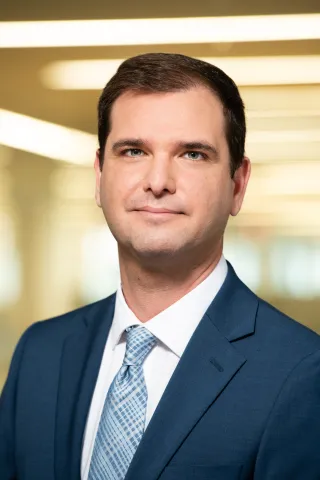
This week, Grand Tamasha commemorates the release of our 300th episode. We started this show as an experiment in the run-up to India’s 2019 general elections. Seven years and 300 episodes later, we’re still around, and no one is more surprised than we are.
While India has changed in many ways over the past seven years, one constant has been our occasional Grand Tamasha roundtables with Sadanand Dhume of the Wall Street Journal and the Council on Foreign Relations and Tanvi Madan of the Brookings Institution. It seemed only natural to celebrate our 300th episode by having them both on to discuss the latest in Indian politics and foreign policy.
This week on the show, Milan, Sadanand, and Tanvi discuss the political fall-out of this summer’s Gen Z protests, the political future of the Cockroach Janata Party (CJP), and the churn within the ruling Bharatiya Janata Party (BJP). Plus, the trio discuss Prime Minister Narendra Modi’s recent meeting with Russian President Vladimir Putin, the potential thaw in China-India relations, and whether ties between India and the United States can weather the current turbulence.
Episode notes:
1. Sadanand Dhume, “An India-China Rapprochement Isn’t in the Cards,” Wall Street Journal, September 9, 2026.
2. Sadanand Dhume, “India’s Global Image Problem,” Wall Street Journal, August 26, 2026.
3. Sadanand Dhume, “‘Cockroaches’ Threaten to Overrun Narendra Modi’s Kitchen,” Wall Street Journal, July 29, 2026.
4. Tanvi Madan, “India’s Strategy for Economic Security: Deny, Indigenize, and Diversify,” Asia Policy 21, no. 3 (2026).
Transcript
Note: this is an AI-generated transcript and may contain errors
Milan Vaishnav Welcome to Grand Tamasha, a co-production of the Carnegie Endowment for International Peace and the Hindustan Times. I'm your host, Milan Vaishnav. Today is a special day for Grand Tamasha. We are commemorating the recording of our 300th episode. We started this show as an experiment in the run-up to the 2019 general elections. Seven years and 299 episodes later, we're still around, and no one is more surprised than I am. While India has changed in many ways over the past seven years, one constant has been our occasional Grand Tamasha roundtable with my guests today, Sadanand Dhume of the Wall Street Journal and the Council on Foreign Relations and Tanvi Madan of the Brookings Institution. It only seemed natural that as we celebrate our 300th episode, we have them both on to discuss the latest in Indian politics and policy. So once again, Tanvi, Sadanand, welcome to the show.
Sadanand Dhume Good to be back and congratulations.
Tanvi Madan Good to be back as well and kudos, Milan, for keeping it going.
Milan Vaishnav I checked, because we discussed this actually yesterday, this is your 28th appearance on Grand Tamasha. So that is actually higher than I thought it was, but you've done 27.
Tanvi Madan So almost at 10%.
Sadanand Dhume Almost at 10%, yeah.
Milan Vaishnav…27 previous experiences of recordings. We are going to talk a little bit about the show and reflect on what's changed in India over the past seven years, but there are two topics that I want to cover today, starting with domestic politics and the events of the summer, a lot has happened since our last episode, which I think was towards the end of last season. I want to start with the summer's Gen Z protests and the rise of the cockroaches, the Cockroach Janta party. Sadanand, I'll start with you. I get a little bit annoyed when I talk to a lot of people who say they saw all of this coming because I think if we’re being really honest, there was a lot that was surprising about these protests and the way in which they unfolded. How surprised were you that things turned out in this way that ended up with the ousting of a pretty central union cabinet figure, not just somebody who had a minor role but was seen as somebody who was kind of a prized minister in the Modi government.
Sadanand Dhume So the denouement was certainly surprising. First of all, nobody saw these people coming. Nobody imagined that something would sort of grow out of a Twitter post and an Instagram post so quickly and become something real on the ground. In fact, when the protests first started, they were pretty low-key and I don't think people were paying too much attention to them. And so what happened at the end of July, the protest intensifying, getting mass, getting volume, getting traction. The fact that so many people came out were people who were traditionally BJP supporters. And the fact that they managed to tap into a very real kind of resentment about this broken examination system and translated that into a tangible political win, that was surprising to me. My sense, along with that of many others, was that Modi was not going to bend. And Dharmendra Pradhan is a very important figure in the BJP. He's been groomed for larger things, he's been a lifelong member of the party, he's a minister in good standing, and so on. So, this wasn't a head that it was easy for the party to allow to let roll, and the fact that they did, that was surprising to me, and spoke to not just the moment, but how well the Cockroach Janta Party actually managed to exploit that moment to achieve, to make that achievement.
Milan Vaishnav Before I move to Tanvi, let me just ask you one quick follow-up, which is, you know, I mean, obviously, the ruling party, the government, were the principal target, but I mean, do you think that the protests also were kind of an indictment or a statement on the political opposition as well?
Sadanand Dhume Well, to the extent that, you know, you had the Cockroach Janata Party filling a vacuum. To the extent that normal opposition politicians seemed unable to take this initiative, though they did capitalize on it once the CJP took off, it's certainly an indictment of the opposition. But I think that as it evolved, I think it became somewhat, you know, complimentary. And the opposition certainly helped the CJP and the CJP certainly helped put a little wind in the opposition sails.
Milan Vaishnav So, Tanvi, you were in Delhi for part of the summer. We were all kind of texting to get updates on what was happening. And you got a kind of, I'm sure, palpable sense of kind of what was happening in the city. What did it feel like to be present in Delhi during this time? The protests were taking part just steps from the heart of national government.
Tanvi Madan Look, I don't want to do the Tom Friedman, “I talked to a cab or an Uber driver and, and said x.” But I think there are a few things that struck me being in Delhi at the time. I think one, you know, the security studies part of my brain was surprised that so close to the steps of power that the authorities were taken a little bit by surprise by the size and momentum of crowds. Because, you know, this at the end of the day was, these were protests and, you know, it's a democratic kind of right to do that. And it's part of it being a democracy. But I was just thinking, suppose it wasn't, you know, about kind of domestic issues. So there was that aspect, which I was actually struck by that that could happen. I think on the political side, what was interesting is, you know, and we've talked about it so much on this show, is this kind of hard to quantify or even describe something about hava or the mood. And you know the whole thing of has it shifted or is this another symptom and then you'd have the BJP being able to adapt or has something fundamentally shifted? Is there something underlying the sense of frustration amongst a younger generation that is showing up and you where's the hava going to get channeled, and by whom? So, I think that was one thing, which is, you know, there seemed to be a shift in the Hava, but it's also not clear what that direction will necessarily take. I think there was another thing though. I think while we talk a lot about the CJP, there seemed to a lot more than that. A lot of the people who you saw, and this was beyond, to me it was not just Delhi, it was in places like, or Bombay for that matter, it was places like Bihar where you saw this. In fact, I would wonder if people were actually, you know, the government was more worried about what was happening in Bihar rather than Delhi in some ways. So, for me, I think it was not just the CJP, these were people who didn't necessarily, weren't organized, they were just showing up. So, kind of the, you know, it wasn't just organized, there was an organic aspect to it as well that was kind of striking to me.
Milan Vaishnav I mean, Sadanand, the question I'm sure you get all the time, I mean I think we all get it, which is about the longer term impact of the Cockroach movement. I mean as you look into your crystal ball, what do you think about, how do you assess the ability of this movement to kind of sustain itself? They've gotten a victory, it's like the dog that chases the ambulance, they've got the ambulance. What happens now?
Sadanand Dhume I think, you know, I'm a little bit, I have to say, on the skeptical side, in terms of their prospects. I think that they did, they made the most of an opportunity and I think they organized well. They obviously have a very good social media game. But since then, I think these sort of, they seem to be just searching for the next thing. The idea of going and, you know, going and looking for decrepit schools, , I mean sure everybody wants schools to be good, but I don't think that, I think that's a little bit too diffused. They need to capture the imagination for something else. I don't see them at this point as the most savvy political operators. So for me, at least at this point, and I could change my mind in, you know, in two months or six months or whatever, but at this point, it seems to me that they are more significant for what they say about the national mood as Tanvi was saying, what they see about disaffection towards the government. That, to me, is significant. I'm not sure if the ultimate vehicle for that is going to channel that disaffection is necessarily going to be the CJP. And it doesn't need to be, right? So we've seen protest movements in Indian history. In the Navnirman movement is the most obvious example, right, in the 1970s. It's not as though Navnirman ended up sort of, you know, taking over the government or ousting the Raghandi single-handedly. But what it did was it was a catalyst. And so at this point, if I had to characterize CJP, I would look at them more as important catalysts as opposed to important political actors in their own right.
Milan Vaishnav I mean, here's a question I think for both of you, but, you know, there haven't been that many examples post-2014 of this government facing such a decisive kind of defeat, right? I mean there was the land acquisition bill ordinance that they had to withdraw early on that tried to reform what the Congress party had done towards the end of UPA II. There were the farm law bills that they had to walk back. You could say that, you know, they weren't able in 2019 to push the NRC, the National Registry of Citizens. COVID happened, and that kind of conversation went by the wayside. Sadanand, how do you think about this setback within the broader set of setbacks that this government has faced, which have been relatively few and far between in such a high-profile way?
Sadanand Dhume Like, I mean, the first one, right? I mean on the land stuff, there wasn't even any kind of public upsurge of sentiment of insistence. I mean that was basically Modi retreating from that, from Rahul Gandhi's suit boot ki sarkar jibe, right. He was this sort of didn't want to be identified as pro-rich or pro-industrialist or whatever early on in his term. I thought that…I thought the farm laws are a very interesting comparison because I do think that, you know, that the similarity is again, the government had staked a lot and they did back down quite decisively, right? They scrapped those laws despite, you know, it took it over a year to cover it up.
Milan Vaishnav And they had passed the laws and then had to repeal them, so it wasn't even that they decided to scrap them from being presented in Parliament.
Sadanand Dhume And in policy terms, that was a much greater setback than getting rid of the education minister. So I think in some ways the retreat on the farm laws was more significant. But I think what was politically more significant over here was that they were really struggling to use the usual playbook that they use against demonstrators, which they used against the anti-CAA protestors, what they used against the farm law, which is to kind of treat them as outsiders, to treat them as the other, to treat them as somehow suspect and anti-national. And they tried to do this with the with the CJP too, but at this point I think a lot of people, particularly young people, particularly the young urban gen Z as they say they kind of see through this and they sort of you know they became a sort of the subject of jokes and memes and so on. And so, they were not able to characterize CJP as hostile to the Indian national interest in the way that they were able to with the farm protest, even though they'd had to back down in the end, or with the anti-CAA protest. And I think that's pretty significant.
Tanvi Madan I mean, there are a couple of other things, right, that is kind of different, but similar in some ways, where with the farm laws, there was kind of a rural urban, perhaps not even divide, but there was a difference where, you know, if you asked a lot of people in in urban cities, they would actually in fact, all of us would say actually some of those farm laws were good and necessary and people have been calling, but very different. I think in this case, it's a generational divide. And you saw this even with, obviously there were, you know, folks who are Gen X or boomers that were supportive, but you did hear, I mean, I heard people who were kind of boomer or even Gen X like me, who were like, you know, these guys don't know why they're protesting. So, you did see a certain divide. And given that these terms are, you know, they're American terms and not even Indian terms, that you have seen this divide. And it has implications for a country that, you know, it is starting now, it's fallen below a replacement rate, population, but it is a young country still and going to be, many of these people are protesting, they will vote for the first time in a national election in 2029. And so, what does that mean? I think there's one other thing that is striking and might make this a little bit more challenging, which is, you know, with the farm laws, okay, you get rid of, you just don't do the farm laws. With this, yes, you can say that the challenge, the ask was the resignation of the HRD minister, the human resource development minister. But it is harder to address the underlying issue.
Milan Vaishnav The structural issue.
Tanvi Madan That is, you know, to me, it's always this question of if you're the Prime Minister of India, any Prime Minister of India for the last 20, 30 years, or at least in the 20 years, your challenges, your key challenges have been creating or enabling job creating growth and dealing with the rising challenge at your doorstep in terms of China alone and in conjunction with Pakistan. And to me this was a manifestation of that first challenge and there are no easy answers. And there's no one single you know silver bullet. So I think that plus that this came at a time that it is the education issue, but also the ethanol issue, which I'll let you describe to the audience. And then things like, you know, the university grant commission changes and the proposed, where the prime minister's party's own supporters have been quite critical of both that ethanol issue and this other UGC issue. So it didn't, in some ways, if it was just alone and if it was just regular critics of the government, then you could dismiss it also as just an opposition thing or anti-government. But some of this is coming from within the own, on their own side, which is saying we are having problems with these issues. So I think this is, in some ways, a more challenging moment. That's not, and I think the answer, including to what can the CJP or others do with it, is in part going to be what does the BJP or the government also do with it and do they adapt, do they try to find solutions to some of these issues as well.
Milan Vaishnav I mean, just one final thing before we move on, Sadanand, just on the, because you've paid so much attention to kind of what's happening internally within the BJP, within the kind of Sangh Parivar, the kind of entire Hindu right wing. Does this change in any kind of discernible way, the discussion about sort of who comes next after Modi? I mean we have the UP elections coming next year, Yogi Adityanath, I would still say is probably the odds-on favorite to win, although maybe the opposition has gotten a bit of a lift from this. How do you see the discourse around Modi's successor in the wake of these protests?
Sadanand Dhume I don't think it changes the fundamental dynamic, right? I think if we would have had this conversation six months ago, or if we had the conversation today, they’re essentially two contenders, right, for the most part. And it's either Amit Shah, Home Minister of India, Modi's right-hand man, or Yogi Adityanath, Chief Minister of Uttar Pradesh, and his hand would obviously be strengthened if he manages to win a third term next year, right? So that's the contest to watch. I think that most people would say that because of his proximity to power, Amit Shah probably has an edge. But that, you know, within the party, you know Yogi Adityanath probably commands more of a following, so right. And I don't think that this fundamentally changes that. But there's something else that's going on, which I think, you now, Tanvi alluded to, which we know with this disaffection about this ethanol, which is basically a, you know, a government mandate that people have to use fuel that has been blended with ethanol at 20% and people are upset because they believe that it hurts their car engines and so on. And the UGC guidelines you referred to as sort of, you know, something to do with some kind of anti-discrimination regulations or something based on cost. But what all of these have in common, right? The exam issue, the ethanol issue, the UGC issue, and so on, which does play into sort of the BJP's future, is that these tap into unrest in the BJPs' core constituency, right. The urban upper caste Hindus who have rallied behind Modi and who have sort of, not a majority in India, but have helped power these, power three election victories back to back. You see a kind of discontent there that you have not seen before in my view. And there's a kind, you know, there's this, it's, and, and if I was in the BJP, that's what would worry me the most, that, you know, that there is this deep kind of dissension in the base. And the kind of language that one sees some of these Hindutva influencers use against the Prime Minister is really quite unprecedented. And I think from a BJP perspective, that ought to be worrying.
Milan Vaishnav Tanvi, you mentioned the kind of two existential challenges of jobs and China, so maybe that's a good segue to talk about foreign policy. I want to talk a little bit about India's relationships with the great powers because there's been some interesting meetings, both in the recent past as well as in the near future. Prime Minister Modi recently met with Russian President Vladimir Putin. He reiterated his calls for an end to the war in Ukraine. Many of our listeners will remember, was it 2022 when he talked about, now is not the time for war? And that got a lot of attention. During this meeting, Modi said, and I'll just quote, “every day spent in war pushes humanity back and every step taken towards peace fills humanity with new hope and enthusiasm.” Tanvi, let me start with you, what is the message do you think that Modi was trying to send and how much weight should we really place on these comments?
Tanvi Madan I think there are a couple of things going on here. I think one, these comments did go further than those 2022 comments about this is not an era of war, which is kind of a passive, like, wind this up, you know, it's hurting everybody's interest. This was a pretty straightforward kind of end this war. And a message that for India's own interest, you behalf of anybody, for India's own interests that it would like to see an end. And, you know, sometimes people will say, oh, India has been supportive of Russia. It's wanted to maintain its partnership, but it has never, at least the Indian government, whatever you say about, you now, folks outside, the Indian Government understands that this has adversely affected several Indian interests. And so at this point, you, along with the, what is called the West Asia crisis there, but you know the Iran War, it is, you know, you've had kind of these setbacks when at a time India wants to kind of grow and focus on that other job creating growth priority. So, I think one is actually since saying to Putin, this is where we stand. It is hard to know whether that came in the context of some indication that Russia was thinking of escalating. There had been some kind of news that Russia was thinking about escalating against Europe, against a NATO member. That would put even more pressure on India's diversification with a lot of European powers. And so I think a clear message that where India stands is wanting to see an end to this war, not an escalation. I think the other aspect though was, I think this was a bit of signaling to Western partners ahead of some pretty key engagements, including Putin's travel to India for the BRICS summit. But also, even before that, they were at the SCO, at the Shanghai Cooperation Organization. And then, you know, an understanding in India is that often when you have a SEO and then a BRICS Summit, all these reports come out that India is on China and Russia's side or India is enabling Putin. So, I think you've seen a number of things that India has done to try to say that, look, this is part of our balancing act, but we are not anti-West. A lot of trips to Europe and some interesting things around, you know, when we talk about BRICS, I'll mention them, that an interesting set of engagements, even in the Indo-Pacific or on the military side with partners to make that signal clear. One thing to watch though, I will say, anybody who studies India and foreign policy should always just have trackers because sometimes you notice things
Sadanand Dhume That's what we have you for.
Tanvi Madan You know, AI can help lots of people do it. I don't know what the answer to this is, but there's been an interesting set of engagements and phone calls and visits between India, Russia, Ukraine, and some European countries. And one of the questions I have is, is India part of some effort to try to not just say, bring this to an end, this war to an end, but in terms of getting to that, just like India had been part of a process that in the Biden administration which Jake Sullivan, the national security advisor had led, had been enabling. And not just in terms of a specific issue like grain corridors, or kind of trying to deter Russia from nuclear threats, but something more broad, including as we're recording today, Modi talking to Prime Minister Modi, talking to Chancellor Metz in Germany.
Milan Vaishnav We saw Xi Jinping, well, I guess we will see him soon, come to Delhi this weekend to attend the BRICS summit. I think it's the first trip in seven years. I'd like to get both of your takes on this. I'm going to start with you, Tanvi, and then go to Sadanand who's just written a column about this, but you have looked at the China-India relationship more than almost anyone else. Obviously, we don't know what's going to happen, but, you know, what are your expectations for the visit? And, you know, do you see this as kind of part of a broader rapprochement, which is, again, a word that you're hearing a lot, along with détente in the Indian press.
Tanvi Madan I mean, I will caveat this with, there are lots of people who have written more about India-China than I have, but I think, you know, it is interesting that I think you will see a fair bit of consensus. And now, interestingly, from the Chinese side as well and Chinese commentators, that what you're seeing is a thaw. What you're seeing is an attempt to stabilize, you know, the border or stabilize ties. There was kind of a face-off that was reported on the Eastern sector recently. And a way to manage competition, or the term that was used, a set of floor to the relationship. And if that happens, then seeing if there were ways to explore cooperation or engagement in spaces like on the economic side, and I think there's still a debate in India on that question. That is all the case, but at the same time, that there is no big strategic reset, there is no shift away from strategic rivalry, that the competition persists. I would suggest to folks to read an interview that Ananth Krishnan, our friend, did for the Hindu with Hu Shisheng, who is a South Asia scholar, and he's been one for many, many years with CICIR, which is a Chinese government think tank very close to, especially the security side, where he lays out what China would like to see, more economic engagement, but then says what frankly a lot of us have said the Indian approach has been, which is more one of competitive coexistence. Some like Ambassador Vijay Gokhale, who's with Carnegie India have said, called it even armed coexistence, that he repeats that term that for China this is going to be about competitive coexistence and says that the structural challenges and constraints remain. So this is not a major rapprochement. I think this is an attempt to see what's possible. This visit is happening in the context of for both sides as an incentive to signal certain things to other partners and for Xi it is before You know his visit to the US to meet with President Trump And he wants to go with the wind at his back and say, look, well, I am the stable, predictable power who has lots of friends. So, it's an interesting balancing act for India, right? India has zero interest in actually strengthening Xi's hand when it comes to his meeting with Trump. But nonetheless, India also has some interest in having this visit go successfully.
[…]
Milan Vaishnav Sadanand, kind of same question, you have a new Wall Street Journal column out today or last night in which you posed the question, and this is how the piece starts, “Six years after a border clash in the Himalayas, are India and China the world's two most populous countries trying to make up?” What do you conclude?
Sadanand Dhume I basically agree with everything Tanvi said. They are trying to make up but within limits. So this is not some kind of sweeping rapprochement, this is certainly not any kind of reset. And the structural problems that continue to exist, right? Not just the things that Tanvi mentioned, but also the fact that China has not given up any of its territorial claims to territory that India sees as its own, that doesn't seem to be going anywhere. And in terms of China's very deep relationship with Pakistan, which includes a military relationship, as we saw last year in Operation Sindhoor, you know, again, that isn't changing. So the fundamentals that China is this very large, aggressive power on India's boundary with claims on Indian territory and with a very close Iron Brother relationship with India's chief historical adversary, Pakistan, hasn't changed. So I like the way Tanvi put it, right? I mean, they're looking for a floor and they certainly seem to have found a floor, right. Things are not, the relationship is not in free fall the way it was six years ago after Galwan. And so I don't think either country wants it to be in freefall in that way. But I don't think at the same time that we are going back to the days of Modi and Xi Jinping sitting together on the swing.
Tanvi Madan But I will say, I mean, you know, one thing that has changed is in some ways, even in the last year, while this thaw is going on, India's China problem has got worse because, for example, in the India-Pakistan crisis last year in May, China actually helped Pakistan operationally much more than it ever has in an India- Pakistan crisis. China has imposed export controls, exit controls on, you now, goods and people moving to India in the last year much more than it has in the past. So, you know, I don't think India or the government is kind of naive about these issues. And sometimes, you people say, why are you ignoring things? I think they're being pragmatic that China is five and a half times their size. The U.S. approach is uncertain. In fact, you President Trump has talked about a G2, but I think you've seen at the same time. So because understanding that got to find a working relationship with China, there's some very interesting things that have happened around this, which is last week, India hosted a Quad Sherpas meeting, which is the key, the folks who kind of are going to plan for either next summit or next set of ministerials, including led by the Indian foreign secretary, did that last week. There was another Quad meeting for the logistics network in Japan this week. You've also seen, as this is happening, the Indian Navy chief in Australia, Japan sending fighter aircraft to India for the first time for an Air Force exercise, their bilateral Air Force Exercise. And very soon to start, perhaps the largest iteration of the India-U.S. Army exercise, which is reported to be taking place over the next few weeks, 100 kilometers from the line of actual control that India has with China, and both sides. So China's doing its things, assuming there's still competition, and India is also continuing to operate on the assumption that this will remain a competitive relationship.
Milan Vaishnav I want to bring the United States into this. The New York Times had this recent piece basically on the multiple ways in which India was sort of hedging, given the turbulence in the U.S.-India relationship. And I'll just quote a passage from the piece, which starts, “In the past year, Prime Minister Narendra Modi of India has zigzagged around the world at a breathless pace, jolted into action by a grim reality, India's only way to combat the global turbulence unleashed by President Trump and fortify its economy is to spread its bets widely.” Sadanand, I mean, India has been a dedicated, devoted hedger for eight decades. Do you see anything genuinely new here about the direction of Indian foreign policy?
Sadanand Dhume Well, you're right, right? I mean, at one level, India is consolidating its position as the world's hedger-in-chief. But at the same time, you know, I mean there obviously is a change and that change is driven by the fact that the U.S. has gone from being seen as a reliable partner, largely reliable partner over the last 25 years. I would date it going back all the way to Cargill. So between 1999 and 2025, I think that India lived in a world where the U.S., the world's superpower, was broadly seen as favorably disposed towards India, and decisively so when it came to India's problems in its own neighborhood, for example, with Pakistan. All of that has been appended, right? So both in terms of elite opinion in India and in terms mass opinion in India, President Trump has taken a wrecking ball to the relationship. I'm not saying this is necessarily permanent. I'm not saying that it can't be recovered. Nor am I saying that there aren't people who are doing some good work to recover ground. But that's just a reality. And I think what that has meant is that there is even greater urgency to kind of pursue some of this hedging. And I think the most vivid example of that has been the India-EU FTA. Or you can also see, ironically, a rapprochement between India and Canada, which is, you know. And so you can see it's not just India, other countries are doing this too. I think they see that the world order has been appended in many ways, and countries that value stability, which is most countries, are looking for other anchors of stability. And so I think what India is doing in this context is very natural and not really that different from what many other democracies are also doing at this point.
Tanvi Madan I would stress, though, that, you know, when we talk about these things, and I agree with Sadanand, because I think the way I've thought about it is, if you look at it at a three-level thing in terms of U.S.-India, this last year and a half, the state has been shaken but is pragmatic about the relationship. The strategic community, they have tended to be America skeptics anyway, and it has reinforced their skepticism of America. And in terms of the street, that is where you see the most significant change, I think, where the mood has soured considerably. But I will say, you know, I'll go back to the pragmatism of the Indian government as governments elsewhere. There is more as your former colleague, Rudra Chaudhuri put it, more determined diversification as a result of Trump's coming to office, definitely on India's part and the discovery of diversification amongst a number of other countries. But all the or both the countries or entities that Sadanand mentioned but also Japan and Australia and Korea and others This is what I've called a kind of a U.S. Plus or U.S. and strategy for all these countries, not a U.S. minus strategy. And so, I think when sometimes there are these descriptions of this is a move away or it is, it is hedging against over-dependence on the U S it is hedging against uncertainty about the U.S. It is not kind of these countries hedging or walking a middle path between the U.S And China, as sometimes people glibly describe. That is not what is happening here and I think that nuance is important.
Milan Vaishnav I mean, you know, there are people who have made a kind of contrarian argument that if you kind of strip away a lot of the headline noise around tariffs and immigration in particular, that security cooperation between the U.S. And India has continued unabated. You have Ambassador Gor traveling at a kind of breathless space around the country talking about. Everything from defense to science to tech to education partnerships. There are some rumblings in our city here of a kind of renewed push on U.S.-India collaboration on critical emerging technologies, which was the signature measure of the Biden administration. The Trump administration in name anyway has formally adopted, although there hasn't been a lot of kind of high-level deliverables. So I guess that's all…
Tanvi Madan Though they have changed the name.
Milan Vaishnav They have changed the name, right, from to TRUST, which is kind of an interesting acronym given the situation. So I guess, Sadanand, I mean, like, you know, I sort of, Tanvi has long had this line, which I will just paraphrase about, you kind of, the US-India relationship never being as great as everyone says, but also not as bad as the kind of critics point out. I mean where do you fall on this spectrum?
Sadanand Dhume That's true. I mean, I don't think that, you know, I don't think anyone reasonable is claiming that 25 years of effort has been erased overnight. And I think it's absolutely true to sort of point out that the optics are worse than the reality. I think that is also just a kind of baseline fact. But at least on some of these things, you know, there seems to be or there may be a bit of a zombie quality. That there's already been cooperation and that cooperation is ongoing. And the question is that, is this, can these things be insulated forever or for long periods of time from the downturn in a political mood? And my view is that it can't. So I think you sort of, that people who are well-wishers of the US-India relationship should certainly look for opportunities to turn the mood around so that this cooperation can continue unabated. But I don't think anybody is claiming, and certainly I'm not claiming that, you know, that every aspect of the relationship has been derailed. I mean, Tanvi spoke about the military exercises. There's, you know, there's even arms purchases continue. And so, and in many ways, I think, you know, the events of the past year and a half have underscored the fact that for India, the U.S. remains the single most important partner.
Tanvi Madan It is worth thinking about. I mean, it's the dogs that don't bark, right? We don't, one thing that would be an interesting exercise to do is thinking about, yes, there's a lot of things, as I pointed out, you just pointed out as well, that the U.S. and India have either continued to, in fact, have moved forward. What are the things where they have been missed opportunities or things that haven't happened that might have been in the works, which we didn't even know about, that are not happening because of the sense that this enthusiasm or they’re questions? I'll just also say, I think some of what will happen will not depend on the US-India relationship, but as has been in the past, the kind of China shadow of this, that was 25 years, yes, it was a lot of work on the part of many people on both sides. This is, we've said before, not just a natural partnership, it took a lot a nurture, but there was a structural factor that helped drive this relationship towards cooperation, but also incentivize both sides to manage differences. And that was a rising concern about China's growing assertiveness. And so, we could be talking about this either way, either more friction in the US-India relationship if you see, for example, a different US-China more accommodating US towards China or for that matter India towards China, though I think that's harder to envision. Or if you see, as we saw in the first Trump term, the president sour on China, then you could see a different climate for the US-India relationship as well. So I think the jury’s out on this one, but it won't just depend on what happens, I think, in the US-India relationship, but more broadly what's happening in the strategic environment.
Milan Vaishnav So, as I mentioned at the top, we are celebrating our 300th episode of Grand Tamasha, and I thought it might be interesting to kind of end with just a kind of freewheeling agenda-less discussion on the past seven years of this journey. I mean, so much has happened during this period, both in India and around the world. And as I've mentioned before, you guys have been on the show 27 times, now 28 times. And I'm curious, just to kind of start, you know, what strikes you each about how the world of Indian politics and policy has changed since 2019 when we started?
Sadanand Dhume Before I answer, I want to sort of start with a sort of personal anecdote, right? So, there was a time when I would sort of bump into people sometimes and they would say that, yeah, I read your column in the Wall Street Journal. And then over the years, more and more people have come up to me and said, well, I've heard you on Grand Tamasha. They've also obviously complained that you have Tanvi, you give her a platform, even though she has absolutely no taste when it comes to keema as an opponent of peas and keema. And I have to sort of endorse those complaints. But it's been great. It's been a great ride. But just going back now to the beginning, and I remember I was a guest on the very first episode in 2019, and that was just after the Pathan code strikes. You can see that how much has changed. So that was a turning point in so many ways. It was a turn point in the India-Pakistan story, which is really it went south and it stayed there. Things have only deteriorated. I think it was, and it was just before COVID. So in terms of the economy, I think there was…PLIs were just kind of, the production LinkedIn centers were just kind of gearing up. And there was a sense of India chasing the China plus one dream. China plus one hasn't really panned out the way people thought. So, I think some of that optimism was belied. I think in terms of US-India, it was again a very optimistic period and it was an optimistic period that remained. And I think if we look back on 2019, again, some of the shocks that we've seen over the last five years hadn't yet come into play. We hadn't seen the Russian invasion of Ukraine. We hadn’t seen what happened with tariffs and so on within the Trump second term. So, they're just in, you know, in some ways this is you can see the signs of stories that have deepened another one that's kind of you know, that's deepened over time is concerns about Indian democratic backsliding a lot of that 2019 is a fulcrum for that, right? With you know the vdem rating changing and freedom house also, you know reclassifying and
Milan Vaishnav NCAA, NRC protests and so on.
Sadanand Dhume And so in some of those stories, you can sort of see that that's really the genesis is around that period and some of the trends that we started seeing in 2019 have deepened. And in other ways, I think we sort of see the story looking, you know, things have become, you know what people were expecting to happen has ended up not happening. So, you have a sort of continuation and deepening of some of these storylines and then you have reversal of others.
Milan Vaishnav Yeah, what about you?
Tanvi Madan Well, now, since Sadanand talked about what's changed, I'll talk about what hasn't changed. One, that Grand Tamasha continues to be a must-listen podcast. And I think Sadanand and I have seen the kind of work that Milan puts into this and the Grand Tamasha team that we can see here, but you can't. And it takes a lot of work. And I think especially covering a set of issues that you would say is not in your comfort zone and doing it so in-depth. I've told Milan that Grand Tamasha is my laundry podcast, and so I listen to it every episode while I do laundry. And I learn so much from each episode, so I'm glad that hasn't changed. Things that I'm not glad that have not changed is Sadanand and I have been demanding Grand Masha's swag, and the fact that we don't, for those who can't see us, we have like glasses of water. And so, we demand that before we hit the next 50 episodes or even the next 10, there should be Grand Tamasha swag and hope listeners and viewers will send in their ideas about what kind of swag there should be. And then finally, just on the politics and policy side, what hasn't changed? I think one thing that has been interesting and it keeps this podcast interesting is that then and now, even our pronouncements and assumptions and conclusions they don't, you know, they don’t pan out sometimes because what keeps this interesting is that things don't move in a linear way. You know, after 2024 elections, people had a certain conclusion about Indian politics, and that's been upended after a few state elections. Now, with these protests and these, the unhappiness with a number of different issues, again, you know, Indian politics. It's the movie abhi baaki hai or the movie is still left, remaining, which is keeps, I think, the podcast and Indian politics and policy interesting that you never know what's, uh, what it's like the, what did it, Forrest Gump? It's like life is like a box of chocolates. You never know what you're going to get. And I think that's been true. That was true in 2019 and it's true today.
Sadanand Dhume We get multiple opportunities to be proven wrong, which is great.
Milan Vaishnav I have been struck that, you know, just if you focus on the politics side, right, over the past seven years, I mean, there have been interesting subplots of the kind of emergence of Yogi Adityanath as, as you mentioned, one of the two most likely successors to Narendra Modi to lead the BJP. There have been the many flips and counter flips of Nitish Kumar in Bihar. There have been ups and downs for the Congress party, Rahul Gandhi's yatras, and this kind of rehabilitation or partial rehabilitation, which is a question mark about where that stands today. But up until the Cockroach protests, and I don't know if you would agree, there has been to me a surprising lack of actually kind of creative destruction in the Indian political space, right? And like, I think you can understand that between 2014 and 2019, everybody I think was in the opposition was very shell shocked by what happened and thought that, okay, if they just kind of find a better message and a better way to kind of project leadership and a kind of, you know, a better campaign that they can kind of right those wrongs in 2019. And that clearly did not work out. And yes, 2024 was a relative high-water mark, but it's more or less been the same political parties and the same leaders that we talk about on the show. And that surprised me, I think, you know, that 12 years into this new government, right? We're still struggling to kind of figure out who is it on the opposite side that is going to break through.
Sadanand Dhume And it's so different from like other countries, right? And I think a lot of that speaks to India's scale. But I would say that's probably true at the national level, but it's not true if you look at it at the state level, right, who would have thought that Vijay is going to emerge from nowhere in Tamil Nadu, or even AAP emerging as a credible ruling party in Punjab.
Milan Vaishnav Or that the historic Schiff Senna would become an opposition to the BJP. So at the state level.
Tanvi Madan But isn't that an Indian norm, right? So in some ways, the period 1989 to 2013-2014 has thrown us off this idea, because this is actually the norm in Indian politics, to have a big dominant national party with, you know, constant figuring out what, you know. Is Vijay all that different from an NTR, you know, anti-Rama-Ram emerging or, you as so in Tamil Nadu itself, big actors emerging? This is the historian, me always saying that, you know, in some ways it might be different from other countries, but there are themes like this that are perhaps even the norm. It is that period between, we might look back and say 1989 to 2014 was the different part for India.
Sadanand Dhume I think that also comes back to the sort of debate that we've had about the democracy issue, right? So many of us had normalized 1989 to 2014 as that's what Indian politics looks like, and I think you've written about this, right, about the emergence of the BJP as such a dominant force has changed that. My view is that things are in flux again, and it's just this idea that any government, I think, after this much time in power, it's been 12 years, the next time they go to the polls, it would be 15 years. And I just don't think that, I think that there's something deeply rooted in Indian democratic culture that beyond a point people sort of like, people don't like stasis. This doesn't…I'm not predicting that who's going to win or lose the BJP may well come back again. But I think that the next the next few years you're going to see more political surprises for example, like we saw with the CJP. I'd be very surprised if we don't sort of when we look back and you know episode 350 or episode 400 that we wouldn't have seen a greater period of turmoil than we have in the in the previous six years.
Milan Vaishnav I mean, I'll just make one final comment before we wrap up, which is kind of a more generic one, and it sounds a bit trite, but I have been struck, kind of doing this week after week, sometimes with you and sometimes without you, how much interesting work is being done on India. And, you know, I think oftentimes we get a little bit down on, you know, are we people paying enough attention and what is the quality of scholarship, but like If you actually think about what's coming out on India, both from within India and outside of India, I mean, like a spate of really interesting political biographies, right? Like all of these people who we have been dying to know more about, we now have these great references, right. I mean really interesting work from the archives on the princely state period, which is the book that's on the show this week, Josy Joseph's new book, right, but there are many others. Rahul Sagar's work of kind of unearthing, right, these really interesting tracks on political theory. And even when you're in India, and we've all been there recently, right? I mean, the kind of reading culture, right. The lit fest, most of the people we know get four or five newspapers delivered at home. I mean, it does kind of restore one's faith in humanity a little bit. Actually at some level, maybe not on the political level, but there is this kind of engagement with ideas and sort of history and knowledge that I don't know, it has really struck me how easy it is now if we do 42 episodes a year to do, we could do 42 books easily.
Sadanand Dhume So, you know, if you want to feel really depressed about India, watch Hindi TV news. And if you, if, you want to feel good about India walk into a bookstore and, you know, and, and both are true.
Tanvi Madan India is never boring, and I think, you know, the sheer breadth and depth of the episodes you've done, kind of 300, if you just go back and look at it. So if somebody's new on the beat and wants to know something about India, listen to all 300 episodes. But it just, it's a testament to that fact. There's so much, so many ideas, so much left to be studied, and so much fodder for your next 300 episodes.
Milan Vaishnav That seems like a fitting note to end, Tanvi Madan, Sadanand Dhume, thank you guys for being such great loyal stalwart fans and listeners, and look forward to doing this again soon.
Tanvi Madan Congrats again.
Sadanand Dhume Yeah, congrats.