U.S.–Iranian animosity has persisted relentlessly for more than four decades. From the Cold War to the unipolar moment to today’s multipolar world, tensions between the United States and Iran have remained a constant in an otherwise shifting geopolitical landscape. Understandably, Washington blames Tehran. But where does American agency fit into this story? Where have U.S. policymakers missed chances to reset the relationship? And what stands in the way of charting a new course?
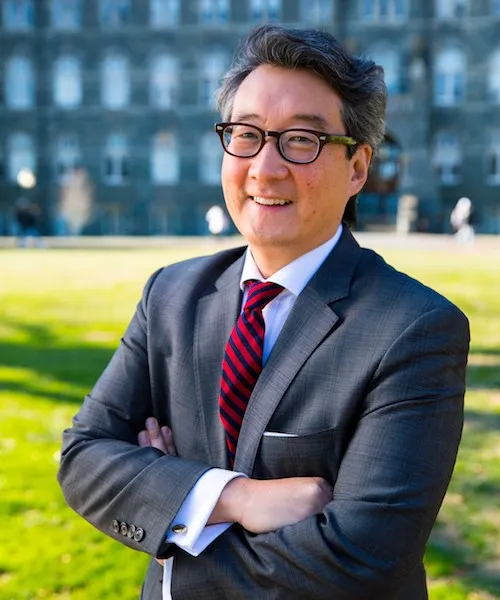
In her new book, Enduring Hostility, Dalia Dassa Kaye examines how America’s foreign-policy elite, from Reagan through Biden, have understood and shaped relations with Iran.
On Pivotal States, she joins host Christopher S. Chivvis to discuss how America's choices have contributed to the stubborn antagonism between the two countries, and what it will take to change the script.
Transcript
Note: this is a rush transcript and may contain errors.
Dalia Dassa Kaye:
Here we are in 2025 and we're still, despite President Trump saying Iran's nuclear sites were obliterated and it's over, we are still at risk of having another war with Iran.
Chris Chivvis:
In the case of Iran, we have a perfect storm of rogue-ness, an outlaw and a religious fundamentalist state all in one. How does the language that we use to talk about Iran affect our capacity to see alternative strategies for our foreign policy?
Dalia Dassa Kaye:
We've been able to overcome, even with the Soviets, right? And we have this ideological contestation on communism and so forth, but we had arms control agreements, we had diplomatic relations, we had embassies. We repaired relations with Libya, for goodness' sake, with Gaddafi. I mean, really bad guys in the world, we've dealt with. And yet with Iran, it's this really, really difficult baggage.
Chris Chivvis:
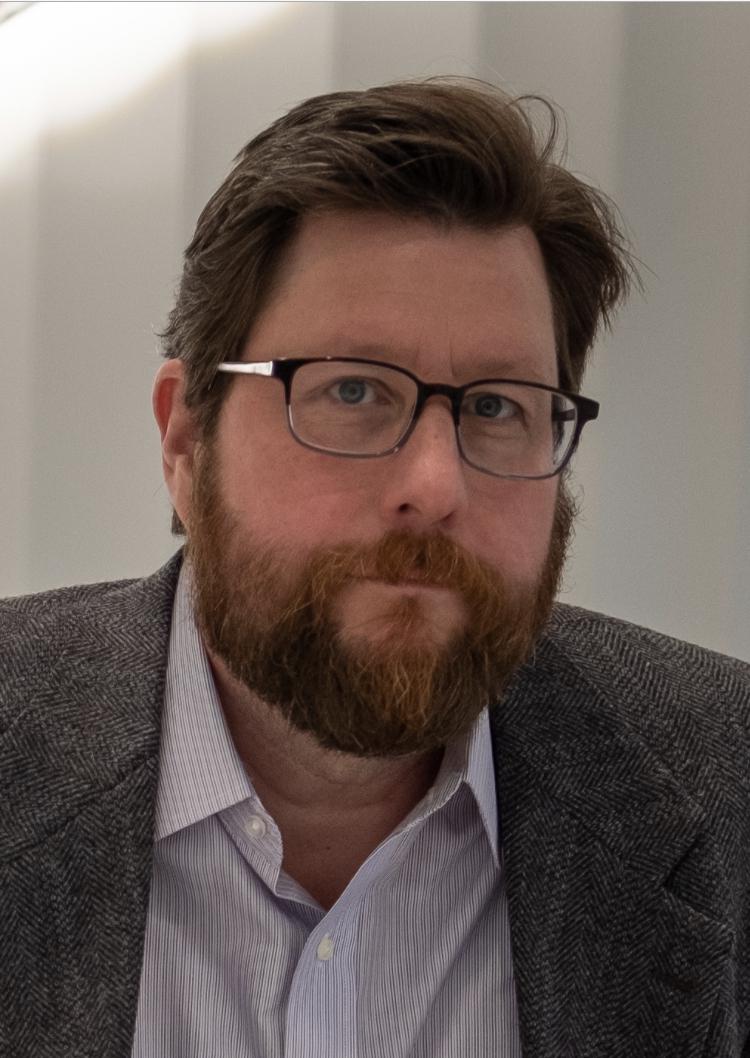
I'm Chris Chivvis. Welcome to Pivotal States, where we examine the strategic challenges and opportunities facing the future of American foreign policy. For more than four decades, the United States and Iran have sustained hostile relations. The world has changed, but US-Iran antagonism has remained a constant. In Washington, our explanation for this usually starts and ends with Tehran as the problem. But is that really the whole picture?
My guest today, Dalia Dassa Kaye, thinks it's not. Her new book, Enduring Hostility: The Making of America's Iran Policy is a history of the US approach to its biggest adversary in the Middle East. It's a story of implacable hostility that's now more than half a century deep. What I like so much about this book is that it's also a story about the pathologies of American foreign policy, a tale of how Washington can too easily get stuck in a rinse and repeat policy of sanctions, military pressure, and diplomatic isolation that lacks strategic foresight or a clear sense of where America's real interests lie.
We're going to talk about the prevailing US strategy toward Iran, what an alternative might look like, and why the United States has been so unable to have an open debate about what the right approach to this difficult relationship should be.
Dalia, welcome.
Dalia Dassa Kaye:
Thanks, Chris.
Chris Chivvis:
Congratulations on the book. I'm delighted to have you with us here on Pivotal States.
Dalia Dassa Kaye:
It's great to be here. Really a pleasure. Thanks for having me.
Chris Chivvis:
I thought we'd start by talking a little bit about your experiences working on Track 2 and Track 1.5 projects with Iran. You've been talking to officials from all over Washington, the State Department, the Pentagon, the White House, of course, but also with scores of former officials from Iran itself. I thought it would be interesting if you could recount for us if there were any moments in particular during those Track 2.0 or Track 1.5 dialogues that really struck you and really drove home the problem that we face in our relationship with Iran.
Dalia Dassa Kaye:
Yeah. Well, that's a great question to start off. I loved your opening on rinse and repeat because there's just a tendency to be on autopilot on so many policies, but certainly when it comes to US-Iran policy. And so sometimes these kinds of informal dialogues, and they happen, the Track 2 is mostly non-governmental participants, some that could be former officials, but currently non-governmental. Track 1.5 can actually involve sitting officials, usually let's say from the Gulf or American officials. And a lot of times these can be very helpful in brainstorming and getting ideas out there that are not going to happen in very rigid, official conversations.
And so that is where it really has the value where when there is a moment when there's political will, and that doesn't happen often. But when things align and there's an opening to have some kind of resolution, if you have the ideas that are kind of pre-cooked and discussed and you understand the other side's red lines and where there may be movement for compromise, that can really help. And we actually see examples where Track 2 and Track 1.5 actually did really move the ball forward when it came to US and Iran.
Chris Chivvis:
Okay, that's great. I want to talk about those. Is there a particular moment that you can recall that you want to share with us when it really drove home some of the challenges that we face?
Dalia Dassa Kaye:
The furthest that I think the US has gotten with Iran, especially on the nuclear issue or particularly on the nuclear issue, was the 2015 Iran nuclear deal. And John Kerry, the secretary of state at the time, was very forthcoming on this issue. And in fact, he participated in Track 1.5 dialogues. In fact, a non-governmental institution sponsored discussions through the UN and others that actually introduced Secretary Kerry to Iranian officials, including the Iranian foreign minister, Zarif, who ended up being really instrumental in moving those negotiations forward.
So, off the record, off-back-channel discussions can actually affect official policy if it comes at the right time. But it's really important to have those kinds of conversations to be ready when those moments strike and they don't strike often.
Chris Chivvis:
So, one thing that I think would be interesting to hear from you is just bringing it down from the 30,000-foot level to the ground floor. But just on a human level, what's it like to sit down with Iranians? I mean, we have this implacable hostility in Washington, D.C. Obviously we know Iranians here in the United States. But these are people who are from Iran who are connected with a regime that is widely vilified here in Washington and in many European countries. So, you sit down and do you speak English? Are they breathing fire at you? What's it like?
Dalia Dassa Kaye:
Well, look, there's a little bit of a self-selection process in these kinds of dialogues.
Chris Chivvis:
Okay.
Dalia Dassa Kaye:
It's not like the Iranians who show up are the hardliners of the hardliners.
Chris Chivvis:
Interesting.
Dalia Dassa Kaye:
I mean, they're the ones who are willing to engage with Americans and others around the world to have these kinds of open discussions. Now that said, if you're coming from Iran, as you say, there's plenty of Iranians in America. I live in Los Angeles, so I meet Iranians all the time, many are friends. And that's actually one of the tragedies of this whole thing. The Iranians who show up, they do need to get some permission obviously from their government. I mean, this is not a-
Chris Chivvis:
Because these meetings are usually taking place in European capitals-
Dalia Dassa Kaye:
In European capitals.
Chris Chivvis:
... or in the region in a hotel or a conference center.
Dalia Dassa Kaye:
Exactly. They're taking place in European capitals, in regional countries that have ties with Iranians. Most do, especially these days. You're sitting in hotel rooms. It's nothing that glamorous, kind of like Carnegie. Not to diminish your Carnegie round tables.
Chris Chivvis:
Business.
Dalia Dassa Kaye:
I'm sure they're very interesting.
Chris Chivvis:
They're all business.
Dalia Dassa Kaye:
All business. Lots of coffee breaks. Actually, some of the best discussions happen during the coffee breaks because that's when the informal stuff really happens. And there is kind of a humanization element. But also, it's less about that because this is more, you're talking about academics from Iran. They're in universities. Some are tied to organizations that are linked to the foreign ministry, but it is the more forward-leaning thinkers in the country that are showing up to these.
And I think they're also coming to test the climate and understand how do Americans view things? How do Europeans view things at any moment in time? So, it's a lot of back and forth to try to understand what are the domestic conversations happening in each respective environment. And it's the kind of thing you can't just get from reading a newspaper or reading a policy report, which we've all written many of them. And we'd like to think everybody loves our policy reports, and hopefully they do, and our books.
Chris Chivvis:
All 10 people who read them.
Dalia Dassa Kaye:
All 10 people, but no, we love Carnegie, great reports. But the truth is when you're just sitting like we are face to face and you're like, "Oh, here's what my family's facing," or, "Here is what the newspapers, here's what we're hearing from the hardliners, this is the constraints we're going to face." We talk about, "Here's the climate in Washington, this congressman is saying this and this one's that, and this is the climate right now and here's where we think ..." That really can be excellent brainstorming.
Chris Chivvis:
So, it sounds like these Track 2 discussions that you've been so deeply involved in doing at least three things. One is to sort of explore what the real edges of negotiating positions might be, where there might be room for compromise on the big issues that we face with Iran, like Iran's nuclear program. The second and I think you referred to this, but tell me more if not, is resolving crises when they arise. Because there are moments in the US-Iran relationship where things get really dangerous, where we're all concerned that violence could spiral out of control. And so, these kinds of connections that you're talking about, it's almost like a back channel, I mean it is a back channel of a kind to try and share information. And then the third one, which you've referred to a couple of times, is the humanization of the enemy, which is something that I think is also important.
Is that about right? Are those the sort of main categories?
Dalia Dassa Kaye:
I think it is. I think that's very good characterization. I would just not overplay though, the unofficial channels having as direct an impact, let's say in crisis resolution. That's going to happen more at best in the Track 1.5 or true back channels. So, part of what Track 2 is it opens up the space to do that and especially generate some of the more innovative ideas that can seep into Track 1. But to really resolve crises to prevent unwanted escalation because while there's been a lot of intentional escalation, there's a lot of unintentional moments too where things can get out of control. That is where you need officials talking to each other.
And this is one of the biggest challenges with US and Iran of not having direct dialogue. I mean, we're back to the same situation again. Hopefully there's some indication we're moving back to direct, but it's still back to the indirect. At times it's been the US that prefer the indirect. At times it's the Iranians who prefer the indirect for different reasons in their domestic context. But as I think Yitzhak Rabin rightly said many, many years ago, "You don't make peace with your friends, you make peace with your enemies. And to do that, you need to talk to them."
Chris Chivvis:
You need to talk to them, but we don't talk to the Iranians, which is why this kind of exercise that you've been involved in seems to me to be so important.
As you can see, I am very interested and supportive of the efforts that you've made. I think doing Track 2, Track 1.5 with a country like Iran is really important. It's hard work. And as you alluded to earlier, it doesn't always yield results. What do you say to the criticism that I've heard a lot about these kind of discussions that says, "Aren't they just using you for this? I mean, aren't those of us who think that it's a good idea to talk to Iranians or other countries, talk to Chinese, talk to Russians, aren't we just gullible? Aren't we just having the wool pulled over our eyes? Why would an adversary like that, one of America's main enemies want to actually engage in a serious discussion with someone like us?"
Dalia Dassa Kaye:
Well, I think you're not really going to advance your own country's national interest if you don't understand what's driving that adversary. What are the motivations behind why they're doing the bad things that you don't like them doing? And so, it's really, and this reflects larger issues in how we think about foreign policy, this idea that talking to your adversary is a concession, that you're making a concession already by doing that.
Chris Chivvis:
It's a gift.
Dalia Dassa Kaye:
It's a gift. It's really actually a benefit for us, because then we start understanding what are the dynamics in that country, and then we can formulate more rational policies to try to advance our interests and resolve conflicts.
I think the people who engage in these kinds of discussions understand that you need to demystify the so-called enemy. And you need to break down what does that really mean at a human level and discuss it at a policy level. But again, I don't want to personally take credit for Track 2, that this is going to be the game-changer moving forward. Because ultimately, you need officials in Washington, in Tehran to understand that they need to think about how to engage directly and resolve conflicts, and they have to be open to the ideas that may be generated in some of these informal channels. And that is the most difficult nut to crack.
Chris Chivvis:
Great. I want to talk about US strategy towards Iran because that's really at the core of your book, what we've got right, what we've got wrong. And then I want to go on to talk about why the United States approaches Iran in the way that it does, why the “blob,” as we often call it, finds it so hard to change in its approach and thinking about Iran. Because I think the pathologies of the “blob” are particularly strong in the case of Iran.
But before we do that, I think we got to talk about Iran itself. I mean, you mentioned a couple of minutes ago, why is Iran doing the bad things that it's doing? We got to be pretty clear. I don't want to gloss over the fact that Iran does a lot of bad things that are not good for the United States, for our allies, or for its own people. I'm talking about obviously human rights, the role that they allow women to play in their society. They have got a nuclear program. They are destabilizing the region in some ways. And their rhetoric on the United States and on Israel is really despicable. So, I just want to give you an opportunity to talk a little bit about that before we go into the problems that we have on our own side.
Dalia Dassa Kaye:
Of course, the Iranians since 1979, starting with taking our hostages at the embassy for 444 days, moving to the Marine barrack bombing in 1983, every decade has one of these incidents. The '90s, the Khobar Tower bombing. In the 2000s, after the Iraq War invasion by the United States, constant IED attacks by Iranian-supported militia forces, killing American military personnel in very large numbers. I mean, this has been a direct conflict. The tanker war, we went back and forth, and up to the present day with the tit-for-tat since the Gaza War leading to the episode we saw last June.
And this is aside from a lot of the other activities that go on by militia forces, especially Hezbollah, since its founding by the Iranians in the early '80s where some of these incidents were instigated by these militia forces, but they have killed Americans. So, it's they've hurt our partners, they've killed Americans, they have supported groups and engaged in terrorism. There's still transnational repression. There's repression at home. The Mahsa Amini protests were particularly, I think, a momentous event in 2022. All of these things create a lot of baggage.
So, one of the things that I do in this book is say, "Yeah, that's a big part of the story." It's actually the story that's most well-known and affects our psyche in the United States of how we look at these mad mullahs, so to speak, this malign, abnormal, rogue government whatever word of the day you want to use, because they do a lot of things to justify that. But the point is, it's only part of the story.
And so, the idea is there's also been barriers on the US side as well. And so that is what the book is really trying to uncover, the American side of the story. It's – how do we react if we just continue the same strategy, you mentioned strategy, of containment, isolation, pressure, no matter what happens in Iran, no matter what they're doing or not doing at any given time? And we keep doing the same thing again and getting bad results, isn't that what they say the definition of insanity is, right?
Chris Chivvis:
Completely.
Dalia Dassa Kaye:
So that's the dilemma.
Chris Chivvis:
Let's unpack that. That's what I want to talk about. So let me start by asking you if you could give your elevator speech version of what US strategy toward Iran over the course of the last 50 years has been. And then I want to get into unpacking the different elements of it. But just basically, how would you characterize the baseline policy of America towards Iran?
Dalia Dassa Kaye:
Actually, it's really short, which is it's mostly been a pressure campaign, economic and military. It's basically containment, isolation, diplomatically and economically. That's essentially, with a few detours of some dialogue and some ratcheting down of tensions. In the book, I liken that to bends in a river, moving basically in that kind of pressure, containment direction.
Chris Chivvis:
So just again, at a basic level, let's unpack each of those elements a little bit. So, when we talk about military pressure, we're talking about strikes on Iran, we're talking about strikes on Iranian officials. Is that what you mean?
Dalia Dassa Kaye:
Well, okay. Over the years it's changed. I mean, you had in the 1980s, direct military pressure. So actually, this was during the tanker war in the late 1980s. One of the big issues of contention, the nuclear has been the big issue since the early 2000s. But before that and since that, the issue of Iran's threat to global maritime traffic and energy supplies has been a huge factor influencing the way the US is looking at Iran and frankly the world looking at Iran. We also did a very major cyber-attack, the famous Stuxnet attack that was during the Obama administration.
Chris Chivvis:
Beyond Reagan, Stuxnet, what other military actions have we conducted against Iran?
Dalia Dassa Kaye:
Well, the most obvious ones were actually during the various Trump terms. So, first Trump administration, the US killed General Qasem Soleimani, which is the head of the IRGC. This is a revolutionary guards force. This is a very, very dangerous element of Iran's military, not its conventional military, military kind of designed for regime protection. It was a direct strike killing him in Iraq on an airfield. So that was very dramatic.
And then of course, the most dramatic was just over this past year in June 25, when the United States joined the Israeli attack and struck, used B-2 bombers, very, very much elevating the military component of the confrontation to significantly destroy very hardened nuclear sites within Iran itself. So, until the current war in June, actually the US, and in the tanker war, we hit oil platforms, but the US never struck in Iran directly. This war has not been on each other's territory. It's been played out all over the world, assassinations, terrorism, bombings, through militias and so forth. But there's been a real hesitancy on both sides to do direct.
Chris Chivvis:
Right. It changes the situation to some degree. But even though there haven't been that many direct strikes by the United States on Iran, there is the reality of American military power in the region, which has always been substantial and then obviously grew even more substantial after the 9/11 attacks.
Dalia Dassa Kaye:
Yeah, they do have a sense of being encircled by the United States. I mean, the US has had a very large force presence in the Middle East since the 9/11 attacks. In fact, traditionally the US did not have a very large force presence. It was kind of offshore and so forth. Since 9/11, and then since the great power competition framing starting in Obama, the idea was the US was going to move out of the region a little bit. Well, that hasn't exactly happened. And Iran is a big reason why the US keeps a lot of forces still based in the region.
Chris Chivvis:
Let's move to the economic angle because you also mentioned in your summary of US approach to Iran that we've used a lot of economic pressure. Iran is one of the most sanctioned regimes, countries in the world right now. I don't know exactly how you measure the difference between Russia and Iran at this point, or Venezuela.
Dalia Dassa Kaye:
Look, sanctions have become the default policy in the United States because when we don't like what a country's doing, and we don't want to-
Chris Chivvis:
We sanction them.
Dalia Dassa Kaye:
Yeah, and we don't want to go to war. So, it's like the default, right? Okay, economic.
Chris Chivvis:
Despite the fact that there's an enormous amount of academic literature out there now that says that they almost never achieve their strategic objectives.
Dalia Dassa Kaye:
Exactly. It's mind-boggling. And not only don't they achieve the strategic objective, they hurt people. They hurt people we don't want to hurt, like people who could be more on our side, people within countries. Average Iranians often get hurt by these sanctions, especially the secondary sanctions where we punish other countries for not doing business. So, Iran is moving very close to China and Russia. So, what happens is these countries find workarounds. And then the wrong people benefit like the IRGC. They benefit from workarounds.
Chris Chivvis:
They get rich from our sanctions.
Dalia Dassa Kaye:
Yeah.
Chris Chivvis:
Our biggest enemy within Iran is making a lot of money off of sanctions.
Dalia Dassa Kaye:
They make money off of this. So, it's not to say that you shouldn't have this tool. Every tool is important, and we don't want to go to war against every country and diplomacy's not always going to solve everything. But diplomacy is often looked at as last resort or conciliatory instead of ... So economic sanctions are looked at as this convenient default because it's like the middle ground option. And unfortunately, it hasn't proven effective in many cases and certainly not with Iran.
But I will say that when you got the sanctions truly global, and this really happened toward the end of the first Obama administration where you got UN Security Council Resolution 1929, where you got the Russians, the Chinese, everybody agreeing this nuclear issue had to be resolved in Iran. That is when a country can start really feeling the pressure and you may be able to get more movement. So again, I think sanctions are a very mixed bag. More often than not, they're counterproductive. But the big lesson is you do need international support. You can't just do this unilaterally.
Chris Chivvis:
So, one of the things that I like about your book, Dalia, is that you go through seven US presidents' policies towards Iran and you point to some moments in which things might have turned in a more positive direction in the relationship but did not. I mean, you talk about, for example, the fact that the Reagan administration was at least considering trying to keep Iran out of the orbit of the Soviet Union during the Cold War.
You talk about how, after the 9/11 attacks, Iran was actually appearing to be a constructive partner in our efforts in Afghanistan, but that that opening got shut down because of the axis of evil speech that President Bush gave in early 2002. You talk about how the Biden administration more recently did not return to JCPOA, the Iran nuclear deal, something that many of us, including, I was in the government still at the time, expected it to do, but it did not.
Can you sort of walk through why in maybe one or two of those cases, the United States just didn't take the opportunity that was there?
Dalia Dassa Kaye:
Yeah. I think it is one of the more puzzling issues because you can make a strategic case. Those of us in the policy business, you can come up with lots of rational reasons things should happen, right?
Chris Chivvis:
Right.
Dalia Dassa Kaye:
So, every strategic era, there was a good strategic argument that we should rethink the way we're dealing with the Iranians. Not only was there good strategic logic, but there were people behind it. So, what's really interesting is we talk about Iranian factions all the time, like their hardliners, their moderates, their reformists, and so forth. We often don't acknowledge we have our own factions in the United States. And every administration, some more than others, you see a lot of internal battles about how to deal with Iran and what we should do.
And so, I think just a couple of the ones you had mentioned, Ryan Crocker, who I interview a bit for the book, was involved in the Afghanistan episode. So, he was one of the earliest US officials to engage with Iranians, not just foreign ministry officials, but the hard-line guys who really were calling the shots on the ground. And because the Taliban was also an Iranian enemy, they have an ambiguous relationship, but let's just say our interest aligned when it came to Afghanistan. So, there was room for cooperation on trying to create a post-Taliban government.
And so, the Iranians were making all kinds of offers, maybe even they could help fund the new Afghan army, and they were actually, during the war, helping with identifying troop locations of the Taliban where the US could strike, almost like operational help, showing maps to Ambassador Crocker. So there's a lot of stuff going on, and he does believe, Ryan Crocker, that it's not that no cooperation happened after that axis of evil speech, but there was that sense of, very noticeably, the Iranians lowered the level of their delegation after that, and they were not able to make the same progress.
And Ambassador Crocker talks about how there were factions within the administration who were vehemently opposed. These are better known as neoconservatives. They were very, very hawkish on Iran. They were the ones who thought the Iranian regime would fall after Iraq. And that ultimately, we didn't talk about strategy, but underlying US strategy for some corners in Washington is regime change. It's not just about containment, but it's containment and pressure to eventually lead to the demise of the Islamic Republic.
So, there were factions vehemently opposed. I mean, Ryan Crocker, he described incidents where he would fly out of Washington on Friday night and get to a European capital, talk to the Iranians and get back by Sunday night so nobody would notice he was out of the office and didn't put anything on paper just because he knew the battles he would have to face in Washington of those who were trying to undercut the engagement. So that's just one example.
Then in the Biden administration, it's interesting because you were talking about how you were in it and you were surprised. Well, I talked to Biden administration officials who were closely working on these kinds of files and they themselves were surprised at how, as one put it to me, Biden wasn't into his own policy. I mean, a lot of us on the outside, the way President Biden was talking on the campaign trail and early on, he was a big proponent of non-proliferation. This was a high priority for him, a high priority to get back in this nuclear deal. He was vice president during the Obama administration when this deal was struck. It was an international agreement supported by our European partners, even supported by Russia and China.
So, it seemed like it was going to be a high priority, but what happened was domestic politics got in the way. And this is a story you see again and again in the US system. It's not just that we frame the Iranians as so abnormal and rogue that we can't deal with them and it raises the political cost of dealing with them. But it's also just the incentives for doing so are reduced because who wants to take that political hit?
So, with Biden, when he came in, the high priority was getting confirmations in Congress through. And he needed Democratic senators like Bob Menendez to confirm his lead appointees. And those guys were not in favor of the Iran nuclear deal. And in the end, it just didn't become the priority. And then the administration did move to talks by the spring of '21, but a lot of people feel that those first few months when he quickly turned around the Paris Agreement on climate and so forth, that was the moment to quickly turn the tide and deal with the very difficult issues of getting back in the deal. And they were difficult, but the political will was not as strong as you would have thought. And a lot of that had to do with domestic political considerations.
Chris Chivvis:
And I want to talk about that. But before we go to dig into the pathologies of the blob in Washington when it comes to Iran, I want to ask you. So, we have this sort of rinse and repeat strategy with Iran, military pressure, diplomatic isolation, sanctions. We've been doing it now for decades. How would you assess the results that we've gotten in relation to what our interests are?
Dalia Dassa Kaye:
Well, very poor. I mean, here we are in 2025 and we're still, despite President Trump saying Iran's nuclear sites were obliterated and it's over, we are still at risk of having another war with Iran. How is that success? So, I think the record speaks for itself that despite these openings, even the nuclear deal, frankly, which I was supportive of because it was important to contain the issue, it wasn't going to solve everything, it wasn't a transformative agreement.
And even those who were backing the nuclear deal in the Democratic Party even, leading voices were basically saying, "Let's do this, but now let's hit Iran really hard in other areas." So, it wasn't like, "Let's use this for an opening to see if we can try to change the overall dynamic in US-Iran relations." It's like, "Okay, let's contain them here so that we can hit them harder on other fronts, missiles and so forth, and really keep the pressure up."
So, there was really no change of strategy. And ultimately, when Trump withdrew from the nuclear deal in 2018, we were back to Iranian attacks in the Persian Gulf. We're back to the cycle of escalation.
Chris Chivvis:
Iran is still pursuing a nuclear program.
Dalia Dassa Kaye:
They’ve advanced the nuclear program.
Chris Chivvis:
Relations with other countries in the region are bad.
Dalia Dassa Kaye:
Yeah.
Chris Chivvis:
The human rights situation in Iran is not getting better. Many of the things that we would like to see have not been achieved despite the strategy that we've pursued.
Dalia Dassa Kaye:
Absolutely. I mean, the relations actually with countries in the region are an interesting outlier to that, but that's not because of things the US has done.
Chris Chivvis:
Not because of the United States. Okay.
Dalia Dassa Kaye:
There has been repairing of relations between Iran and its Gulf-
Chris Chivvis:
Because of their own efforts and to some degree, the intervention of other countries.
Dalia Dassa Kaye:
Well, mostly intervention and mediators in the region who don't really want war because war is not good for business. So mostly this has been about the Saudis and others who basically are saying, "We don't want to keep getting attacked because of this US-Iran and US-Iran-Israel tension. So, we're going to protect ourselves, start normalizing with Iran, cutting our own deals." But that's not as a result of the things we're doing.
It's interesting and it's been positive, but in terms of our main goals, nuclear, repression, so forth, it's gotten worse. Repression is horrendous right now in Iran. The nuclear issue, yes, a lot has been destroyed in the June attack. It was very devastating, no question about it, but the knowhow is still there.
Iranians were enriching to 60% levels before, at the time of the June strike. The nuclear agreement in 2015 capped it at 3.67. This is a huge transgression. The amounts of enriched uranium are significantly greater. And there's a big chunk, I think it's like 400 kilograms is the amount of 60% enriched uranium that's still buried somewhere under those sites that were struck. And there's reports that new enrichment sites may be developing. It's not clear. And Iran is trying to recoup its missile capability, which is extremely worrying. The story's not over. So, I don't see how we could say this has been successful.
Chris Chivvis:
Okay. So given that sad assessment-
Dalia Dassa Kaye:
Sorry.
Chris Chivvis:
... of how successful our foreign policy has been with Iran, we need to ask why it is that we persist in this path. And I'll say that one of the issues that we've focused on in my program here in the American Statecraft Program at Carnegie is the question of strategic change, how US foreign policy can do big shifts in its attitudes and practices and strategies towards key challenges in the world. We did a study, we looked at five major cases of strategic change, and it really just underscored for me how difficult it is to get Washington, once a consensus is formed around a particular approach, to change that approach.
You write in your book that “it's them, not us. The narrative is practically sacrosanct in Washington. Arguing otherwise, in other words, arguing against the consensus view on Iran constitutes a foreign policy version of heresy. Even arguing it's both of us, as this book does, your book in other words, is a bridge too far for some.” And you say, "This is not a healthy state of affairs when it comes to dealing with a critical foreign policy challenge like Iran. Any chance of improving adversarial relationships requires honest and open debates and reflection of policy choices and actions on all sides." Can you talk a little bit more about that and what's really holding us up here in Washington?
Dalia Dassa Kaye:
Yeah, thanks. I forgot my own words. Thank you. The Iranians don't help because they just keep doing things like sending drones to Ukraine or Mahsa Amini and so forth. So that feeds the ... But even before those things were happening, like the early Biden months example suggest, there is this sense that there's nothing to win politically by advocating to do, I don't want to say nice things with Iran but test the waters with Iran. It's a very politically toxic issue. It's a political football at Washington. There's nothing to gain.
Chris Chivvis:
Especially if you've already taken the position that Iran is evil and you're out there on the record with the-
Dalia Dassa Kaye:
Right, and unchangeable.
Chris Chivvis:
Sure, yeah. To take a different position exposes you to all kinds of criticisms of you're waffling or you've gone soft or-
Dalia Dassa Kaye:
Yeah, that you're an apologist for the regime, again, this idea that talking and engagement and diplomacy is a concession showing weakness. This has been an ongoing problem in US foreign policy, which I think this Iran case exemplifies, but it's also-
Chris Chivvis:
But it just pushes us back again and again to overuse of the military and economic sanctions tools.
Dalia Dassa Kaye:
Yes.
Chris Chivvis:
Those are important pieces of the puzzle, but not if it means that we never try to do diplomacy.
Dalia Dassa Kaye:
Well, also because in the Iran case, and probably others as well, in some of the cases you looked at in your report, it precludes or it favors these other tools. But also, if you have an image of your adversary that no matter what you do it won't matter because they're unchanging and they're going to be hostile regardless. And that is the mindset when it comes to Iran. They're this monolith. I mean, of course, this is why there are debates in the US and policymakers because not everybody looks at Iran this way.
Chris Chivvis:
Of course.
Dalia Dassa Kaye:
But the prevailing consensus that tends to dominate the outcomes is-
Chris Chivvis:
What's the point of diplomacy? They are what they are.
Dalia Dassa Kaye:
... what's the point? Why would we expend political capital when it's not going to help and they're going to keep doing the bad things? That's just going to burn us. So again, when you're having internal policy debates, there was one time when I interviewed Dennis Ross for this book as well, and he comes up a number of times in the story. And he even on record talks about a principals meeting during Obama administration in the first term where-
Chris Chivvis:
It's a high-level cabinet meeting.
Dalia Dassa Kaye:
High level cabinet meeting. And he is known to be more on the hawkish side. He has kind of a mixed record himself when it comes to this issue, but he argues that he has always pressed for a dual approach, test diplomacy, but hit them hard. It's always like, "Hit them hard. It's only way it's going to work."
But he was arguing when he was raising the idea of outreach to Iran in a very high-level meeting, it was almost like the principals were competing – President Obama himself, Hillary Clinton, as secretary of state, others, competing for who could look tougher in Iran. What would be the chance they were coming around? What would be the chance of success of diplomacy? And I think Hillary Clinton put it like 10% and Obama put it maybe, I don't remember the percentages.
Leaders matter. Mindsets matter. So, when you have this conventional view, you have a political incentive process, change is hard in foreign policy. It's very hard. So, you need a lot of political will, and you need leaders who are really going to push the envelope and very rarely does that happen.
Chris Chivvis:
So there is this sense that you can't win by being anything but a hawk on Iran, but that pressure is coming from context in which there's different groups, forces, allies that are pushing the United States in this direction and making it very costly for anyone who would, well, not anyone, but for people who would start to talk about detente with Iran or moving in a different direction. So, can you talk a little bit about that milieu in which we are having this conversation?
Dalia Dassa Kaye:
Yeah. It is very difficult to break the norm. So those who were advocating for the Iran nuclear deal really did face a lot of critique and pushback, and it got very personal and nasty. I mean, it's to the extent that foreign policy professionals sometimes worry about saying things because they're not sure they could get confirmed if they want a position in the future. So, it's a very warped-
Chris Chivvis:
So, you have careerism. This is obviously one of the things, right?
Dalia Dassa Kaye:
You have careerism, which is one of them. Part of it is that, but you really did see it with the Iran nuclear deal where a lot of that came up. And you mentioned others pushing this. Well, in that case, it was very obvious that Israel was opposed to the nuclear deal. So, they were the major power in the region, and the Gulf states didn't love it either. They came around to accept it and now they're very much in favor of diplomacy, but in those days, they were also tentative, less because of the nuclear and more because of Iran's support from militia groups that were of concern to them.
But the Israelis were, I think, the most forward-leaning and it's not like a secret because you had the Prime Minister of Israel, Benjamin Netanyahu coming to the US Congress arguing against the policy of a sitting American president to try to undermine him. He politicized the issue to an extent we have never seen in the US system. So, it was a very, very big push from Israel, from the pro-Israel lobby in Washington, really lobbying very heavily against the deal.
What's interesting is it didn't work. So, in the book, I talk about Israel in every strategic era because they do play a big role. And there are some arguments out there that, "Oh, you want to understand US-Iran policy? It's Israel. It's because Israel is threatened by Iran. Iran wants to destroy Israel and that's driving the US." But actually, if you look over the evidence, and I'm not saying Israel doesn't play a big role, the example of the Iran deal shows that, but in every area you can find examples of Israeli policy preferences often did not win the day. You can't just pin the blame, "Oh, it's Israel that explains this." It's homegrown. It's a thing happening here.
And when it came to the Iran nuclear deal, despite this incredibly forceful lobby effort and opposition from Israel, Congress could not overturn, and the deal went through. And President Obama in his second term, maybe willing to take more political risks. So, I think it's a very important illustration that US-Iran policy is not being driven from outside.
Chris Chivvis:
Coming back to the factors that are driving the United States to continue to avoid having what you call an open debate about our Iran strategy, what about bureaucratic actors? It's tempting to say that the Pentagon is part of the issue here, although I wonder if that would be a bit of an oversimplification at least, because certainly you have a growing movement by some parts of the Pentagon to shift resources to the Indo-Pacific. And we've seen that going on. And I think many of those people, including at senior levels, would like to reduce our focus on the Middle East.
Now that said, you also have the fact that there is a very strong group of officers and civilians who have spent the last 20 years, or at least spent 20 years after the 9/11 attacks working on Middle East issues, believe very strongly that the United States has a vocation there, and I could see putting up a fair amount of resistance to the idea of some kind of a detente with Iran.
Dalia Dassa Kaye:
I think this issue – I deal with a little bit of the final chapter can't just be neatly attributed to bureaucratic differences. The Pentagon is hawkish, State Department, soft diplomats. You see hardliners, our own hawks, and our own moderates within bureaucracies. I mean, the Pentagon, obviously they're the ones in the line of fire. US military personnel, as I mentioned, have been killed because of Iranian actions, but so have US diplomats. And US diplomats were held hostage from the outset of the revolution.
So again, I think it's the way personalities react. Some of these actors have been involved in Track 2. It's given them a different sense. Others have just seen what the Iranians are capable of. And so it's really hard to predict it based on bureaucratic politics, but the overall context of this kind of, it doesn't pay to deal with Iran affects things more. And that's really coming from the executive branch, it's coming from Congress.
So, they take these inputs, but you have the factional fighting within certain bureaucracies as well. Same with State Department: not everyone at the State Department is in favor of diplomacy. Some are, some aren't. I think there is an overall opportunity right now in the sense that there is fatigue with fighting and so forth, that ratcheting down tensions with Iran would be beneficial, deescalation would be beneficial. But I think that's across bureaucracies.
Chris Chivvis:
One final point that I think we should touch on when it comes to understanding the pathologies of Washington's foreign policymaking and strategy with Iran is the language that we use. You talk about this some. You write, "Seeing Iran as a rogue or outlaw state feeds into frames viewing Iran as an irrational rule breaking state outside the bounds of international norms of how states are supposed to behave, even by the standards of other 'abnormal states,' Iran stands out."
And then you go on to say, "In the case of Iran, we have a perfect storm of rogueness, an outlaw and a religious fundamentalist state all in one." How does the language that we use to talk about Iran affect our capacity to see alternative strategies for our foreign policy?
Dalia Dassa Kaye:
I think it's very much constrained. I'm a big believer that words matter, language matters, framing matters, how leaders frame things. And when you do it so consistently for nearly half a century now. And Iran makes it easy to do it because they are this fundamentalist Islamic regime.
Chris Chivvis:
They do a lot of bad things.
Dalia Dassa Kaye:
They do a lot of bad things, so they feed into this frame. So, as you say, rinse and repeat, the frame has repeated itself. But if you really look at the discourse in Iran, there are leaders and thinkers who are, and you're seeing it right now with how little the so-called resistance strategy has served Iran. They're not doing very well at the moment.
Chris Chivvis:
Right. That's not working great either. Yeah.
Dalia Dassa Kaye:
So, there's a lot of folks in Iran saying, "Maybe we need a different approach with America. Maybe this isn't working so well. Maybe we should rethink what we're doing." But you can't catch those signals the same way when our repeated frames are, it doesn't matter what we do, they're still going to be bad. They're going to be this malign, abnormal. And because there's the religious aspect and they violate international law, that's the perfect rogueness I'm talking about.
And again, this is part of the puzzle that drove me to this book is that we've been able to overcome, even with the Soviets, right? And we have this ideological contestation on communism and so forth, but we had arms control agreements, we had diplomatic relations, we had embassies. We repaired relations with Libya for goodness' sake, with Gaddafi. I mean, really bad guys in the world, we've dealt with. And yet with Iran, it's this really, really difficult baggage. And I think the language over time has really affected us.
Chris Chivvis:
Not all of our allies in the region are perfect. I mean, let's be honest about that. So, I think that's just something that we should perhaps think about more often and seriously than we do.
Okay, let's go on to what a better strategy would look like by way of conclusion. So, we've already referred to maybe where your thinking is on this a little bit but just flesh it out. And again, in a summary form, what do you think a better strategy might be?
Dalia Dassa Kaye:
Well, what I suggest in the book is we need a detente. We need to be realistic. We're not going to have full normalization overnight given this legacy that we have. But I do think there are openings, part of what I said earlier about the kind of debates within Iran itself that we could capitalize on but also debates here in Washington about whether this strategy has served us. It's not hypothetical, we've had moments. In fact, before the October 7th Hamas attacks in Israel, there was a deescalation kind of arrangement between the Biden administration and the Iranians. It was negotiated indirectly, but there were talks before October 7th and then literally everything blew up. But there were talks about the US engaging Iranian officials directly at that time. We have similar talk right now.
And the idea was, okay, you're not going to have a full agreement on things, but let's just have caps on the nuclear, let's release some prisoners. Let's just start creating some momentum. I think that's possible, getting to non-aggression pacts. Obviously, the Iranians are very interested in survival and not getting attacked again. And so, we can play on that. And my view is, let's face it, as Americans and those in the free world, of course, and for the people of Iran, it would be a good thing if eventually the Islamic Republic of Iran fell. Who doesn't want that? But the idea that you can actively orchestrate that is not going to happen. We've seen what regime change looks like. It doesn't work.
Chris Chivvis:
It doesn't work.
Dalia Dassa Kaye:
So, what we could do though, my view is the more you engage, the more you have detente, the more you're dealing normally, that is more likely to spark the internal debates and pressure within Iran for change. I think that's our best bet. So, to me, more diplomatic engagement, more thawing, more figuring out where is the space where we can agree to at least not be killing each other anymore, try to prevent future military conflict first and foremost, start thinking about easing economic sanctions. That is all part of what a detente package looks like. We have a blueprint for how to do this type of thing with former adversaries. Why are we not pressing that kind of blueprint with Iran?
Chris Chivvis:
There is a lot of speculation about the possibility that America's approach to Israel might shift some in the coming years. I wonder if that would have some kind of an impact on this or whether potentially a new president who has very different views from the mainstream views that we've been talking about would have the capacity to at least consider new strategies and potentially implement them. I'm not sure that he or she would, but I think it's worth asking.
Dalia Dassa Kaye:
Yeah, it's worth asking. But again, I think that's why the Israel thing is probably not the make or break it. I think it's more about what the thinking is in Washington more geopolitically and globally and so forth, and our own political tolerance for what we can take on Iran. And the Iranians are going to have to act in ways that give us something to work with. So that I think is going to be the most decisive factor.
Israel, ultimately, will adapt to where the US is going. I think this idea that we're going to push it, I think there's more adaptation by the Israelis than recognized. And as we saw with the nuclear deal, ultimately, they did adapt to that reality. And it was President Trump – they were pushing on an open door – it was Trump who decided to leave the deal. So, I think, yes, there's potential for spoiling, but right now we're not even at the point where there's anything to spoil. So, we got to get to the point where there's actually some traction on a diplomatic track and we're just not there yet.
Chris Chivvis:
What do you think it would take for the US to change its approach? In other words, we've talked about what the barriers are to having a more open debate about Iran strategy. Are we talking about a big shock to the system, things getting even worse before people start to consider alternatives to the strategy that we pursued?
Dalia Dassa Kaye:
Well, certainly I think if another war with Iran breaks out, that's going to lead to a lot. We've seen historically wars often lead to rethinking strategically.
Chris Chivvis:
Sure.
Dalia Dassa Kaye:
Maybe your study showed that when there was a breakthrough.
Chris Chivvis:
There is evidence of this.
Dalia Dassa Kaye:
Unfortunately, conflict is a force-
Chris Chivvis:
Preferably, you don't have the war before you do the rethinking.
Dalia Dassa Kaye:
Exactly. But unfortunately-
Chris Chivvis:
But that can be hard.
Dalia Dassa Kaye:
... it's very hard to do that. But we have had conflict. So, I think what you're going to need is you're going to need people who think differently. Some people are arguing Trump's this big disruptor, maybe that's what it takes. The problem with President Trump is that he is so erratic. There is no national security process right now to change. There's no national security process at all at the moment, to be honest. He sends mixed messages, one day I want a deal, then he bombs. I mean, it's just-
Chris Chivvis:
That was a real flip-flop.
Dalia Dassa Kaye:
It's a flip-flop. And it's also he's driven by domestic as I'm arguing in the book, all administrations, domestic politics infringe on really good strategic thinking on Iran, but President Trump in particular is driven by domestic calculus. So, for him, it could be like, "Oh great, if there's a deal, if it's working, maybe. But if we think the Islamic Republic's about to fall, wouldn't I like to take credit for that as the only president in US history who could lead-
Chris Chivvis:
Yeah, it's interesting. It's like this loose hinge in his foreign policy.
Dalia Dassa Kaye:
So, I don't hold a lot of faith in the people in this administration thinking like that, but I think we're going to have to eventually see a different mindset in Washington. We're going to have to see different leaders. And I think if there's a big change in Iran where there's really like a very obvious interest in engaging Washington in a different way, really ratcheting down and malicious and so forth, I think the missiles will be hard, but I think people in Washington will take notice. It will help, but it's not going to be enough.
The thing going, I think, for diplomacy now and rethinking is that Iran's regional neighbors really want to calm the waters. They really want to push diplomacy forward and they're very influential at the moment. So that could be a source for change. The fact that the neighborhood is much more interested. Ultimately, you're going to have to have Israelis thinking differently about Iran as well, I think. But again, it's not something that's going to happen overnight. This could be – unfortunately continuing to be a generational issue.
Chris Chivvis:
This is one of the most vexing challenges in American foreign policy, which is saying something. I really am glad that you wrote this book, and I appreciate you coming to talk to us on Pivotal States today.
Dalia Dassa Kaye:
Thanks, Chris. It was a lot of fun. Thanks.
Chris Chivvis:
This has been Pivotal States, and I'm Chris Chivvis of the Carnegie Endowment for International Peace. I've been talking with Dalia Dassa Kaye, who's the author of a new book on the pathologies of American policy toward one of its most implacable enemies, Iran.
If you enjoyed this episode, please like it on YouTube, Spotify, or wherever you get your podcasts. Also, check out our other cool things we're doing on our website for the American Statecraft Program here at the Carnegie Endowment.