President Trump campaigned on peace. Yet, for months, he expanded America’s military presence in the Caribbean to its largest since the Cold War. Just days into 2026, Trump had Venezuelan President Nicolás Maduro captured and taken to a New York prison. Trump claims the United States will “run the country” until a proper transition takes place. Now the world’s left wondering what that means and what comes next.
What are U.S. national interests in Venezuela in the first place? What does the United States stand to gain from a policy of maximizing control over Venezuela? And how does the U.S. operation in Venezuela impact the region, and even world order?
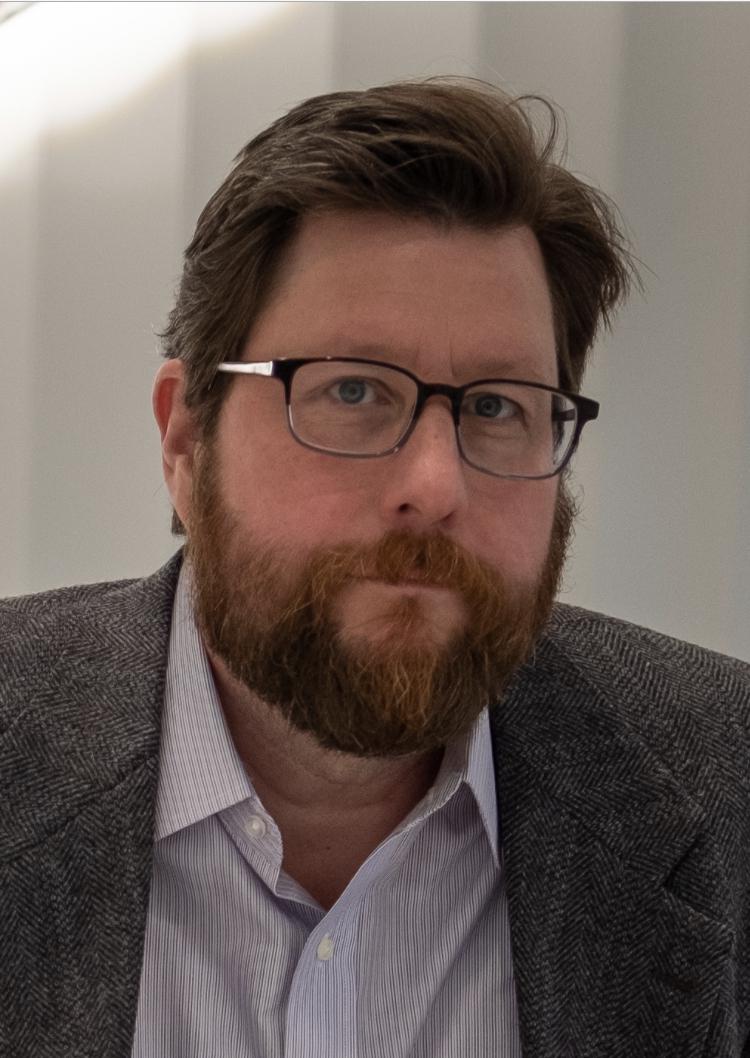
To explore the consequences for the United States, Latin America, and the world, Christopher S. Chivvis is joined by Oliver Stuenkel, a Senior Fellow at the Carnegie Endowment for International Peace and Associate Professor of International Relations at Fundação Getulio Vargas (FGV) in São Paulo.
Transcript
Note: this is a rush transcript and may contain errors.
Oliver Stuenkel
From a Latin American point of view, the language used by the Trump administration that will run the country, will take their oil, activates a sort of intuitive reaction about defending our resources.
Chris Chivvis
Sort of like a nationalism that would be natural in any country. Even if Venezuela eventually stabilizes, the idea that South America is insulated from great power military intervention exists no more. That's got to be really troubling for people all across the region.
Oliver Stuenkel
Fernando Henrique Cardoso once famously said the best thing we can do is fly below the radar of the United States because if they start paying attention to us it's usually for the wrong reasons, it's the wrong kind of attention.
Chris Chivvis
I was like, I could talk for hours. Yeah, that was fantastic.
Oliver Stuenkel
Fantastic yeah I was like at some point you would like say no, let's go for lunch. I was wondering if they'd bring burgers
Chris Chivvis
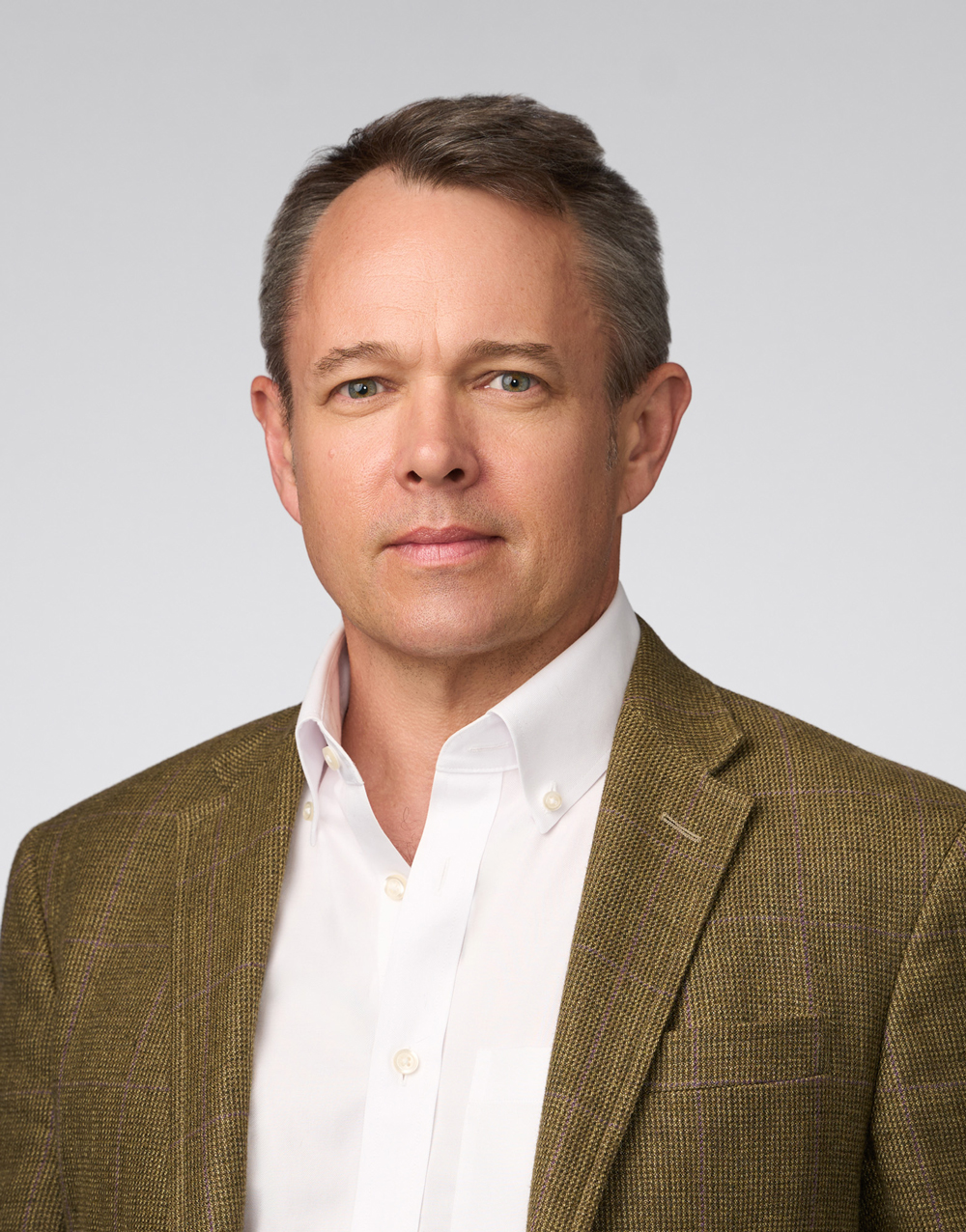
I'm Chris Chivvis. Welcome to Pivotal States, where we examine the strategic challenges and opportunities facing the future of American foreign policy. Donald Trump was brought to power with the promise to end America's forever wars. But just days into 2026, he greenlit a military operation to oust Venezuelan President Nicolás Maduro. Trump says the United States will now run Venezuela for the indefinite future. What is this audacious use of force and open-ended commitment mean for the United States and for the world? What are U.S. Interests in Venezuela in the first place? To help me make sense of this stunning moment in U. S. Foreign policy and to unpack the underlying structure of America's relations with Venezuela and the region, I'm joined this morning by my colleague Oliver Stuenkel. He's a senior fellow here at the Carnegie Endowment and a professor of international relations. At the Fundação Getúlio Vargas in Sao Paulo, he also teaches at Harvard University. He's one of my favorite analysts of the region, and I'm so glad to have him here with us. Today, we're going to focus on the bigger story of U.S. National interests in Venezuela, but I'd like to note that at the outset, we're recording this conversation on the morning of January 8th, which is only a few days after the United States launched its operation to capture Maduro, who now sits in a New York prison, awaiting trial. Oliver, so happy to have you here with us.
Oliver Stuenkel
Thank you for having me.
Chris Chivvis
So I thought it'd be interesting if we started off sort of on a personal note. You are a Brazilian from Latin America. When you woke up on Saturday morning and heard the news about the operation that had taken place overnight, how did you feel?
Oliver Stuenkel
Well, goosebumps. I mean, this is a big moment and a lot of contradictory emotions and reactions. I have traveled many times over the past 20 years to Venezuela. I've lived there for a while, 25 years ago. And I've been following the trajectories of many friends from Venezuela. Many of them have left the country. And these are very difficult stories and a lot of hardship. Seeing the end of the Maduro regime, of course, was celebrated by many, and I can understand that. At the same time, of, course, the way it happened is also unsettling, because ideally, you overcome authoritarian regimes by domestic mobilization. I mean, we've been through that, right? Brazil has done it in the 80s. Chile has done it and we know, you know, how external intervention can produce all sorts of unexpected problems down the road. It reduces the legitimacy of future governments and all that. So, as I was sitting there on Saturday with my wife and you know my son was like: “what's happening? What's happening?” Because we were, you know, starting to make phone calls and you know he was like: “is this good? is it good?” I'm saying I don't know let's see but he's here or something. So, the, I think that. There are mixed feelings across the region because everybody wants Venezuela to succeed. It's a country that has so much potential. It's not only the oil, it's a fantastic society. It's geographically placed in a central region. This could be a central node of the Americas. Caracas could have become really a center of the Americas. Exactly. And really a set of innovations to move beyond, to diversify the economy. So, it's got all the potential. And yet, it's been a basket case for such a long time and producing all sorts of negative effects, not only in Venezuela, but across the region. And, yet, you have this hugely, you know controversial case of a US intervention which is not backed by international law. And now the countries in Latin America are like, well, if this succeeds, wouldn't this embolden Trump to try similar things in other countries? So, there's a weird incentive now, and it's kind of unclear for scholars, but also for people in government. And I, of course, over the past days, spoke to many diplomats across Latin America, and everybody's sort of ambiguous and say, what do we actually hope for now? Of course, we hope for Venezuela to stabilize and to become more prosperous, but at the same time, you know, immediate success would actually increase the chances that this happens elsewhere with consequences for our national security, for sovereignty, because what's emerging now, of course, raises a lot of question about Venezuela's autonomy, its sovereignty. And that has been a key driver of politics in Latin America for a long time, is the attempt to reduce outside interference.
Chris Chivvis
And especially the interference of the United States. Exactly.
Oliver Stuenkel
Exactly. You know, the Monroe doctrine, especially the Roosevelt Corollary, which justified frequent intervention at times using military force, overtly so, particularly in Central America, but also in covert fashion, like in Chile, for example, or in Brazil in the 60s and 70s. So, a lot of mixed emotions, I think. Yeah.
Chris Chivvis
Trepidation, hope, fear, all at the same time.
Oliver Stuenkel
All at the same time. And you, you know, I write an article and then there's, and I say, well, this is, you, know, my first article I wrote was talking about how this was unsettling to military planners in other South American countries and immediately got calls from friends from Venezuela saying, how can you write this? This is the best moment. And of course, then at 11 a.m. Trump has this press conference, and I have friends who are at parties, Venezuelans who were celebrating, and then Trump says well the opposition leader you know doesn't necessarily play a role in my plans for Venezuela and a lot of people said he had misspoken.
Chris Chivvis
They were so shocked. They believed so strongly that he was going to return the democratic opposition to power.
Oliver Stuenkel
Exactly. And I had, and this was even, you know, I had a lot of tense conversations with Venezuelan friends in academia. When I said, prior to the intervention, I said you know the idea that you can just remove Maduro and install Maria Corina Machado is an illusion. This country has completely hollowed out its institutions. It's completely controlled by the party. So, there's been a total fusion of party and government. All the, it's no longer that somebody who manages the police or even like water management or food distribution, all these people have been chosen for years based on their loyalty and not based on their technical expertise. So just throwing out these people will lead to immediate state collapse. So, you'd have to have a very difficult transition. So, I even think that Trump's decision to not install Machado right away does have an element of prudence. I mean, this is the big lesson from Iraq. You can't just destroy existing institutions. But at the same time, of course, what becomes clear now is that the United States may actually have no intention at all to pressure the current regime. To reform itself and facilitate a transition. So, I think not only Latin American observers, but a lot of Venezuelans have had sort of an emotional roller coaster since January 3rd.
Chris Chivvis
And I could see it in the way that you so eloquently describe how you felt about it. I want to get to some of those things. But first, I wonder if you'd give us a sort of short history lesson on the Maduro regime and Chavismo in general. You said earlier that Venezuela has been a mess for a long time, but it wasn't always a mess. It was a democracy until, what, the late 1990s, would you say? When did things start to fall apart and why?
Oliver Stuenkel
So Venezuela was, for a time, the only democratic country in Latin America, and more, at that period of time, Spain and Portugal were also authoritarian. So, it was the only Democratic country, both in Latin American and the Spanish-speaking world. So, this is really significant. So, there was a time that Caracas was, you know, a hub of dissident activity, where people talk about how to spread democracy to other countries in the region. So, a very long-standing democratic tradition. At the same time, of course, a lot of inequality, a lot of corruptions. For example, in the 1990s, there was a profound sense that the system was failing the in Venezuela and that there was, that the elites were unable to actually address the problems of the of the population. You had a military coup led by Chavez in 1992. It failed. He was imprisoned, but he was able to project himself as kind of the anti-system candidate who would clean up the system – kind of similar to Bolsonaro in Brazil later. Kind of a military man who was an anti-politician even though he was convicted in a prison. With that, he comes onto the national scene, later pardoned, and then wins the election in the late 1990s. And at the time, it must be said, Venezuela was seen by many experts as a very corrupt country. Also in rankings, it appears as such. But yeah, it was a democracy. It was a functioning democracy. But I think it's also always important these sorts of populist anti-establishment candidates don't emerge in fully functional democracies, right? I mean, these people don't come out of nowhere. These are people who win elections. If really there's a sense that all the established parties are the same, they don't have answers there, you know, don't understand what really is going on in the country. So, Chávez wins. And I lived in Venezuela in 2001. And he was this sort of typical Latin American strongman with some authoritarian ambitions. But above all, was just a populist who would, for example, take calls from citizens on live television. And they would say: “there's a problem here on the street.” And then he would direct somebody to go there and fix the street, so this, you know. Exactly, a man of people, sort of very approachable, and, you know, was kind of seen as a quirky but not necessarily dangerous leader. And then in 2002, there was a coup attempt against him. It failed. There was some involvement by business elites, part of the army rose up, but eventually, even though he was detained, he was able to to withstand and remain in power.
Chris Chivvis
And that probably only made him more popular.
Oliver Stuenkel
Exactly. Well, popular, but also more radical. And I think that something changed then that he really believed and he, first of all, he believed that the United States had attempted to overthrow him. There's no concrete evidence. Condi Rice at the time made a, let's say, I think a comment which was slightly ambiguous, she literally said, “he had it coming.” Which of course doesn't mean that the United States was supporting—
Chris Chivvis
Actively supporting the coup—.
Oliver Stuenkel
Coup-mongers. He was at this time beginning to place a lot of loyalists in key positions, so there was resistance among people at the state oil company. But it wasn't, I don't think that at the time there was a concerted effort by the Bush administration to overthrow Chavez necessarily. And yet it began a process of radicalization. And the first, I think, clear signs of an authoritarian trend occurred after Chávez's reelection when in the following years you had attempts to silence or pressure the judiciary and change of the constitution, concentration of power and then this very typical playbook we know from How Democracies Die is that you know there was increasing pressure on civil society, on the media you had Chávez allies who bought up newspapers, the cancelation of licenses for TV stations. So, this sort of slow process was made possible in part because you did have fairly high oil prices during the latter part of the decade which produced a windfall but, even then, Chávez was able to benefit tremendously from that, increasing social spending in an unsustainable way. Where even when oil was extremely, the oil price was extremely high, he wasn't able to balance the books, but he was very popular at the time, of course. And everybody knew that at some point, this would collapse. And I think sort of starting in the early 2010s, it was fairly obvious that Venezuela was transitioning towards authoritarian rule. Chavez died of cancer, and Maduro, his—the second-in-command became president in 2013, and really since then, the economy has been declining, and authoritarian rule has been consolidating itself. We now have about 8 million Venezuelans outside of the country, which is a fourth of the entire population.
Chris Chivvis
That's amazing.
Oliver Stuenkel
That's amazing and that is also important to point out these are the most capable people, these are people with international connections, so when you think about rebuilding the country
Chris Chivvis
The human capital has been drained.
Oliver Stuenkel
Exactly. And a lot of these people are huge, are very qualified, so they have good jobs. So, will they come back? You know, it's very unclear. So, I think the decline of Venezuela has, as I said, been fairly gradual, predictable. But Venezuela has always been too big and autonomous for other South American countries to actively, for example, support democracy in the country and pressure the country to stop its authoritarian drive. So, it's quite interesting that you've had, you know, anti-democratic forces in Paraguay, for example, and Brazil was able to contain them. Or in, you had democratic crises in Ecuador and regional actors were able to contain them. But Venezuela is different because Venezuela given its dependence on oil which it sells not to South America but to the global oil market is largely immune from political and economic pressure from its neighboring countries.
Chris Chivvis
That's super helpful in understanding how we got to where we are right now. Now, in pivotal states, we always want to think about what America's national interests are. So, it also sets us up well to tackle that question. How should we conceptualize the importance of Venezuela in terms of America's role in the world, America's rule in the region? What are the main things that we ought to be thinking about when we think about Venezuela from a U.S. foreign policy perspective.
Oliver Stuenkel
As well as a hugely important actor. First of all, as I said, it's the country with the largest oil reserves, proven oil reserves in the world: 17%. At this stage, it only produces one million barrels a day and about 1% of global production only, which gives you a sense of the potential. Now the infrastructure has been decimated because of a lack of institutional stability. All companies are very reluctant to invest –there have been sanctions, U.S. Sanctions on Venezuela, making Venezuelan oil exports to the United States difficult in the past only through special licenses, and Chevron has been operating throughout in the country. Also, you had a flight not only of investors, but experts, which ran the oil industry.
Chris Chivvis
Talented engineers that are needed to make the oil come out of the ground.
Oliver Stuenkel
Right. So that is a first key issue from a strategic point of view. The second is, of course, the migration issue.
Chris Chivvis
Explain how that's, you've touched on it a little bit, but explain how that is linked to the challenges that the United States has faced at the southern border.
Oliver Stuenkel
Well, Venezuela has been one of the key elements of the migration crisis at the southern border, of course. And the push factor is enormous. And I've seen this. Initially, you had the most qualified people trying to migrate to the United States with graduate degrees and friends who lived in America. Uh, then came people who, you know, worked in the public administration, had like an accounting degree, were some of the middle management at maybe a city hall of a smaller town, they were trying to move out. And then you had these people, you know, taking their family members. And at the end you had whoever was able to physically actually leave the country, try to get out, even if that meant going to Peru or Columbia or Brazil, oftentimes in harrowing conditions and facing great risk.
Chris Chivvis
Creating in some degree of instability in those which then contributed to the general conditions that you know made for this push that we've seen.
Oliver Stuenkel
These are very vulnerable people to smugglers, to organized crime, producing instability and even political tensions and domestic backlash across the region. So, you had anti-migration rhetoric in Chile and Peru and Colombia, but especially, of course, most of them seeking to migrate towards the United States, putting a lot of pressure on all the countries along the way.
Chris Chivvis
Along the way, right.
Oliver Stuenkel
Producing instability there. Many who got stuck at some point, weren't able to enter the region for a long time, including the southern border. So that's been a key issue. The third issue is, of course, that the Venezuelan regime functions in a very particular way. It's not based on popular support. In fact, the 2024 elections were most likely won by the opposition. But it retains control over the armed forces and a number of domestically operating militias that are in charge of repression. And these groups benefit from a system that is acting both in the legal, in the licit and illicit economy. So, for example, you have in Venezuela more generals than in the United States, and that's because the Maduro government distributed economic privileges to all these people in order to retain their support, creating incentive structures for them to continue supporting the Maduro government. Exactly, so for example, you had a general in charge of distributing a particular medicine, which was perhaps scarce, so you could sell 10% on the black market, creating great profits. Some of these activities, as I said, were food distribution, but a lot of it also, of course, in the illicit market, be it illegal mining, for example, illegal gold mining in the south of the country or illegal deforestation, smuggling activities, a corporation with the FARC guerrillas from Colombia, drug trafficking. So, you basically had a country which uninterested in cooperating internationally or regionally combating transnational crime. And that wasn't only a problem for the United States, that was also a problem for Colombia, for Brazil. So, Venezuela became a hub of illicit activity. I don't think it became a key actor in the shipment of drugs towards the United States. Okay.
Chris Chivvis
Okay, that's an important point. Because this is a claim that the administration has obviously—
Oliver Stuenkel
Yes, exactly. And initially there was a claim that Maduro was heading a cartel, the Cartel de Los Soles, which is basically mostly like a colloquial slang that Venezuelans and later on Latin Americans used to describe the engagement of armed forces in the drug trade. But it's not really a formal cartel, like the Sinaloa Cartel in Mexico, for example. And now that Maduro is detained, the Justice Department has actually stepped back from this accusation and has said that he's actually not the head of Cartel de los Soles because they would have to prove that. And it's very difficult to prove. So, I think that was mostly to mobilize U.S. public opinion, perhaps to justify the military action. But still, Venezuela was not in any way actively collaborating in regional efforts to contain transnational crime.
Chris Chivvis
Problematic country from the law enforcement.
Oliver Stuenkel
Even though the key concern, of course, for the United States is fentanyl, when you look at the number of people dying from drug consumption. And in that regard, Venezuela played no role whatsoever. That was perhaps one of the weakest sort of accusations by the Trump administration because when you compare the relevance of Venezuela to say, you know, Colombia or Peru, these are, you now, producers actually, significant producers of drugs and not transit countries. So, you have limited production in Venezuela. It was certainly a relevant transit country, although a lot of the drugs leaving Venezuela were actually heading towards Europe. Still, if you think about the fight against transnational crime in the Americas, Venezuela is definitely a key actor. So, this is sort of a third key aspect. I think one should look at when thinking about the strategic relevance of Venezuela.
Chris Chivvis
One of the issues that has come up recently, and actually for those who have been in the national security world for a while, is the role of Russia and China in Venezuela, even Venezuela's relations with Iran, a group of countries that are sometimes referred to, if you include North Korea, as C.R.I.NK, and especially in the last few years have been increasingly viewed as America's main adversaries in the world. Venezuela was sort of loosely aligned with that group. There have been concerns about the possibility of Russian and Chinese military relations with Venezuela. Can you talk a little bit about that? Can you help us understand how seriously we should take those relationships, and if that ought to factor in our thinking about Venezuela?
Oliver Stuenkel
So after the failed coup against Chávez in 2002, the government became increasingly hostile towards the United States. It's important to point out that prior to 2002, so in the year 2000, 2001, Chávez was not especially anti-American. He actually traveled to Texas. So, he wasn't always so blatantly anti- American. But particularly after 2002, that changed a lot. And then, of course, he became kind of a linchpin of anti-imperial rhetoric and made his entire persona and the way he governed about resisting and mobilizing and inspiring a lot of people across the region. I mean, he, despite Venezuela being a much smaller country than Brazil, for example, emerged as, you know, one of the most visible Latin American leaders in the world, you know, railing against the United States. So that, of course, produced a lot of tension. For a long period of time, though, Venezuela continued to send most of its oil to the United States, so Chavismo was also sort of pragmatic in that sense and used anti-American sentiment to mobilize the public. But still had a deep-seated and fairly stable trade relationship with the United States. However, with time, Venezuela began shifting its trade patterns more towards China. So, it began to export more and more oil to China to attract investment also from China in order to reduce its reliance on the United States. And that of course then was aggravated by sanctions under the first Trump administration where you had a dramatic reduction of Venezuelan exports to the United States and then—.
Chris Chivvis
China is eager to buy Venezuelan oil. Its presence is growing across the region. It almost seems natural that Venezuela's relationship with China should deepen
Oliver Stuenkel
Right. You had a radicalization also of Venezuelan foreign policy, of Venezuela projecting itself as one of the key adversaries – also in the multilateral sphere of the United States – which ended up increasing ties, many of it symbolic, also to countries like Iran. There was a fairly interesting moment where Chavez inaugurated a direct flight from Caracas to Tehran. It became this symbol of how Venezuela joined the club of countries which were motivated by their antipathy towards the United States. I don't necessarily think that Venezuela became really sort of a key Iranian ally, which has a huge strategic relevance. I think perhaps more relevant would be the presence of Cuban operatives in Venezuela. So, during the military operation, you had about 30 Cubans who were actually killed in the battle with U.S. Special forces. And Venezuela sustained economically the Cuban regime, which is, of course, also very much motivated by its resistance, its anti-American posture. So, I think that added to a perception of Venezuela being part of a group of countries.
Chris Chivvis
It seems to me, it has always seemed to me from a U.S. perspective that it would be very problematic if a country like Venezuela were to develop serious military ties with China, Russia or any other of America's major adversaries in the world. But what you're saying is it's pretty unlikely that any of that was going on and that beyond the economic relationship with China a lot of the perception that Venezuela was cozying up to Russia, Iran, was really pretty superficial.
Oliver Stuenkel
Yeah, I mean, you did have the presence of Russian military equipment. That didn't really help much on January 3rd. I think perhaps the most interesting anecdote to show why Venezuela was sort of a useful partner for countries like Russia was, do you know these yearly commemorations that Russia organizes to celebrate victory in World War II? And increasingly, for example, Putin was isolated after the invasion of Ukraine. So back in the day, you had Western leaders, actually, who were actually attended, and that no longer happened. So even at the height of Russia's diplomatic isolation, you'd always have Nicolas Maduro showing up. The Cubans and a couple of others from Africa. So, Putin could always say: “there's leaders from around the world, you know, here.” And Maduro was really always there, walking next to Putin. And I think, even though that may sound superficial, I mean, that's kind of a very practical usefulness of this partnership with Venezuela for the Russians who don't need Venezuelan oil, for example. But it's a country that reliably votes against the United States, that votes with Moscow, it supports Iran diplomatically, which, it is home to a couple of media platforms that are very anti-American and embracing the Russian narrative about the war in Ukraine. So, I think that these are more likely benefits that sustained that relationship rather than let's say the presence of, I mean, I'm sure you've had the presence of Russian intelligence officials occasionally in the country. But from a military perspective, I wouldn't say that Venezuela became an acute threat to the United States.
Chris Chivvis
Let's talk about the regional perspective, something that you know especially well. How are other countries across Latin America responding to Trump's actions in Venezuela? We've seen statements of condemnation from governments around the region. But can you sort of help us understand what kind of conversations are going on in Latin American capitals right now.
Oliver Stuenkel
So in order to make sense of the reactions, it's important to keep in mind that Venezuela is the most polarizing issue in Latin American debates because, I mean, Chávez was so visible and so controversial and so divisive that, you know, you had people on the left who said, “you know, whatever he's doing is justified or all the problems Venezuela has is because of the Americans and he’s the only one who's standing up and showing the United States the middle finger.” And so basically this admiration for this guy who is not afraid of the United States says that amongst of the nationalist left he was a hero and of course on the right he was this you know, classic leftist dictator who had no idea how to manage the economy. And in Brazil or elsewhere if you were on the right you would always try to associate any left-wing politicians of Brazil to Venezuela, so you know if Lula gets elected we’ll—
Chris Chivvis
We'll be the next Venezuela; we'll be falling apart. Look at what's happening there. Right, yeah, got it.
Oliver Stuenkel
But basically, Venezuela was this outsized topic in political debates and became increasingly a problem for the left, a liability because Venezuela and people started to see Venezuelans coming and talking about the misery and seeing images of despair and of repression also in the country. So, the left increasingly was forced to distance itself, across the region, from Venezuela. That explains why when the United States toppled Maduro, leaders across the region responded thinking about how this would play domestically above all. So, it was fairly obvious that for Milei, for example, who's a right-wing leader, pro-Trump, he celebrated this and said, you know, this is great. Same in Chile, for example. José Antonio Kast celebrated this. Lula couldn't say, you know, we stand with Maduro, of course, because he wants to get reelected. But you basically still have, you still had a division of conservative leaders seeing this in a more positive light, what happened, and left-wing leaders being more critical. However, behind closed doors, even in countries whose president celebrated this, there was a lot of concern of what that means for national security more generally. Especially because Trump didn't say, here is the main reason why I'm doing this. Rather, he gave a number of shifting justifications which generated some apprehension because it wasn't clear whether that could end up happening to other countries as well. So, he talked about the drugs. A lot of experts said, you know, it's not really a convincing explanation because Venezuela is not that relevant. He talked about migration issue stabilizing Venezuela so that migrants could go back. He talked about occasionally – some of the senior officials in the government talked about democracy. A lot of concern about that too, because Latin America, of course, being so close to the United States and being exposed many times to interference throughout the 20th century, is very skeptical about this pro-democracy rhetoric, of course. Then you had the rhetoric about ties to Russia, Iran. Then you have the oil rhetoric. Brazil sits on 20% of the world's proven reserves of rare earths, for example. So, as a Brazilian military planner you look at this and say, okay he toppled Maduro to have access to the oil.
Chris Chivvis
And I think you have a great piece in foreign policy that came out just after Maduro's removal from power. You write, Washington's actions toward Venezuela in recent months have already altered perceptions of risk, power, and precedent throughout the Western Hemisphere. Even if Venezuela eventually stabilizes, the idea that South America is insulated from great power military intervention exists no more. That's got to be really troubling for people all across the region.
Oliver Stuenkel
Absolutely. And I think that there was a perception that this period had ended in the early 1990s. You still had the Bush administration intervened in Panama in 1989 and removed Manuel Noriega from power. Panama actually stabilized, is today one of the big success stories. But after that, the U.S. rhetoric and action was very much about collaboration, about multilateral engagement, seeing eye-to-eye, I mean, increasing trade ties. Some would call it also benign neglect. I mean a lot of presidents stopped paying attention to Latin America. And that, in a weird way, was being criticized, but also seen as something potentially positive. I mean Fernando Henrique Cardoso once famously said, the best thing we can do is fly below the radar of the United States, because if they start paying attention to us, it's usually for the wrong reasons. It's the wrong kind of attention. So, we're a partner, but we're not on the top of everyone's mind in the White House, and that's a good thing. And in retrospect, you could say, well, there were issues, of course, Latin America was unable to stop the slow motion catastrophe unfolding in Venezuela, but it was also from a geopolitical point of view, a fairly tranquil period, because all countries in Latin America were largely free to pursue their relations with, you know, the Americans, with the Europeans, with the Chinese, with Russians, with Africa, without actually having to think about the geopolitical ramifications of that. You did have some rhetoric sort of in doing the first Trump administration and then also during the Biden administration some concern about Latin America's excessive dependence on China, but it wasn't really about you stop dealing with China or else we will use military force. I mean that the trump administration in the first term put some pressure on Latin American countries for example to stop using Huawei. As a component provider of a 5G telecommunication networks.
Chris Chivvis
But that wasn't unique to Latin America.
Oliver Stuenkel
Exactly. And all countries in Latin America firmly declined and said, you know, we understand that this is not in America's interest, but we prefer to work with the Chinese and that was it. So, this is a completely new situation also because while there were covert actions across South America, like in Chile, for example, when the United States actively instigated a coup in 1973, which initiated a very repressive period of authoritarian dictatorship. This is the first time that you had overt military action to topple a leader in the history of South America, with U.S. special forces snatching a leader. So, it's got some unsettling optics, of course, to leaders, particularly because Trump then said, well, maybe Petro's next and the Cubans also need to be careful. So, this is not something restricted to countries that are imploding economically or politically or are authoritarian regimes. I mean, Trump made this comment about a democratically elected leader in a country that, you know, is far from perfect.
Chris Chivvis
Here you're referring to Colombia.
Oliver Stuenkel
Exactly, but which is, you know, electoral democracy. There will be an election coming up. For now, there's been a de-escalation and Petro spoke to Trump, but I think that all of these countries are, from a security perspective, hugely dependent on the United States. So, what you actually have in Latin America is two separate regions from a strategic point of view. You have Central America, the Caribbean, and Mexico which are fully aligned economically with the United States where Chinese influence is rising, but not really decisive. And you have South America, particularly south of Colombia, where countries are increasingly dependent on China. Brazil, for example, exports more to China than to Europe and the United States combined.
Chris Chivvis
Right, sure.
Oliver Stuenkel
So, these countries have undergone a profound strategic transformation over the past 20 years because they're no longer as dependent on the United States as they have been for the past century, basically. But from a security perspective, the entire region, with few exceptions, Cuba and Venezuela, is largely dependent on United States, fully embraces security cooperation with the United States. So Brazilian generals don't want Chinese military equipment. They want American military equipment, they want American intelligence, which is crucial for the fight against, you know, transnational crime of the Amazon, deforestation, all this kind of collaboration is very important.
Chris Chivvis
So this is important to the future of America's own footprint and approach towards Latin America. There's been a lot of discussion in the second Trump administration about whether or not President Trump intends to pursue a spheres of influence foreign policy. And certainly, with the release of the National Security Strategy about a month ago, and discussion now about the “Donroe Doctrine.” You know, there is a view that, you know, the United States is going to assert itself much more forcefully in the region for the rest of this administration. And I think, you now, prior to the Venezuela operation that we've just seen, it was possible to say that that was all talk, that it was bluster, and that, Trump always chickens out TACO, as has been used in so many other cases. But now is that is that door open you know Do you think, and how do you think the region would respond to a much more forceful and robust U.S. focus?
Oliver Stuenkel
So I think the door was opened last year because what happened is that the United States imposed sanctions on the president of Brazil's Supreme Court. I mean, that was a pretty big deal. The justifications for high tariffs on Brazil's economy were about domestic political issues in Brazil. So, this was seen as a very blatant...
Chris Chivvis
Nothing that really affected the United States.
Oliver Stuenkel
Exactly. So this was, I think, already seen as a new age. And then you had Trump days before the legislative election in Argentina saying publicly that he was willing to offer a huge bailout, but the condition was that Milei should win. And you had, you know, voters who I would suspect in Argentina. Who may be influenced by that and say, well the United is offering help but only if this particular candidate wins and he ended up achieving a very positive result.
Chris Chivvis
This is already using U.S. economic power and soft power to try to affect the outcomes of elections in the region in order to get people in power who President Trump considers to be his allies.
Oliver Stuenkel
Exactly, and then you had the perhaps even more blatant case in Honduras where Trump days prior to the election also said that, you know, please vote for this guy, Asfura. If you vote for this guy, I will support Honduras; if you don't we will withhold aid for a country that's hugely dependent on the United States and Asfura won by very small margin. So, there is now an expectation in countries like Brazil that this is the new normal, that Trump will seek to influence results if he has a specific interest. And we have elections coming up in Costa Rica, in Colombia, in Peru, and in November in Brazil. So, there's now a lot of apprehension about what that means, for example, for protecting these countries from outside interference in the electoral process, not necessarily through meddling with the electoral system per se, but through a tweet. And that paired with huge vulnerabilities, both in the military and the technological sphere, I think generates a lot of apprehension. I was part of a debate with Brazilian military officials at the time of the sanctions. And one official said, you know, since this has been happening, I've been looking at our vulnerabilities vis-a-vis the United States. And I realized that most of our data stored by the government is in data centers in Virginia. The entire healthcare system, the public healthcare system of Brazil, all the data is stored in Virginia, he said – I thought it was really interesting – he said that, you now, they could switch off our access to this data. And also, a lot of people in the legislature who were briefed on this realized that the United States can basically stop sending software updates to the Brazilian military and their planes will no longer fly. And that's just the reality. I mean, so you can't change that in the short term, and I think it would be a mistake to expect some of these countries to now drop everything and say, let's embrace China. Brazil doesn't want that either. And the current government, even Brazil, despite occasionally embracing an anti-American rhetoric has been very clear that, for example, it doesn't want to join the Belt and Road Initiative because it really genuinely believes in a strategy of what it calls multi-alignment, which is to preserve ties, and that overt resistance is not the solution. And I agree with that. I think that, if anything, Venezuela also shows that this sort of confrontational approach is very dangerous. And it's not helpful at all. Rather, I think, you either, and this is going to be I think the case for all of Central America, Mexico, and a number of perhaps South American countries, you bandwagon. So, you embrace US leadership and seek to extract some benefits by being a reliable partner to the United States. Or you don't overtly balance or you don't overtly embrace resistance. But you kind of, uh, you fence sit, you know, you kind of occasionally drag your feet, you sometimes kick things into the long grass, you don't really cooperate, all the things.
Chris Chivvis
The problem that interests me is, you know, as you pointed out, I mean, the Brazilian economy has become very intertwined with the Chinese economy. There's an enormous amount of demand for Brazilian lumber, food. So, if the United States is going to try to push back against Chinese influence in Latin America, which is mostly economic, and yet at the same time take more responsibility, implicitly at least, for the future of the region. Can it do that without creating real economic difficulty for countries that are now so intertwined with the Chinese economy?
Oliver Stuenkel
It depends on what the Trump administration's ambitions are. So, Brazil will not stop selling soy or iron ore to the Chinese, in part because these are structural factors. I mean, there's a massive complementarity, economic complementarity between China and numerous South American countries when it comes to commodities. In fact, the United States and Brazil compete to sell soy to the Chinese market. So, there's no conceivable scenario in which the United States could pressure Brazil to stop selling soy to the Chinese. I don't think that's what the Trump administration actually wants. I mean it understands that you'd have to completely control South America's trade relations, which is not something I think that's possible and a realistic scenario. Now, what I think the new national security strategy points out is that there's a couple of issues, strategic assets, that the United States is interested in. And it doesn't actually talk exactly about what these are, but I suspect that ports, energy infrastructure, telecommunication infrastructure perhaps, military bases, things like that, where I expect the United States to increase pressure on countries to not fully integrate into China's, for example, digital ecosystem, because they're seeing our port ecosystem, logistical ecosystem, because that's seen as a threat to U.S. national security.
Chris Chivvis
It's going to be a delicate balance for many of these countries.
Oliver Stuenkel
And this is, I think, important to point out. Are there American companies willing to build large ports? I don't know, but I mean, the ones we're seeing are mostly from China, right? So, for a country like Peru, I mean the Chinese just opened a massive container port, which will be crucial to connect Peru economically to China. Same for, let's say, the electricity network or roads cutting through the Amazon or all that. I mean, there is a perception in Latin America that the country most willing to do these kinds of things is China.
Chris Chivvis
Let's turn back to Venezuela and the future there. This has been a wonderful discussion of the region and American interests in Venezuela and the history of the erosion of democracy in Venezuela. But as we look ahead, I am trying to think through what the prospects are that this operation that the Trump administration has just conducted looks to future historians to be even partially successful. Obviously, the United States has had a lot of problems with the military interventions that it has conducted over the course of, well, really its history, but especially since the end of the Cold War. One intervention around the end of the cold war that's viewed as somewhat successful was the removal of Manuel Noriega That's right from power in Panama. Panama is a, you know, somewhat stable democracy now. And I think it's certainly possible that that model was in the minds of many of those who are trying to bring up the 1980s and portray President Trump as a second Reagan, a rebirth of a certain type of America. Now, I've done a lot of research earlier in my career on military intervention, on nation building. And I have to say that if you had to pick a country, Venezuela is not a bad country to intervene in from a purely technical perspective because it has natural resources, it's close to the United States, and, so far, at least, we have left the security forces intact. Of course, it was the dismissal of security forces in other cases; Iraq is the most famous, but not the only one. That ultimately unleashed a flood of civil war that led military interventions in the past to turn from initial success to failure. But the situation that you've just described about Venezuela, which is one where not only the regime, but the security forces themselves are engaged in all kinds of illicit trade doesn't sound like it's actually all that promising. So, how should we be thinking about the future of Venezuela? Where do you think there's some room to hope that this will not lead to a further deterioration of conditions in the country? And what are the things that you think are going to be the biggest obstacles?
Oliver Stuenkel
I think that the Trump administration's decision to not install Maria Corina Machado was a prudent one, actually.
Chris Chivvis
And I should just say, this is speaking of someone who studies democracy and is very, you know, obviously favorable—
Oliver Stuenkel
Of course. I mean, I would love to see a democratic, prosperous, and stable Venezuela, and at the same time I had very tense debates with Venezuelans about that prior to January 3rd because they said all that's necessary is to quote unquote “liberate Venezuela from Maduro,” so if you take him out, the opposition leader can fly in and we're democracy and I said—
Chris Chivvis
We've heard that story so many times before, I just have to say it just doesn't work like that. It just doesn't work like that.
Oliver Stuenkel
And I think that that is, of course, unrealistic. Now, having said that, the Trump administration has now signaled no clear intention of how it will go about this process. And that's, of course, troubling because you may have a situation in which the current regime satisfies a very specific demand by the United States, which is to have access to oil, to be able to invest in the Venezuelan oil industry, to actually, as it appears now, to actually manage not only the sale but also the proceeds of the oil, which raises a lot of questions about Venezuelan sovereignty. So, this sounds a bit like a protectorate. If the United States were to decide how to spend this money without actually having a US-led administration on the ground, so there's a lot of questions about how that will actually play out. But in the worst case, I think you'd have a Venezuelan regime, which is the continuation of the Maduro regime, which outsources practically its oil industry to the United States, but it has completely free reign in all other issues and utilizes that to crack down, which could produce a situation in which democratization becomes actually less likely. Because you move from an anti-American authoritarian regime to one that's being tolerated and partially supported by Washington. And we've seen that in Chile, for example, where after the coup of 1973, you had a U.S.-supported dictatorship that felt emboldened because it was actively supported. So as long as Delcy Rodriguez, the new leader of Venezuela, believes that the Americans are happy with their access to Venezuelan oil she may actually feel – and there's first signs that that's the case –emboldened to crack down even more.
Chris Chivvis
So I agree, and I think it seems somewhat unlikely that Venezuela is going to democratize soon as a consequence of this intervention. The second question, and in some ways I hate to say it, but the more important one, is does security and stability in the country further deteriorate as a consequence of this?
Oliver Stuenkel
So the big question is whether US engagement in the oil industry can actually help stabilize Venezuela economically, grow the pie which would be necessary for the Venezuelan security establishment which sustains the regime to continue to get its share. If that's the case, they may be happy with the Americans running the oil industry because they could continue to pursue their illicit activities; and they get a share of the proceeds. Because I suppose at least you know that not all the proceeds will remain in America. If that's the plan then Venezuela will collapse fairly quickly and have a humanitarian disaster. So, I don't think that is the scenario.
Chris Chivvis
That's the scenario that we really need to avoid. I mean, if the United States is going to take all of this rent out of Venezuela, it's going to be inherently destabilizing for a country that is already very fragile.
Oliver Stuenkel
Exactly. I think the calculus of the Trump administration, I can only suppose, is that currently Venezuela produces about a million barrels of oil per day. It has to sell a significant part of that at lower rates because it's also not particularly high-quality oil. It also sends subsidized oil to Cuba. It’ll stop doing that, which, by the way, is a very interesting development too. It could actually end up destabilizing Cuba. As a consequence, we'll have to see how other countries like Mexico will send more to Cuba in response. But basically if, you know, the plan is to increase oil production to, say, 2 million or 3 million, which will require billions and billions of investments. It could take many years. Then, in that case, this could lead to a stabilization of the Venezuelan economy without actually engaging in any kind of political transition. But it could also end up consolidating even more the current regime. And then the question is, of course, why would Trump actually initiate a process which could destabilize the country and generate uncertainty for investors in the oil industry, and why would the armed forces be willing to engage in a process?
Chris Chivvis
You're talking about Democratic reforms in this case?
Oliver Stuenkel
And why would the—
Chris Chivvis
It just seems so unlikely that that would be a policy that this administration would want to pursue.
Oliver Stuenkel
Why would the Venezuelan generals who have significant benefits from the status quo and maybe have even greater benefits if the oil industry recovers, why would they want to support a democratic transition given that that may produce, you know, prosecutions and a lot of questions about transitional justice? So, I'm unfortunately skeptical about that. Of course, you still have the Venezuelan streets. I mean, you still have, theoretically, you could have large-scale protest against the Rodrigo's government, even though it's seen as a satisfying partner to the Americans. They're still—
Chris Chivvis
But the closer that the United States becomes to the post-Maduro regime, the more the incentive is going to be for the United State to actually not only tolerate but even support the repression of those protests.
Oliver Stuenkel
So, it's entirely unclear what happens to the opposition now. But what I do think is important to recognize is that the language from a Latin American point of view, the language used by the Trump administration that we’ll run the country, we’ll take their oil, activates a sort of intuitive reaction about, you know, defending our resources.
Chris Chivvis
Sort of like a nationalism that would be natural in any country.
Oliver Stuenkel
Of course. And, you know, I think Trump may be sowing the seeds of the rise of somebody like Chávez, five years from now, ten years from, now, who will say, you know, they are taking our oil, we'll nationalize the oil industry. And I think that, you know, this may be part of a long historic cycle where the events of January 3rd may, could actually stabilize the Venezuelan oil industry. But could also be the starting point of a renewed cycle of nationalism, anti-Americanism in Venezuela. Because in the end, a lot of centrist observers, like myself, we've always watched Chávez and say, you know, he's a bit overboard and he was always railing against America, they want to steal our oil. And now what Trump is sort of saying is very similar to what Chávez was.
Chris Chivvis
Chavez was accusing the United States of secretly wanting to do.
Oliver Stuenkel
In a way, I think there's a significant risk that, not in the short-term, because Venezuelans are exhausted and I think have very limited capacity to rise up, and may temporarily be content with the specter at least of some economic growth perhaps. But in the medium-term I'm afraid that this will be detrimental to U.S. national interests, because you. Are producing a breeding ground for anti-American sentiment. And that may extend to other countries as well.
Chris Chivvis
So it sounds like in the long term, we may have sowed the seeds for more problems. In the medium term, it sounds the possibility of Venezuela emerging from this as a democratic country that is an ally or partner of the United States is extremely slim and that the actual realm of, or the spectrum of outcomes is more between a continued authoritarianism in Venezuela that maybe is a little bit more stable, maybe puts a little less migration pressure on the region and thereby on the United States. And so, the U.S. gains in that sense. The Venezuelan people, of course, do not gain politically, although perhaps they gain economically. That may be the best outcome that we can hope for. And then there's a series of, you know, worse outcomes, which involve you know, the failure to pay back some of the dividends of the intervention to the Venezuelan people, in which case you could see more civil strife, more infighting within the regime, and potentially a fracture of security in a situation that is even worse than the one that existed a week ago.
Oliver Stuenkel
Exactly, and I think that two questions still emerge on top of that. The first is, is the Trump administration willing to force or pressure the Rodriguez government to contain illicit activities in the role of drug trafficking? That may cause resistance among the security staff.
Chris Chivvis
It sounds as though some of those illicit activities are necessary to the stability of the regime. That is a real problem.
Oliver Stuenkel
It's the lubricant for this to work. Yes. Yes, exactly. So, let's say there's a lot of pressure and the growing presence of US special forces track these kinds of movements. That may produce some resistance and may destabilize the security establishment support for Rodriguez. So that's, I think, one thing to look at. If Trump's all about the oil. It would be, of course, advantageous for the security establishment in Venezuela. If he's willing to engage more, questions arise, but it's also unclear whether that's possible from afar or whether that would necessitate the presence of permanent presence of Americans.
Chris Chivvis
And by the United States, yeah.
Oliver Stuenkel
And the consideration, though, I think that's worth making is, of course, Trump is constantly threatening Rodriguez and saying, if you don't oblige, we will attack you in the same way that we've attacked Maduro. However, he could do that, and then somebody else comes, and somebody else comes. But the Venezuelan elite, the regime is aware of the fact that Trump does not want to invade and have a permanent presence in the country. You'd need tens or if not hundreds of thousands of people on the ground, which is really the recipe for disaster. Because, you know, I mean, we all know what this means. I mean you're going to have clashes involving soldiers, you're going to have, it's going to be inevitable that you have human rights abuses. All these kinds of difficulties, you put a lot of Americans at risk. So, and I think that may embolden the Rodriguez regime when it negotiates with Trump because it knows that that ultimate threat of occupation is not probably not real. So that, you know, that's basically as Trump can only continue to do what he has done, but that this the specter of occupation, is probably too daunting for the Trump administration.
Chris Chivvis
You know, if we've learned one thing from, you know, the long history of U.S. Military intervention in Latin America and around the world, it's that this is really only the beginning of the story.
Oliver Stuenkel
Of course all of this is still fully speculative yeah, but I think that no matter what happens Latin America is now back on the radar, what Fernando Henrique Cardozo sought to avoid, and—
Chris Chivvis
Be careful what you wish for.
Oliver Stuenkel
Exactly, and I think Venezuela has become a key theme for the remainder of Trump's foreign policy.
Chris Chivvis
Oliver, I love talking to you about these things. I've learned so much from this conversation and really appreciate you joining us here on Pivotal States.
Oliver Stuenkel
Thank you for having me.
Chris Chivvis
To the listeners, if you enjoyed this episode of Pivotal States or want to take issue with anything that we said, please leave a comment on YouTube or engage with the Carnegie Endowment for International Peace's American Statecraft Program account on LinkedIn or on X, at C-E-I-P, Statecraft. We'd love genuinely to hear your thoughts. So, until next time, I'm Chris Chivas, the director of the American Statecraft Program here at the Carnegie Endowment for International Peace.