
• Research
  • Emissary
  • About
  • Experts
Carnegie Global logoCarnegie lettermark logo
DemocracyIran
  • Donate
{
  "authors": [
    "Karim Sadjadpour"
  ],
  "type": "legacyinthemedia",
  "centerAffiliationAll": "dc",
  "centers": [
    "Carnegie Endowment for International Peace"
  ],
  "collections": [],
  "englishNewsletterAll": "menaTransitions",
  "nonEnglishNewsletterAll": "",
  "primaryCenter": "Carnegie Endowment for International Peace",
  "programAffiliation": "MEP",
  "programs": [
    "Middle East"
  ],
  "projects": [],
  "regions": [
    "Middle East",
    "Iran"
  ],
  "topics": []
}
Source: Getty

In The Media

Ahmadinejad in America

Link Copied
By Karim Sadjadpour
Published on Sep 24, 2007
Program mobile hero image

Program

Middle East

The Middle East Program in Washington combines in-depth regional knowledge with incisive comparative analysis to provide deeply informed recommendations. With expertise in the Gulf, North Africa, Iran, and Israel/Palestine, we examine crosscutting themes of political, economic, and social change in both English and Arabic.

Learn More

Source: CNN's Anderson Cooper 360 Degrees

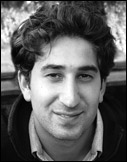
In an interview on CNN's Anderson Cooper 360 Degrees, Carnegie's Karim Sadjadpour discusses Iranian President Ahmadinejad’s controversial U.S. visit and his interview with Columbia University President Lee Bollinger.

Click here for transcript.

About the Author

Karim Sadjadpour

Senior Fellow, Middle East Program

Karim Sadjadpour is a senior fellow at the Carnegie Endowment for International Peace, where he focuses on Iran and U.S. foreign policy toward the Middle East.

    Recent Work

  • Q&A
    Iran Wanted to Survive the War. Now What?

      Suzanne Maloney, Aaron David Miller, Karim Sadjadpour

  • Q&A
    What’s Keeping the Iranian Regime in Power—for Now

      Aaron David Miller, Karim Sadjadpour, Robin Wright

Karim Sadjadpour
Senior Fellow, Middle East Program
Karim Sadjadpour
Middle EastIran

Carnegie does not take institutional positions on public policy issues; the views represented herein are those of the author(s) and do not necessarily reflect the views of Carnegie, its staff, or its trustees.

More Work from Carnegie Endowment for International Peace

  • Trump and MBS walking through a doorway
    Commentary
    Emissary
    What We Know About the U.S.-Saudi Nuclear Deal

    Despite the agreement’s uncertainty, it’s still a significant development in regional and nuclear policy.

      • Andrew Leber
      • Jane Darby Menton

      Andrew Leber, Jane Darby Menton

  • Article
    From Hormuz to the Maghreb: The Geopolitical Reach of a Gulf Crisis

    Morocco and Algeria, each in its own way, are having to navigate the global economic fallout of the U.S.-Israeli military campaign against Iran.

      Yasmine Zarhloule

  • Commentary
    Emissary
    Nolan’s "The Odyssey" Has a Colonialism Problem

    Despite Morocco’s hopes that its film industry would reap rewards, the blockbuster’s success will be tainted by controversy surrounding filming in occupied Western Sahara.

      • Sarah Yerkes

      Sarah Yerkes

  • Commentary
    Diwan
    Kurdish Rebel Groups Are Wary of Tehran’s Next Move

    Following its deal with the United States, Iran may act against Iraq-based dissidents.

      Wladimir van Wilgenburg

  • Commentary
    Sada
    A New Patrimonialism is Undermining Syria’s Transition

    Syria's transition promised a fresh start. But are old habits of power making a comeback? This analysis looks at the warning signs and what it will take to build a more accountable state.

      Sima Beitinjaneh

Get more news and analysis from
Carnegie Endowment for International Peace
Carnegie global logo, stacked
1779 Massachusetts Avenue NWWashington, DC, 20036-2103Phone: 202 483 7600
  • Research
  • Emissary
  • About
  • Experts
  • Donate
  • Programs
  • Events
  • Blogs
  • Podcasts
  • Contact
  • Annual Reports
  • Careers
  • Privacy
  • For Media
  • Government Resources
Get more news and analysis from
Carnegie Endowment for International Peace
© 2026 Carnegie Endowment for International Peace. All rights reserved.











