

Commentary
The conflict is exposing the deep energy vulnerabilities of Korea’s chip industry.
Darcie Draudt-Véjares, Tim Sahay
{
  "authors": [],
  "type": "pressRelease",
  "centerAffiliationAll": "",
  "centers": [
    "Carnegie Endowment for International Peace"
  ],
  "collections": [],
  "englishNewsletterAll": "",
  "nonEnglishNewsletterAll": "",
  "primaryCenter": "Carnegie Endowment for International Peace",
  "programAffiliation": "",
  "programs": [],
  "projects": [],
  "regions": [
    "United States"
  ],
  "topics": [
    "Foreign Policy"
  ]
}
REQUIRED IMAGE
Jessica Mathews, president of the Carnegie Endowment, announced that Richard Giordano, former chairman of the board, BG Group plc, would succeed James C. Gaither as its chairman. Stephen R. Lewis, president emeritus and professor of economics at Carleton College replaces Greg Craig as vice chairman.
WASHINGTON, May 19—Jessica Mathews, president of the Carnegie Endowment for International Peace, today announced that Richard Giordano, former chairman of the board, BG Group plc, would succeed James C. Gaither as its chairman. Stephen R. Lewis, president emeritus and professor of economics at Carleton College replaces Greg Craig as vice chairman.
Making the announcement, Jessica Mathews said:
“We will sorely miss the strong leadership and unfailing dedication that Jim Gaither has provided as chairman for the last six years. His vision in identifying and supporting new ideas and his unmatched skill in executing them has been crucial to making Carnegie’s decision to pioneer the first global think tank a success. He has made this a stronger institution in countless ways.
“But Jim’s departure is matched by our gain in Dick Giordano becoming chairman. I can think of no one who brings with them the powerful combination of understanding the Endowment’s work with decades of experience leading and advising global companies. As we develop the Endowment’s offices in China, Russia, the Middle East, and Europe, his leadership will be a huge asset to Carnegie.
“We dearly miss Greg Craig, now White House counsel to the President, but in Steve Lewis we have the rare mix of intellectual research heft with a brilliant record of achievement in its implementation in the U.S. and overseas.”
Reacting to the announcement, Richard Giordano said:
“I am honored to have been chosen to become chairman of the Carnegie Endowment’s board of trustees. The list of previous chairmen is an illustrious one. Decade after decade the Endowment has, as Andrew Carnegie intended, reinvented itself to remain relevant to a changing world. In this new millennium of globalization, I look forward to helping Jessica Mathews and the Carnegie team take forward the already highly successful New Vision of the world’s first truly global think tank.”
Stephen Lewis said:
“The Endowment is an outstanding institution, and Jessica Mathews provides superb and imaginative leadership, so this position is an honor and a privilege. The Endowment’s emphasis on truly collaborative work across national lines to address the world’s most pressing challenges is both unique and critically important. I’m delighted to be asked to help further its work.”
###
NOTES
Richard Giordano, chairman of the board, retired, BG Group plc, has been a member of the Endowment’s Board since 1999. He was a member of its finance committee until 2006, has chaired its investment committee, and has been vice chair of the New Vision campaign cabinet since 2006.
After working as a lawyer with Shearman & Sterling in New York City, Giordano joined Airco Inc. in 1963 as assistant secretary. Later elected president, chief operating officer, and a member of the board of directors of Airco, he became chief executive officer in 1978, the same year Airco was acquired by the BOC Group. Giordano was appointed group managing director and chief executive of the BOC Group (then BOC International) in October 1979. From January 1985 to December 1990, he combined his position as chief executive of the BOC Group with that of chairman. He returned to BOC as non-executive chairman on April 31, 1994, a post he relinquished in January 1996.
In July 1982, Giordano was appointed a part-time member of the UK Central Electricity Generating Board and continued in that post until the privatization of the industry in 1989. He was a non-executive director of National Power, one of the privatized companies, until he retired from that board in September 1992. He served as non-executive director of the U.S.-based Georgia-Pacific Corporation for twenty years, non-executive director of Rio Tinto plc for fourteen years, and as lead director for the last four years of his tenure.
During the 1980s, Giordano was a non-executive director of Reuters plc. He also served for twelve years as a non-executive director and deputy chairman of Grand Metropolitan plc. On January 1, 1994, he was appointed chairman of British Gas plc. He implemented the de-merger of British Gas plc into three successor companies in February 1997 and in 1999. He continued as chairman of BG plc, the exploration and production company, until December 2003.
In December 1989, Giordano was appointed an Honorary Knight Commander of the British Empire for his services to British Industry. In 2002 Sir Richard was granted British citizenship, which he holds with U.S. citizenship, and he was appointed an additional Knight Commander of the Order of the British Empire. Giordano graduated from Harvard College in 1956 and received his law degree from Columbia Law School in 1959. He has also been appointed an Honorary Fellow of the London Business School and he received an Honorary Doctor of Laws from Bath University in the United Kingdom.
He began his senior administrative experience at Williams College, where he twice served as provost of the College (1968–1971 and 1973–1977). In January 2007 he was elected chairman of the boards of RiverSource Funds, the Minneapolis-based mutual fund group, formerly IDS Funds.
An economist with a specialty in developing countries, Lewis received his B.A., Phi Beta Kappa, from Williams in 1960, and his Ph.D. in economics from Stanford in 1963. He taught economics at Stanford (1962–1963), Harvard (1965–1966), the University of Nairobi (1971–1972) and Williams (1966–1987), where he held the Herbert H. Lehman Professorship.
As research adviser to the Pakistan Institute of Development Economics in Karachi (1963–1965), Lewis headed a research section on fiscal policy; his work resulted in two books, including Pakistan: Industrialization and Trade Policy (1970). He also lived in Nairobi (1971–1973) where he served as an economic adviser to the ministry of finance and economic development of the government of Kenya.
In 1975, Lewis began a long association with Botswana, serving as economic consultant to the Ministry of Finance and Development Planning on a resident basis in 1977–1978 and 1980–1982, on short term assignments from 1975 to 1988, and occasionally since then. With Charles Harvey he coauthored Policy Choice and Development Performance in Botswana (1990). Lewis edited Q.K.J. Masire’s Very Brave or Very Foolish? Memoirs of an African Democrat (Macmillan, 2006). Masire served as Botswana’s vice president and minister of finance from independence in 1966 until 1980, and as its second president from 1980 to 1998. Lewis was awarded the Presidential Order of Meritorious Service by the Botswana Government in 1983.
As a result of his work in Southern Africa, Lewis was asked by the Council on Foreign Relations to analyze the South African economy, resulting in his 1990 book, The Economics of Apartheid. His work on fiscal issues in developing countries resulted in several articles and a textbook, Taxation for Development (1984).
Lewis is a member of the Council on Foreign Relations and the Dean’s Advisory Council of the Hubert H. Humphrey Institute of Public Affairs, a trustee of the William Mitchell College of Law, and vice chairman of the board of trustees of the Carnegie Endowment for International Peace. He is a director of RiverSource Funds and Valmont Industries, Inc., and a consultant to the Presidential Practice, which provides counsel to newly elected college presidents. He has received honorary degrees from Williams, Carleton, Macalester College, Doshisha University in Kyoto, Japan, and Lingnan University in Hong Kong.
Carnegie does not take institutional positions on public policy issues; the views represented herein are those of the author(s) and do not necessarily reflect the views of Carnegie, its staff, or its trustees.

The conflict is exposing the deep energy vulnerabilities of Korea’s chip industry.


Darcie Draudt-Véjares, Tim Sahay
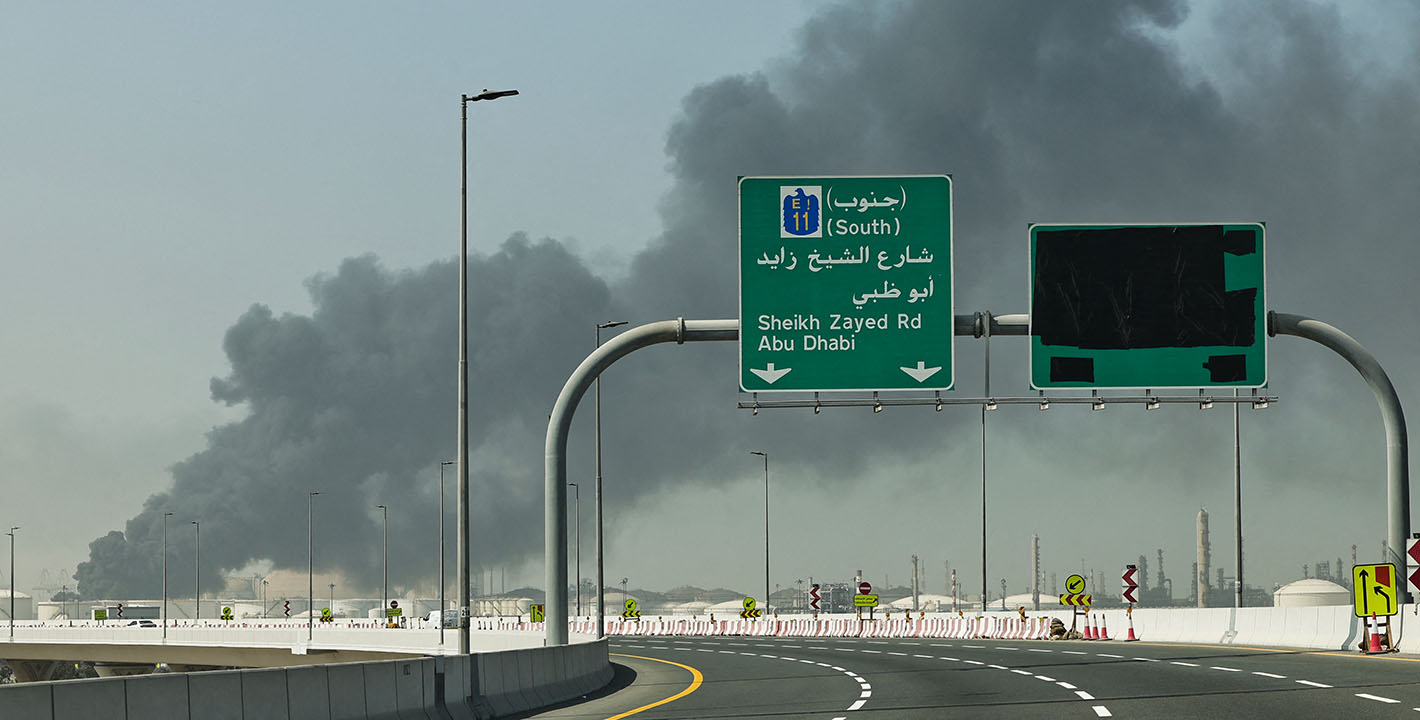
The countries in the region are managing the fallout from Iranian strikes in a paradoxical way.

Angie Omar

French President Emmanuel Macron has unveiled his country’s new nuclear doctrine. Are the changes he has made enough to reassure France’s European partners in the current geopolitical context?

Rym Momtaz, ed.
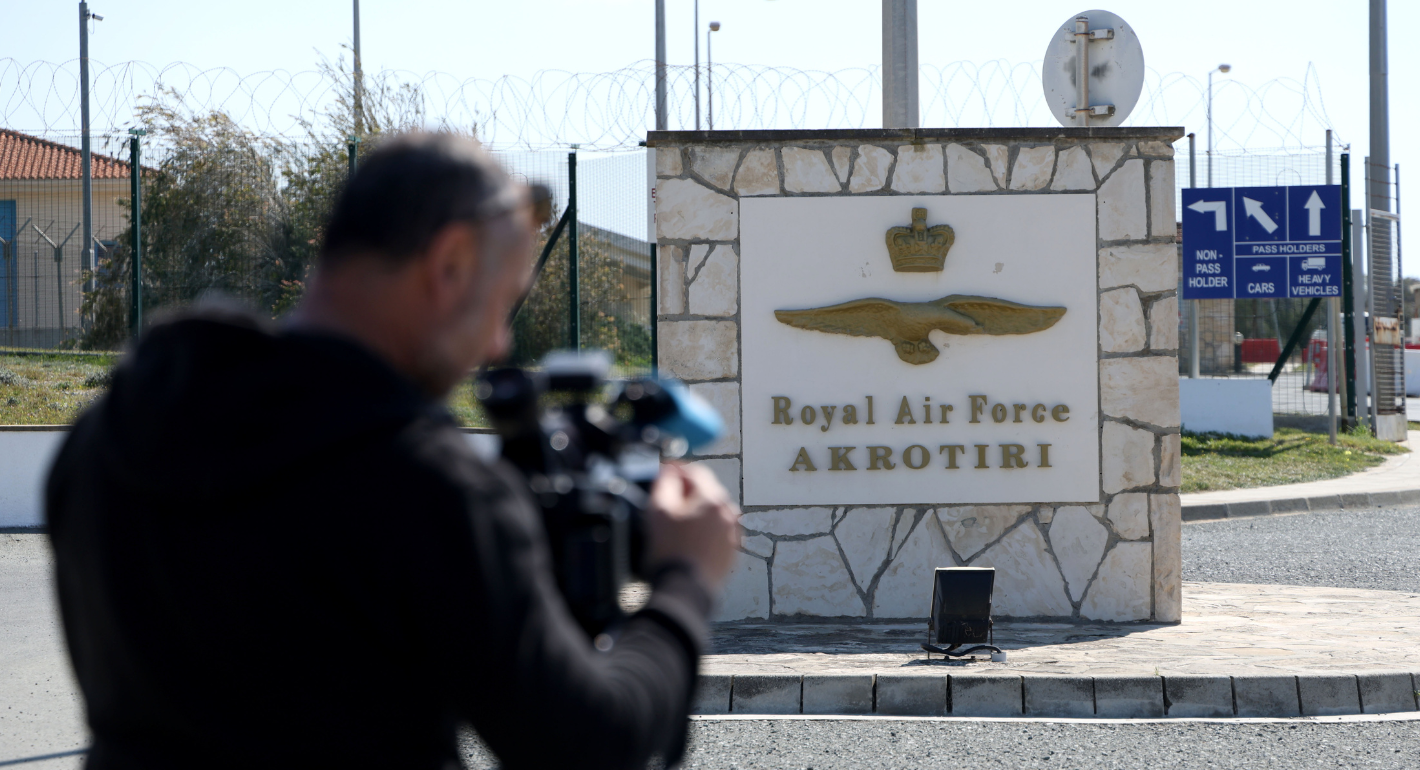
The drone strike on the British air base in Akrotiri brings Europe’s proximity to the conflict in Iran into sharp relief. In the fog of war, old tensions in the Eastern Mediterranean risk being reignited, and regional stakeholders must avoid escalation.

Marc Pierini

In an interview, Hassan Mneimneh discusses the ongoing conflict and the myriad miscalculations characterizing it.

Michael Young