

Paper
Congress needs to step up and make EXIM a low-carbon financing powerhouse.
Jesse Young
{
  "authors": [],
  "type": "pressRelease",
  "centerAffiliationAll": "",
  "centers": [
    "Carnegie Endowment for International Peace"
  ],
  "collections": [],
  "englishNewsletterAll": "",
  "nonEnglishNewsletterAll": "",
  "primaryCenter": "Carnegie Endowment for International Peace",
  "programAffiliation": "",
  "programs": [],
  "projects": [],
  "regions": [
    "United States",
    "North America"
  ],
  "topics": [
    "Economy",
    "Trade"
  ]
}
REQUIRED IMAGE
Moisés Naím, editor-in-chief of the award-winning Foreign Policy magazine, will rejoin the Carnegie Endowment. As a senior associate in Carnegie’s International Economics Program, Naím will analyze international economics and politics, trade and investment, multilateral organizations, economic reforms, and the economic, political, and cultural consequences of globalization.
WASHINGTON, April 2—Moisés Naím, editor-in-chief of the award-winning Foreign Policy magazine, will rejoin the Carnegie Endowment for International Peace. As a senior associate in Carnegie’s International Economics Program, Naím will continue to analyze international economics and politics, trade and investment, multilateral organizations, economic reforms, and the economic, political, and cultural consequences of globalization.
Making the announcement, Jessica Mathews, president of the Endowment, said:
“We could not be more pleased to welcome back Moisés. When Carnegie sold Foreign Policy to the Washington Post Company in October 2008, it was a recognition of its tremendous growth under Moisés’ leadership. While building a prestigious, nationally recognized magazine, Moisés continued to lead the field in understanding how globalization shapes the world. Joining Uri Dadush and a team of experts around the world, Moisés will provide the fresh thinking that policy makers need to address the post-crisis global economy.”
Naím said:
“Coming back to the Carnegie Endowment is an exciting opportunity. Joining a truly global think tank whose scholars are driven to tackling some of the thorniest problems of our time is a great privilege.”
During Naím’s 14 years at Foreign Policy, he transformed the publication from an academically-oriented journal to an ambitious glossy magazine which has won the National Magazine Award for General Excellence in three out of the past six years. Additionally, ForeignPolicy.com has quickly established itself as the daily destination for people engaged with global ideas and now receives more than 1.2 million unique visitors a month.
Susan Glasser, who succeeds Naím as editor-in-chief of Foreign Policy magazine, said:
“It couldn’t be more of an honor to succeed Moises. He is a true visionary who imagined a great magazine—and then went out and created it.”
Naím has served as editor-in-chief of Foreign Policy since 1996. Previously, he served as Venezuela's minister of trade and industry and played a central role in the initial launching of major economic reforms in the early 1990s.
###
NOTES
Moisés Naím, currently editor-in-chief of Foreign Policy magazine, will join the Carnegie Endowment in August. He has written extensively on international economics and global politics, economic development, and the unintended consequences of globalization. He is the author or editor of eight books and his last one, Illicit: How Smugglers Traffickers and Copycats are Hijacking the Global Economy, was selected by the Washington Post as one of the best books of the year and was translated into 18 languages. A documentary based on Illicit, produced by National Geographic and PBS, won an Emmy in 2010. Naím’s columns are published every Sunday by Spain’s El Pais and Italy's Il Sole 24 Ore and reprinted by more than forty leading newspapers worldwide.
Naím served as Venezuela’s minister of trade and industry and played a central role in the initial launching of major economic reforms in the early 1990s. Prior to his ministerial position, he was professor of business and economics and dean at Instituto de Estudios Superiores de Administración (IESA) in Caracas. He was also the director of the project on economic reforms at the Carnegie Endowment for International Peace and served as executive director at the World Bank. Naím is a member of the board of directors of the National Endowment for Democracy, International Crisis Group, Population Action International, and the Group of Fifty.
Naím holds a Ph.D. and a master’s degree from the Massachusetts Institute of Technology.
Carnegie does not take institutional positions on public policy issues; the views represented herein are those of the author(s) and do not necessarily reflect the views of Carnegie, its staff, or its trustees.

Congress needs to step up and make EXIM a low-carbon financing powerhouse.
Jesse Young
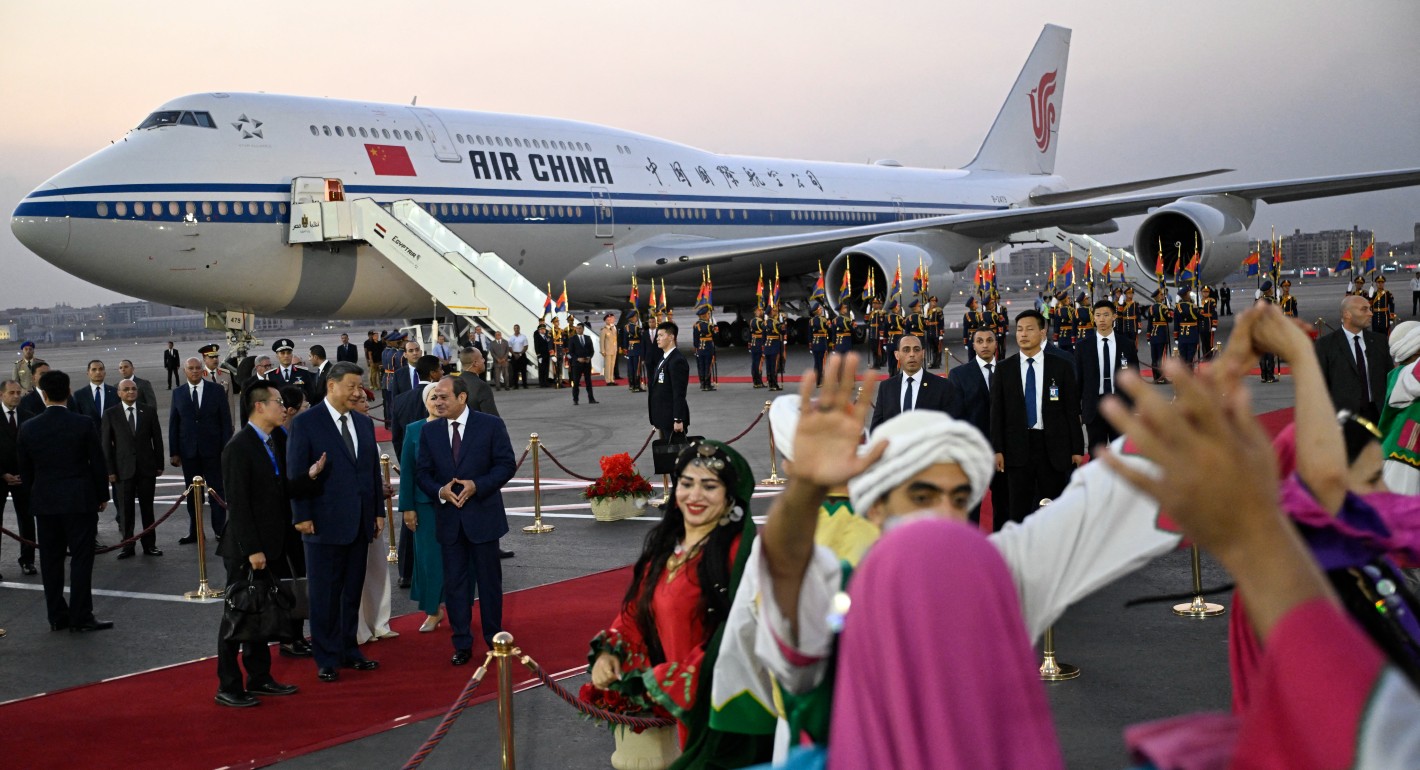
Amid celebrations of bilateral ties was a deeper focus on stability in the Middle East.

Amr Hamzawy

Canadian Prime Minister Mark Carney has twice inspired praise for standing up to U.S. President Donald Trump: at the 2026 World Economic Forum in Davos and on Canada-U.S. trade negotiations. Is Carney showing a third way better than the EU has in dealing with the Trump administration?

Rym Momtaz, ed.

Middle Eastern states should welcome an accelerated U.S. disengagement from their region.

Michael Young

Xi, Putin, and other regional leaders are back-slapping in Bishkek, but the SCO has yet to answer the most serious questions about continental Asia's economic future.

Evan A. Feigenbaum