

Research
- +5
Alper Coşkun, Fatih Ceylan, Tacan İldem, …
{
  "authors": [
    "Sinan Ülgen"
  ],
  "type": "legacyinthemedia",
  "centerAffiliationAll": "dc",
  "centers": [
    "Carnegie Endowment for International Peace",
    "Carnegie Europe",
    "Malcolm H. Kerr Carnegie Middle East Center"
  ],
  "collections": [
    "Turkey’s Transformation"
  ],
  "englishNewsletterAll": "menaTransitions",
  "nonEnglishNewsletterAll": "",
  "primaryCenter": "Carnegie Europe",
  "programAffiliation": "MEP",
  "programs": [
    "Middle East"
  ],
  "projects": [],
  "regions": [
    "Middle East",
    "Europe",
    "Türkiye",
    "Levant",
    "Western Europe"
  ],
  "topics": [
    "Foreign Policy",
    "EU",
    "Economy"
  ]
}
Source: Getty
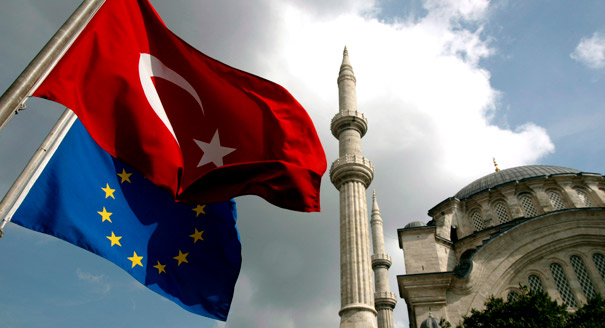
The crisis in the eurozone may prove a blessing in disguise for Turkey, given its strong economic performance over the past years, and could even revitalize Turkey’s prospects for membership in the European Union.
Source: European Voice

Turkey's economy relies heavily on the EU – almost half of its exports are destined for, and three-quarters of foreign direct investment originates from EU countries – and yet its economy is growing strongly. Turkey bounced back quickly from the economic contraction of 2009 (when the economy shrank by 4.7%), with growth reaching double digits in the first quarter of 2010.
The resilience of the Turkish economy can be explained by three factors: fiscal austerity, an under-leveraged economy, and a robust banking industry. Following the economic crisis of 2000-01, it undertook a set of austerity reforms led by the International Monetary Fund. Within a few years, it began recording large budget surpluses. In addition, its public debt dropped significantly, from a high of 98% of gross domestic product in 2001 to 40% in 2008. When the global conditions worsened, it responded with a strong fiscal stimulus and yet its primary budget remained in balance and its public debt stabilised at 46%.
A conservative approach to banking regulation and consumer finance has also allowed Turkey to weather the storm created by the eurozone crisis. Strong regulatory oversight in the banking sector in the aftermath of the 2001 crisis effectively eliminated the risk from toxic assets and non-performing loans. Moreover, the banking system is not heavily dependent on foreign funding, relying instead on its domestic depositors to provide funding for its loan activities.
The crucial question, however, is whether Turkey can continue this strong performance if the eurozone fails to recover. Given Turkey's heavy reliance on the EU, it is difficult to see how its economy can keep on defying the laws of gravity.
Indeed, Turkey is now beginning to suffer the repercussions of Europe's economic woes. Exports have plummeted, with revenues linked to EU markets decreasing by an average of 30% in 2009. Turkish exporters now view with increasing concern the austerity package introduced by the German government. Foreign investments from EU countries are starting to dry up, having decreased by 40% in the past 12 months. In addition, the euro's depreciation is causing its trade deficit to balloon, since most of Turkey's export earnings are in euros and its imports are in dollars.
So, for the foreseeable future the Turkish economy will be affected by the recovery in Europe. That will create additional difficulties for Turkey's membership bid, which has already stalled because of a lack of political will in the EU. To gain support for the austerity measures that they will have to adopt at home, European leaders will need all the political capital they can muster. They are unlikely to expend much capital on selling the benefits of future enlargement to an increasingly sceptical public.
But Turkey's economic performance should remain relatively strong. It will remain among the few European countries that fulfil the Maastricht criteria on public debt. Its growth will be faster than that of many eurozone members, and so the convergence of incomes with the EU average will be more visible. And the fundamental factors that made Turkey resilient during the crisis will continue to help it.
Despite the brake put on Turkey's economic performance by the EU's difficulties, this period of crisis should confirm the country's status as an emerging regional power.
Gradually, the EU may also grow to see Turkey's economic performance as a valuable asset for the EU, rather than as a liability. If so, the crisis in the eurozone may prove a blessing in disguise for Turkey – a changed view of Turkey's economy could revitalise Turkey's membership perspective.

Senior Fellow, Carnegie Europe
Sinan Ülgen is a senior fellow at Carnegie Europe in Brussels, where his research focuses on Turkish foreign policy, transatlantic relations, international trade, economic security, and digital policy.
Recent Work

Alper Coşkun, Fatih Ceylan, Tacan İldem, …
Carnegie does not take institutional positions on public policy issues; the views represented herein are those of the author(s) and do not necessarily reflect the views of Carnegie, its staff, or its trustees.
Despite the agreement’s uncertainty, it’s still a significant development in regional and nuclear policy.


Andrew Leber, Jane Darby Menton
“AI safety in parallel” is modest and pragmatic but vital.

Matt Sheehan

Trump is distracted and Ukraine wants Europe to step up. The continent’s leaders must find their voice and assert it in talks with Russia.

Alissa de Carbonnel
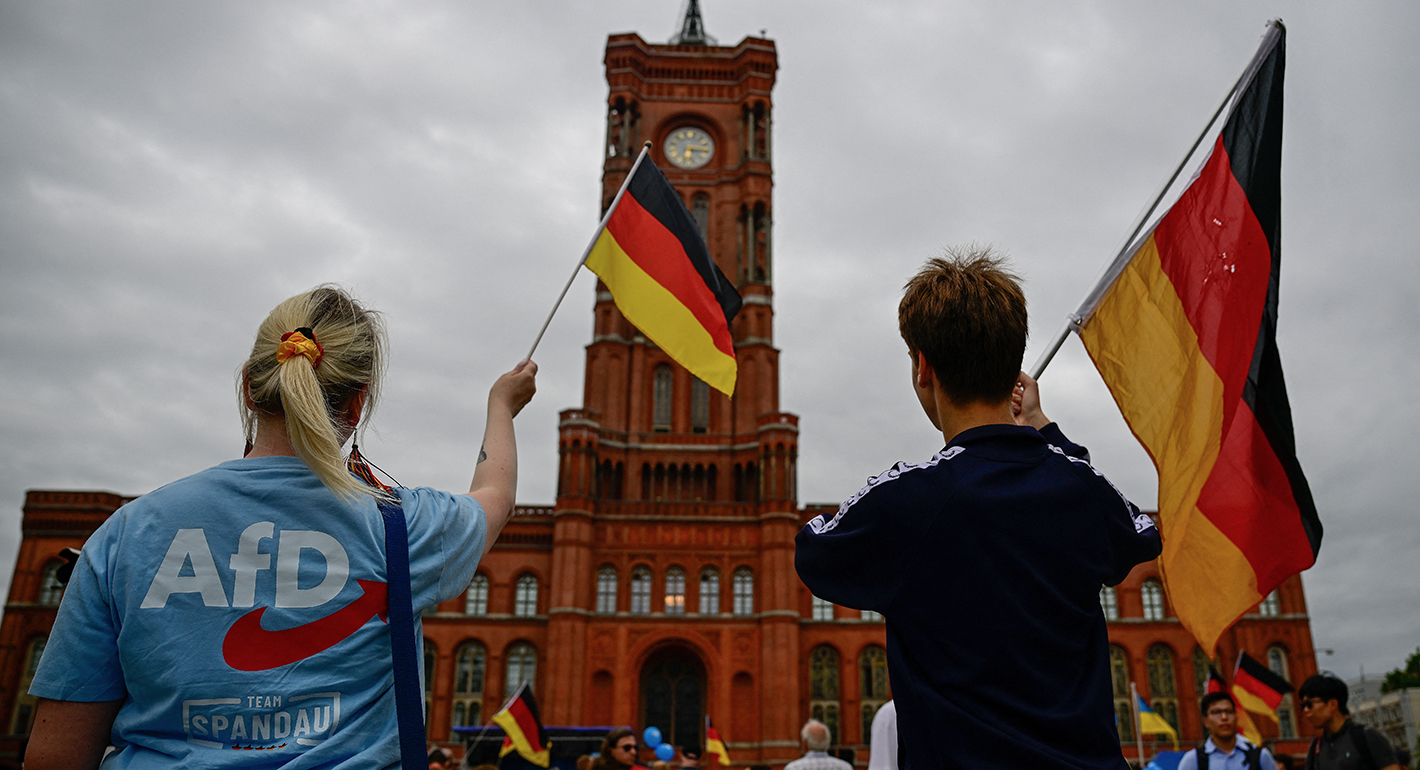
Unresolved tensions within the AfD may ultimately constrain the its potential as a leader among European and global populist forces.
Jeremy Cliffe

There is a deeply rooted assumption in post–Cold War American statecraft that overwhelming military and economic power translates directly into favorable political outcomes. But force alone is rarely enough. To meet the challenges of the mid-21st century, Washington needs a cultural shift toward a mindset that takes negotiation far more seriously.

Cecily Brewer