

Article
- +1
Toby Dalton, Mark Hibbs, Nicole Grajewski, …
{
  "authors": [
    "Mark Hibbs"
  ],
  "type": "legacyinthemedia",
  "centerAffiliationAll": "dc",
  "centers": [
    "Carnegie Endowment for International Peace"
  ],
  "collections": [],
  "englishNewsletterAll": "ctw",
  "nonEnglishNewsletterAll": "",
  "primaryCenter": "Carnegie Endowment for International Peace",
  "programAffiliation": "NPP",
  "programs": [
    "Nuclear Policy"
  ],
  "projects": [],
  "regions": [
    "East Asia",
    "Japan"
  ],
  "topics": [
    "Nuclear Policy",
    "Nuclear Energy"
  ]
}
Source: Getty
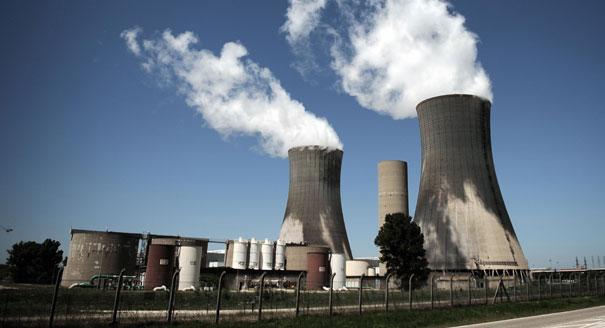
Since the accident at Japan's Fukushima Daiichi nuclear power, countries have reviewed the safety of their nuclear infrastructure and plans for expansion, with some choosing to cease their nuclear programs altogether.
Source: Jane's Intelligence Review

Before the onset of the Fukushima nuclear crisis, which was triggered by a huge earthquake and tsunami that struck the plant on 11 March 2011, more than 30 countries were considering establishing their own nuclear power programmes, and global nuclear energy production was projected to triple over the next 50 years. Dubbed a 'nuclear renaissance' by energy analysts and the international media, countries looking to meet increasing energy demands were enticed by the relatively low operating costs and reduced carbon emissions offered by nuclear power - particularly at a time when the industry had managed to recover its reputation following serious accidents at Three Mile Island in the United States in 1979 and at Chernobyl in the Soviet Union in 1986.
However, the Fukushima crisis has clearly set back the tide of interest in nuclear 'new builds' and has curbed power production in those states with existing nuclear programmes - including Japan. The revelation that, like the Three Mile Island and Chernobyl incidents before it, the Fukushima crisis largely resulted from errors of judgment will be a key factor in decisions by governments, regulators and the general public regarding the use of nuclear power in the months and years ahead.
This article was originally published in Jane's Intelligence Review.

Nonresident Senior Fellow, Nuclear Policy Program
Hibbs is a Germany-based nonresident senior fellow in Carnegie’s Nuclear Policy Program. His areas of expertise are nuclear verification and safeguards, multilateral nuclear trade policy, international nuclear cooperation, and nonproliferation arrangements.
Recent Work


Toby Dalton, Mark Hibbs, Nicole Grajewski, …
Mark Hibbs
Carnegie does not take institutional positions on public policy issues; the views represented herein are those of the author(s) and do not necessarily reflect the views of Carnegie, its staff, or its trustees.

A deep dive into the policy ecosystems behind battery development in China, South Korea, Japan, the European Union (including some of its member states), the United States, Canada, and India.



Milo McBride, Herbert Crowther, Darcie Draudt-Véjares, …

The Plaza Accord was not an externally imposed punishment of Japan but part of a broader restructuring that Japanese economists and policymakers themselves recognized was necessary. Its effects were undermined, however, when Tokyo responded to the resulting slowdown with policies that exacerbated investment, credit expansion, and the very imbalances the adjustment was intended to resolve.

Michael Pettis

The nuclear relationship between China and the United States is increasingly shaped by widening perception gaps rather than deliberate strategic design.

Tong Zhao

A look at why states without nuclear weapons are seeking naval nuclear propulsion, whether they can legally and technically deliver it, what it will cost them, and what responsible stewardship of the capability would look like.

Jamie Kwong

U.S. trading partners in Asia are closely watching the dispute for signs of how it may affect their own interests.

Barbara Weisel