

Commentary
Uri Dadush
{
  "authors": [
    "Uri Dadush"
  ],
  "type": "legacyinthemedia",
  "centerAffiliationAll": "",
  "centers": [
    "Carnegie Endowment for International Peace"
  ],
  "collections": [],
  "englishNewsletterAll": "",
  "nonEnglishNewsletterAll": "",
  "primaryCenter": "Carnegie Endowment for International Peace",
  "programAffiliation": "",
  "programs": [],
  "projects": [],
  "regions": [
    "North America",
    "United States",
    "Southern, Eastern, and Western Africa"
  ],
  "topics": [
    "Economy"
  ]
}
Source: Getty
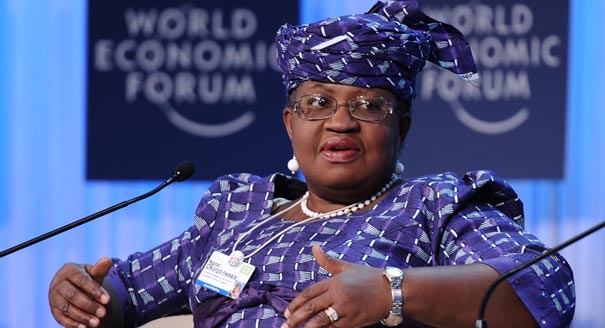
Over three dozen ex-World Bank officials have backed Nigerian finance minister Ngozi Okonjo-Iweala's bid for the World Bank's presidency. But does she stand a real chance of becoming the institution's first non-U.S. leader?
Source: CNN
Appearing on CNN’s “Quest Means Business,” Uri Dadush discussed Nigerian finance minister Ngozi Okonjo-Iweala’s candidacy for the World Bank’s top job. Dadush was one of 39 ex-World Bank economists and managers to endorse Okonjo-Iweala in an open letter to the bank’s members, citing her “deep experience in international and national issues of economic management.” Dadush acknowledged that the chances of a developing country leader being selected for the World Bank’s presidency are slim, as Americans have always led the organization in the past. But there is a small possibility that Okonjo-Iweala could be selected, especially if she becomes the consensus candidate among the World Bank’s developing country members, he concluded.

Former Senior Associate, International Economics Program
Dadush was a senior associate at the Carnegie Endowment for International Peace. He focuses on trends in the global economy and is currently tracking developments in the eurozone crisis.
Recent Work
Uri Dadush
Uri Dadush
Carnegie does not take institutional positions on public policy issues; the views represented herein are those of the author(s) and do not necessarily reflect the views of Carnegie, its staff, or its trustees.

China’s rapid technological progress and its first-rate infrastructure are often cited as refuting the claim that China has been systematically overinvesting in non-productive projects for many years. In fact, as the logic of overinvestment and the many historical precedents show, the former is all-too-often consistent with the latter.

Michael Pettis
If Washington cannot adapt to the ongoing transformations of a multipolar world, its superiority will become a liability.

Amr Hamzawy
A prerequisite of serious talks is that the country’s leadership consolidates majority national support for such a process.

Michael Young

On March 10, 2026, India’s Union Cabinet approved amendments to Press Note 3, a regulation that mandated government approval on all foreign direct investment (FDI) from countries sharing a land border with India. This amendment raises questions primarily about whether its stated benefits will materialize and if the risks have been adequately weighed. This piece will address the same.

Konark Bhandari
Here’s why—and what the next president needs to do to fix the process.


Daniel C. Kurtzer, Aaron David Miller