

Commentary
Judy Dempsey
{
  "authors": [
    "Judy Dempsey"
  ],
  "type": "legacyinthemedia",
  "centerAffiliationAll": "",
  "centers": [
    "Carnegie Endowment for International Peace",
    "Carnegie Europe"
  ],
  "collections": [],
  "englishNewsletterAll": "",
  "nonEnglishNewsletterAll": "",
  "primaryCenter": "Carnegie Europe",
  "programAffiliation": "",
  "programs": [],
  "projects": [],
  "regions": [
    "Europe"
  ],
  "topics": []
}
Source: Getty
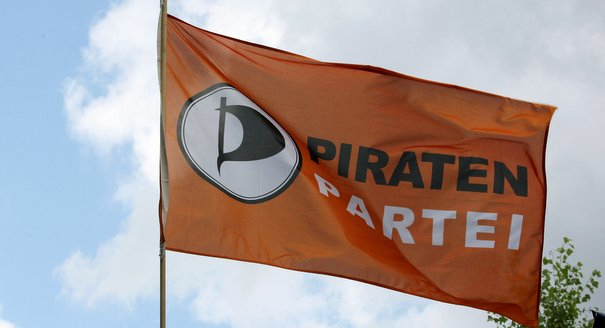
The success of Germany's Pirates party is the result of its transparency and accountability. Sustaining that enthusiasm through national elections in 2013 will be a challenge, however.
Source: New York Times

Once she became chancellor in 2005, German lawmakers, especially those belonging to Ms. Merkel’s conservative Christian Democratic Union, had no choice but to follow her in communicating through text messages.
Ms. Merkel went further. She introduced her own weekly podcast on the chancellery’s Web site. Other parties soon caught on, with the pro-business Free Democrats building a lively Web site designed to generate discussion.
But Germany’s established parties could never satisfy the political expectations of a younger generation weaned on the Internet and globalization. “That’s where the Pirates came in to fill the vacuum,” Stephan Klecha, a political scientist at the Institute for Democratic Research at Georg-August University, Göttingen, said of the political party. “They are convinced they can change the way politics and democracy function.”
The Pirates’ rise has been phenomenal. They were catapulted in September into the Berlin City Parliament, later into the legislature in the western state of Saarland, then last week into the government of the northern state of Schleswig-Holstein.And Sunday, the Pirates won nearly 8 percent of the vote in North Rhine-Westphalia — a major victory in what is considered a bellwether state. There were other big upsets there, too: The Social Democrats and Greens were swept back into power, while the Christian Democrats were trounced, a big defeat for Ms. Merkel.
Buoyed by such successes, the Pirates now have their sights on national elections set for next year, even though they have few concrete policies toward the euro crisis, the economy, or social or security issues. Where they exist, their suggestions tend to be costly, like providing every schoolchild with a laptop computer, or giving everybody a basic income independent of work.
What they have going for them is a special kind of transparency and accountability unknown to Germany’s other parties. Anyone can sign on and register as a guest or member to the Pirates’ Web site and see a particular method of democracy at work. The Pirates call it “liquid democracy.”
No issues are taboo, with one exception: When a prominent party member declared he did not believe the Holocaust had occurred, the party leadership, after a stormy public debate, declared neo-Nazi propaganda off-limits.
Sustaining such popularity and such a degree of democracy for a party that has raised high expectations is not going to be easy, as Sebastian Nerz, deputy leader of the Pirates, acknowledged. “We know that power can change a party, especially how it functions and how it connects with its supporters and members. That will be difficult for us,” Mr. Nerz said in an interview.
Indeed, when the Pirates elected a new leadership last month, the reaction in the stratosphere of liquid democracy was revealing. Some said the party was now becoming hierarchical, that decisions would soon be taken “top-down” instead of “bottom-up,” that the Pirates would evolve into a mainstream party interested only in power.
Mr. Nerz said he was aware of the criticism. “Now that we are in a few state legislatures, we want to have a much more vibrant and open way of working between the leadership, the lawmakers and our supporters,” he said. “It is going to be hard especially when it comes to taking decisions and making policy.”
The established parties are caught in shock and awe.
“The Pirates are taking support away from all parties but especially the Greens,” said Andrea Römmele, a professor for communication in politics and civil society at the Hertie School of Governance in Berlin.
One reason is that the Greens are now seen as part of the political establishment. Their original program — protecting the environment and ending nuclear power — is now redundant. Ms. Merkel made sure of that following the nuclear catastrophe last year in Fukushima, Japan, when she decided to close Germany’s nuclear power plants.
The Pirates have also stolen votes from the Free Democrats, taking over the baton of civil liberties that the Free Democrats abandoned several years ago in favor of business interests. That is the other interesting aspect of the Pirates. New protest movements in other European countries are fiercely populist, right-wing and anti-immigration. The Pirates are anything but.
The only party relishing the rise of the Pirates is the Christian Democrats.
Despite the electoral setback last Sunday, Ms. Merkel’s popularity, and that of her party on the national level, is on the rise again, in part because of the Pirates.
The Pirates are dividing the left, much to the delight of the conservatives. It means that the prospect of a coalition of Social Democrats and Greens winning the national elections next year seems weaker than a few months ago. The speculation is of another “grand coalition” of conservatives and Social Democrats.
“For the moment, Ms. Merkel has the advantage because the Pirates have splintered the left-wing parties,” Mr. Nerz acknowledged.
Of course, all the political parties could make an enormous effort between now and autumn 2013 to reorganize their Internet sites. But that would not be enough to woo over Pirates. The parties would have to radically change their attitudes toward transparency when it comes to making decisions and laws. “I can’t see them making such a leap,” said Mr. Klecha.
Still, if that were to happen, the Pirates’ role would have achieved what they set out to do: change the way politics and democracy function. “I suppose we would no longer be needed,” Mr. Nerz said.
This article was originally published in the New York Times.

Nonresident Senior Fellow, Carnegie Europe
Judy Dempsey is a nonresident senior fellow at Carnegie Europe
Recent Work
Judy Dempsey
Judy Dempsey
Carnegie does not take institutional positions on public policy issues; the views represented herein are those of the author(s) and do not necessarily reflect the views of Carnegie, its staff, or its trustees.

Funding Ukraine remains a priority for European leaders. As Russia’s war of aggression heads into another winter, two feasible options to mobilize support for Kyiv should be fast-tracked.


Vladyslav Rashkovan, Gregory P. Wilson

While the EU and European governments are embracing the much-lauded middle-power moment, this entails three difficult conundrums.

Richard Youngs

Europe is facing rising populism internally as well as external pressures from Russia, China, Turkey, and the United States.

Dimitar Bechev

A notable degree of participative democracy has firmly arrived in Europe. But to have more far-reaching impact, democratic deliberation needs to move into a radically new phase.
Richard Youngs

Much has been said of the changes Brussels is trying to make to the EU enlargement process. Here’s why gradual integration might—or might not—be the answer.
Dimitar Bechev