

Q&A
- +1
Sophia Besch, Alper Coşkun, Nate Reynolds, …
{
  "authors": [
    "Stephen Wertheim"
  ],
  "type": "other",
  "centerAffiliationAll": "dc",
  "centers": [
    "Carnegie Endowment for International Peace"
  ],
  "englishNewsletterAll": "americanStatecraft",
  "nonEnglishNewsletterAll": "",
  "primaryCenter": "Carnegie Endowment for International Peace",
  "programAffiliation": "ASP",
  "programs": [
    "American Statecraft"
  ],
  "regions": [
    "United States",
    "Europe"
  ],
  "topics": [
    "Global Governance",
    "Foreign Policy",
    "Security",
    "NATO"
  ]
}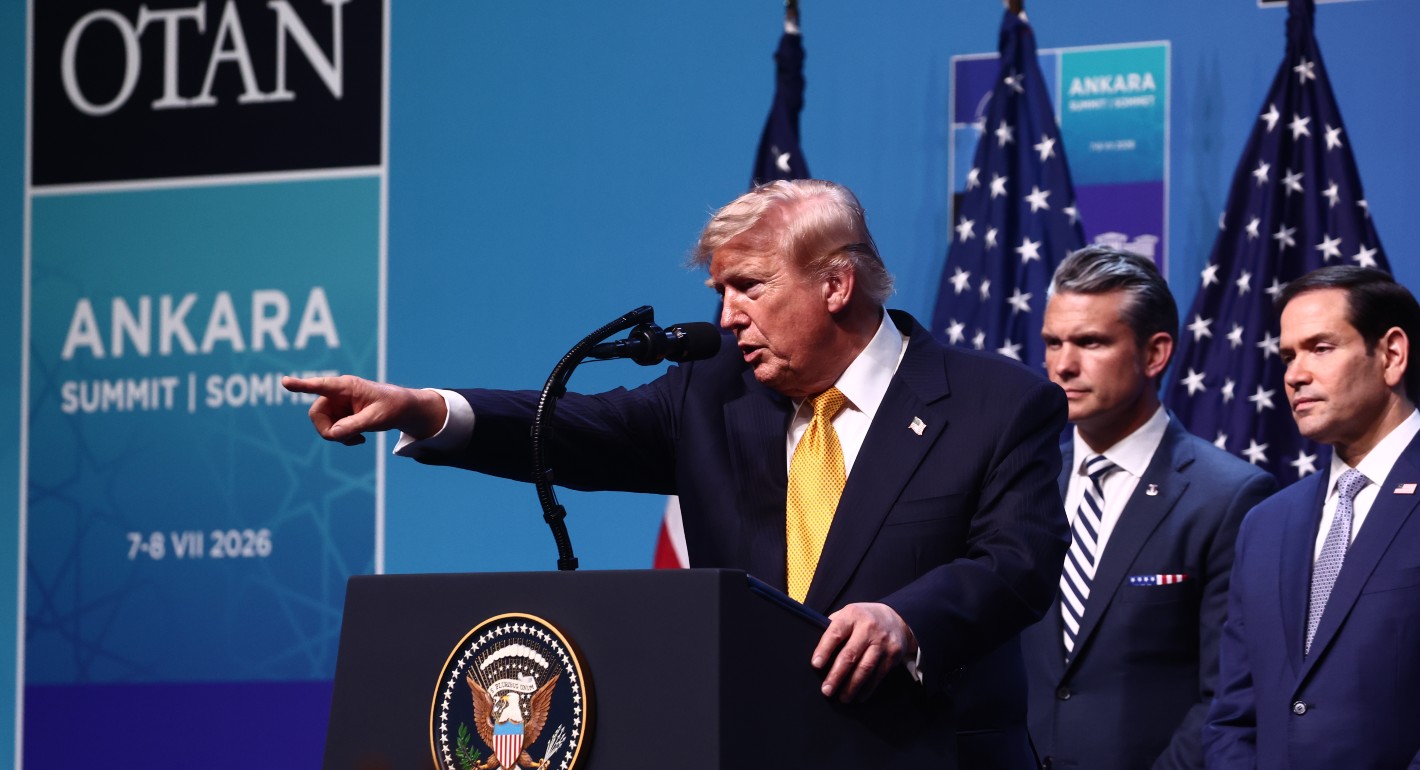
Press conference at the NATO Summit in Ankara, Turkiye, on July 8, 2026. (Photo by Jakub Porzycki/NurPhoto via Getty Images)
Does Donald Trump want to redraw the map of the world? Historian and geopolitical thinker Stephen Wertheim tries to parse the logic behind current American foreign policy
This interview was originally published in Dutch by Knack on July 25, 2026. It was translated from Dutch using Claude and cross-checked with the original English interview, with additional edits for clarity.
Interview and writing by Jeroen Zuallaert
It is decidedly not easy to fathom how America conducts foreign policy these days. “Donald Trump is exceptionally difficult to read,” says Stephen Wertheim, a historian at the Carnegie Endowment for International Peace who tries to understand the motives behind American foreign policy. “The president is definitely somebody who says things to try to achieve an effect. When he declares dozens of times that he’s about to conclude a deal with Iran, he’s trying to message to the American people. When he says the regime is made up of very rational people, that message is meant for Iran: I’m willing to negotiate. And days later, they’re a bunch of madmen. They’re the same people—they haven’t changed. Sometimes I wonder: what’s the real Trump in there? There may not be a real Trump.”
Wertheim has long been fascinated by how America positions itself as a world power. In Tomorrow, the World, his most recent book, he examined how American policymakers arrived at the idea of making the United States the global military power it is today. In his next book, he intends to investigate why the country never relinquished that role after the Cold War ended. Because Donald Trump, too, seems bent on expanding America’s role in the world.
“In Trump’s first term, the apparatus of policymaking was fairly functional: he operated within a thick bureaucratic structure that informs and steers the president,” Wertheim observes when we speak by video link. “In the second term, that is completely different. Trump just does stuff, and then everybody else around Trump catches up and creates a rationale around it. They try to guess what he’s thinking or wants, and act accordingly.”
KNACK: Is Trump’s foreign policy mostly improvisation, or is there a long-term strategy behind it?
WERTHEIM: It’s usually both—it’s not one or the other, and it is often difficult to distinguish what is what. Any utterance Trump makes about Greenland, for example, may well be improvised. When he declared that he wanted to take Greenland, it may be that nobody in the U.S. government had any notion that today was the day he was going to say that. But at the same time, Trump’s attachment to Greenland is long in the making—it goes back to his first term. So this is not just a passing fancy.
KNACK: How do you square Trump’s current foreign policy with that of his first term?
WERTHEIM: His second term is implicitly premised on the idea that his first term was a failure. The people around Trump seem to assume he was stymied because the people around him were inherited from the existing Republican Party apparatus. What’s more, Trump discredited himself by trying to steal the 2020 election. As a result, he is now surrounded exclusively by people who had loyalty to him—the glue that holds the administration together is loyalty to the president. Those people may be loyal, but they have very different agendas.
KNACK: Do you discern a larger strategy behind Trump’s foreign policy?
WERTHEIM: There is no grand strategy, but there are a couple of things we can usefully say. Trump sees himself as a transformative figure. He wants to be able to say that Donald Trump has done great things that none of his predecessors could do. How he wants to change the world is not fixed. At first he wrote the script for himself that his legacy would be a legacy of a peacemaker. But he’s also gotten into his head that he can use military force to take longtime adversaries of the United States off the map—Venezuela, Iran, Cuba. Or that he can annex Canada. Or take Greenland. Or maybe the Panama Canal.
KNACK: He has also threatened to leave NATO. Do you think that threat is sincere?
WERTHEIM: I don’t think Trump wishes in his heart of hearts that he could get the U.S. out of NATO. He says things that might suggest that, in an effort to use the alliance as leverage to obtain benefits for the United States. Why would he throw away the very platform that gives him that leverage? I think what Trump would like to say at the end of his administration is: I got really tough with our allies, because they were screwing us. The Europeans are now taking the lead in their own conventional defense. As a result, America is stronger, and it’s all costing us less money.
KNACK: Which, at the moment, is also true.
WERTHEIM: As of today, he’d have a pretty good case to make. The only question is: has trust eroded to such a degree that the very notion of transatlantic cooperation could slip away?
KNACK: Trump is not the first president to declare that America can no longer be the world’s policeman. How does he differ from his predecessors?
WERTHEIM: Trump is not some kind of isolationist. De facto, he has always accepted a global sense of American prerogative. About traditional adversaries like Iran or North Korea, he has never said: this adversary is on the other side of the world and doesn’t actually pose a threat to the United States. He simply gives that global role a different content. He has, for example, dispensed with the notion that the United States acts for the benefit of humanity.
Another major difference is that, for Trump, allies are means to other ends, not ends in themselves. Nor does he treat adversaries as permanent adversaries. He sees the world as perpetually competitive—always a scramble—in which allegiances should regularly change sides.
KNACK: What does that mean for Europe?
WERTHEIM: American presidents have usually viewed allies as a force multiplier—a way of amplifying America’s power. Not Trump. He thinks allies are ripping off the United States, and he will always think that.
That was the problem with the NATO countries’ pledge to spend 5 percent of GDP on defense a year ago: where were you going to go from there? Next time, maybe 10 percent? 15?
That aside, I have to say Trump has posed a legitimate question: do we need these allies? What is the potential cost, weighed against the benefit? What should the distribution of defense burdens be? These are important questions, and unfortunately, it seemed to take Donald Trump to knock them open and finally have that crucial debate.
KNACK: Can you give an example of such an ally?
WERTHEIM: The U.S. relationship with Israel is clearly overdue for reconsideration. There have been so many ways in which America’s global interests have been damaged by following Israel’s lead almost blindly in recent years and decades. It’s also correct to expect European countries to build sufficient military capabilities to deter and defend against Russia themselves over time.
KNACK: And yet even Trump has failed to scale back America’s global military role. How do you explain that?
WERTHEIM: At the end of the Cold War, plenty of seasoned Cold Warriors also wrote that the United States should now become a “normal country in a normal time,” to quote one of them, Jeane Kirkpatrick. The threat from totalitarian great powers, after all, was over. But America chose a different course.
What’s more, the United States found it could have its cake and eat it too. It could cut defense spending down to 3 percent of GDP and still emerge as the most powerful country that, some argued, had ever existed. Foreign policy was very few Americans’ top priority. What happened was a profound depoliticization of foreign policy, which provided a permissive environment for American policymakers to do any number of things. They maintained the defense commitments America had taken on during the Cold War and then enlarged them, particularly through the enlargement of NATO.
It's actually quite remarkable: the average American doesn't really feel there’s any great purpose for American power, but also doesn’t necessarily believe that power is coming at any great expense.
KNACK: Can you make that concrete?
WERTHEIM: Take the war Trump launched against Iran. It was unpopular from the start, and the effects on gas prices at the pump were so much more important for Americans than anything that seemed to be going on with Iran.
KNACK: You called the war with Iran a “boomer war.”
WERTHEIM: The war had an anachronistic quality from the very beginning. In the opening weeks, it had something close to majority support only among the oldest cohort of Americans. And even boomers themselves took not much time to turn against the war.
KNACK: How do you explain Trump’s decision to attack Iran?
WERTHEIM: He felt he had cracked the code. He had succeeded in removing Nicolás Maduro from Venezuela. In January there were large-scale protests against the Iranian regime. And that regime had barely reacted to the U.S. and Israeli attacks of June 2025, imposing no real costs on the United States. That fed Trump’s hubristic belief that the Iranian regime was a paper tiger and would not retaliate severely this time either. Tragically, the Iranians have since come to the conclusion that they must hit hard in order to be taken seriously.
KNACK: Unlike previous American administrations, the Trump administration seems intensely focused on its own hemisphere—Latin America above all. Does that surprise you?
WERTHEIM: Trump wants to deport undocumented immigrants, combat the drug trade, and curb Chinese influence, and he is prepared to vigorously exercise American power to do it. A focus on the Western Hemisphere is therefore logical. Migration and drugs are real problems; what the Trump administration is trying to do about them is another matter. And there is probably only one thing on which all the factions backing Trump on foreign policy can agree: the United States has a fundamental national interest in limiting the influence of rival great powers in the Western Hemisphere.
KNACK: Do you see that attitude as a return to a world of spheres of influence, as in the nineteenth century?
WERTHEIM: Trump shares in the normal hypocrisy of American foreign policy: spheres of influence for me, but not for thee. Although not stated explicitly, global competition with Russia and China is there in the background of Trump’s National Security Strategy. Granting regional spheres to Russia and China would mean evacuating American positions in Europe and East Asia. Trump hasn’t shown much desire to do that.
KNACK: How do you understand Trump’s China policy? He seems to have all but given up the fight.
WERTHEIM: Trump found that China has leverage over the United States—it can hurt America by threatening to cut off exports of critical minerals. That has produced a kind of mini-détente. It’s not very stable, but Trump does seem to be deterred from trying to bring the hammer down on China, for the time being.
In his first term, Trump ushered in an apparent bipartisan consensus in favor of something like a new Cold War with China. Now he has shattered the idea that there is one, and it seems he has deprioritized China.
KNACK: How do you understand his posture toward Russia?
WERTHEIM: I don’t think Trump is pro-Russian or anti-Ukrainian. His number-one priority is to end the war. To get negotiations moving, he has at times imbibed the Russian narrative, but at other times he has also taken the Ukrainian view of the conflict. It has not worked out, clearly. At the same time, he wants at all costs to avoid this war being seen politically as "his" war.
KNACK: Do you think it’s possible he will abandon Ukraine after all?
WERTHEIM: Trump does not want a terrible outcome in Ukraine. In the American peace proposals, the Trump administration has supported Ukraine having a strong military with few limitations, whereas Russia has wanted to impose draconian restrictions on its size and scope. Trump appears to understand that one could make a deal and call it peace, but if Ukraine doesn’t have the ability to deter Russia, that’s a problem for him—because then Russia can reattack on his watch. He knows that Joe Biden was seen as weak after the chaotic American withdrawal from Afghanistan. That is something he absolutely wants to avoid.

Senior Fellow, American Statecraft Program
Stephen Wertheim is a senior fellow in the American Statecraft Program at the Carnegie Endowment for International Peace.
Recent Work


Sophia Besch, Alper Coşkun, Nate Reynolds, …

James M. Acton, Saskia Brechenmacher, Cecily Brewer, …
Carnegie does not take institutional positions on public policy issues; the views represented herein are those of the author(s) and do not necessarily reflect the views of Carnegie, its staff, or its trustees.

Scholars and policymakers increasingly use ecological metaphors such as “information environment” and “information ecosystem” to describe contemporary informational spaces. Ecology offers more than loanwords. Its concepts and frameworks can help researchers understand relationships among people, technology, content, and society.

Alicia Wanless, Claire Wardle, David Scales
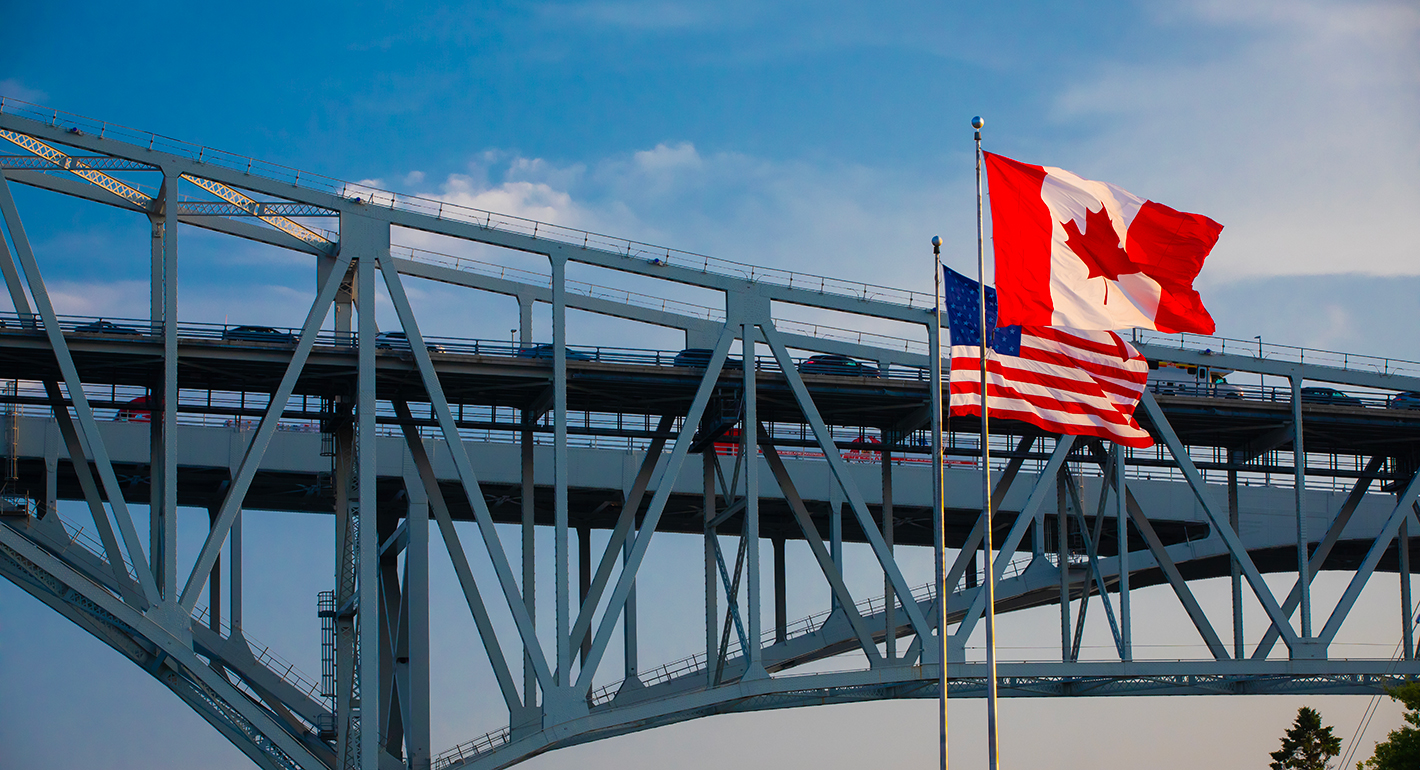
Smaller powers cannot go it alone, but Canadian history shows that integration with the United States will not always be benign.
Paul Samson
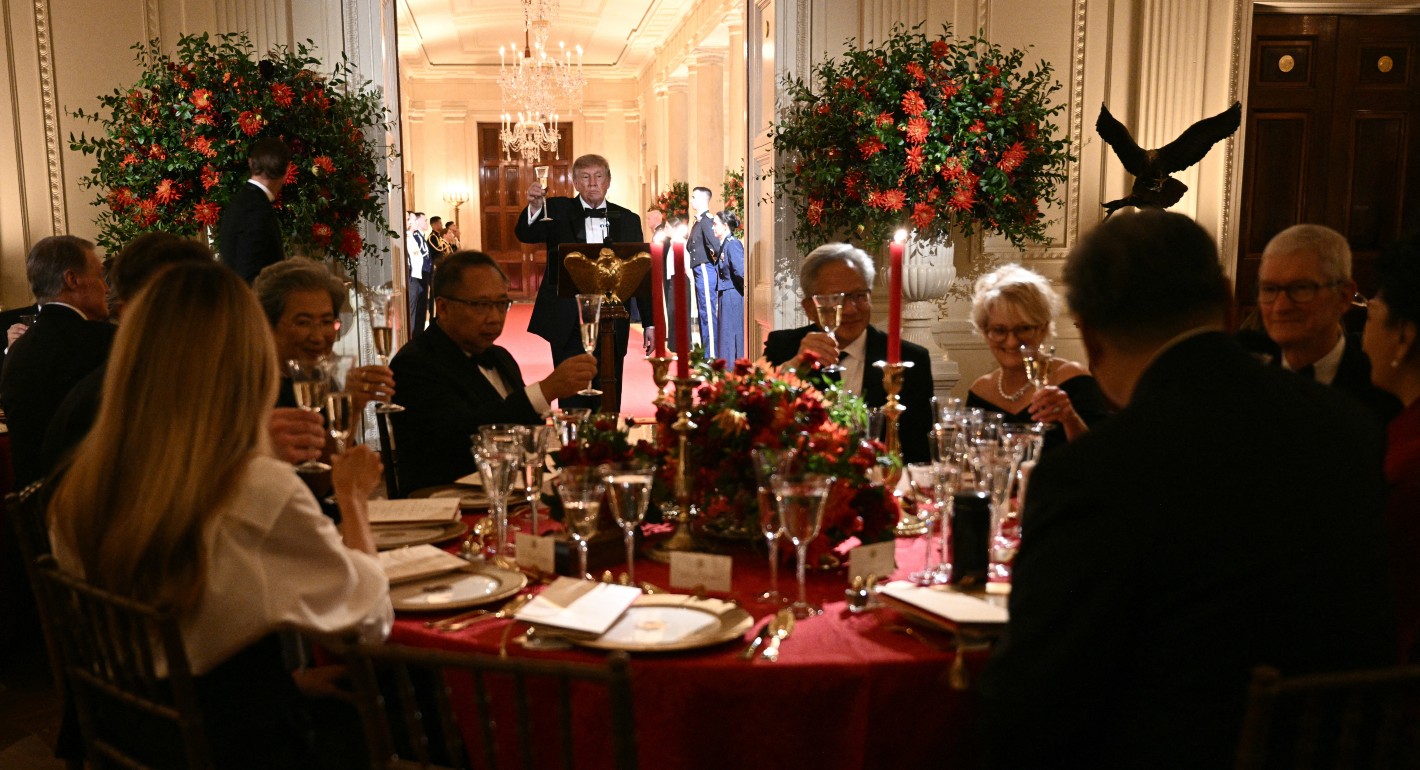
The summit may be remembered as a fatal blunder, when Washington, Beijing, and the AI industry collectively chose ceremony over action.
Jeffrey Prescott
Soft power on its own is insufficient to meet U.S. national security needs, but hard power also has its limits. Soft power allows for more effective and efficient use of hard power than hard power alone, as it encourages cooperation and compliance which deters the need for hard power.

Sarah Yerkes
Washington needs to recognize that influence in the Western Hemisphere comes from presence, delivery, and reliability. It also must recognize that while the United States remains the key external actor, it no longer operates in a permissive environment and cannot presume deference from regional players who have other options, namely China.
Juan S. Gonzalez