

Commentary
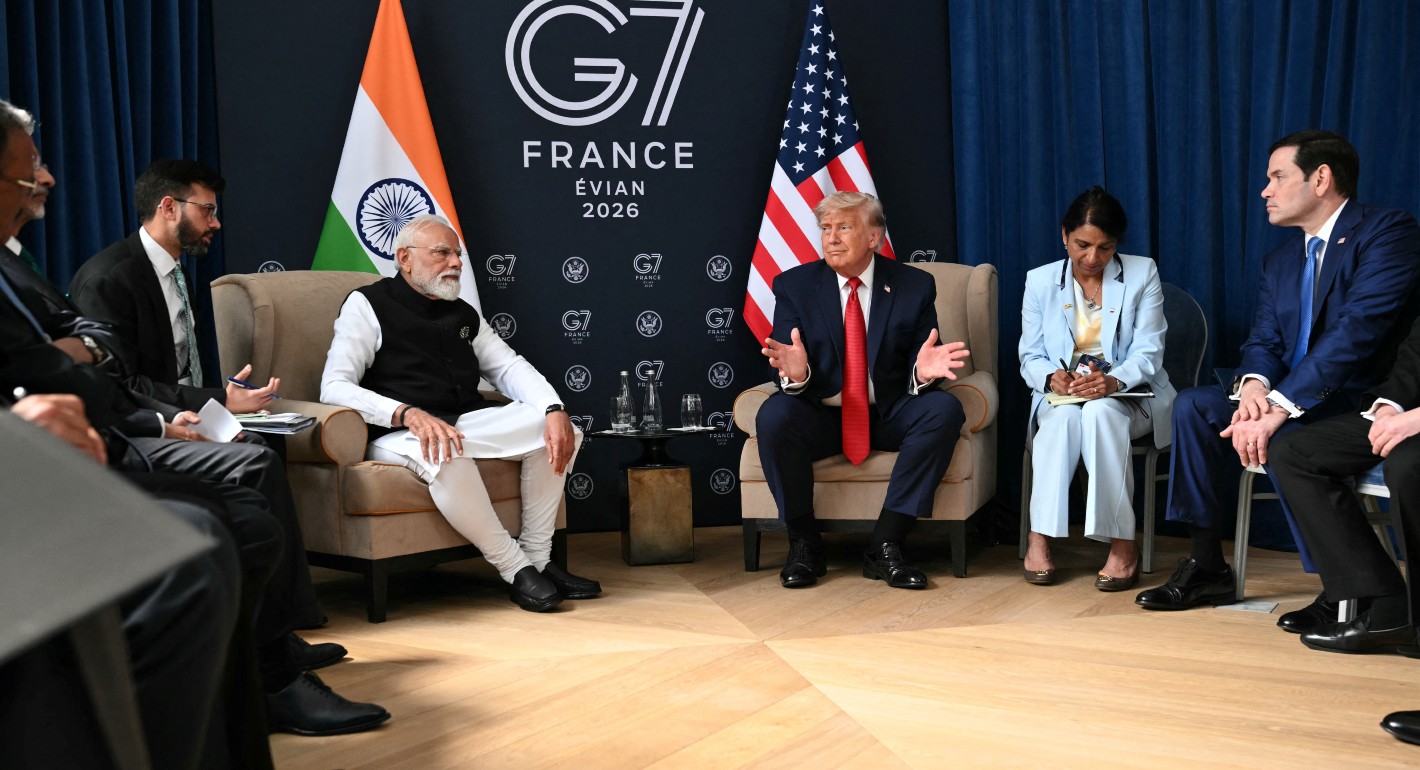
Despite public disputes over trade and immigration, the strategic partnership’s foundations remain sturdy.
Sameer Lalwani
{
  "authors": [],
  "type": "pressRelease",
  "centerAffiliationAll": "",
  "centers": [
    "Carnegie Endowment for International Peace"
  ],
  "collections": [],
  "englishNewsletterAll": "",
  "nonEnglishNewsletterAll": "",
  "primaryCenter": "Carnegie Endowment for International Peace",
  "programAffiliation": "",
  "programs": [],
  "projects": [],
  "regions": [
    "North America",
    "United States"
  ],
  "topics": [
    "Foreign Policy"
  ]
}
REQUIRED IMAGE
U.S. Secretary of State Hillary Clinton spoke at the Carnegie Endowment to mark the State Department’s release of its annual International Religious Freedom Report.
WASHINGTON—U.S. Secretary of State Hillary Clinton today called on governments to actively protect religious minorities and the rights of all their citizens to practice different religions freely. Speaking at the Carnegie Endowment to mark the State Department’s release of its annual International Religious Freedom Report, she said religious freedom is “a cherished constitutional value, a strategic national interest, and a foreign policy priority.”
Secretary Clinton characterized religious freedom as a crucial “safety valve.” Particularly in the context of the Arab Awakening, she argued that “it lets people have a say over important aspects of their lives, join their societies fully, and channel their frustrations into constructive outlets.”
Talking about her recent visit to Egypt, Secretary Clinton said, “President Morsi has said clearly and repeatedly in public and private that he intends to be the president of all the Egyptian people. He has pledged to appoint an inclusive government and put women and Christians in high leadership positions. The Egyptian people and the international community are looking to him to follow through on those commitments.”
Secretary Clinton noted that Christians were “feeling under pressure” in a lot of places in the Middle East, partly because of the rise to power of Islamist parties. She expressed concern that respect for religious freedom is tenuous and that sectarian violence has increased in Egypt since the fall of Mubarak.
Citing Iraq, Lebanon, Egypt, and a number of other countries, she argued that “leaders have to be active in stepping in and sending messages about protecting the diversity within their countries. And frankly, I don’t see enough of that.” She said that the United States will continue to “push and prod and persuade and then, if necessary, look at ways to use consequences that can send a very clear message” to governments that do not protect the religious freedoms of their people.
Press Contact: Charita Law, claw@ceip.org, 202-939-2233
Carnegie does not take institutional positions on public policy issues; the views represented herein are those of the author(s) and do not necessarily reflect the views of Carnegie, its staff, or its trustees.
Despite public disputes over trade and immigration, the strategic partnership’s foundations remain sturdy.
Sameer Lalwani

It signals a new era of tech diffusion and warfare.

Steve Feldstein

With its public finances in shambles, the far right polling at 35 percent ahead of the 2027 presidential election, and a growing protest movement, is France’s crisis a threat to the EU’s geopolitical awakening?

Rym Momtaz, ed.

Ahead of a tough winter for Ukraine, Donald Trump’s swing back toward Russia bodes ill. But instead of panicking, Kyiv’s European allies are focusing on action.
Rym Momtaz

Without a ceasefire with Ukraine on attacking each other’s energy infrastructure—to which the Kremlin is unlikely to agree—the diesel agreement between Putin and Trump is largely for show, rather than representing a genuine increase in the volumes of Russian diesel on the global market.

Sergey Vakulenko