

Commentary
Judy Dempsey
{
  "authors": [
    "Judy Dempsey"
  ],
  "type": "legacyinthemedia",
  "centerAffiliationAll": "",
  "centers": [
    "Carnegie Endowment for International Peace",
    "Carnegie Europe"
  ],
  "collections": [],
  "englishNewsletterAll": "",
  "nonEnglishNewsletterAll": "",
  "primaryCenter": "Carnegie Europe",
  "programAffiliation": "",
  "programs": [],
  "projects": [],
  "regions": [
    "Europe",
    "Eastern Europe",
    "Western Europe"
  ],
  "topics": [
    "Foreign Policy",
    "Political Reform",
    "Democracy"
  ]
}
Source: Getty
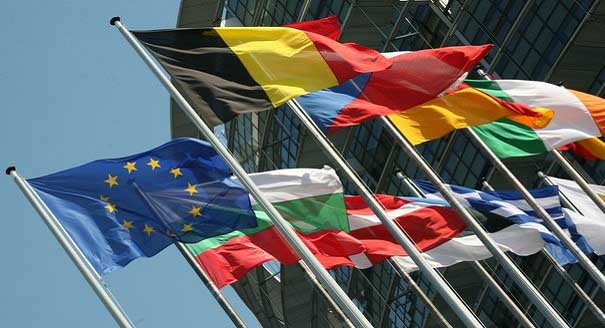
Bureaucracy in the more mainstream funding channels and a weakening commitment to human rights at the European Council mean that hopes are high for a new body aimed at promoting democracy.
Source: New York Times

Belsat TV works out of small offices in Warsaw, where it has been operating on an annual budget of €6 million, or $8 million. The Polish government has provided most of that, with additional contributions from Sweden, Norway and the Netherlands.
Despite the European Union’s commitment to spreading democracy and human rights, Brussels has given no funding to Belsat TV.
Late last year, money became so scarce that Agnieszka Romaszewska-Guzy, Belsat TV’s director, was forced to make programming cuts. “We simply ran out of money,” she said.Financial support, however, may be on its way through the European Endowment for Democracy, or E.E.D., which recently began operating in Brussels.
The private foundation is named and modeled after the influential National Endowment for Democracy, which the United States set up in 1984 to assist pro-democracy independent movements like the Solidarity trade union in Poland. The E.E.D.’s goal is to support pro-democracy individuals or groups operating under authoritarian regimes.
“The promotion of democratic values is Europe’s role. That is what defines us,” said Jerzy Pomianowski, who was appointed executive director of E.E.D. this month. “Any time support for the undersupported is necessary, the E.E.D. will act in a flexible manner.
But why is there a need for the E.E.D. in the first place? Doesn’t the European Union pride itself on supporting pro-democracy organizations and promoting its values of human rights anyway?
“The E.U. bureaucracy and lack of transparency is terrible,” Ms. Romaszewska-Guzy said. “Applying for a grant from the E.U. is a bureaucratic nightmare.
Mr. Pomianowski agreed. “The E.U. has established a highly bureaucratic and administrative process for applying for funds, getting them agreed and released,” he said. “The E.U. institutions have a lot of money, but they are cautious about spending it. And they have to consider the taxpayers.
The E.E.D. aims to avoid bureaucracy. “It will not become blocked by procedural hurdles,” said Pavol Deme, one of the foundation’s board members, who is based in Slovakia for the German Marshall Fund of the United States.
The E.E.D. is necessary for another reason: enlargement fatigue.
In the past, the prospect of joining the Union motivated governments, opposition parties and independent movements in wider Europe to introduce democratic reforms.
But today, “E.U. enlargement is no longer the driving engine of European foreign policy,” Mr. Demes said. Because of that, he added, “certain countries are not interested in receiving E.U. assistance and do not want conditionality.”
As a result, pro-democracy groups have become more vulnerable. But instead of responding in a more creative and flexible manner, the European Union has often frozen them out.
“One of the conditions of the E.U. for providing money is that organizations need to be registered,” Mr. Pomianowski said. “In many countries, this means that they have been vetted by the regime.” That is why, he added, the E.E.D. wants to support unregistered groups.
“That is exactly what N.E.D. did with Solidarity under Communism and continues to do so with other pro-democracy individuals and groups throughout the world,” said Carl Gershman, the N.E.D. president.
Even the Council of Europe is no longer an organization where human rights activists and groups can expect unequivocal support.
The council was established in 1949 to develop common and democratic principles throughout Europe based on the European Convention on Human Rights.
But since the 1990s, when the council admitted Russia and the authoritarian regimes of Central Asia, advocacy groups and diplomats say the organization has become a bitter ideological battleground.
On the one side are countries committed to holding the members of the Council of Europe accountable to the organization’s values. On the other side are those, including Russia and Azerbaijan, that resort to corruption and bribery to divert criticism from human rights violations.
“Bribes and gifts are about softening, even stopping” the council’s criticism “of rampant human rights violations, especially in Central Asia,” said a senior European diplomat who requested anonymity because the issue is sensitive.
No wonder that the E.E.D. wants to start working as quickly as possible.
It has a small budget. The European Commission has allocated €6 million for running costs. Many E.U. member states have together contributed an additional €10 million, but Germany, Italy, France, Britain and Spain have not donated.
Mr. Pomianowski insists that, with such funding, the E.E.D. will be independent from political interference. Belsat TV cannot wait to apply.

Nonresident Senior Fellow, Carnegie Europe
Judy Dempsey is a nonresident senior fellow at Carnegie Europe
Recent Work
Judy Dempsey
Judy Dempsey
Carnegie does not take institutional positions on public policy issues; the views represented herein are those of the author(s) and do not necessarily reflect the views of Carnegie, its staff, or its trustees.
Ultimately, Zelensky sided neither with the reform camp nor with the military establishment as such, but with political control.

Balázs Jarábik
Despite the agreement’s uncertainty, it’s still a significant development in regional and nuclear policy.


Andrew Leber, Jane Darby Menton
“AI safety in parallel” is modest and pragmatic but vital.

Matt Sheehan

Trump is distracted and Ukraine wants Europe to step up. The continent’s leaders must find their voice and assert it in talks with Russia.

Alissa de Carbonnel
Unresolved tensions within the AfD may ultimately constrain the its potential as a leader among European and global populist forces.
Jeremy Cliffe