

Q&A
Stephen Tankel
{
  "authors": [
    "Stephen Tankel"
  ],
  "type": "legacyinthemedia",
  "centerAffiliationAll": "dc",
  "centers": [
    "Carnegie Endowment for International Peace"
  ],
  "collections": [],
  "englishNewsletterAll": "ctw",
  "nonEnglishNewsletterAll": "",
  "primaryCenter": "Carnegie Endowment for International Peace",
  "programAffiliation": "SAP",
  "programs": [
    "South Asia"
  ],
  "projects": [],
  "regions": [
    "South Asia",
    "Pakistan"
  ],
  "topics": [
    "Security",
    "Military"
  ]
}
Source: Getty
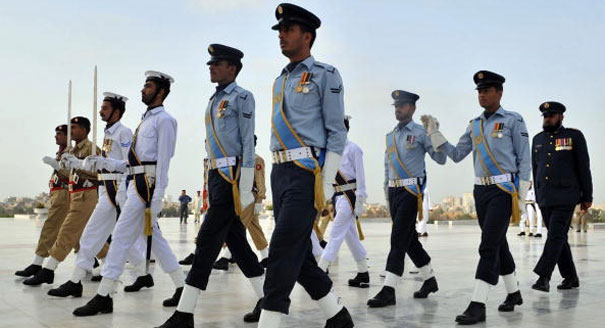
The jihadist insurgency will continue to cause problems for Pakistan’s new Chief of Army Staff, General Raheel Sharif.
Source: War on the Rocks
On August 14, 2012, the sixty-fifth anniversary of Pakistan’s independence, Chief of Army Staff Ashfaq Parvez Kayani addressed the Azadi Parade in the drill square of the Pakistan Military Academy in Kakul. Acknowledging a litany of ills, he zeroed in on terrorism and extremism. These, he said, “present a grave challenge” to the country and combatting this challenge consumed a significant portion of General Kayani’s attention during his historic tenure as Pakistan’s Chief of Army Staff.
The jihadist insurgency raging in Pakistan erupted after security forces raided Islamabad’s Red Mosque in July 2007. President Pervez Musharraf resigned his command as Chief of Army Staff in November 2007, making way for Kayani. Pakistan made no sustained effort in the areas of counterinsurgency and counterterrorism during Musharraf’s tenure. On the one hand, the insurgency had not yet exploded. On the other, these lackluster efforts created conditions for the threat to mature. Upon assuming command, Kayani increased the army’s ownership of internal security and began taking steps to enhance its commitment in this sphere. Yet the record has been mixed when it comes to tackling deeper institutional issues that must be addressed in order to defeat anti-state militancy.Military doctrine provides a guide to action and is therefore a good place to begin. Kayani oversaw the development of new doctrine. The new Chief, General Raheel Sharif, most recently headed Training and Evaluation and played a critical role in developing this doctrine. Under his guidance, the infantry training manual was rewritten to include counterinsurgency. The infantry is the army’s backbone and historically has been India-centric. The addition of CT / COIN doctrine is therefore no small thing. However, this is not indicative of a shift away from India. Pakistan has always viewed its internal and external security as intrinsically linked, and the new doctrine is an expansion of the traditional focus. Indeed, it is notable that in addition to beefing up the Army’s CT / COIN doctrine, the incoming Chief also worked on augmenting the Army’s capabilities to counter India’s Cold Start doctrine.
In terms of action, Pakistani forces have engaged anti-state militants throughout FATA and in portions of Khyber Pakhtunkhwa province since Kayani took office. The armed forces launched major operations in Bajaur, the Swat Valley and South Waziristan in 2009. Ongoing experience operating in the Federally Administered Tribal Areas coupled with training assistance and capacity building provided by the United States meant Pakistan’s armed forces were better prepared to clear and hold territory.
Yet the army has thwarted efforts to bring FATA into the political mainstream. As long as its leaders insist on maintaining the status quo in order to use the Tribal Areas as a staging point for proxy invasions of Afghanistan, the Pakistani state will be unable to tackle the myriad political and socioeconomic factors that contribute to militancy and make it almost impossible to consolidate gains.
In the meantime, many militants have fled into Afghanistan or to other tribal agencies, most notably North Waziristan, to escape army incursions. The army has promised to launch an operation in North Waziristan on multiple occasions, but has yet to follow through. There are two reasons for this. First, and most important, North Waziristan is home of the Haqqani network, which has been a critical Pakistani proxy in Afghanistan. Second, concerns exist that neither the army nor the state could withstand the blowback that might ensue. The military has increased its resolve to combat anti-state militants, but remains sensitive to its standing among the population and to the impact on morale of unpopular or unsuccessful operations.
General Kayani has attempted on multiple occasions to rally the country behind the need to counter the militant threat. If this is an uphill climb, however, the difficulty is largely one of the army’s making. General Kayani’s lament that “certain quarters still want to remain embroiled in the debate concerning the causes of this war and who imposed it on us” overlooks the fact that the military helped to fuel that debate. It shaped public opinion and then used it to buffer against U.S. demands to do more about proxies like the Haqqani network or Lashkar-e-Taiba. The army has also used religious and political parties connected, directly or indirectly, to various militant organizations to undercut civilian officials and polarize issues for bargaining purposes with other nation-states. This has enabled some militants to arrogate political power and made formulating a counter-narrative to militancy more difficult.
Pakistan’s civilian leaders are not as wedded to a policy of maintaining proxies for geopolitical use as the military is, and are more open to peace with India. Yet they are also more anxious to make peace with the Pakistani Taliban, even if it means ceding ground. Indeed, many of them campaigned on a pledge to “give peace a chance.” The military, which has lost much blood and treasure waging Pakistan’s own war on terror, is more resolute. To use a South Asian idiom, both the civilian and military leaderships have a soft corner for some militants, just not the same ones.
The anti-state insurgency has made the security establishment even less likely to part with its pro-state proxies for the time being, not least because they do not attack Pakistan and in some cases provide utility against those militants who do. At the same time, the existence of a militant infrastructure and ongoing support for proxies creates myriad operational and ideational challenges for those seeking to counter the jihadist insurgency. As the new Chief of Army Staff, General Sharif will have his hands full.

Former Nonresident Scholar, South Asia Program
Tankel was a nonresident scholar at the Carnegie Endowment, where his research focuses on insurgency, terrorism, and the evolution of nonstate armed groups.
Recent Work
Stephen Tankel
Stephen Tankel
Carnegie does not take institutional positions on public policy issues; the views represented herein are those of the author(s) and do not necessarily reflect the views of Carnegie, its staff, or its trustees.

Are Germany’s economic, industrial, and political struggles becoming a liability for the EU’s ability to rise to the geopolitical moment?

Rym Momtaz, ed.

China’s police training infrastructure construction projects provide benefits to recipient countries, promote China’s image as a major global security provider, and are likely to reinforce alignment between Beijing’s security priorities and those of countries in the Global South.


Cameron Waltz, Sheena Chestnut Greitens, Kim Nguyen, …
They face an uphill climb, but they could draw on a strategy that other diplomats have used in the past.


Shana Tabak, Alejandro Martin Rodriguez
Understanding the climatic pain points is necessary for policymakers hoping to minimize the war’s negative environmental consequences.


Alejandro Martin Rodriguez, Joy Arkeh, Sarah Yerkes

The books, podcasts, and films that explain the world it made.

Andrew Leber