

Commentary
Togzhan Kassenova
{
  "authors": [
    "Togzhan Kassenova"
  ],
  "type": "legacyinthemedia",
  "centerAffiliationAll": "dc",
  "centers": [
    "Carnegie Endowment for International Peace"
  ],
  "collections": [],
  "englishNewsletterAll": "ctw",
  "nonEnglishNewsletterAll": "",
  "primaryCenter": "Carnegie Endowment for International Peace",
  "programAffiliation": "NPP",
  "programs": [
    "Nuclear Policy"
  ],
  "projects": [],
  "regions": [
    "North America",
    "South America"
  ],
  "topics": [
    "Nuclear Policy",
    "Nuclear Energy"
  ]
}
Source: Getty
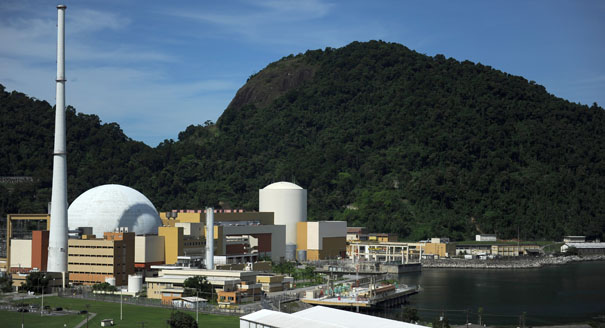
Brazil currently has two nuclear reactors and a third is under construction. Four more power plants are being proposed for construction in the 2020s.
Source: CCTV
Carnegie’s Togzhan Kassenova spoke to CCTV about Brazil’s nuclear policy and the country’s role as an emerging power.Kassenova told CCTV that over the last decade, Brazil has experienced several very severe energy crises during which major Brazilian cities went dark. She said that while other countries have decided to dismantle their nuclear reactors after the Fukushima incident in Japan in March 2011, Brazil has not ruled out the use of nuclear energy. The pacing of the nuclear energy expansion in Brazil, however, has been affected by the events in Fukushima, said Kassenova.
Kassenova added that Brazil sees nuclear technology as a component of an important country on the international scene and that the country’s role in the global nuclear order is growing.
This interview was originally broadcast on China Central Television.

Former Nonresident Fellow, Nuclear Policy Program
Kassenova was a nonresident fellow in the Nuclear Policy Program at the Carnegie Endowment.
Recent Work
Togzhan Kassenova

Toby Dalton, Togzhan Kassenova, Lauryn Williams
Carnegie does not take institutional positions on public policy issues; the views represented herein are those of the author(s) and do not necessarily reflect the views of Carnegie, its staff, or its trustees.

The nuclear relationship between China and the United States is increasingly shaped by widening perception gaps rather than deliberate strategic design.

Tong Zhao
Washington needs to recognize that influence in the Western Hemisphere comes from presence, delivery, and reliability. It also must recognize that while the United States remains the key external actor, it no longer operates in a permissive environment and cannot presume deference from regional players who have other options, namely China.
Juan S. Gonzalez

A look at why states without nuclear weapons are seeking naval nuclear propulsion, whether they can legally and technically deliver it, what it will cost them, and what responsible stewardship of the capability would look like.

Jamie Kwong
Congress should ask tough questions about the agreement’s more unique features and whether they advance U.S. interests or compromise them.

Jane Darby Menton
By focusing only on hard security, the Shield ignores the conditions that fuel cartel power.


Alejandro Martin Rodriguez, Kayly Ober