

Research
- +10
Rosa Balfour, Frances Z. Brown, Yasmine Farouk, …
{
  "authors": [
    "Moisés Naím"
  ],
  "type": "legacyinthemedia",
  "centerAffiliationAll": "",
  "centers": [
    "Carnegie Endowment for International Peace"
  ],
  "collections": [],
  "englishNewsletterAll": "",
  "nonEnglishNewsletterAll": "",
  "primaryCenter": "Carnegie Endowment for International Peace",
  "programAffiliation": "",
  "programs": [],
  "projects": [],
  "regions": [
    "Middle East",
    "Türkiye",
    "Russia",
    "Eastern Europe",
    "Ukraine",
    "North America"
  ],
  "topics": [
    "Political Reform",
    "Democracy",
    "Foreign Policy"
  ]
}
Source: Getty
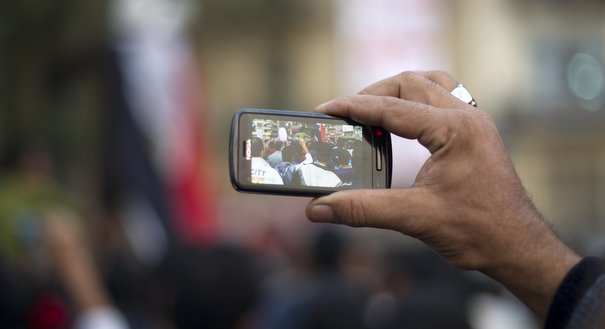
Many of the world’s autocrats believe there is a vast international conspiracy underway to destabilize their governments and eventually oust them from power.
Source: Atlantic
Turkey's Recep Tayyip Erdoğan and Venezuela's Nicolás Maduro agree: There is a vast international conspiracy underway to destabilize their governments and eventually oust them from power.
They are convinced that the protesters storming the streets of Istanbul and Caracas are nothing more than mercenaries serving foreign powers or “useful idiots” unwittingly aiding the shadowy interests working to overthrow their governments. Vladimir Putin shares this view. He has said that the revolts in Kiev and other Ukrainian cities, which forced his ally, former President Viktor Yanukovych, to flee to Russia, were also instigated by foreigners. And who, according to these autocrats, is behind this dark global conspiracy?Western Democracies, of course.
Putin, Erdoğan, Maduro, and other leaders who share their fears (Bashar al-Assad, Robert Mugabe, etc.) assume that foreign intelligence services and other secret agencies are the main instigators, organizers, and funders of the protests against their governments. Their fears are not entirely unfounded. After all, the CIA does have a history of helping overthrow leaders that the U.S. government didn’t like at the time: Iran’s Mohammad Mosaddegh in 1953, Guatemala’s Jacobo Árbenz in 1954, Chile’s Salvador Allende in 1973. But today’s dictators and their semi-authoritarian colleagues seem to feel equally threatened by private philanthropic organizations that operate openly in support of democracy and human rights.
In fact, their most public and strident denunciations have often been against non-governmental organizations and democracy activists rather than foreign spy agencies. For example, during a recent press conference, Putin explained that “our Western partners” had interfered in Ukrainian affairs before. “I sometimes get the feeling that somewhere across that huge puddle, in America, people sit in a lab and conduct experiments, as if with rats, without actually understanding the consequences of what they are doing,” he said. This isn’t the first time that the Russian president has denounced meddling by, to use Julia Ioffe’s paraphrase, “American political technologists.” He also saw their hand in the large anti-government demonstrations that spilled into Moscow’s streets in December 2011 and May 2012.
So who are these American political technologists? Activists and employees of foundations who are promoting democracy, documenting and reporting human-rights violations, calling for media freedom, observing elections, and denouncing torture.
According to leaders who undermine democracy, imprison opponents, persecute journalists, and rig elections, the noble goals of these organizations are just hypocritical fronts for their true mission: to undercut their rule. And thus, the world’s full-fledged dictatorships and authoritarian-leaning governments do what they can to make life hard, if not impossible, for such groups. These regimes are bent on avoiding a repeat of the color revolutions that brought political change in the Balkans and several former Soviet countries during the early 2000s, or an eruption like the Arab Spring uprisings.
Full disclosure: I am on the board of directors of two of these international organizations—the National Endowment for Democracy (NED) and the Open Society Foundation (OSF)—and I receive no financial compensation for my involvement with them. The goals of both are to support organizations that strive to improve democracy and human rights in nearly every corner of the world. I don’t work for any government and have never received instruction or pressure from a government regarding initiatives to support or regimes to oppose. During board discussions for the NED and OSF, I have never seen evidence that a government is determining our agenda or decisions. Needless to say, I don’t expect the believers in the “great conspiracy” to believe me.
What I have routinely witnessed are the constant efforts of many governments to silence, repress, or neutralize those who are openly and transparently promoting democracy in countries where it is imperfect or doesn’t exist. Their methods of obstruction are many and varied, and the most efficient are those that rely on the head of state’s control over the legislative and judicial branches of government. Laws that make it illegal or extremely difficult for NGOs to receive funds from abroad are common. According to Darin Christensen and Jeremy Weinstein, the external financing of NGOs is currently prohibited in 12 countries and restricted in 39. The irony is that in these same countries, it isn’t rare for politicians and government officials to fill their personal bank accounts with generous gifts from oligarchs, organized-crime bosses, and other shady characters. The disparity of the numbers is appalling: the annual budget for many NGOs is easily equivalent to the cost of one of the lavish parties regularly thrown by an oligarch or cartel leader in honor of a favorite politician, a compliant provincial governor, or a friendly general. And while international organizations like NED and OSF make all information about their financing and operations public, the details about who finances pro-government politicians in countries like Russia, Turkey, and Venezuela are opaque, when not altogether secret.
Then there is the use of the courts to undermine or simply shut down civil-society organizations and media outlets that threaten the government. Last year, an Egyptian court sentenced 43 NGO workers to between one and five years in jail. The three-judge panel also closed the local branches of their employers: the International Republican Institute, the National Democratic Institute, Freedom House, the International Center for Journalists, and the Konrad Adenauer Foundation. In Ecuador, the Supreme Court smacked a $40-million fine on the newspaper El Universo following a libel suit brought by President Rafael Correa.
Another common ploy is to simply block the entrance of foreign NGO workers into countries where they’ve been tasked with monitoring elections, documenting torture, or investigating corruption of high-level officials. In many countries, these NGOs are obligated to officially register as “foreign agents.”
In the most comprehensive study about these abuses to date, Thomas Carothers and Saskia Brechenmacher of the Carnegie Endowment come to two conclusions. First, and not surprisingly, the impact of government obstructionism on NGOs promoting democracy has been huge and detrimental. The second conclusion, however, is more surprising. Despite everything that authoritarian governments do to stifle the efforts of democracy-promotion organizations, in more than half of the 100 countries the authors analyzed, it is still possible to help those fighting for freedom from the outside. “While it would be impossible to calculate with any precision either the overall amount or the percentage of democracy and rights assistance that has been blocked by governmental measures, it remains a minority share in gross terms,” the authors write.
And that, at the very least, is good news.

Distinguished Fellow
Moisés Naím is a distinguished fellow at the Carnegie Endowment for International Peace, a best-selling author, and an internationally syndicated columnist.
Recent Work



Rosa Balfour, Frances Z. Brown, Yasmine Farouk, …
Moisés Naím
Carnegie does not take institutional positions on public policy issues; the views represented herein are those of the author(s) and do not necessarily reflect the views of Carnegie, its staff, or its trustees.

The domestic impacts of how long it is taking to end the war in Ukraine have pushed the French electorate to the political extremes and compromised the country’s diplomatic capacity.

Rym Momtaz

In an interview, Ian Lustick and Eli Clifton discuss their new book on why a prominent ally has so much influence in America.

Michael Young
Germany, India, and other middle powers can’t build frontier AI alone, and they risk being cut off if they depend on the United States or China. The way through is to build the capacity for a frontier sprint while hoping never to use it.
Anton Leicht, Sam Winter-Levy

Sergei Kiriyenko used Russia’s parliamentary vote to further hone his strategy of corporate mobilization that is designed to maximize votes for United Russia.

Andrey Pertsev

Before the next wave of EU enlargement takes place, the union needs to grapple with thorny questions of how power is distributed among its members.


Emil Sondaj Hansen, Ditte Brasso Sørensen