

Paper
Renée DiResta, Rachel Kleinfeld, Margot Treadwell
{
  "authors": [
    "Rachel Kleinfeld"
  ],
  "type": "legacyinthemedia",
  "centerAffiliationAll": "dc",
  "centers": [
    "Carnegie Endowment for International Peace",
    "Malcolm H. Kerr Carnegie Middle East Center"
  ],
  "collections": [
    "Democracy and Governance"
  ],
  "englishNewsletterAll": "democracy",
  "nonEnglishNewsletterAll": "",
  "primaryCenter": "Carnegie Endowment for International Peace",
  "programAffiliation": "DCG",
  "programs": [
    "Democracy, Conflict, and Governance"
  ],
  "projects": [],
  "regions": [
    "North America",
    "United States",
    "Gulf",
    "Levant"
  ],
  "topics": [
    "Political Reform",
    "Security",
    "Democracy",
    "Foreign Policy"
  ]
}
Source: Getty
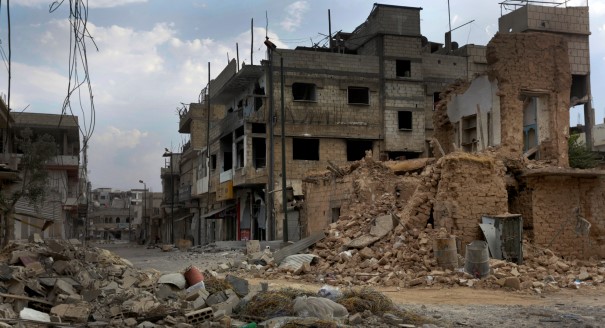
Both the Islamic State and Ebola have the same root cause: failed governance. Western aid at times serves as support and patronage for ill-governing regimes that do not develop their own countries for the good of their people.
Source: Hill
The Islamic State in Iraq and Syria (ISIS) is ravaging the Levant and Ebola is terrifying West Africa — but other than the fear both engender, there seems to be little linkage between a raging insurgency and a contagious disease. But appearances are deceiving. In fact, both ISIS and Ebola have the same root cause: failed governance.
Insurgencies do not emerge from nowhere. In Iraq, former Prime Minister Nouri al-Maliki's government had failed to keep his bargain to integrate Sunnis, who fought valiantly against their fellows in the Awakening, into the regular Iraqi military. He gave army posts to Shiite cronies and allowed the military to corrupt itself from the inside. As once-dominant Sunnis watched their position erode and their dignity diminish, their connection to the artificial construct of their "country" inevitably began to degrade. Signing up for an insurgency, or at least not being willing to fight to the death when an insurgency declared that one was either with them or against them, was the next step.
ISIS, in other words, was not inevitable. It emerged from the politicization of the military by a leader who did not aim to create a state that served all its citizens, but a regime that served only one group personally loyal to him.Ebola presents a similar challenge. Right now, the world is tackling it as it needs to, as a medical emergency. The solution set required — more doctors, hospitals, protective gear and medicine — makes sense. But why is this Ebola outbreak so much more dire than all previous outbreaks? Because in Guinea, Sierra Leone and Liberia, people did not trust their governments. They fought government medical officers trying to enter their villages, hid patients and otherwise acted as if the government itself was as dangerous to them as the disease. And, indeed, they were not wholly incorrect.
Liberia and Sierra Leone have been heralded in the West as success stories, countries that rebounded from devastating civil wars to rebuild their states. Liberia, particularly, has been showered with World Bank and other donor money thanks to its widely trusted president, Ellen Johnson Sirleaf. But under her, and in Sierra Leone, lies a broadly rotten apparatus of cronyism and patronage that has resulted in favoritism in public services and general government incapacity. Locals in remote villages see this, even if Western donors at Davos and the Clinton Global Initiative do not. And therein lies the formers' distrust for their governments, which can now be measured in the spread of disease.
The West similarly thought it could buy and counsel a functional Iraqi military. Billions of U.S. dollars and years of our military troops' lives were poured into twinning, training, providing equipment and mentoring Iraqi troops. But no amount of equipment and tactical training could build a military with the esprit de corps to fight when the country's leadership marginalizes and betrays an entire portion of the population. The individuals could be well-trained, but the institution itself was rotten.
I hope that the immediate military and aid efforts to halt the spread of both ISIS and Ebola will work. But in staunching the immediate bleeding, we must also treat the underlying wound. So long as the West is a source of money, support and patronage for ill-governing regimes, such governments do not need to develop their own countries for the good of their people. They can instead count on Western aid, giving speeches at international meetings and writing internationally palatable program documents while ignoring the hard work at home of cobbling together coalitions that govern on behalf of their people.
We aid and abet such two-faced leaders at our own peril. Ebola and ISIS are simply two of the many horsemen that emerge from such a devil's bargain.

Senior Fellow, Democracy, Conflict, and Governance Program
Rachel Kleinfeld is a senior fellow in Carnegie’s Democracy, Conflict, and Governance Program, where she focuses on issues of rule of law, security, and governance in democracies experiencing polarization, violence, and other governance problems.
Recent Work
Renée DiResta, Rachel Kleinfeld, Margot Treadwell
Political Violence Researchers, Rachel Kleinfeld, ed., Dalya Berkowitz, ed.
Carnegie does not take institutional positions on public policy issues; the views represented herein are those of the author(s) and do not necessarily reflect the views of Carnegie, its staff, or its trustees.
Why Pakistan, Saudi Arabia, and Turkey are joining forces on regional security.


Alper Coşkun, Amr Hamzawy

The truth of the strategic situation is that Europe and Russia are extremely unlikely to be able to “turn the page” on their confrontation within the next two decades.

Arkady Moshes

Despite public disputes over trade and immigration, the strategic partnership’s foundations remain sturdy.

Sameer Lalwani
It signals a new era of tech diffusion and warfare.

Steve Feldstein

With its public finances in shambles, the far right polling at 35 percent ahead of the 2027 presidential election, and a growing protest movement, is France’s crisis a threat to the EU’s geopolitical awakening?

Rym Momtaz, ed.