

Article
Paul Stronski
{
  "authors": [
    "Paul Stronski"
  ],
  "type": "legacyinthemedia",
  "centerAffiliationAll": "dc",
  "centers": [
    "Carnegie Endowment for International Peace"
  ],
  "collections": [
    "Inside Russia"
  ],
  "englishNewsletterAll": "ctw",
  "nonEnglishNewsletterAll": "",
  "primaryCenter": "Carnegie Endowment for International Peace",
  "programAffiliation": "russia",
  "programs": [
    "Russia and Eurasia"
  ],
  "projects": [],
  "regions": [
    "Russia"
  ],
  "topics": [
    "Political Reform",
    "Democracy",
    "Security",
    "Foreign Policy"
  ]
}
Source: Getty
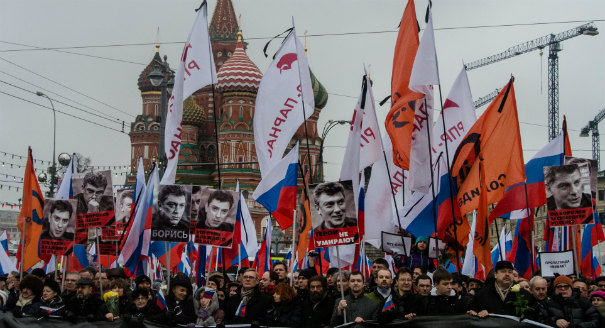
The discussion surrounding Nemtsov’s murder has missed the larger question of whether the Russian political system is less stable than commonly assumed.
Source: LA Times
Russian opposition leader Boris Nemtsov’s killing is not just a tragedy for Russia, but could be a harbinger of political turbulence. Commentary in the West implicitly blames President Vladimir Putin, highlighting the long list of Putin critics who have met violent deaths over the years. The focus has now turned to possible Chechen connections. However, the arrest of five men from the North Caucasus sheds little light on who ordered the attack, particularly since Chechens have served as easy scapegoats in previous high-profile deaths. What this discussion has missed is the larger question of whether the Russian political system is less stable than commonly assumed.
What makes the killing of Nemtsov shocking is that overt violence against prominent politicians — not the same thing as political pressure and intimidation — had become somewhat rare. The last assassinations of prominent opposition leaders occurred in 2003. Anatoly Chubais, who spearheaded President Boris Yeltsin’s privatization campaign in the 1990s and later became an influential businessman, survived a 2005 assassination attempt, and a senior central bank official was gunned down in 2006. Back then, the killing or attempted killing of prominent Russian politicians was relatively common; the BBC reported in 2003 that nine members of parliament had been gunned down in as many years.Russia in the 1990s and early 2000s was a place of political violence and instability. Organized crime groups ran rampant, renegade justice resolved disputes and the country fought two brutal wars in the North Caucasus.
Putin supposedly changed all that. Moscow is less dangerous than it was 20 years ago, although it remains hazardous for journalists and human rights advocates to do their jobs. Yet, even among these groups, political violence peaked in 2003-06 with the killings of journalists Paul Klebnikov and Anna Politkovskaya, among others. These were the early years of Putinism, a time when politics remained in flux and some questioned Putin's longevity in office as he stumbled through several crises. There was another spike in politically motivated deadly violence against human rights advocates in 2009, but that too was a time of transition with the arrival of the Putin-Medvedev tandem.
Since 2009, political assassination has not been a prominent force in Russian politics. Opposition leaders could be critical of the regime and might instead be bullied, beaten, arrested, blackmailed, labeled a Western agent or encouraged to go abroad.
Does Nemtsov’s death signal a return to levels of political instability in Russia that the Kremlin may have unleashed, but may no longer be able to control? Problems similar to those of the 1990s have returned and scapegoats are needed.
Unlike Putin’s first terms, economic growth and improved living standards are a thing of the past, replaced by falling oil prices, sanctions, inflation and salary cuts. Putin 3.0 has no positive agenda and state propagandists are trying to hide that fact, along with the human and financial costs of war, with vile rhetoric about threats emanating from Ukraine, the West and traitors and other “fifth columnists.”
A group of radical thugs has been empowered to protect the state from organized internal dissent similar to the way in which Russian volunteers have been encouraged to fight in Ukraine. Russian society is increasingly barraged with violent hate speech at a time when radical elements — largely sidelined until 2014 — have been emboldened to take matters into their own hands.
Nemtsov was labeled as one of those “fifth columnists” for his opposition activity. But it was his work on Ukraine that probably made him a real threat. He was working on a report documenting Russia's military involvement in Ukraine, including highlighting the misery of Russian soldiers and the civilian population. This is potentially dangerous stuff for those claiming to defend the interests of ethnic Russians.
Overshadowed by the violence in Ukraine is another battle brewing in Russia about the overall direction of the country. Many Russian elites — and they are not exclusively liberals — were unhappy with Putin's decision to return to the presidency in 2012. Their dissatisfaction has grown since the start of the Ukraine conflict as they see its financial and reputational costs, as well its destabilizing effect on Russia. Their private grumblings have become increasingly public as they fight a pro-war faction — consisting of some service elements, reactionary oligarchs and Russian chauvinists — that is largely responsible for orchestrating, escalating and financing the Ukraine war.
Some in the pro-war faction label their opponents within the Russian elite as dangerous “sixth columnists,” purportedly more treacherous than the “fifth column,” for their quiet efforts to de-escalate the conflict.
Nemtsov was not directly part of this elite debate, but he certainly had connections to people who were. His killing is not just a warning to the opposition, but also to those elite insiders who question Russia's current trajectory. The anger and brutality unleashed by the war, combined with the pro-war faction's efforts and eagerness to find enemies at home and abroad, could very well undermine the stability that Putin has long trumpeted as his primary achievement.
Former Senior Fellow, Russia and Eurasia Program
Paul Stronski was a senior fellow in Carnegie’s Russia and Eurasia Program, where his research focuses on the relationship between Russia and neighboring countries in Central Asia and the South Caucasus.
Recent Work
Paul Stronski
Paul Stronski
Carnegie does not take institutional positions on public policy issues; the views represented herein are those of the author(s) and do not necessarily reflect the views of Carnegie, its staff, or its trustees.
Japan’s revision of its three strategic documents reflects an intention to keep the United States engaged in the region while Japan fills any vacuums of U.S. power to preserve the Indo-Pacific order.
Ryo Sahashi
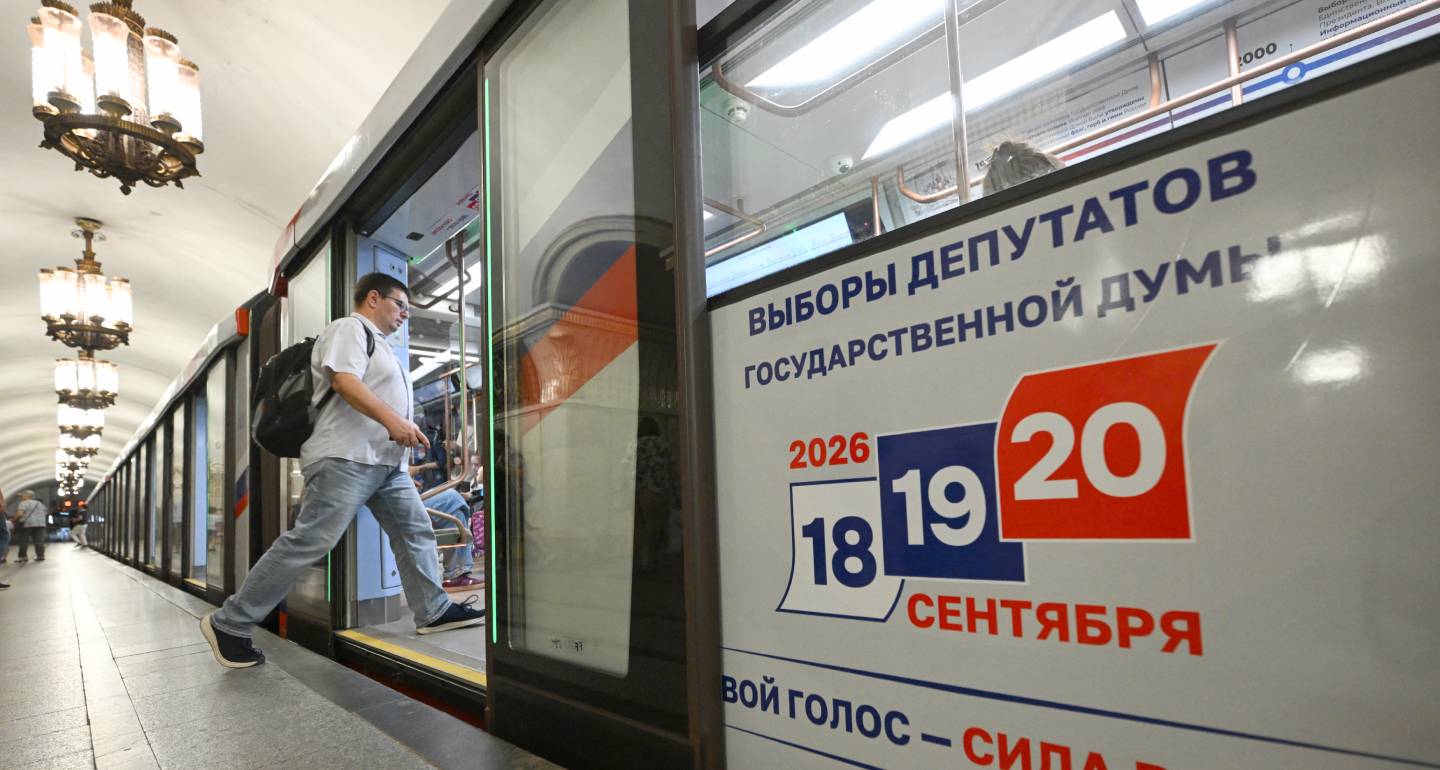
In the discussions made possible by the State Duma election campaign, one question is being asked more and more loudly. “What next?”

Andrey Pertsev
While the Nazis rushed ahead in a revolutionary fervor, Russia’s modern crusaders against enemies of the state work methodically, giving their targets time to adjust to restrictions before closing the loopholes.

Leonid Bershidsky
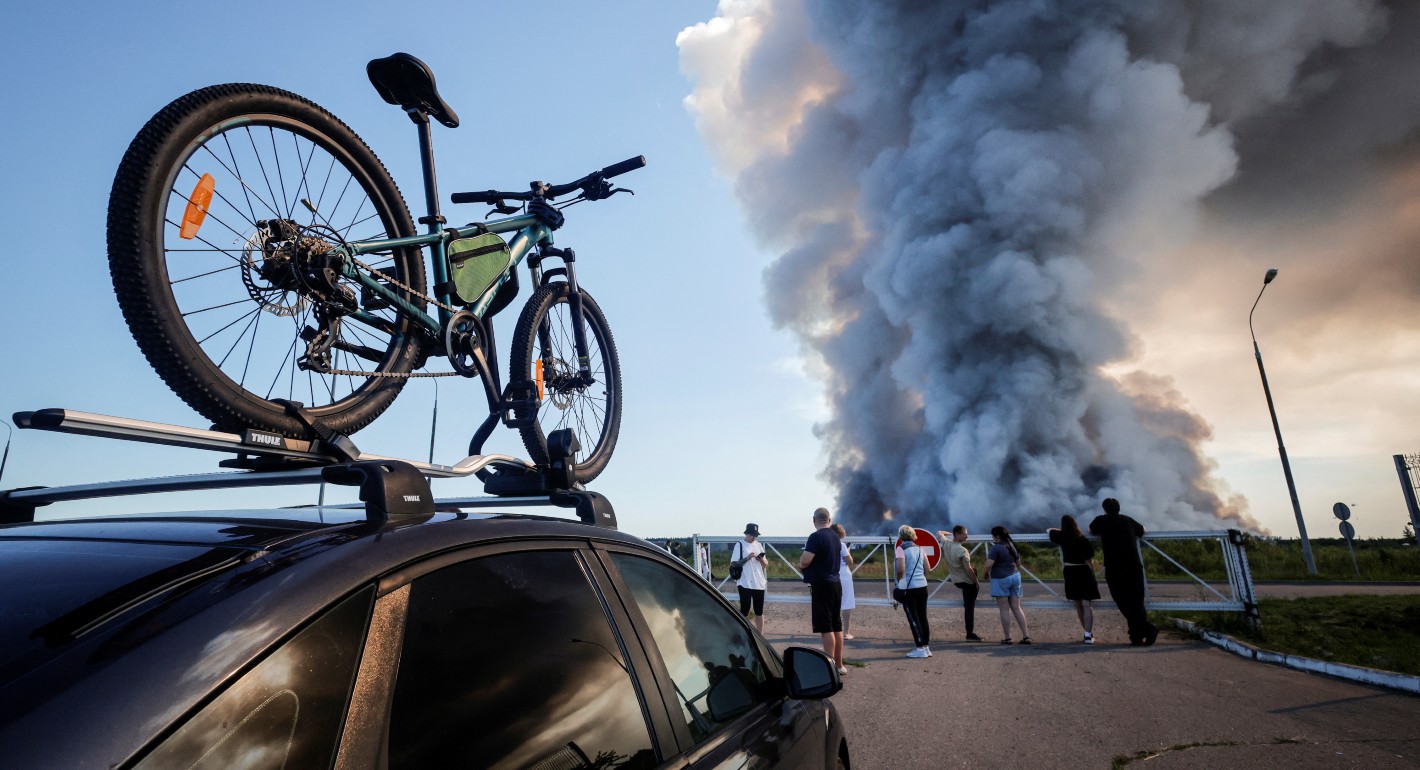
Media coverage suggests Kyiv’s fortunes have changed. That shift may be important, but it only goes so far.

Dara Massicot, Aaron David Miller, Andrew S. Weiss
Lee’s tour shows how Seoul is reorganizing its diplomacy away from Pyongyang and toward industrial networks and the geography of the compute economy.
Darcie Draudt-Véjares