

Research
- +4
Milan Vaishnav, Rahul Verma, Rukmini S., …
{
  "authors": [
    "Christophe Jaffrelot"
  ],
  "type": "legacyinthemedia",
  "centerAffiliationAll": "dc",
  "centers": [
    "Carnegie Endowment for International Peace"
  ],
  "collections": [],
  "englishNewsletterAll": "ctw",
  "nonEnglishNewsletterAll": "",
  "primaryCenter": "Carnegie Endowment for International Peace",
  "programAffiliation": "SAP",
  "programs": [
    "South Asia"
  ],
  "projects": [],
  "regions": [
    "South Asia",
    "India",
    "Afghanistan",
    "Pakistan"
  ],
  "topics": [
    "Foreign Policy"
  ]
}
Source: Getty
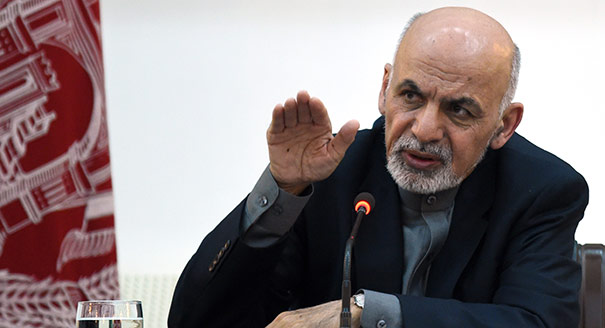
Afghanistan President Ashraf Ghani’s upcoming visit to India will not resemble those of his predecessor. In contrast to Hamid Karzai, the new Afghan president does not seem to have the image of a great friend of India.
Source: Indian Express
Afghanistan President Ashraf Ghani’s upcoming visit to India will not resemble those of his predecessor. In contrast to Hamid Karzai, the new Afghan president does not have the image of a great friend of India. In fact, he is coming to Delhi after five official trips to other countries, including China, Saudi Arabia, Pakistan (twice) and the US.
While Karzai had signed a strategic partnership agreement with India in 2011, Ghani has shelved Afghanistan’s demand for military equipment from Delhi and suspended the construction of a $400 million tank and aircraft refurbishing plant funded by India. At the same time, he has taken up the longstanding Pakistani offer for Afghan army cadets to train in Pakistan. Another gesture that Islamabad (and Rawalpindi) appreciated was the delivery of the captured Latif Mehsud, a close associate of former TTP chief Hakimullah Mehsud, to Pakistan. After the Peshawar tragedy of December 2014, the Pakistani chief of army staff, Raheel Sharif, who had rushed to Kabul claiming that the operation had been orchestrated by Mullah Fazlullah, the new TTP chief, from Kunar, congratulated himself for the Afghan army deploying 1,500 troops to battle the Pakistani Taliban in the region.
Why is Ghani making so many concessions for Pakistan and, in particular, for the General Headquarters in Rawalpindi, with which, in contrast to his predecessor, he has been trying to establish close links — understandably, given the declining authority of Nawaz Sharif? Primarily because he expects Pakistan to give him access to the Taliban shuras of Quetta and Peshawar. This is key to promoting the Afghan reconciliation process, which is his priority. One may recall that, in his first speech as president of Afghanistan, he had invited the Taliban to take part in peace talks. But to no avail — the Taliban is still insisting on preconditions that Kabul cannot accept, including the withdrawal of American troops. In fact, last month, Ghani asked President Barack Obama not to reduce the size of the US military contingent in 2015 — it was supposed to be halved by the end of the year. Obama has obliged.But will Pakistan help Ghani? So far, it has not reciprocated. Certainly, the atmosphere has changed. Karzai used to accuse Pakistan of being a safe haven for Taliban groups, including the Haqqani Network, which was striking Afghanistan. Pakistan used to level similar accusations against Kabul about the TTP. These recriminations have resulted in frequent shelling between the two armies. But now, tensions have significantly reduced and the two armies seem to jointly monitor their border and share intelligence. However, Ghani expects more, whereas Pakistan may be reluctant to go further if its army cannot influence the peace talks and have friends appointed as ministers and governors in case of reconciliation, to say nothing of Islamabad’s demand that Kabul recognise the Durand Line as the international border.
Ghani may get more without making these concessions, however, because of the growing role of a new player in the Af-Pak region: China, which was his first official international destination. Beijing is more interested than before in a peaceful Afghanistan, for both security and economic reasons. In terms of security, the Uighur problem has probably become the number one issue for the Chinese — the Turkistan Islamic Party, a prominent strand of the Uighur movement, has close ties with Islamist groups in the Af-Pak region, where some of its militants are trained. As far as the economic dimensions are concerned, not only has China invested heavily in Afghanistan’s copper reserves and oil fields, but President Xi Jinping’s Silk Road Economic Belt initiative, including portions of the Pakistan-China Economic Corridor, also makes imperative the stabilisation of the Af-Pak region.
For all these reasons, Beijing is prepared to support the reconciliation process in Afghanistan. Chinese Foreign Minister Wang Yi said it in public during his February visit to Pakistan: “We will support the Afghan government in realising reconciliation with various political factions, including the Taliban. China is ready to play its constructive role and will provide the necessary facilitation at any time if it is required by various parties in Afghanistan.”
At the first China-Afghanistan-Pakistan Trilateral Strategic Dialogue, held in Kabul in February, Beijing committed itself to financing the construction of a new dam in Kunar — this 1,500 megawatt hydroelectric plant is to be jointly managed by Afghanistan and Pakistan, and should supply electricity to both countries. China also agreed to finance a motorway to connect Peshawar with Kabul and a rail link between Quetta and Kandahar.
China’s initiative seems strong enough to put pressure on Pakistan and help peace talks materialise. At the same time, Beijing has also reached out to Saudi Arabia and the Gulf countries, where the talks should take place. The US, which has tried — unsuccessfully — to promote such talks in Doha over the past few years, is “fully on board” with Chinese efforts, according to Barnett Rubin, former member of Richard Holbrooke’s Af-Pak team.
Should India worry? Delhi, which has invested $2 billion in infrastructural and humanitarian projects, probably expected greater recognition and may fear marginalisation if Pakistan and China become that central in Afghanistan. But Delhi can also felicitate itself on the ongoing process — because it may deliver. Ghani, in fact, has shown a great sense of realism by turning to Pakistan and China, at the expense of the Kabul-Delhi special relationship. India could hardly be part of the solution so far as the Taliban problem was concerned. Delhi could not help Afghanistan militarily — partly because of American pressure, India has been reluctant to engage Kabul intensively in the defence sector, in spite of having made verbal commitments over the last 10 months. It could not help organise peace talks either, at least, not as much as Pakistan. Second, in terms of development, so necessary to making peace sustainable (and opium cultivation less important than it is today to Afghan peasants), China can do much more.
It is not as if India is bound to become a marginal player either. First, it is formidably popular among the Afghan population because of its soft power as well as the affinities that have developed between elite groups in the two countries. Second, the return of the Taliban, who may be offered ministerial portfolios and governorships if talks are fruitful, does not mean that Pakistan will be in a position to contain the Indian presence in Afghanistan like in the 1990s. Things have changed. The Taliban, who have never been puppets of Pakistan and who may be even more jealous of Afghan national sovereignty today, will probably appreciate the balancing influence of India. So will China, especially if fighting Islamic extremism remains its key priority. In fact, India and China have many common interests in Afghanistan, including access to mineral resources and new markets. China may take the lead, but India could benefit in the long term.
This article was originally published in the Indian Express.

Former Nonresident Scholar, South Asia Program
Jaffrelot’s core research focuses on theories of nationalism and democracy, mobilization of the lower castes and Dalits (ex-untouchables) in India, the Hindu nationalist movement, and ethnic conflicts in Pakistan.
Recent Work

Milan Vaishnav, Rahul Verma, Rukmini S., …
Christophe Jaffrelot
Carnegie does not take institutional positions on public policy issues; the views represented herein are those of the author(s) and do not necessarily reflect the views of Carnegie, its staff, or its trustees.
Regardless of the outcome, there’s another path to ensuring that progress doesn’t stall.

Zaur Shiriyev
Bangladesh’s February 2026 elections were the most credible in nearly two decades. But within weeks of the BNP’s return to power, the fundamental characteristics of the country’s political economy threaten to pull it back toward continuity rather than change.
Avinash Paliwal

But their "principal to principal" model will only be as effective as the political strength of each leader back home.

Damien Ma
China’s Ministry of Public Security is often portrayed as a domestic law enforcement agency, but it is also a global security actor. This paper explores how MPS has used international law enforcement and security cooperation agreements—over 200 since 2006—to advance China’s vision of security in a changing global environment.


Sophie Zhuang, Sheena Chestnut Greitens, Cameron Waltz

The demands of the Kremlin’s war in Ukraine, demographic problems, and public hostility toward Central Asians mean Russia does not have enough workers.
Salavat Abylkalikov