

Q&A
- +1
Amr Hamzawy, Andrew Leber, Eric Lob, …
{
  "authors": [
    "Marwan Muasher"
  ],
  "type": "legacyinthemedia",
  "centerAffiliationAll": "dc",
  "centers": [
    "Carnegie Endowment for International Peace",
    "Malcolm H. Kerr Carnegie Middle East Center"
  ],
  "collections": [
    "Arab Awakening"
  ],
  "englishNewsletterAll": "menaTransitions",
  "nonEnglishNewsletterAll": "",
  "primaryCenter": "Malcolm H. Kerr Carnegie Middle East Center",
  "programAffiliation": "MEP",
  "programs": [
    "Middle East"
  ],
  "projects": [],
  "regions": [
    "Middle East",
    "North Africa",
    "Egypt",
    "Gulf",
    "Levant",
    "Maghreb"
  ],
  "topics": [
    "Political Reform",
    "Democracy",
    "Foreign Policy"
  ]
}
Source: Getty
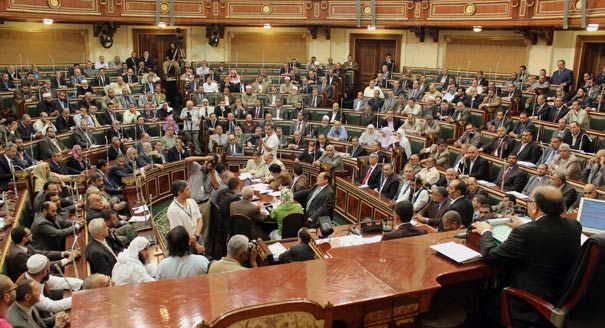
While the international community is focused on the self-proclaimed Islamic State or Iran, most Arabs are focused on improving their lives. Their governments should encourage them.
Source: Project Syndicate
A recent survey of 100 Arab thought leaders conducted by the Carnegie Endowment for International Peace revealed a sweeping consensus about what underlies many of the region’s problems: a lack of good governance. Indeed, those polled emphasized domestic problems resulting from that failure – authoritarianism, corruption, outdated education systems, and unemployment – over regional concerns, including the threat of the self-proclaimed Islamic State (ISIS) or interference by regional heavyweights or outside powers.
This is not new information. The Arab Spring uprisings brought to the fore the inadequacy of the region’s outdated social contracts in the face of current political and economic challenges. Yet Arab governments still seem not to have gotten the message.Five years after the uprisings erupted, Arab citizens have little – in some cases, even less – voice in running their countries’ affairs. Moreover, they depend on rentier economies that are unable to create enough jobs for their young, educated populations. And they face an alarming absence of the rule of law, leaving them with no assurances that they will be treated equally, regardless of gender, ethnic origin, or religion.
But poor governance today does not mean the Arab world is doomed to failure. Tunisia serves as a beacon of hope. After the 2011 revolution, it pursued a consensual, inclusive process to develop a new social contract that upholds all of its people’s individual and collective rights.
While Tunisia still faces serious economic and security problems, the national dialogue that the country has undertaken is the crucial first step toward resolving them. Other Arab societies now must undertake similar dialogues, with the ultimate goal of creating economies and institutions that meet their people’s needs.
History has taught us that such transformational processes take time. The long-suppressed ideas and energies unleashed by events like the Arab Spring must mature before having their full effect on society.
Consider the uprisings in Europe in 1848, in which citizens protested against authoritarian, feudal systems and the lack of economic opportunity. By the end of that year, status quo forces managed to retake the reins of power, and the uprisings appeared to have been all but crushed.
But something had changed. Taboos had been broken, and during the subsequent decades, technological advances enabled the spread of new ideas. It was not long before feudalism began to dissolve; liberal and democratic values gained traction; women secured greater rights; and economic systems emerged that could boost productivity, achieve high growth rates, and improve living standards.
A similar process is unfolding gradually in the Arab world, with citizens (especially young people) who lack trust in their governments seeking alternative sources of information and new ways to survive economically. This shift has so far gone largely unnoticed by governments, a reflection of just how disconnected they are from their own people. But it will soon be impossible to ignore.
All of this comes at a time when another important development is underway: Oil-based rentier systems are rapidly diminishing, owing to the steep decline in energy prices over the last two years. In particular, Saudi Arabia has been forced to initiate a shift toward an economic model that emphasizes investment and productivity as the main drivers of economic growth. Other countries in the region will have to follow suit and reform their economic systems, or face the wrath of their increasingly disgruntled citizens.
One important element of economic-reform strategies will be technology. Already, 240 million Arabs – largely young people – have access to the Internet through mobile phones; by 2020, it is estimated that all Arab youth will be connected. Technology is facilitating the creation and sharing of knowledge, in a region that has historically lagged in this area, and technology start-ups are on the rise.
This is not to say that technology is a panacea for the region. After all, ISIS is also using technology, but in a sinister way: to spread gruesome propaganda and recruit new members. But technology can speed up the Arab world’s social and economic progress, even as countries build a modern institutional framework capable of supporting it.
Nowadays, no country can evolve without developing effective and credible institutions, establishing a meaningful system of political checks and balances, and diffusing control over decision-making. These elements are vital to enable countries to offer their citizens an adequate quality of life.
In time, the Arab world will have them. While the international community is focused on ISIS or Iran’s destructive role in the Middle East, most Arabs are focused on improving their lives. Their governments should encourage them.

Vice President for Studies
Marwan Muasher is vice president for studies at Carnegie, where he oversees research in Washington and Beirut on the Middle East. Muasher served as foreign minister (2002–2004) and deputy prime minister (2004–2005) of Jordan, and his career has spanned the areas of diplomacy, development, civil society, and communications.
Recent Work



Amr Hamzawy, Andrew Leber, Eric Lob, …
Marwan Muasher
Carnegie does not take institutional positions on public policy issues; the views represented herein are those of the author(s) and do not necessarily reflect the views of Carnegie, its staff, or its trustees.

China’s political future will be shaped between now and next October. As the Communist Party enters its intense “campaign season” to prepare for a major political transition in 2027, reading Beijing's actions and responses may become more difficult as domestic politics weigh on its behavior more than usual.

Damien Ma

The EU can impose sanctions but struggles to enforce them without the United States. With Washington increasingly disinterested in backing European interests, the bloc must now fend for itself.


Nicu Popescu, Tiago Antunes
Global and rising powers will need to engage with Africa’s priorities and agency in order to secure the continent’s increasingly attractive partnerships.
Fonteh Akum

Rubio’s recent visit brought welcome attention, but more capital requires governance changes that may be a hard sell for regional governments.

Jennifer B. Murtazashvili

America’s foreign-policy objectives have grown more demanding while Americans have demanded greater focus on their own affairs.

Stephen Wertheim