• Research
  • Emissary
  • About
  • Experts
Carnegie Global logoCarnegie lettermark logo
DemocracyIran
  • Donate
{
  "authors": [
    "Marc Pierini"
  ],
  "type": "legacyinthemedia",
  "centerAffiliationAll": "dc",
  "centers": [
    "Carnegie Endowment for International Peace",
    "Carnegie Europe"
  ],
  "collections": [
    "Turkey’s Transformation",
    "Europe’s Eastern Neighborhood"
  ],
  "englishNewsletterAll": "ctw",
  "nonEnglishNewsletterAll": "",
  "primaryCenter": "Carnegie Europe",
  "programAffiliation": "EP",
  "programs": [
    "Europe"
  ],
  "projects": [],
  "regions": [
    "Europe",
    "Türkiye",
    "Middle East",
    "Iran"
  ],
  "topics": [
    "Security",
    "Military"
  ]
}
Source: Getty

In The Media
Carnegie Europe

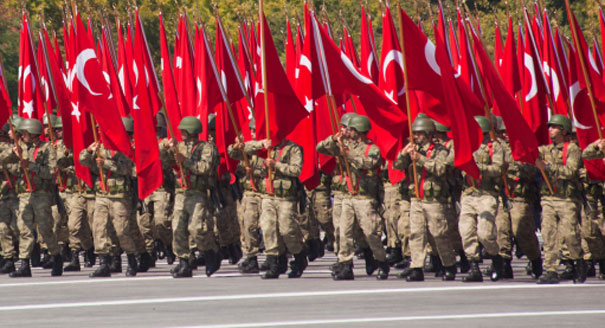
What Will Turkey’s Failed Coup Mean for Its Relations?

Following the failed military coup attempt, what will the future hold for domestic and foreign policy in Turkey?

Link Copied
By Marc Pierini
Published on Jul 17, 2016
Program mobile hero image

Program

Europe

The Europe Program in Washington explores the political and security developments within Europe, transatlantic relations, and Europe’s global role. Working in coordination with Carnegie Europe in Brussels, the program brings together U.S. and European policymakers and experts on strategic issues facing Europe.

Learn More

Source: Al Jazeera’s Inside Story

Speaking to Al Jazeera’s Inside Story, Marc Pierini was asked to comment on the situation in Turkey following the failed coup attempt. What does an unstable Turkey mean for the region, and has the failed coup affected Ankara’s relations with the West? He was joined by Yusuf Kanli, Turkish journalist and former editor of Hurriyet Daily News, and Bulent Aliriza, director of the Turkey Project and senior associate at the Center for Strategic and International Studies in Washington.

This interview was originally aired by Al Jazeera English.

About the Author

Marc Pierini

Senior Fellow, Carnegie Europe

Marc Pierini is a senior fellow at Carnegie Europe, where his research focuses on developments in the Middle East and Turkey from a European perspective.

    Recent Work

  • Commentary
    Deciphering Europe’s Relationship with Turkey

      Marc Pierini

  • Commentary
    Europe Doesn’t Like War—for Good Reasons

      Marc Pierini

Marc Pierini
Senior Fellow, Carnegie Europe
Marc Pierini
SecurityMilitaryEuropeTürkiyeMiddle EastIran

Carnegie does not take institutional positions on public policy issues; the views represented herein are those of the author(s) and do not necessarily reflect the views of Carnegie, its staff, or its trustees.

More Work from Carnegie Endowment for International Peace

  • Japanese troops take part in a counter-landing live fire exercise as part of the annual Balikatan joint military drills on May 04, 2026 in Laoag, Ilocos Norte province, Philippines.
    Article
    The Two Logics Driving Japan’s Security Policy

    Japan’s revision of its three strategic documents reflects an intention to keep the United States engaged in the region while Japan fills any vacuums of U.S. power to preserve the Indo-Pacific order.

      • Ryo Sahashi

      Ryo Sahashi

  • Two people in blue PPE standing over large metal rolls
    Commentary
    Emissary
    Inside the Global Race to Erode a Battery Manufacturing Monopoly

    Over the past decade, China has moved from marginal player to major producer of all things batteries. The United States, Europe, and others are aiming to balance the market.

      Milo McBride

  • people watching a huge column of smoke in the distance
    Commentary
    Emissary
    Is the Russia-Ukraine War Vibe Shift Real?

    Media coverage suggests Kyiv’s fortunes have changed. That shift may be important, but it only goes so far.

      Dara Massicot, Aaron David Miller, Andrew S. Weiss

  • Lee and Lula walking
    Commentary
    Emissary
    Why Korea’s President Skipped Washington for Silicon Valley and Brasília

    Lee’s tour shows how Seoul is reorganizing its diplomacy away from Pyongyang and toward industrial networks and the geography of the compute economy.

      Darcie Draudt-Véjares

  • An AS3 interceptor part of the Merops, an AI-powered anti-drone system is pictured during a NATO live-fire demonstration of a counter-UAS system on November 18, 2025 in Nowa Deba, Poland.
    Paper
    Confronting the Barriers to AI Diffusion in the U.S. Military

    The Pentagon is calling for a rapid AI transformation. Autonomous drones offer a case study in the eight bottlenecks the U.S. military must navigate to realize that vision.

      Jake Steckler

Get more news and analysis from
Carnegie Endowment for International Peace
Carnegie global logo, stacked
1779 Massachusetts Avenue NWWashington, DC, 20036-2103Phone: 202 483 7600
  • Research
  • Emissary
  • About
  • Experts
  • Donate
  • Programs
  • Events
  • Blogs
  • Podcasts
  • Contact
  • Annual Reports
  • Careers
  • Privacy
  • For Media
  • Government Resources
Get more news and analysis from
Carnegie Endowment for International Peace
© 2026 Carnegie Endowment for International Peace. All rights reserved.