

Research
- +5
Alper Coşkun, Fatih Ceylan, Tacan İldem, …
{
  "authors": [
    "Sinan Ülgen"
  ],
  "type": "legacyinthemedia",
  "centerAffiliationAll": "dc",
  "centers": [
    "Carnegie Endowment for International Peace",
    "Carnegie Europe"
  ],
  "collections": [
    "Turkey’s Transformation"
  ],
  "englishNewsletterAll": "ctw",
  "nonEnglishNewsletterAll": "",
  "primaryCenter": "Carnegie Europe",
  "programAffiliation": "EP",
  "programs": [
    "Europe"
  ],
  "projects": [],
  "regions": [
    "Europe",
    "Türkiye",
    "Middle East",
    "Western Europe",
    "Iran"
  ],
  "topics": [
    "Foreign Policy"
  ]
}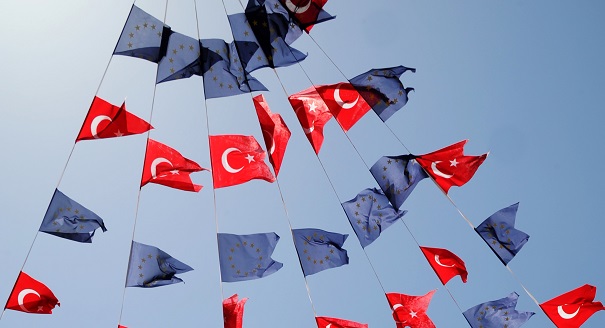
Source: Getty
The path for Turkey to join the EU in order to cement its place among western democracies has reached a dead end.
Source: Financial Times
First as a diplomat, then as the head of a liberal-leaning think-tank in Istanbul, I have spent three decades trying to advance Turkey’s relationship with Europe. For years, I believed Turkey should join the EU to cement its place among western democracies. Now, it is time to accept that this path has reached a dead end.
The tragedy is that this outcome was not at all preordained. Yes, Turkey’s EU membership was always going to be a difficult endeavour. We had to battle deeply entrenched prejudices on both sides. Yet against all the odds, Turkey was still able to get to the starting line of the accession negotiations in 2005. This was thanks to a democratic wave initiated by a coalition of political parties in 1999 and revitalised by the ruling Justice and Development party, or AKP, when it came to power in 2002.
EU accession won the support of 74 per cent of the Turkish population in 2005. It was argued that this would finally prove that Islam, democracy and modernity could coexist. Turkey and the EU would decisively rebut claims of civilisational conflict advanced by writers such as Samuel Huntington.
The EU leaders’ decision in December to informally freeze the accession talks was a milestone in this derailed journey. It was the first time that this procedure had been used against a candidate country. The Council of Europe parliamentary assembly’s vote last week to degrade Turkey’s status because of continuing violations of fundamental freedoms is the final signal that EU membership is no longer a realistic prospect for Ankara.
The responsibility for this historic failure is a shared one. We first have to thank Nicolas Sarkozy, the former French president, for blocking the desire of Turkish people to join the EU. Between 2007 and 2012, he used opposition to Turkish accession as a trump card in his proto-populist agenda at home. He blocked unilaterally several critical strands in the negotiating process, fuelling suspicions among Turkish people about the sincerity of the European offer that endure today.
The EU’s strategic blunder of accepting the membership of Cyprus, a divided island, also contributed to the erosion of trust. The slowing of the pace of domestic reform in Turkey and the increasingly illiberal behaviour of the government in Ankara helped to hasten the moment of reckoning.
What now? A formal end to a political journey that began in 1963 is likely to trigger an escalation in tension between Ankara and Brussels in the short term. The refugee deal of March 2016 — in which Turkey made a commitment to stem the flow of illegal migrants to Europe in return for promises of financial assistance, resettlement and visa liberalisation — is on the verge of collapse. Yet Turkey and the EU will have to create a new framework for their relationship one way or the other.
If the EU hopes to continue to exert an influence on Turkey, this framework should reflect a revised set of good governance conditions tied to a programme of comprehensive trade liberalisation. The proposed modernisation of the Turkey-EU customs union provides such an opportunity.
The start of this round of talks should not be tied to human rights, however. Instead, the conclusion of the discussions should be conditional on improving the rule of law and implementing pro-market reforms that would lead to a more transparent, predictable and fair economic environment.
Because of its strategic blindness over the past decade, Europe has forfeited the ability to influence Turkey’s political trajectory. It has also abdicated any future role in helping Turks build a more liberal version of their flawed democracy. The most it can hope for is to retain some leverage over its economic future.
This article was originally published in the Financial Times.

Senior Fellow, Carnegie Europe
Sinan Ülgen is a senior fellow at Carnegie Europe in Brussels, where his research focuses on Turkish foreign policy, transatlantic relations, international trade, economic security, and digital policy.
Recent Work

Alper Coşkun, Fatih Ceylan, Tacan İldem, …
Carnegie does not take institutional positions on public policy issues; the views represented herein are those of the author(s) and do not necessarily reflect the views of Carnegie, its staff, or its trustees.
Despite the agreement’s uncertainty, it’s still a significant development in regional and nuclear policy.


Andrew Leber, Jane Darby Menton
“AI safety in parallel” is modest and pragmatic but vital.

Matt Sheehan
Trump is distracted and Ukraine wants Europe to step up. The continent’s leaders must find their voice and assert it in talks with Russia.

Alissa de Carbonnel
Unresolved tensions within the AfD may ultimately constrain the its potential as a leader among European and global populist forces.
Jeremy Cliffe
There is a deeply rooted assumption in post–Cold War American statecraft that overwhelming military and economic power translates directly into favorable political outcomes. But force alone is rarely enough. To meet the challenges of the mid-21st century, Washington needs a cultural shift toward a mindset that takes negotiation far more seriously.

Cecily Brewer