

Commentary
Chung Min Lee
{
  "authors": [
    "Chung Min Lee"
  ],
  "type": "legacyinthemedia",
  "centerAffiliationAll": "dc",
  "centers": [
    "Carnegie Endowment for International Peace"
  ],
  "collections": [
    "Inside Korea"
  ],
  "englishNewsletterAll": "asia",
  "nonEnglishNewsletterAll": "",
  "primaryCenter": "Carnegie Endowment for International Peace",
  "programAffiliation": "AP",
  "programs": [
    "Asia"
  ],
  "projects": [],
  "regions": [
    "East Asia",
    "South Korea",
    "North Korea"
  ],
  "topics": [
    "Security",
    "Foreign Policy"
  ]
}
Source: Getty
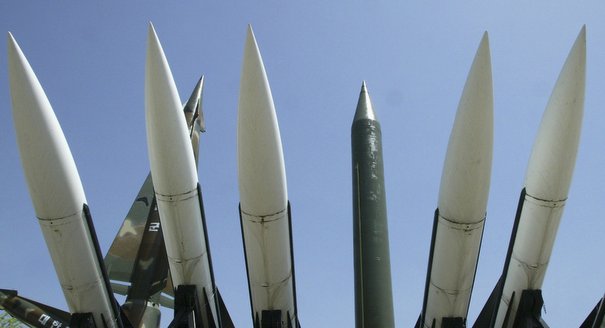
North Korea’s acquisition of ICBM capabilities is a game-changer—and not only for the inter-Korean balance of power and Northeast Asia’s strategic stability.
Source: Washington Post
As the United States celebrated its July 4 birthday, Kim Jong Un gave America a very unwelcome present: a public announcement heralding the successful launch of an intercontinental ballistic missile. North Korea’s acquisition of ICBM capabilities is a game-changer — and not only for the inter-Korean balance of power and Northeast Asia’s strategic stability. With this development, the North now also represents a global security threat.
Even though his nation continues to live in deep poverty, Kim has been obsessed with enhancing his nuclear weapons arsenal and wants the nation to be recognized as an official nuclear state. Regardless of how South Korea, the United States, Japan, China and the broader international community react to Pyongyang’s ICBM test, Kim has chosen conflict with the rest of the world.
Kim’s unprecedented belligerence comes as a surprise to South Korea’s newly inaugurated president, Moon Jae-in. Ushered into office on May 10 following the impeachment of President Park Geun-hye, Moon has long held the belief that greater engagement is the preferred path to lowering inter-Korean tensions. After his election, members of Moon’s Democratic Party declared that a new era in South-North relations was just around the corner. Now, the ICBM missile test has already presented the new president with his first major national security crisis. How he responds is going to define the trajectory of his policy toward North Korea for the rest of his five-year term.
Moon now cannot return to the so-called Sunshine Policy of the Kim Dae-jung and Roh Moo-hyun administrations, a policy that advocated sustained dialogue and often ignored the plight of human rights violations in North Korea in the hopes of preventing a nuclearized North Korea.
Moon is attending his first Group of 20 summit this week and will hold sideline meetings with Japanese Prime Minister Shinzo Abe and Chinese President Xi Jinping, among other world leaders. Moon has to show the world that South Korea will not be cowed by North Korea’s growing nuclear threat. He has to affirm to the international community that he can help forge a solid South Korea-U.S. alliance together with a strengthened U.S.-ROK-Japanese security triangle. A holistic response to North Korea’s ICBM capabilities will be the bedrock of his policy toward the North.
No one wants another fratricidal war on the Korean Peninsula. But North Korea has become an existential threat to South Korea, the United States and Japan. Deterrence assets must be enhanced. Moreover, secondary sanctions against companies and banks that conduct business with North Korea should be implemented. Finding and closing Kim’s illicit bank accounts in China and Europe, and turning off hard-cash transfers to North Korea from North Korean laborers who are forced to work in inhumane conditions in China, Russia and even the Middle East, will also help.
Fundamentally, a successful strategy on North Korea requires a unified stance vis-à-vis China by the United States, South Korea, Japan and key European states such as Germany, France and Britain — the latter two being permanent members of the U.N. Security Council.
China has been a beneficiary of a belligerent North Korea, using it as a buffer against the United States and its core allies in East Asia. While China’s left hand supports U.N. sanctions, its right hand continues to provide North Korea with critical economic and energy assistance. So far, Beijing has done nothing besides implementing multilateral sanctions to thwart North Korea’s nuclear capabilities.
Moon, Abe and President Trump must show Xi that China’s continuous coddling of North Korea is no longer acceptable. Beijing must be faced with consequences if it continues its current course of minimal pressure on the North. Moon enjoys the highest approval rating of any incoming president due to his warm and engaging interactions with the public and his emphasis on transparency. But public approval ratings don’t lead to a successful national security strategy.
Moon’s international standing as a major Asian leader depends crucially on his stances on North Korea’s nuclear threat and his willingness to work hand in hand with allies and partners as he attends the G-20 summit in Hamburg.
This article was originally published in the Washington Post.
Senior Fellow, Asia Program
Chung Min Lee is a senior fellow in Carnegie’s Asia Program. He is an expert on Korean and Northeast Asian security, defense, intelligence, and crisis management.
Recent Work
Chung Min Lee
Carnegie does not take institutional positions on public policy issues; the views represented herein are those of the author(s) and do not necessarily reflect the views of Carnegie, its staff, or its trustees.
Japan’s revision of its three strategic documents reflects an intention to keep the United States engaged in the region while Japan fills any vacuums of U.S. power to preserve the Indo-Pacific order.
Ryo Sahashi

Chinese biotech companies have been on the receiving end of U.S. economic coercion. Yet their responses have differed significantly because firm and state interests are not uniformly aligned. For Washington, treating all Chinese tech firms the same, irrespective of their actual interests, risks pushing them farther into Beijing’s corner.

Xue Gong
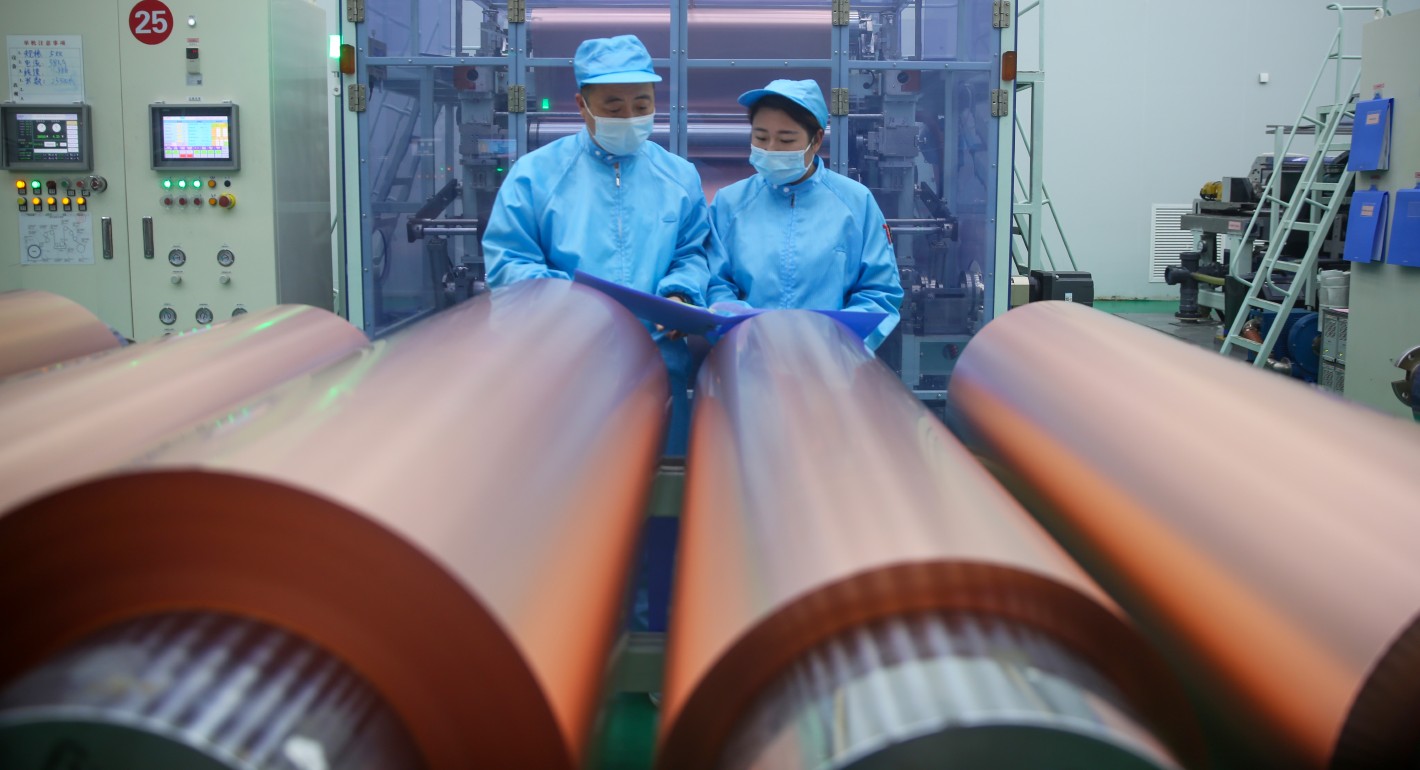
Over the past decade, China has moved from marginal player to major producer of all things batteries. The United States, Europe, and others are aiming to balance the market.

Milo McBride
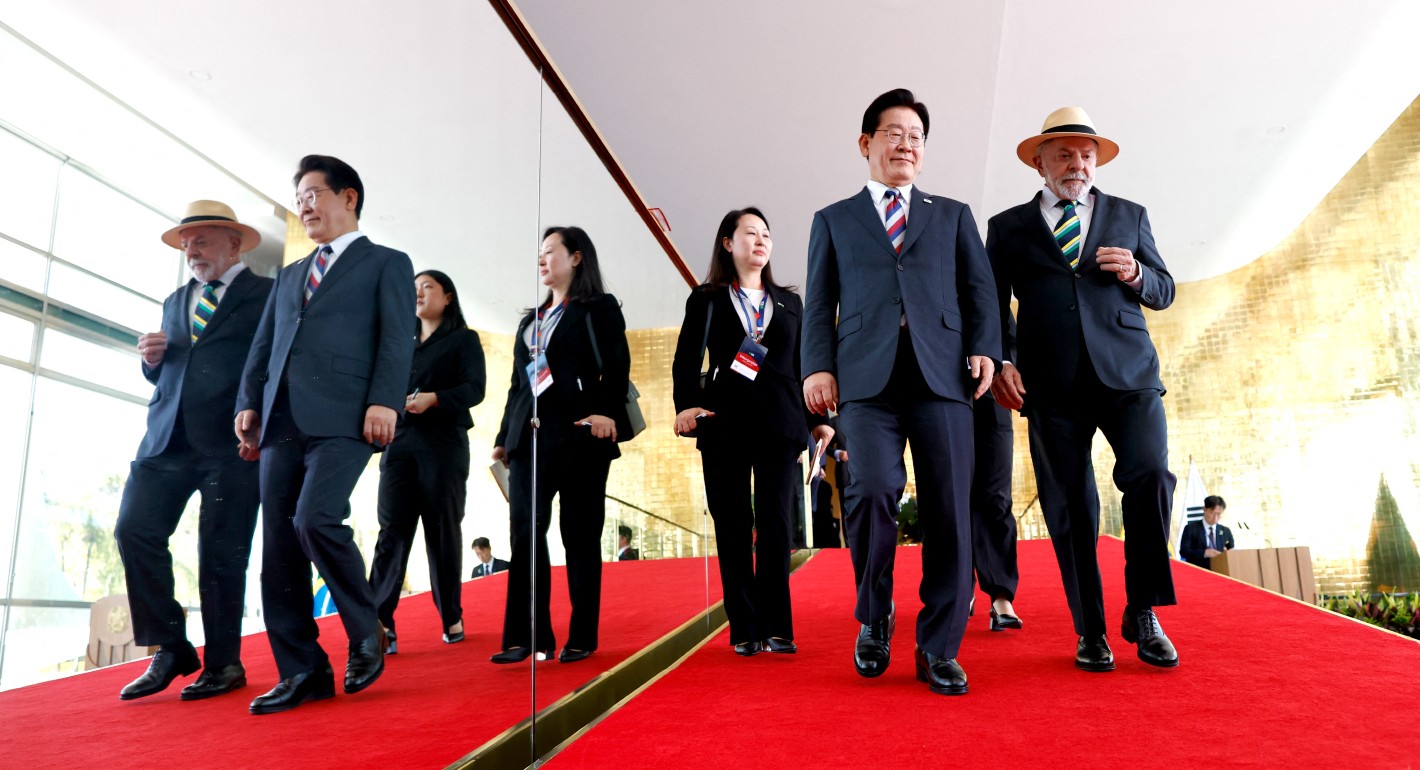
Lee’s tour shows how Seoul is reorganizing its diplomacy away from Pyongyang and toward industrial networks and the geography of the compute economy.

Darcie Draudt-Véjares

Most migrants may have left Ceuta, but the effects may linger.


Alejandro Martin Rodriguez, Sarah Yerkes