
• Research
  • Emissary
  • About
  • Experts
Carnegie Global logoCarnegie lettermark logo
DemocracyIran
  • Donate
{
  "authors": [
    "Se Young Jang"
  ],
  "type": "legacyinthemedia",
  "centerAffiliationAll": "dc",
  "centers": [
    "Carnegie Endowment for International Peace"
  ],
  "collections": [
    "Korean Peninsula"
  ],
  "englishNewsletterAll": "ctw",
  "nonEnglishNewsletterAll": "",
  "primaryCenter": "Carnegie Endowment for International Peace",
  "programAffiliation": "NPP",
  "programs": [
    "Nuclear Policy"
  ],
  "projects": [],
  "regions": [
    "East Asia",
    "South Korea",
    "North Korea",
    "China",
    "Japan"
  ],
  "topics": [
    "Nuclear Policy"
  ]
}

Source: Getty

In The Media

Do South Koreans Really Want U.S. Tactical Nukes Back on the Korean Peninsula?

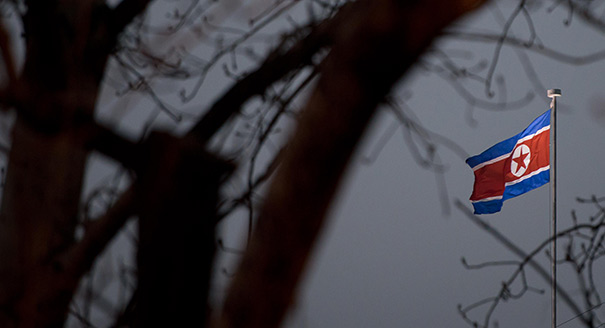
Amid escalating tensions, South Koreans have begun voicing their concerns about a nuclear-armed North Korea-and debating bringing U.S. tactical nuclear weapons back to the Korean peninsula.

Link Copied
By Se Young Jang
Published on Sep 19, 2017
Program mobile hero image

Program

Nuclear Policy

The Nuclear Policy Program aims to reduce the risk of nuclear war. Our experts diagnose acute risks stemming from technical and geopolitical developments, generate pragmatic solutions, and use our global network to advance risk-reduction policies. Our work covers deterrence, disarmament, arms control, nonproliferation, and nuclear energy.

Learn More

Source: National Interest

North Korea increasingly poses a grave threat to its southern neighbor and the world by conducting a series of nuclear and missile tests. Amid this escalating tension on and around the Korean Peninsula, South Koreans have started voicing their concerns about a nuclear-armed North Korea.

A Korea Society Opinion Institute (KSOI) poll conducted September 8–9 shows that 68.2 percent of those surveyed believe that U.S. tactical nuclear weapons, which were withdrawn in 1991, should be redeployed to South Korea to protect the country from Pyongyang’s growing nuclear threat. A Gallup poll conducted September 5–7 also found that 60 percent of the respondents said that South Korea should arm itself with nuclear weapons. Extrapolating from the polls, some people could believe that an absolute majority of the South Koreans favors nuclear rearmament in response to a nuclear-armed North Korea.

Indeed, backed by the results of these latest polls, the right-wing Liberty Korea Party (LKP)—the main opposition party in South Korea—is further stepping up its demands for the redeployment of tactical nukes, not only to the South Korean government but also to the Trump administration. Having already adopted bringing back U.S. tactical nuclear weapons to South Korea as its party platform last month, the LKP argues that a “nuclear balance” is the best way to guarantee South Korea’s security in this dire situation. The LKP’s push for nuclear rearmament is in stark contrast with President Moon Jae-in’s policy of upholding a long-lasting principle of denuclearization of the Korean Peninsula, which he reconfirmed during his latest interview with CNN.

This article was originally published in National Interest

Read the article

About the Author

Se Young Jang

Former Nonresident Scholar, Nuclear Policy Program

Se Young Jang was a nonresident scholar in the Nuclear Policy Program at the Carnegie Endowment for International Peace.

Se Young Jang
Former Nonresident Scholar, Nuclear Policy Program
Nuclear PolicyEast AsiaSouth KoreaNorth KoreaChinaJapan

Carnegie does not take institutional positions on public policy issues; the views represented herein are those of the author(s) and do not necessarily reflect the views of Carnegie, its staff, or its trustees.

More Work from Carnegie Endowment for International Peace

  • Xi walking into a room with people standing and applauding around him
    Commentary
    Emissary
    The Xi Doctrine Zeros in on “High-Quality Development” for China’s Economic Future

    In the latest Five-Year Plan, the Chinese president cements the shift to an innovation-driven economy over a consumption-driven one.

      • Damien Ma

      Damien Ma

  • apan's 8,900-ton Maritime Self-Defense Force supply ship Oosumi leaves Muroran port escorted by the 4,550-ton destroyer Murasame bound for Kuwait February 20, 2004 in Muroran, Japan.
    Article
    Japan’s Security Policy Is Still Caught Between the Alliance and Domestic Reality

    Japan’s response to U.S. pressure over Hormuz highlights a broader dilemma: How to preserve the alliance while remaining bound by legal limits, public opinion, and an Asia-centered security agenda. Tokyo gained diplomatic space through an alliance-embracing strategy, but only under conditions that may not endure.

      • Ryo Sahashi

      Ryo Sahashi

  • Implementing the Biden Administration’s China Strategy
    Report
    Implementing the Biden Administration’s China Strategy

    At the heart of Biden’s approach to China was the consolidation of a framework for strategic competition with an eye toward coexistence.

      • Senkai Hsia

      Christopher S. Chivvis, Senkai Hsia

  • Seoul traffic at night
    Commentary
    Emissary
    How the Hormuz Closure Is Testing the Korean President’s Progressive Agenda

    The crisis is not just a story of energy vulnerability. It’s also a complex, high-stakes political challenge.

      Darcie Draudt-Véjares

  • apan's Prime Minister Sanae Takaichi (L) reacts as US President Donald Trump delivers a speech in front of US Navy personnel on board the US Navy's USS George Washington aircraft carrier at the US naval base in Yokosuka on October 28, 2025.
    Article
    Takaichi’s Security Agenda After the Landslide Election

    Backed by a new LDP supermajority, Prime Minister Takaichi aspires to revise Japan’s long-standing security doctrine. Ahead of her visit to Washington, she faces fiscal hurdles for her proposed defense spending while needing to navigate President Trump’s request for naval assets to the Strait of Hormuz.

      • Harukata Takenaka

      Harukata Takenaka

Get more news and analysis from
Carnegie Endowment for International Peace
Carnegie global logo, stacked
1779 Massachusetts Avenue NWWashington, DC, 20036-2103Phone: 202 483 7600Fax: 202 483 1840
  • Research
  • Emissary
  • About
  • Experts
  • Donate
  • Programs
  • Events
  • Blogs
  • Podcasts
  • Contact
  • Annual Reports
  • Careers
  • Privacy
  • For Media
  • Government Resources
Get more news and analysis from
Carnegie Endowment for International Peace
© 2026 Carnegie Endowment for International Peace. All rights reserved.