

Article
To carry out its global AI agenda, Washington will need strategic relationships with emerging markets in Africa, starting with Kenya.
Jane Munga
{
  "authors": [
    "John Kerry",
    "Aminata Touré"
  ],
  "type": "legacyinthemedia",
  "centerAffiliationAll": "",
  "centers": [
    "Carnegie Endowment for International Peace"
  ],
  "collections": [],
  "englishNewsletterAll": "",
  "nonEnglishNewsletterAll": "",
  "primaryCenter": "Carnegie Endowment for International Peace",
  "programAffiliation": "",
  "programs": [],
  "projects": [],
  "regions": [
    "Southern, Eastern, and Western Africa"
  ],
  "topics": [
    "Political Reform",
    "Democracy"
  ]
}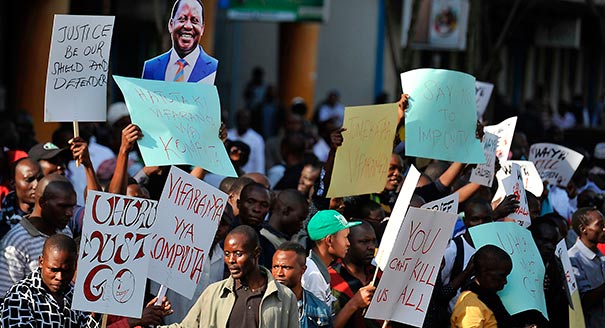
Source: Getty
This is a critical time for Kenya. The court’s historic decision means the world will be watching this race even more closely, and international election monitors must as well.
Source: New York Times
On Sept. 1 Kenya’s Supreme Court made the unprecedented decision to nullify the results of the country’s Aug. 8 presidential election, voiding the victory by incumbent President Uhuru Kenyatta and calling for fresh elections in 60 days. A decade after the 2007 presidential election was followed by violence that killed more than 1,000 people, it is a historic moment not just for Kenya but also for the continent, and guarantees greater global attention on the country this fall.
In response to a petition filed by the opposition leader and former prime minister Raila Odinga, the court ruled the election was not conducted in accordance with the Constitution, citing “illegalities and irregularities” committed by Kenya’s election commission.
The court ruling didn’t contradict the reports of the Carter Center, whose team we led, or those of other observer missions, including the European Union and African Union, whose findings were broadly similar.
Multiple media reports suggested inaccurately that we and other international observers had declared the election free and fair. Our preliminary report two days after the election insisted that the tallying process was in progress and that an overall assessment could be provided only after the process was complete.
Although our observers had noted isolated instances of procedural irregularities in voting and counting, these did not appear to affect the integrity of those processes, which had functioned relatively smoothly.
We also indicated that the electronic transmission of results proved unreliable, with electronic scans of results forms not arriving as planned at constituency-level tally centers, where the results were tabulated.
As a backup measure, the election commission instructed the constituency centers to rely instead on the paper results forms to tally the official results. We noted that the paper-based backup system, if implemented properly, would allow verification of the ballots cast and that agents of political parties had been at most stations and received copies they could crosscheck with the official results.
At the time, there had been sporadic outbreaks of violence, followed by reports of excessive use of force by the government. Mr. Odinga argued he wouldn’t take his case to court but would instead let it play out in “the court of public opinion.” It reminded us of the 2007 elections when Mr. Odinga lost to President Mwai Kibaki and mass violence followed.
Our major exhortation — which angered some at the time — was that all aggrieved parties should pursue their disputes in the courts, not the streets. We and the other international observer mission leaders pressed, both publicly and in private meetings with leaders, for claims of misconduct and fraud to be fully investigated, rather than reduced to rhetoric and innuendo.
Many in the media, including this newspaper’s editorial page, have wondered whether the court ruling has exposed flaws in election observation missions. What they misunderstand is that our early reports were preliminary, covering only the voting and counting stages, not the critical postelection phases of tabulation and dispute resolution that were still ongoing. They also overlook that international observers led the call for candidates to take their disputes to the courts. That happened, and that is a good thing.
Our observers remain in Kenya and continue their monitoring work. A final comprehensive report will be completed after the conclusion of the new election and the resolution of any petitions.
In its electoral petition, Mr. Odinga’s opposition coalition claimed that the election commission did not follow proper procedures in tabulating and announcing final results and that there were inaccuracies in the forms recording polling station results and constituency-level tallying. They also claimed that the commission’s servers were hacked to manipulate results. The election commission has confirmed that there were attempts to hack its servers, but officials deny that any malfeasance occurred.
The Supreme Court has not yet said what parts of Mr. Odinga’s challenge it agreed with. Until it releases a detailed explanation, it is impossible to know the precise basis for its decision and for the commission to plan corrective actions. The court should be commended for affording due process and a transparent review, bolstering public confidence in its independence and reducing tensions across the country.
The election commission has announced that the new election will be held on Oct. 17. It is critical that the process be conducted flawlessly. The government needs to provide the financial resources to make that possible and take steps to ensure the security of the commissioners, candidates and voters.
Initially, President Kenyatta spoke about respecting the court’s decision, but sadly, in subsequent statements, he attacked the judges as “crooks” and vowed to “fix” the court if re-elected. All Kenyans, especially its political leaders, need to act responsibly and ensure that the new electoral process is peaceful.
This is a critical time for Kenya. Democracy is hard work requiring many hands. The court’s historic decision means the world will be watching this race even more closely, and international election monitors must as well. A transparent, credible and peaceful process will affirm the power of Kenya’s democracy — after its court system has already affirmed the strength of its institutions.
This article was originally published in the New York Times.
Nonresident Scholar, Sustainability, Climate, and Geopolitics Program
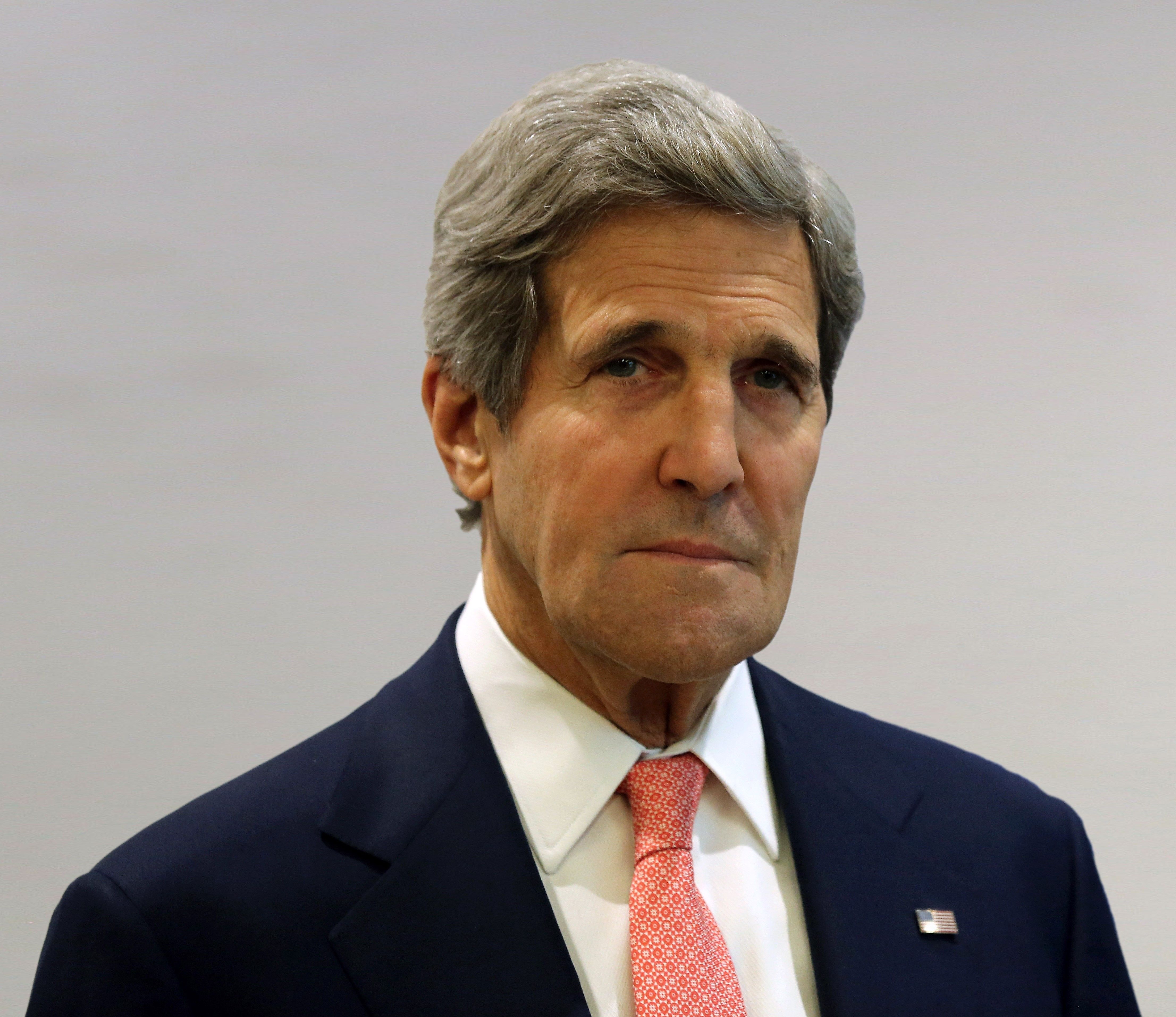
John Kerry is a nonresident scholar the Carnegie Endowment for International Peace.
Aminata Touré
Aminata Touré is a former prime minister of Senegal.
Carnegie does not take institutional positions on public policy issues; the views represented herein are those of the author(s) and do not necessarily reflect the views of Carnegie, its staff, or its trustees.

To carry out its global AI agenda, Washington will need strategic relationships with emerging markets in Africa, starting with Kenya.

Jane Munga
President Lee marked his first year in office after one of the most tumultuous periods in South Korean politics. Though Lee has enjoyed a high approval rating, a large majority in the National Assembly, and foreign policy victories, Lee and his party’s political fortunes depend on generating economic growth, learning the right lessons from the recent local elections, and managing contentious factional strife within his political base.
Chung Min Lee
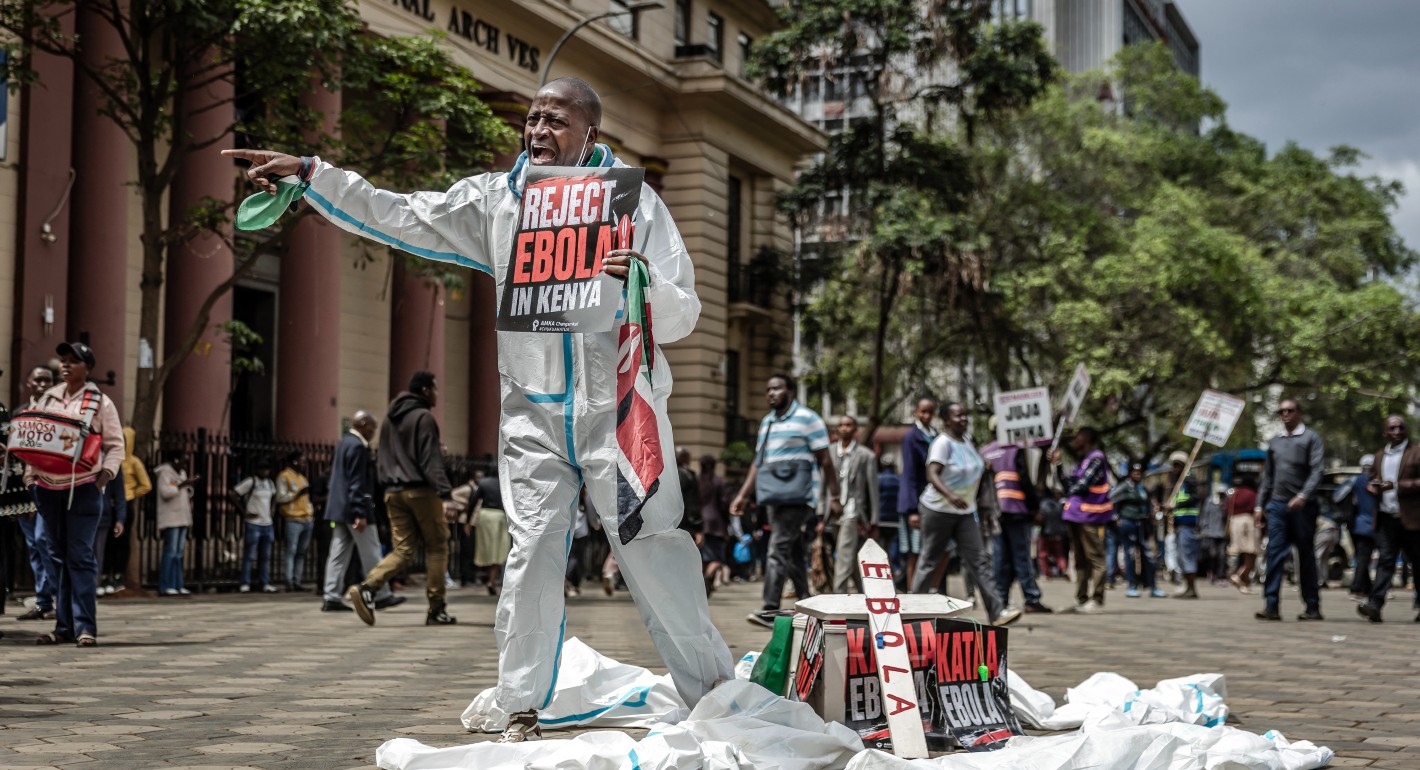
Washington’s transactional foreign policy is making it indistinguishable from Beijing’s, with consequential implications for African agency.
Jane Munga
The ruling elites in contemporary Russia are not a political class, but a community of managers who are not subject to competition or public accountability. The state is becoming an operating apparatus without any internal autonomy.

Alexandra Prokopenko

China’s central bank swap lines could help developing world leaders drive their energy transition—if they harness conditionality to protect their interests.
Ebipere K. Clark