

Commentary
Andrei Kolesnikov
{
  "authors": [
    "Andrei Kolesnikov"
  ],
  "type": "commentary",
  "centerAffiliationAll": "",
  "centers": [
    "Carnegie Endowment for International Peace",
    "Carnegie Russia Eurasia Center"
  ],
  "collections": [
    "Inside Russia"
  ],
  "englishNewsletterAll": "",
  "nonEnglishNewsletterAll": "",
  "primaryCenter": "Carnegie Endowment for International Peace",
  "programAffiliation": "",
  "programs": [],
  "projects": [],
  "regions": [],
  "topics": [
    "Economy"
  ]
}
Source: Getty
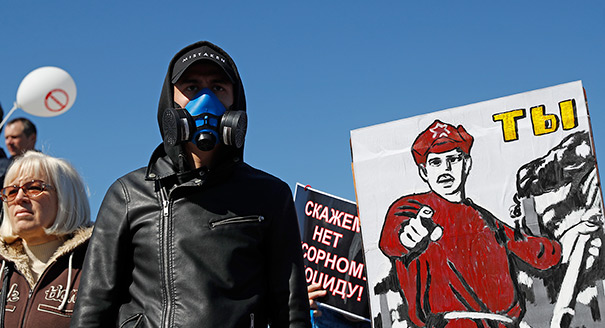
It’s a cliché in the Western discussion about Russia to portray Putin as a god-like force in Russian life who demands unfailing obedience from oligarchs and little people alike. Yet recent spontaneous protests in Siberia and a small town near Moscow show how quickly average citizens can mobilize to rail against injustice and the stunning incompetence of their country’s rulers.
Putin’s post-election honeymoon was upended by two spontaneous protest movements. A shopping mall fire in the Siberian city of Kemerovo that killed more than 60 people, many of them children, because of lax safety standards, provoked angry demonstrations by relatives and inhabitants of the city. In Volokolamsk, a town of 40,000 people west of Moscow, local residents have staged protests to object to a nearby landfill that has been polluting the air of the town with toxic fumes. In a civic action of this kind, a citizen is born.
In both cases, the protesters say they have no interest in getting involved in political issues at the national level, they distrust political opposition leaders, such as Navalny. Igor Vostrikov, who lost his whole family in the Kemerovo mall fire, has founded a new civic movement, A Great Empire, with the goal of “returning power to the people.” It sounds like a naïve project, a form of therapy for a grieving man. It is also an expression of complete distrust for all politicians, including opposition ones. Vostrikov is a recognizable figure in Russian history: the average citizen, who feels unprotected and unrepresented by leaders of any level.
Yet some protests do get political. Most Russians protest from a feeling of moral outrage. The large demonstrations in late 2011 and early 2012 were triggered by the blatant falsification of parliamentary elections and the cynicism with which Putin’s return to the Kremlin was announced. These protests—the famous rallies on Bolotnaya Square in Moscow—began because people felt morally affronted. Later, they became overtly political, and different groups found common cause in them.
There was a romantic sensation of togetherness in these rallies, in the absence of a single leader and a clear ideology. This was both their strength and their weakness. They could not succeed because they disintegrated into wrangles over direction and organization. The nationalists and liberals who stood together soon revealed their contempt for one another.
In March 2017, there were more protests, this time when opposition leader and anti-corruption crusader Alexei Navalny released information about the alleged corrupt practices of Prime Minister (and former president) Dmitry Medvedev. Again, moral outrage walked hand in hand with politics.
What is the chance of a more sustained and organized protest movement in Russia? In 2016–2017, Carnegie Moscow Center and the independent polling organization Levada Center carried out a sociological survey on local civic activism in Moscow. We found that local activism was driven by narrow, small-scale community interests more than by bigger political issues. Yet when the authorities intruded into Muscovites’ private space with bulldozers and plans for using Russian-style eminent domain to relocate thousands of average apartment owners, the activists were extremely tough and intransigent. Municipal deputies also found an important role in defending their local districts.
The conclusion from our surveys was that as the activists find they have no impact on national issues, they decide to lay claim to sovereignty over their own backyards. They organize themselves locally where they can still exert influence. Yet their fight for backyard sovereignty has the capacity to expand—into a city district, an entire city, or perhaps even the whole country.
This kind of conflict is likely to recur more and more often, for the simple reason that Russian officials are incapable of solving local problems or talking to ordinary people. In Volokolamsk, local people have already founded an organization to ensure public oversight of the toxic Yadrovo landfill. The authorities are being forced to coordinate their actions with angry citizens in order to avoid high social tensions.
There is a bigger overall problem: most activists do not see a link between their own problems and the policies emanating from the Kremlin. For most Russians, the president is still the symbol and defender of Mother Russia, a man they associate with their feelings of national pride. Putin’s increasing aloofness from the everyday concerns of average Russians represents his greatest vulnerability.
Former Senior Fellow, Carnegie Russia Eurasia Center
Kolesnikov was a senior fellow at the Carnegie Russia Eurasia Center.
Recent Work
Andrei Kolesnikov
Andrei Kolesnikov
Carnegie does not take institutional positions on public policy issues; the views represented herein are those of the author(s) and do not necessarily reflect the views of Carnegie, its staff, or its trustees.
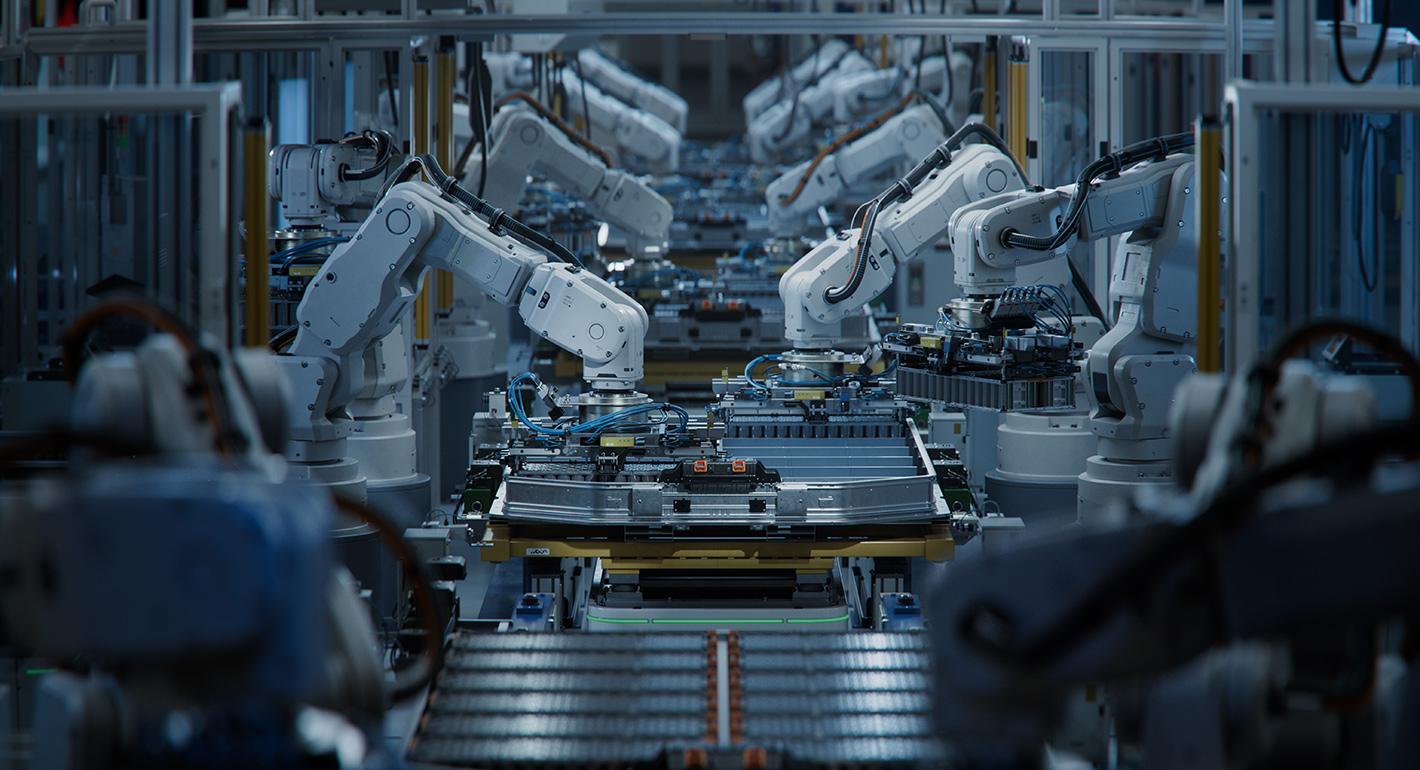
The debate over AI and work too often centers on displacement. Facing aging populations and shrinking workforces, East Asian policymakers view AI not as a threat, but as a cross-sectoral workforce strategy.

Darcie Draudt-Véjares, Sophie Zhuang

In its version of an AI middle power strategy, Seoul is pursuing alignment with the United States not as an endpoint but as a strategy to build industrial and geopolitical leverage. Whether this balance holds remains an open question.
Darcie Draudt-Véjares, Seungjoo Lee

China’s rapid technological progress and its first-rate infrastructure are often cited as refuting the claim that China has been systematically overinvesting in non-productive projects for many years. In fact, as the logic of overinvestment and the many historical precedents show, the former is all-too-often consistent with the latter.

Michael Pettis

On March 10, 2026, India’s Union Cabinet approved amendments to Press Note 3, a regulation that mandated government approval on all foreign direct investment (FDI) from countries sharing a land border with India. This amendment raises questions primarily about whether its stated benefits will materialize and if the risks have been adequately weighed. This piece will address the same.

Konark Bhandari

AI could hollow out jobs, reshape them gradually, create entirely new ones—or do all three at once. The case for starting to act now doesn’t depend on knowing which.
Teddy Tawil