

• Research
  • Emissary
  • About
  • Experts
Carnegie Global logoCarnegie lettermark logo
DemocracyIran
  • Donate
{
  "authors": [
    "Tariq Thachil",
    "Milan Vaishnav"
  ],
  "type": "other",
  "centerAffiliationAll": "dc",
  "centers": [
    "Carnegie Endowment for International Peace"
  ],
  "collections": [],
  "englishNewsletterAll": "ctw",
  "nonEnglishNewsletterAll": "",
  "primaryCenter": "Carnegie Endowment for International Peace",
  "programAffiliation": "SAP",
  "programs": [
    "South Asia"
  ],
  "projects": [],
  "regions": [
    "South Asia",
    "India"
  ],
  "topics": [
    "Political Reform",
    "Democracy",
    "Civil Society"
  ]
}

Source: Getty

Other

The Strategic and Moral Imperatives of Local Engagement: Reflections on India

Engaging with the communities they study offers scholars meaningful critiques for their work and allows those communities to shape and benefit from the research agenda.

Link Copied
By Tariq Thachil and Milan Vaishnav
Published on Jun 15, 2018
Program mobile hero image

Program

South Asia

The South Asia Program informs policy debates relating to the region’s security, economy, and political development. From strategic competition in the Indo-Pacific to India’s internal dynamics and U.S. engagement with the region, the program offers in-depth, rigorous research and analysis on South Asia’s most critical challenges.

Learn More

Source: PS: Political Science and Politics

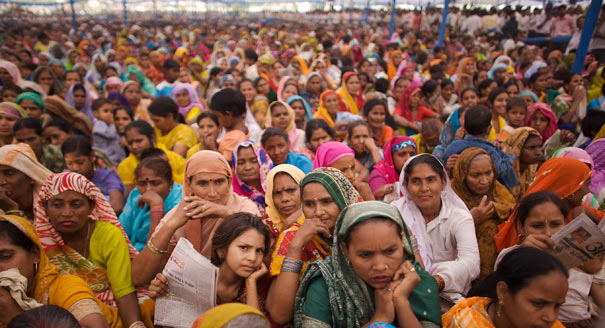
US-based political scientists studying low-income countries make many demands of the communities that we study. Most of our projects would have been inconceivable without myriad forms of cooperation from local communities. Yet, in conceiving our projects and disseminating our findings, our attention is dominated by the imperatives provided by academic outlets written largely by and for other US-based academics. This focus is completely understandable given the incentives that scholars face, especially early in their career. However, this narrow window of engagement limits our reciprocal ability in at least two respects: (1) choosing research questions that are of importance to the communities we study, and (2) ensuring that the results of our studies are shared with such communities.

This article advocates broadening engagement through still relatively underutilized channels: writing for local news and scholarly outlets, and presenting at conferences and workshops for predominantly local audiences in the countries that we study. It is heartening to witness the growth of valuable venues for political scientists to provide accessible summaries of their research, such as the Washington Post’s “Monkey Cage” blog, the “War on the Rocks” blog, and Foreign Policy . These sites significantly broaden scholars’ exposure and help them connect their findings to relevant political developments of wider interest. Yet, despite the vibrancy and importance of these efforts, they remain oriented toward broadening a predominantly US readership. Similarly, scholars and students occasionally present their work to domestic audiences in the countries that they study. However, such efforts typically are not viewed as central to a project’s development or a graduate student’s professionalization, and they certainly are not regarded as on a par with presentations at US conferences and universities.

We present two principal arguments for scholars to increase their engagement in local forms of engagement. First, we argue that there are solid professional incentives to subject our work to local scrutiny at multiple stages of progress. This scrutiny can prove as central to ensuring the rigor of a project as critiques from US-based scholars. The second argument is a moral imperative to not simply inform and engage the communities that enable our careers but also to offer them a degree of agency in shaping our research agendas.

Read Full Text

This article was originally published in PS: Political Science & Politics.

About the Authors

Tariq Thachil

Tariq Thachil is an Associate Professor of Political Science at Vanderbilt University

Milan Vaishnav

Director and Senior Fellow, South Asia Program

Milan Vaishnav is a senior fellow and director of the South Asia Program and the host of the Grand Tamasha podcast at the Carnegie Endowment for International Peace. His primary research focus is the political economy of India, and he examines issues such as corruption and governance, state capacity, distributive politics, and electoral behavior. He also conducts research on the Indian diaspora.

Authors

Tariq Thachil

Tariq Thachil is an Associate Professor of Political Science at Vanderbilt University

Milan Vaishnav
Director and Senior Fellow, South Asia Program
Milan Vaishnav
Political ReformDemocracyCivil SocietySouth AsiaIndia

Carnegie does not take institutional positions on public policy issues; the views represented herein are those of the author(s) and do not necessarily reflect the views of Carnegie, its staff, or its trustees.

More Work from Carnegie Endowment for International Peace

  • Commentary
    Carnegie Politika
    Is Frustration With Armenia’s Pashinyan Enough to Bring the Pro-Russia Opposition to Power?

    It’s true that many Armenians would vote for anyone just to be rid of Pashinyan, whom they blame for the loss of Nagorno-Karabakh, but the pro-Russia opposition is unlikely to be able to channel that frustration into an electoral victory.

      Mikayel Zolyan

  • Army personnel stand guard after a pro-monarchy protest turns violent in Kathmandu, Nepal, on March 28, 2025.
    Article
    The Shadow of the Military in Modern South Asia

    Military rule is now a defining political factor in South Asia. Here’s how analysts can understand and account for it.

      Paul Staniland

  • Commentary
    Strategic Europe
    How to Join the EU in Three Easy Steps

    Montenegro and Albania are frontrunners for EU enlargement in the Western Balkans, but they can’t just sit back and wait. To meet their 2030 accession ambitions, they must make a strong positive case.

      Dimitar Bechev, Iliriana Gjoni

  • Article
    India’s Oil Security Strategy: Structural Vulnerabilities and Strategic Choices

    This piece argues that the present Indian strategy, based on opportunistic diversification and utilization of limited strategic reserves, remains inadequate when confronting supply disruptions. It evaluates India’s options in the short, medium, and long terms.

      Vrinda Sahai

  •  A machine gun of a Houthi soldier mounted on a police vehicle next to a billboard depicting the U.S. president Donald Trump and Mohammed Bin Salman, the Crown Prince and Prime Minister of Saudi Arabia, during a protest staged to show support to Iran against the U.S.-Israel war on March 27, 2026 in Sana'a, Yemen.
    Article
    Amid Iran War, Gulf Countries Slow the Pace of Reforms

    The return of war as the organizing factor in Middle Eastern politics has predictable consequences: governments are prioritizing regime stability and becoming averse to political and social reform.

      • Sarah Yerkes

      Sarah Yerkes, Amr Hamzawy

Get more news and analysis from
Carnegie Endowment for International Peace
Carnegie global logo, stacked
1779 Massachusetts Avenue NWWashington, DC, 20036-2103Phone: 202 483 7600Fax: 202 483 1840
  • Research
  • Emissary
  • About
  • Experts
  • Donate
  • Programs
  • Events
  • Blogs
  • Podcasts
  • Contact
  • Annual Reports
  • Careers
  • Privacy
  • For Media
  • Government Resources
Get more news and analysis from
Carnegie Endowment for International Peace
© 2026 Carnegie Endowment for International Peace. All rights reserved.