

Commentary
Alexander Baunov
{
  "authors": [
    "Alexander Baunov"
  ],
  "type": "legacyinthemedia",
  "centerAffiliationAll": "",
  "centers": [
    "Carnegie Endowment for International Peace",
    "Carnegie Russia Eurasia Center"
  ],
  "collections": [
    "Inside Korea"
  ],
  "englishNewsletterAll": "",
  "nonEnglishNewsletterAll": "",
  "primaryCenter": "Carnegie Endowment for International Peace",
  "programAffiliation": "",
  "programs": [],
  "projects": [],
  "regions": [
    "Russia"
  ],
  "topics": [
    "Political Reform"
  ]
}
Source: Getty
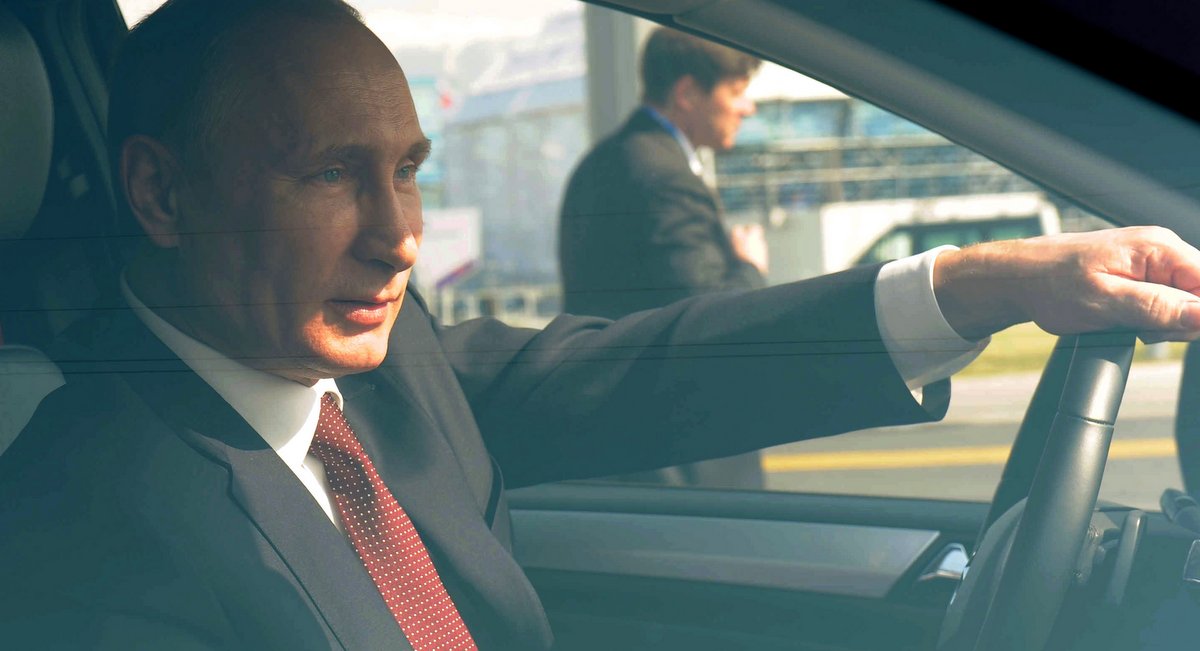
To understand what makes Putin and his allies act the way they do, you need to look beyond the myths.
Source: New York Times
Since Vladimir Putin came to power in 2000, analysis of Russia, both inside and outside the country, has largely focused on two interpretations of his regime. The first argues that Russia is a mafia state in which the main aim of the ruling elite is to steal money at home to conceal and spend abroad. The second states that Mr. Putin is a hostage of his own popularity and that whatever is done in or by Russia is done for the sake of his approval rating.
These theories provide a convenient framework for making sense of Russia; they are also tinged with moralism. For these reasons, many politicians, analysts and scholars both in Russia and in the West have embraced them. But these explanations fundamentally clash with reality. To truly understand what motivates the Kremlin, we must see how the Kremlin itself undermines those myths.
There is, indeed, much corruption among the Kremlin’s associates. They profit from running the country, deposit the proceeds in offshore banking centers and the London property market and send their children to be educated in Western schools. But if the Russian elite were really just a mafia state concerned about its own well-being, it would never do anything that got in the way of its overseas investments and spending. Yet Mr. Putin’s bold foreign policy adventures of the past few years — in particular in Crimea — have received the support of most of the Russian elite despite leading to stinging sanctions.
And certainly, Mr. Putin, like most politicians — especially authoritarian populists — cares about his popularity. One of the primary goals of annexing Crimea was to boost his falling approval ratings. But that is not all he cares about. Recent events expose this: In July, Russia’s Parliament voted to raise the retirement age, sparking a wave of discontent. Polls found that up to 90 percent of Russians opposed these measures and there have even been street protests against them. Yet the Kremlin pushes forward with the reforms. This isn’t the only time that Mr. Putin has taken on unpopular domestic policies. He has made other cuts to entitlements and introduced other tolls and taxes that have resulted in significant protests.
So what does this all tell us? Why does the Russian regime risk, again and again, taking actions to threaten the personal wealth of Mr. Putin’s associates or damage the president’s popularity? Because Russia is not the Philippines or Guatemala. The Russian elite has global ambitions. Mr. Putin and his associates believe that Russia should project its power across the world, economically, militarily and politically.
These ambitions, rooted in Russia’s size and its history, have existed for centuries. They were weakened by Moscow’s defeat in the Cold War, when a major sector of the Russian elite decided that the best choice was simply to join the winning team — the West. But that was only temporary.
The 2008 financial crisis, the first major global crisis since the fall of the Soviet Union, undermined trust in the Western economy. Then in 2012, the United State introduced the Magnitsky Act, a raft of sanctions on Russian businessmen and allies of Mr. Putin. Combined, these two events exposed the West’s unreliability economically and politically.
By contrast, Mr. Putin appeared a better guarantor of the ruling class’s assets. During the economic crisis, he became Russia’s lender of last resort, giving huge amounts of state money to help big Russian businessmen bail out their companies that had received margin calls from their Western creditors. An idea took hold: The stronger the state, the bigger its capacity to protect. And the projection of global power was proof of strength.
Consequently, Russia has been flexing its muscles around the world in recent years, deploying troops to Ukraine and Syria, undertaking cyberoperations and trying — sometimes successfully — to find allies in its struggle for a “multipolar world” among political forces in the Philippines, Africa, Europe and Latin America. Sometimes this engenders pushback from the West, but it is all part of a strategy.
Even on domestic matters, Mr. Putin and his allies are driven by securing Russia’s place in the world. Russia has a lower pension age than most developed economies, and the amount paid into the system is expected to balloon in the future. The government views this as a drag on the national economy and so is determined to reform it — even if doing so is unpopular with a majority of Russians.
Put together, these are the factors that analysts and policymakers need to understand, especially these days as Russia — and Mr. Putin — occupy so much of the Western imagination. Other Soviet leaders declared that their ambition was to “catch up and overtake the West.” Mr. Putin’s goal is something else. He and his backers among the Russian elite have found that it’s not only impossible to catch up with the West but also impossible to overtake it. They want to build an alternative.

Senior Fellow, Editor-in-Chief, Carnegie Russia Eurasia Center
Baunov is a senior fellow and editor-in-chief at the Carnegie Russia Eurasia Center.
Recent Work
Alexander Baunov
Alexander Baunov
Carnegie does not take institutional positions on public policy issues; the views represented herein are those of the author(s) and do not necessarily reflect the views of Carnegie, its staff, or its trustees.

The truth of the strategic situation is that Europe and Russia are extremely unlikely to be able to “turn the page” on their confrontation within the next two decades.

Arkady Moshes
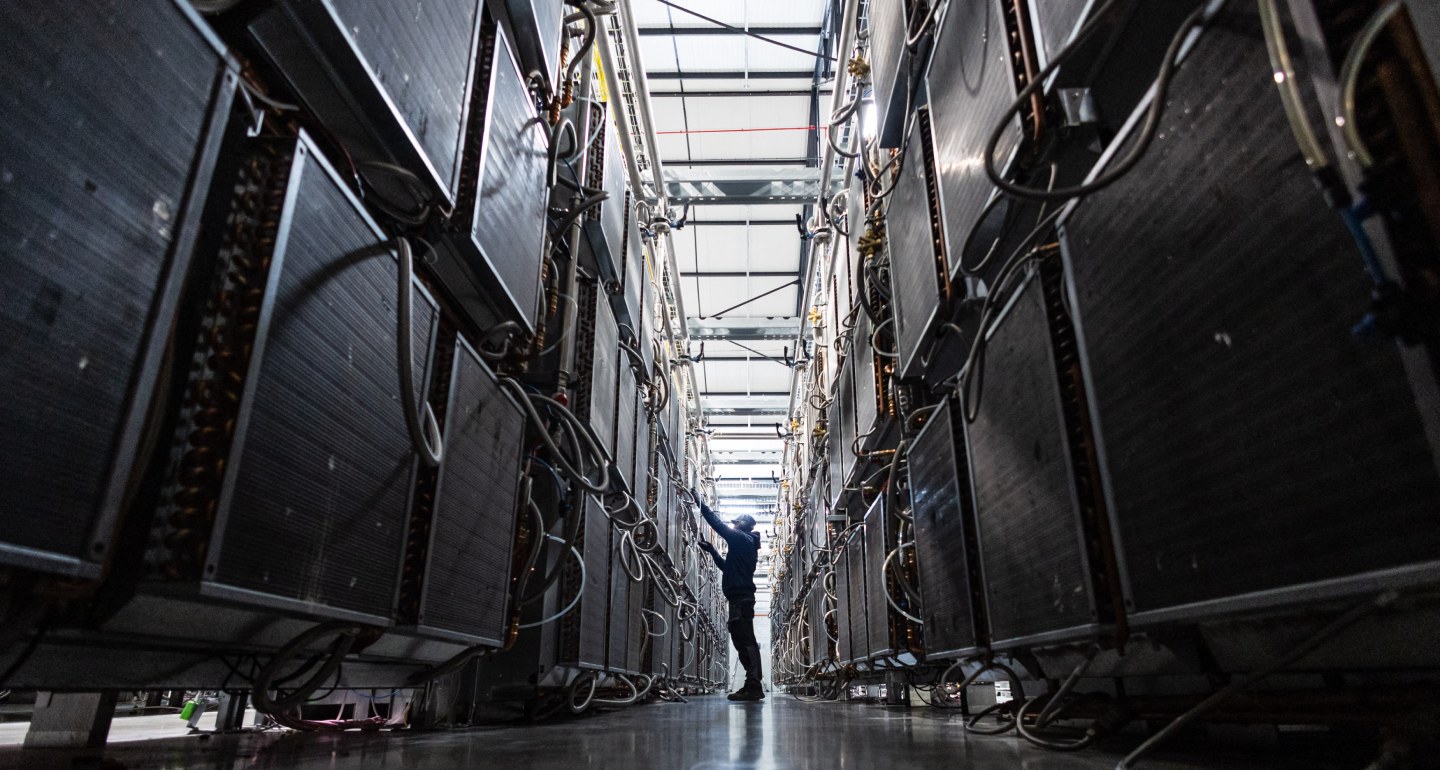
Russia spent years building a “sovereign internet,” concentrating web infrastructure exclusively within Russian territory. Ukrainian drone attacks have shown how vulnerable that approach has left the Russian internet.

Maria Kolomychenko

Putin’s conservative staffing policies and search for ever greater control have cemented parliament’s transformation into a bureaucratic appendage of the executive branch.

Andrey Pertsev

Russia’s AI-driven propaganda campaigns operate in a fragmented, chaotic, and often illogical manner. That’s not necessarily a problem for the Kremlin, though: It’s much easier to mimic genuine public debate that way.

Ilya Klishin

Russian strikes are weakening the economy sustaining Ukraine’s war effort. Closing the growing funding gap will require more European support and politically contentious reforms in Kyiv.

Balázs Jarábik