


• Research
  • Emissary
  • About
  • Experts
Carnegie Global logoCarnegie lettermark logo
DemocracyIran
  • Donate
{
  "authors": [
    "Ulrich Kühn",
    "Alexey Arbatov",
    "David Santoro",
    "Tong Zhao"
  ],
  "type": "other",
  "centerAffiliationAll": "dc",
  "centers": [
    "Carnegie Endowment for International Peace"
  ],
  "collections": [
    "Future of Arms Control"
  ],
  "englishNewsletterAll": "",
  "nonEnglishNewsletterAll": "",
  "primaryCenter": "Carnegie Endowment for International Peace",
  "programAffiliation": "NPP",
  "programs": [
    "Nuclear Policy"
  ],
  "projects": [],
  "regions": [],
  "topics": []
}

Source: Getty

Other

Trilateral Arms Control? Perspectives From Washington, Moscow, and Beijing

As the world enters an age of seemingly unconstrained great power competition, arms control between Russia, China, and the United States could help strengthen arms race and crisis stability and provide a platform for strategic dialogue.

Link Copied
By Ulrich Kühn, Alexey Arbatov, David Santoro, Tong Zhao
Published on Mar 19, 2020
Program mobile hero image

Program

Nuclear Policy

The Nuclear Policy Program aims to reduce the risk of nuclear war. Our experts diagnose acute risks stemming from technical and geopolitical developments, generate pragmatic solutions, and use our global network to advance risk-reduction policies. Our work covers deterrence, disarmament, arms control, nonproliferation, and nuclear energy.

Learn More

Source: IFSH

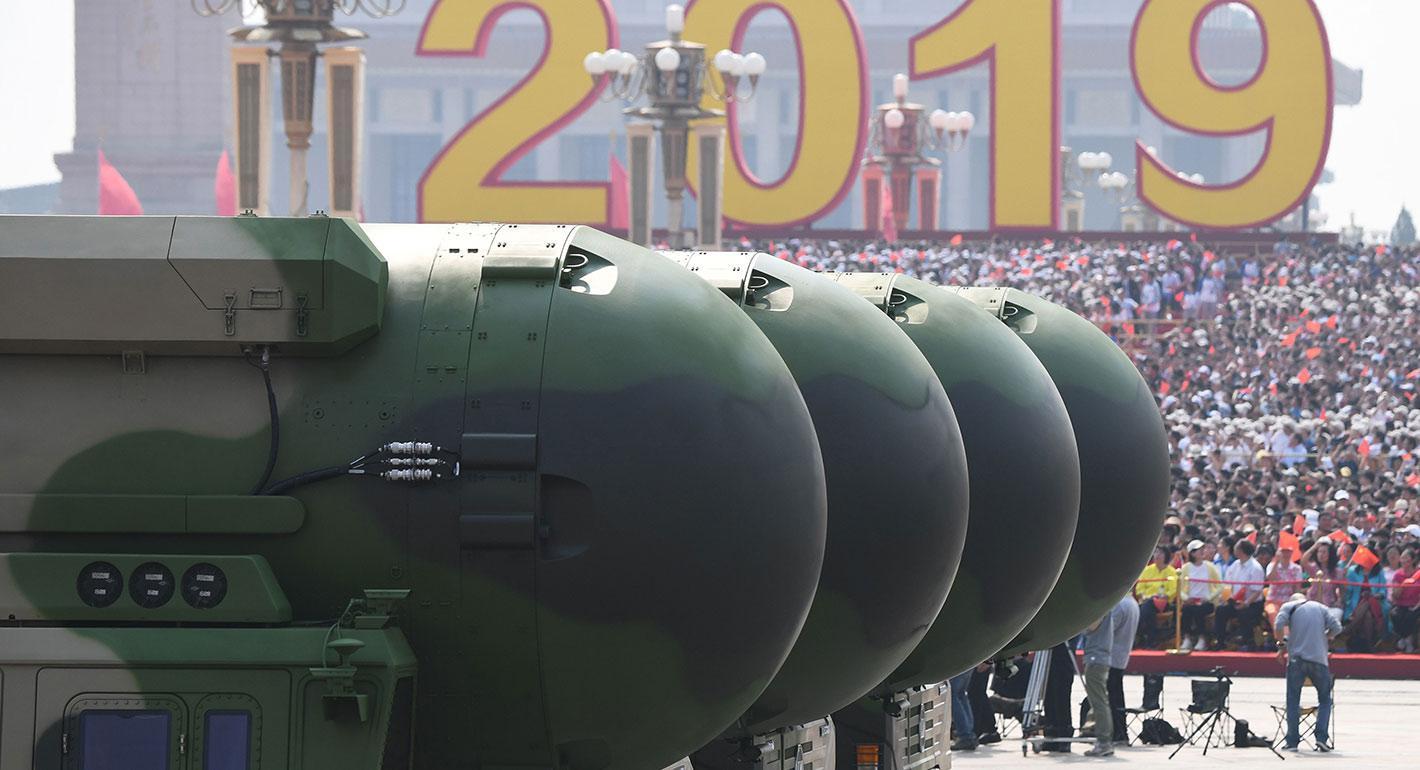
With the end of the INF Treaty in 2019, trilateral arms control – meaning arms control between the United States, Russia, and China – has gained center stage. Only shortly after the U.S. withdrawal, U.S. President Trump declared that he wants a new nuclear pact to be signed by both Russia and China. Other U.S. administration officials have set the goal of including China in a future follow-on framework to the New START agreement, which expires in February 2021. However, could trilateral arms control be possible at all, and what would be necessary conditions?

In this IFSH Research Report, internationally renowned experts Alexey Arbatov (Russia), David Santoro (United States), and Tong Zhao (China) discuss what is possible and what is not. Edited by Ulrich Kühn (IFSH), the report includes a number of very specific proposals, including from China, on how to move forward on trilateral arms control.

Read Full Text

The full report was originally published by IFSH.

About the Authors

Ulrich Kühn

Nonresident Scholar, Nuclear Policy Program

Ulrich Kühn is a nonresident scholar at the Carnegie Endowment for International Peace, and the head of the arms control and emerging technologies program at the Institute for Peace Research and Security Policy at the University of Hamburg.

Alexey Arbatov

Alexey Arbatov is the head of the Center for International Security at the Primakov National Research Institute of World Economy and International Relations.

David Santoro

Tong Zhao

Senior Fellow with the Nuclear Policy Program and Carnegie China

Tong Zhao is a senior fellow with the Nuclear Policy Program and Carnegie China, Carnegie’s East Asia-based research center on contemporary China. Formerly based in Beijing, he now conducts research in Washington on strategic security issues.

Authors

Ulrich Kühn
Nonresident Scholar, Nuclear Policy Program
Ulrich Kühn
Alexey Arbatov

Alexey Arbatov is the head of the Center for International Security at the Primakov National Research Institute of World Economy and International Relations.

Alexey Arbatov
David Santoro
Tong Zhao
Senior Fellow with the Nuclear Policy Program and Carnegie China
Tong Zhao

Carnegie does not take institutional positions on public policy issues; the views represented herein are those of the author(s) and do not necessarily reflect the views of Carnegie, its staff, or its trustees.

More Work from Carnegie Endowment for International Peace

  • Report
    Reimagining Nuclear Arms Control: A Comprehensive Approach

    To try to find common ground, this report presents nine detailed practical measures that—implemented individually or as part of a package—would help address each state’s specific security concerns and the shared dangers of arms racing and inadvertent escalation.

      James M. Acton, Thomas MacDonald, Pranay Vaddi

  • REQUIRED IMAGE
    Commentary
    Negotiating Nuclear Arms Control with North Korea: Why and How?

    The consolidation of nuclear and missile capabilities by North Korea points to the need for a new strategy to mitigate the potential for conflict: to pursue progress toward peace and denuclearization simultaneously.

      Toby Dalton

  • Commentary
    Extending New START Should Be Just the Beginning

    A potential five-year extension of the treaty is welcome news, but there is still more work to be done on reducing nuclear risks, halting arms races with Russia and China, and keeping Americans safe.

      Megan DuBois, Gaurav Kalwani, Pranay Vaddi

  • REQUIRED IMAGE
    Commentary
    Back to the Future? The New Missile Crisis

    After the end of the INF Treaty, the United States and its Allies in Europe and East Asia face a choice of what to do to enhance security: give arms control another chance or provide the ground for another missile buildup.

      Ulrich Kühn

  • Paper
    Revamping Nuclear Arms Control: Five Near-Term Proposals

    To quickly lower the risk of nuclear escalation, manage arms racing, and avoid a breakdown in future treaty negotiations, the United States, Russia, and China should consider five politically binding proposals to build transparency and confidence.

      James M. Acton, Thomas MacDonald, Pranay Vaddi

Get more news and analysis from
Carnegie Endowment for International Peace
Carnegie global logo, stacked
1779 Massachusetts Avenue NWWashington, DC, 20036-2103Phone: 202 483 7600Fax: 202 483 1840
  • Research
  • Emissary
  • About
  • Experts
  • Donate
  • Programs
  • Events
  • Blogs
  • Podcasts
  • Contact
  • Annual Reports
  • Careers
  • Privacy
  • For Media
  • Government Resources
Get more news and analysis from
Carnegie Endowment for International Peace
© 2026 Carnegie Endowment for International Peace. All rights reserved.