

Commentary
Ulrich Kühn
{
  "authors": [
    "Ulrich Kühn"
  ],
  "type": "legacyinthemedia",
  "centerAffiliationAll": "dc",
  "centers": [
    "Carnegie Endowment for International Peace"
  ],
  "collections": [
    "Future of Arms Control"
  ],
  "englishNewsletterAll": "ctw",
  "nonEnglishNewsletterAll": "",
  "primaryCenter": "Carnegie Endowment for International Peace",
  "programAffiliation": "NPP",
  "programs": [
    "Nuclear Policy"
  ],
  "projects": [],
  "regions": [],
  "topics": []
}
REQUIRED IMAGE
After the end of the INF Treaty, the United States and its Allies in Europe and East Asia face a choice of what to do to enhance security: give arms control another chance or provide the ground for another missile buildup.

Former Nonresident Scholar, Nuclear Policy Program
Ulrich Kühn was a nonresident scholar at the Carnegie Endowment for International Peace, and the head of the arms control and emerging technologies program at the Institute for Peace Research and Security Policy at the University of Hamburg.
Recent Work
Ulrich Kühn
Ulrich Kühn
Carnegie does not take institutional positions on public policy issues; the views represented herein are those of the author(s) and do not necessarily reflect the views of Carnegie, its staff, or its trustees.
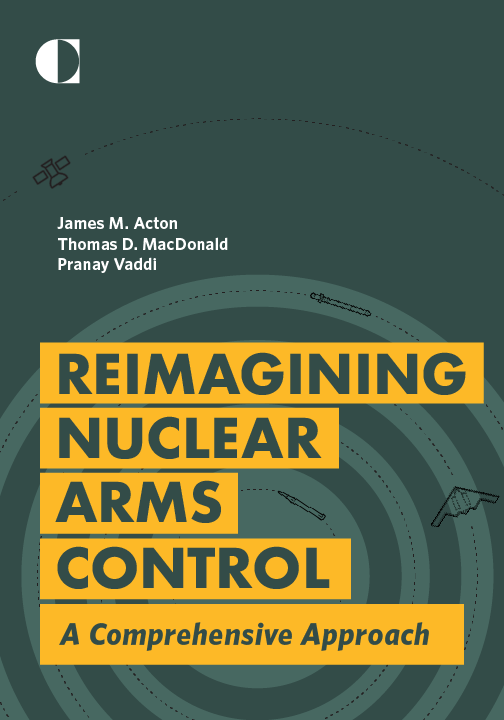
To try to find common ground, this report presents nine detailed practical measures that—implemented individually or as part of a package—would help address each state’s specific security concerns and the shared dangers of arms racing and inadvertent escalation.


James M. Acton, Thomas MacDonald, Pranay Vaddi
The consolidation of nuclear and missile capabilities by North Korea points to the need for a new strategy to mitigate the potential for conflict: to pursue progress toward peace and denuclearization simultaneously.

Toby Dalton
A potential five-year extension of the treaty is welcome news, but there is still more work to be done on reducing nuclear risks, halting arms races with Russia and China, and keeping Americans safe.
Megan DuBois, Gaurav Kalwani, Pranay Vaddi
To quickly lower the risk of nuclear escalation, manage arms racing, and avoid a breakdown in future treaty negotiations, the United States, Russia, and China should consider five politically binding proposals to build transparency and confidence.
James M. Acton, Thomas MacDonald, Pranay Vaddi
There are three guiding principles that can help make future arms control dialogues more successful.


Andrey Baklitskiy, Alexandra Bell, Tong Zhao