

Commentary
The Bureau of Industry and Security needs to adjust its focus and practices to maintain its position as the U.S. government’s primary champion of international technological competition.
Geoffrey Irving
{
  "authors": [
    "Ivan Zuenko"
  ],
  "type": "commentary",
  "centerAffiliationAll": "",
  "centers": [
    "Carnegie Endowment for International Peace",
    "Carnegie Russia Eurasia Center"
  ],
  "collections": [
    "Pax Sinica"
  ],
  "englishNewsletterAll": "",
  "nonEnglishNewsletterAll": "",
  "primaryCenter": "Carnegie Russia Eurasia Center",
  "programAffiliation": "",
  "programs": [],
  "projects": [],
  "regions": [],
  "topics": [
    "Economy"
  ]
}
Source: Getty
The inflow of coronavirus cases entering China from Russia won’t ruin the two countries’ flourishing relationship based on pragmatic interests. The Chinese are more disappointed in the anti-China rhetoric coming from the White House than in Russia’s inability to swiftly combat the coronavirus outbreak.
For several months now, there have been predictions that the new coronavirus pandemic would cause problems between Russia and China. These expectations are not unfounded. Moscow unilaterally closed its border with China because of the virus back at the end of January, becoming one of the first countries in the world to do so.
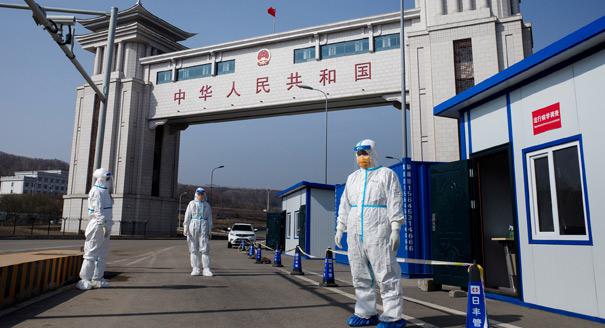
Now it’s the other way around, and Russia is the main source of new coronavirus cases in China, which had managed to contain the virus. The Chinese province of Heilongjiang, which borders Russia, has overtaken Shanghai in having the largest number of imported cases of the coronavirus.
The new viral hotspot is the border town of Suifenhe, just several kilometers from Russia’s Primorsky region. Suifenhe has become known as a “northern Wuhan,” with strict lockdown measures in place, and one of the highest concentrations of coronavirus cases in China.
Despite Moscow’s fears, the virus does not appear to have crossed the Russia-China land border back in January. Russia made the decision to close that border on January 30, the day before the first two cases of coronavirus were discovered in Russia. Those patients were both Chinese nationals, in the Transbaikal and Tyumen regions. They each made a swift recovery, and their presence in Russia did not lead to any further spread of the virus. On February 1, Russia stopped most flights to and from China.
Moscow was much slower to close its borders with Europe, and this is what led to the mass outbreak the country is currently seeing. The first cases of coronavirus among Russians returning from Italy were recorded on March 2, but Russia only stopped foreigners from entering the country on March 18. It was not until March 27 that Russia stopped flights to and from Europe.
Meanwhile, the virus had traveled east from Europe, eventually reaching Russia’s Far East. On March 20, three cases were discovered in the Khabarovsk region, all among people who had recently returned from Italy. By the start of May, Russia had more cases than China.
This slower reaction to put connections with Europe on hold reflects the Western-centric view of the world held by much of Russian society, including its elites, which despite their patriotic, anti-Western rhetoric, have close ties to Europe and North America. The “pivot to the East” that Moscow announced back in 2014 has clearly failed to change perceptions. Faced with a crisis, Russia stayed connected with Europe right up until the last moment, while all contact with Asia was cut off swiftly and without much regret.
When the coronavirus pandemic became worse in Russia than at home, Chinese people living in Russia hurried to return home via Russia’s Far East. Soon, the town of Suifenhe on the Chinese side of the border, which tested all those arriving from Vladivostok, found itself with nearly 400 cases of the virus, and put all new arrivals under a twenty-eight-day quarantine. In total, more than 500 people carried the coronavirus from Russia into China: a third of all reimported cases of the virus there.
On April 7, China unilaterally closed its Suifenhe border crossing to passengers, though it remained open to cargo, and put the town under strict lockdown. On April 13, it closed all the other border crossing points too.
So will these unilateral border closures become a bone of contention in Russia-China relations? No. Despite the natural desire of Western analysts to see the situation in Suifenhe as evidence of the impending collapse of the Sino-Russian quasi-alliance, it’s clear that this will not seriously impact relations.
Firstly, the anti-Chinese rhetoric issuing forth from Washington, along with the collapse of oil prices and growing dependence of Russia on Chinese consumption, are far more effective in bringing the two countries closer together than any unpleasantness at the border is in driving them apart.
Information about talks between the two countries’ leaders shows that Vladimir Putin and Xi Jinping are swift to get in contact when anything threatens to cloud relations between the two nations. Putin first sent a telegram expressing support to China on January 31, immediately after the decision was made to close Russia’s land border with China. The presidents spoke by phone on March 19 after Russia closed all of its borders, and again on April 16, after it became clear what was happening in Suifenhe.
The only detail that could have indicated a miscommunication was China’s refusal to provide Russia with a strain of the new coronavirus to enable it to start working on developing a vaccine at the start of February. In everything else, the two leaders demonstrate a moderation and cool-headedness in their relationship that are rare these days.
Secondly, there is no manifestation of xenophobia in the border zone, either against Chinese people in Russia’s Far East, or against Russians in northeast China. The import of the coronavirus from Russia in April and May hasn’t sparked Russophobia because all the cases came to China via its own nationals: if there is any anger in the Chinese border zone, it’s directed against those returnees.
It’s true that some Chinese have questioned what kind of ally Russia is, if cooperating with it puts Chinese nationals at risk. But this is far from the prevailing mood. The Chinese are much more disappointed right now in the anti-China rhetoric coming from the White House than in Russia’s inability to swiftly and effectively combat the coronavirus outbreak.
The benefits at the current time of continuing to cooperate are obvious to both Russia and China. This friendship of convenience will continue, while Suifenhe will simply build more quarantine facilities and be prepared for more of its nationals to return home from Russia. The crisis caused by the pandemic will be a painful blow to the economy along the border, but the more painful consequences will result not from halting transborder connections, but from the global recession and fall in prices for energy commodities.
Ivan Zuenko
Carnegie does not take institutional positions on public policy issues; the views represented herein are those of the author(s) and do not necessarily reflect the views of Carnegie, its staff, or its trustees.

The Bureau of Industry and Security needs to adjust its focus and practices to maintain its position as the U.S. government’s primary champion of international technological competition.

Geoffrey Irving

Depleted financial reserves and a shrinking tax base mean it is no longer possible to simultaneously deliver high defense spending, price stability, and economic growth.

Alexandra Prokopenko

U.S. trading partners in Asia are closely watching the dispute for signs of how it may affect their own interests.

Barbara Weisel

Amid celebrations of bilateral ties was a deeper focus on stability in the Middle East.

Amr Hamzawy

Xi, Putin, and other regional leaders are back-slapping in Bishkek, but the SCO has yet to answer the most serious questions about continental Asia's economic future.

Evan A. Feigenbaum