

Article
Beijing’s AI diplomacy is pivoting from infrastructure and associated technical standards toward a more comprehensive effort aimed at recrafting global norms and institutions of AI governance.
Arindrajit Basu
{
  "authors": [
    "Vidushi Marda"
  ],
  "type": "legacyinthemedia",
  "centerAffiliationAll": "",
  "centers": [
    "Carnegie Endowment for International Peace",
    "Carnegie India"
  ],
  "collections": [],
  "englishNewsletterAll": "",
  "nonEnglishNewsletterAll": "",
  "primaryCenter": "Carnegie India",
  "programAffiliation": "",
  "programs": [],
  "projects": [],
  "regions": [
    "South Asia",
    "India"
  ],
  "topics": [
    "Technology"
  ]
}
Source: Getty
Artificial Intelligence (AI) systems are increasingly embedded in society – from curating social media feeds and assisting law enforcement, to deciding an individual’s creditworthiness and aiding in healthcare.
Source: Seminar
Artificial Intelligence (AI) systems are increasingly embedded in society – from curating social media feeds and assisting law enforcement, to deciding an individual’s creditworthiness and aiding in healthcare. There are at least two possible explanations for this recent and substantial mainstreaming of AI in everyday life. First, there is more computing power and data today than ever before. Second, due to this the possibility of using AI systems to predict and classify large amounts of data makes it fertile ground for governments and industry alike.
Vidushi Marda
Former Nonresident Research Analyst, Carnegie India
Vidushi Marda was a nonresident research analyst at Carnegie India. She is a legal researcher who focuses on the interplay between emerging technologies, policy, and society.
Carnegie does not take institutional positions on public policy issues; the views represented herein are those of the author(s) and do not necessarily reflect the views of Carnegie, its staff, or its trustees.

Beijing’s AI diplomacy is pivoting from infrastructure and associated technical standards toward a more comprehensive effort aimed at recrafting global norms and institutions of AI governance.

Arindrajit Basu

Democratic institutions currently lack the capacity needed to govern AI-augmented deliberation in ways that serve democratic imperatives.

Micah Weinberg

A partnership between India, a country of subcontinental size, and Africa, a continent of fifty-four countries, may seem asymmetric until one notes that both are home to nearly the same number of people—1.4 billion. This essay spells out the existing challenges to the partnership, its optimal potential, and the possible pathways to realize it over the next quarter-century.

Rajiv Bhatia
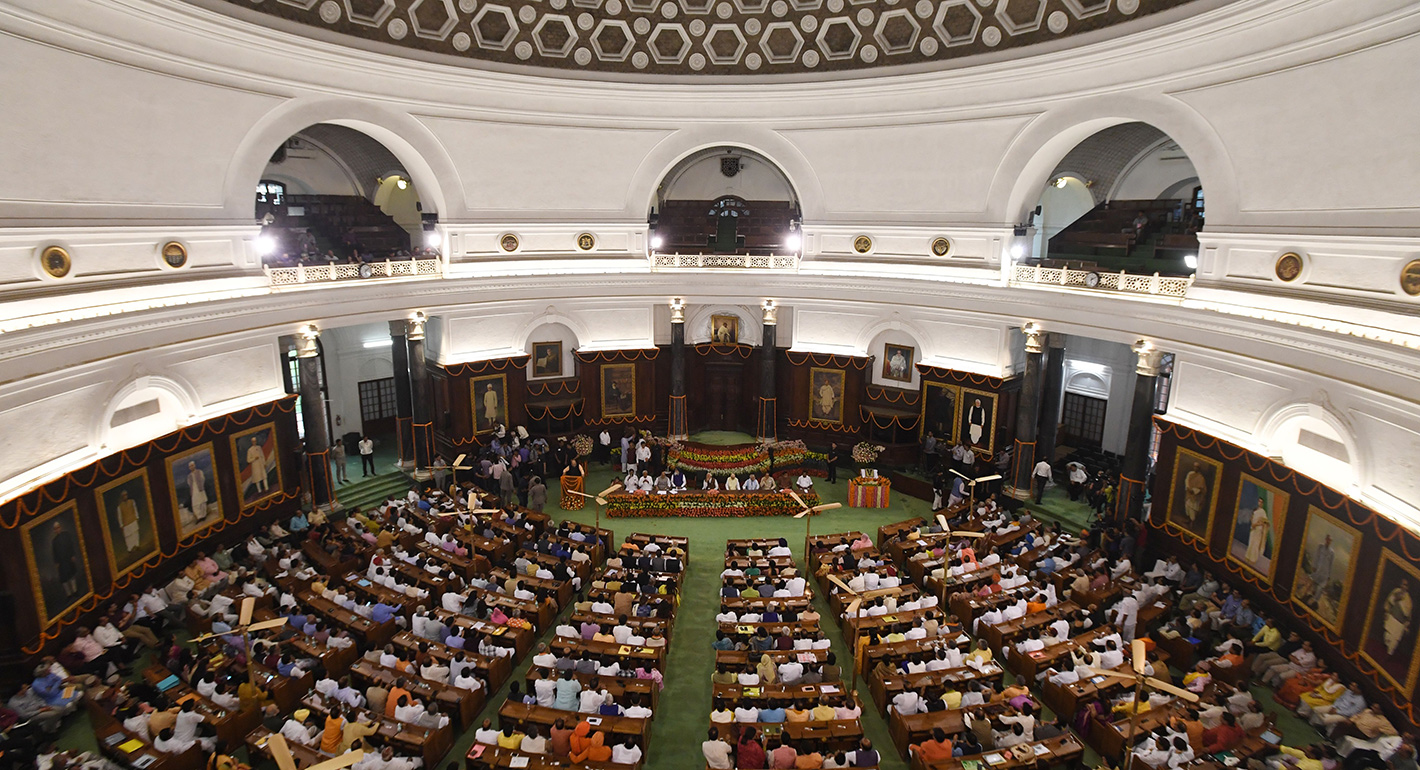
The battle over representation and regional power has been delayed—not resolved—and will shape the future of India’s federal balance.



Louise Tillin, Milan Vaishnav, Andy Robaina

The U.S.–India semiconductor cooperation story is well-stocked with top-level strategic intent. What remains unresolved, however, are some underlying challenges that will determine whether the cooperation actually functions. Three such friction points stand out.

Shruti Mittal