

Commentary
Lessons from other backsliding democracies show that mass mobilization needs to feed into an electoral strategy.
Saskia Brechenmacher, Shreya Joshi
{
  "authors": [
    "Ben Naimark-Rowse"
  ],
  "type": "commentary",
  "centerAffiliationAll": "dc",
  "centers": [
    "Carnegie Endowment for International Peace"
  ],
  "collections": [
    "U.S. Democracy in Comparative Perspective"
  ],
  "englishNewsletterAll": "democracy",
  "nonEnglishNewsletterAll": "",
  "primaryCenter": "Carnegie Endowment for International Peace",
  "programAffiliation": "DCG",
  "programs": [
    "Democracy, Conflict, and Governance"
  ],
  "projects": [],
  "regions": [
    "United States"
  ],
  "topics": []
}
Source: Getty
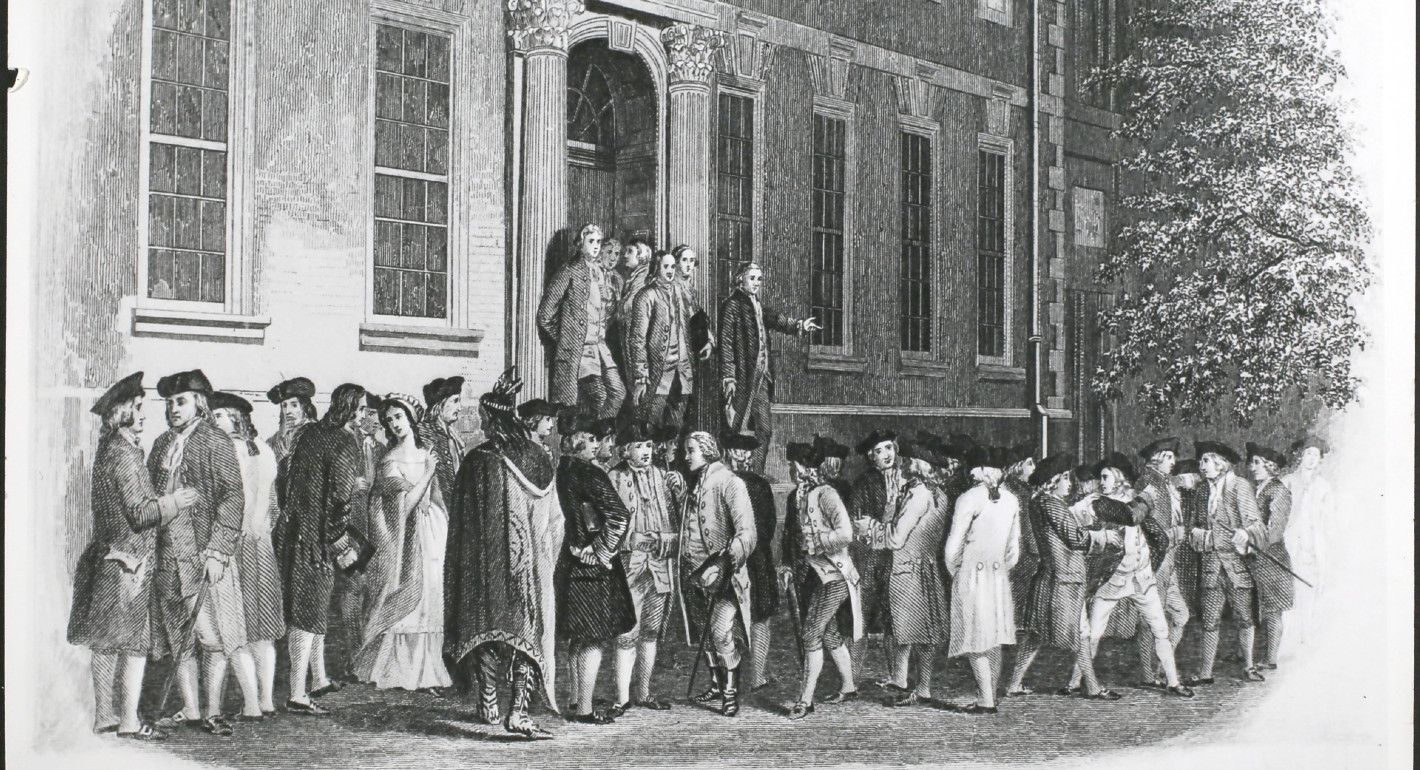
The celebration of war on the Fourth of July obscures the contributions that a decade of nonviolent resistance made to the founding of our country.
This piece was adapted from a version published on Waging Nonviolence in 2017 and has been reprinted with permission.
This weekend, American cities and towns from coast to coast hosted fireworks, concerts, and parades to celebrate our independence from Britain. Those celebrations invariably highlight soldiers like those who pushed the British from our shores. But the lesson we learn of a democracy forged in the crucible of revolutionary war tends to ignore how a decade of nonviolent resistance before the “shot heard round the world” shaped the founding of the United States, strengthened our sense of political identity, and laid the foundation for our democracy.
We’re taught that we won our independence from Britain through bloody battles. We recite poetry about the midnight ride of Paul Revere that warned of a British attack. And we’re shown depictions of minutemen in battle with redcoats in Lexington and Concord.
I grew up in Boston, where our veneration for revolutionary battles against the British extends far beyond the Fourth of July. We celebrate Patriots Day to commemorate the anniversary of the first battles of the Revolution and Evacuation Day to commemorate the day British troops finally fled Boston. At the start of every Red Sox game we stand, take off our hats, and sing—33,000 strong—about the perilous fight, the rockets’ red glare, and the bombs bursting in air that gave proof through the night that our flag was still there.
Yet founding father John Adams wrote that “an History of military Operations . . . is not an History of the American Revolution.”
American revolutionaries led not one, but three nonviolent resistance campaigns in the decade before the Revolutionary War. These campaigns were coordinated. They were primarily nonviolent. They helped politicize American society. And they allowed colonists to replace colonial political institutions with parallel institutions of self-government that helped form the foundation of the democracy that we rely on today.
The first nonviolent resistance campaign was organized in 1765 against the Stamp Act. Tens of thousands of our forebears refused to pay the British king a tax for printing legal documents and newspapers, and collectively decided to halt consumption of British goods. The ports of Boston, New York, and Philadelphia signed pacts against importing British products; women made homespun yarn to replace British cloth; and eligible bachelorettes in Rhode Island even refused to accept the addresses of any man who supported the Stamp Act.
Colonists organized the Stamp Act Congress. It passed statements of colonial rights and limits on British authority, and sent copies to every colony as well as one copy to Britain, thereby demonstrating a united front. This mass political mobilization and economic boycott meant the Stamp Act would cost the British more money than it was worth to enforce, leaving it dead on arrival. This victory also demonstrated the power of nonviolent noncooperation: people-powered defiance of unjust social, political, or economic authority.
The second nonviolent resistance campaign started in 1767 against the Townshend Acts. These acts taxed paper, glass, tea and other commodities imported from Britain. When the Townshend Acts went into effect, merchants in Boston, New York, and Philadelphia again stopped importing British goods. They declared that those continuing to trade with the British should be labeled “enemies of their country.” A sense of a new political identity detached from Britain grew across the colonies.
By 1770, colonists had developed the Committees of Correspondence, a new political institution detached from British authority. The committees allowed colonists to share information and coordinate their opposition. The British Parliament reacted by doubling down and taxing tea, which led enraged members of the Sons of Liberty to carry out the infamous Boston Tea Party.
The British Parliament countered with the Coercive Acts, which effectively cloistered Massachusetts. The port of Boston was closed until the British East India Company was repaid for their Tea Party losses. Freedom of assembly was officially limited. And court trials were moved from Massachusetts.
In defiance of the British, colonists organized the First Continental Congress. Not only did they articulate their grievances against the British, colonists also created provincial congresses to enforce the rights they declared unto themselves. A newspaper at the time reported that these parallel legal institutions effectively took government out of the hands of British-appointed authorities and placed it in the hands of the colonists—so much so that one scholar asserted, “Independence in many of the colonies had essentially been achieved prior to the commencement of military hostilities in Lexington and Concord.”
King George III felt that the colonies’ political organization had gone too far, noting that “the New England governments are in a state of rebellion; blows must decide whether they are to be subject to this country or independent.” Knowing that it might be seen as a declaration of hostilities, the Crown ordered general Thomas Gage, governor of Massachusetts, to quell the rebellion by arresting and imprisoning the principal actors and abettors in the Massachusetts Provincial Congress. In response, colonists organized the Second Continental Congress and appointed George Washington commander in chief. So began eight years of violent conflict.
The Revolutionary War physically ejected the British from U.S. shores, but the war itself did not make the United States democratic. It was during the decade of nonviolent organizing and mobilizing before the war that the colonists practiced and refined democratic principles, practices, and identity. During the Revolutionary War, the founding fathers prosecuted a war. But a focus exclusively on the war obscures the contributions that nonviolent resistance made to the founding of our country.
During the decade leading up to the war, colonists articulated and debated political decisions in public assemblies. In so doing, they politicized society and strengthened their sense of a new political identity free from the British. They legislated policy, enforced rights, and even collected taxes. In so doing, they practiced self-governance outside of wartime. And in practicing these key elements of democratic decisionmaking, they employed the power of nonviolent political action across the broad stretches of land that were to become the United States of America. In this way, they began to reorient the political system away from a monarchy in which maximalist political relationships reigned and toward a democracy in which political compromise through debate could take hold.
So, not only on Independence Day, but every day—as Americans of all backgrounds reflect on the nature of our democracy—it would be ahistorical to ignore our forefathers’ and foremothers’ nonviolent resistance to British rule. It would also be ahistorical to ignore how exclusive this nonviolent revolution was and how exclusive our democracy has been since its founding. No Native American, African American, immigrant, or woman needs to be reminded of that.
The Fourth of July also presents an opening to recall that democracy is not something we have, but something we do. It is something we practice. Independence Day this year presents a moment to pause and reflect on the political polarization visible throughout society and the reckoning of competing and intertwined legacies of violent and nonviolent action that are far from theoretical for so many. And so, as each person living in the United States considers how they practice democracy, it would be eminently historical to draw upon our nonviolent past and to consider—in the spirit of Frederick Douglass—what future Fourths of July could be: a celebration of justice, liberty, prosperity, and independence for all.

Former Nonresident Scholar, Democracy, Conflict, and Governance Program
Ben Naimark-Rowse was a nonresident scholar with Carnegie’s Democracy, Conflict, and Governance Program.
Carnegie does not take institutional positions on public policy issues; the views represented herein are those of the author(s) and do not necessarily reflect the views of Carnegie, its staff, or its trustees.
Lessons from other backsliding democracies show that mass mobilization needs to feed into an electoral strategy.

Saskia Brechenmacher, Shreya Joshi
The wars in Ukraine and the Middle East are existential threats to Europe as a peace project. Leaders and citizens alike must reaffirm their solidarity to face up to today’s multifaceted challenges.

Marc Pierini
Neither the Abraham Accords nor the presence of large U.S. bases are enough to protect Arab Gulf states.

Marwan Muasher

The U.S.-sponsored TRIPP deal is driving the Armenia-Azerbaijan peace process forward. But foreign and domestic hurdles remain before connectivity and economic interdependence can open up the South Caucasus.



Thomas de Waal, Areg Kochinyan, Zaur Shiriyev
Assessing U.S. compliance with the international laws of war is essential at a time when these frameworks are already fraying.

Federica D’Alessandra