

Commentary
Hanoi and Beijing have long treated each other as distant cousins rather than comrades in arms. That might be changing as both sides draw closer to hedge against uncertainty and America’s erratic behavior.
Nguyễn Khắc Giang
{
  "authors": [],
  "type": "pressRelease",
  "centerAffiliationAll": "",
  "centers": [
    "Carnegie Endowment for International Peace"
  ],
  "collections": [],
  "englishNewsletterAll": "",
  "nonEnglishNewsletterAll": "",
  "primaryCenter": "Carnegie Endowment for International Peace",
  "programAffiliation": "",
  "programs": [],
  "projects": [],
  "regions": [],
  "topics": [
    "Foreign Policy"
  ]
}
REQUIRED IMAGE
WASHINGTON—The board of trustees of the Carnegie Endowment for International Peace announced today the addition of two new members—Scott Malkin and George W. Siguler.
“We are honored to welcome these two talented and accomplished individuals to our board,” said Harvey V. Fineberg, chairman of the board. “Both Scott and George bring a wealth of international experience in business, finance, and government that will be of enormous value to Carnegie.”
Scott Malkin is founder and chairman of S.D. Malkin Properties, a real estate development company operating in the United States and throughout Europe. He is also founder and chairman of Value Retail as well as co-founder and co-chairman of Value Retail China. The portfolio of outlet villages operated by Value Retail generates the highest sales per square foot of any group of shopping centers in the world.
Malkin is a graduate of Harvard College, Harvard Business School, and Harvard Law School. He sits on Harvard’s Global Advisory Council.
George W. Siguler is a managing director and founding partner of Siguler Guff & Company, a private equity investment firm with operations in the United States, China, Brazil, India, and Russia. He is also chief investment officer of the firm. Previously he served as a managing director and head of PaineWebber’s private equity group and chief of staff in the Department of Health and Human Services in the Reagan administration.
Siguler is a graduate of Amherst College and Harvard Business School. He sits on the board of overseers of the Hoover Institution at Stanford University and the board of advisors of Johns Hopkins University’s Paul H. Nitze School of Advanced International Studies.
“I’m delighted that Scott and George have agreed to join our board of trustees,” said Carnegie President Jessica T. Mathews. “Scott has one of the most global outlooks of any businessperson I know, and as a longtime resident of London, he adds further depth to the board’s European perspective. George brings extraordinary expertise from the global private equity world, including deep knowledge and engagement in Russia and other former Soviet countries.”
Carnegie does not take institutional positions on public policy issues; the views represented herein are those of the author(s) and do not necessarily reflect the views of Carnegie, its staff, or its trustees.

Hanoi and Beijing have long treated each other as distant cousins rather than comrades in arms. That might be changing as both sides draw closer to hedge against uncertainty and America’s erratic behavior.

Nguyễn Khắc Giang

The conflict is exposing the flaws and fissures of their domestic governance and social cohesion.

Frederic Wehrey, Charles H. Johnson

Closer EU-UK ties could help address urgent European concerns. But is the EU ready for rapprochement with the United Kingdom?

Rym Momtaz, ed.
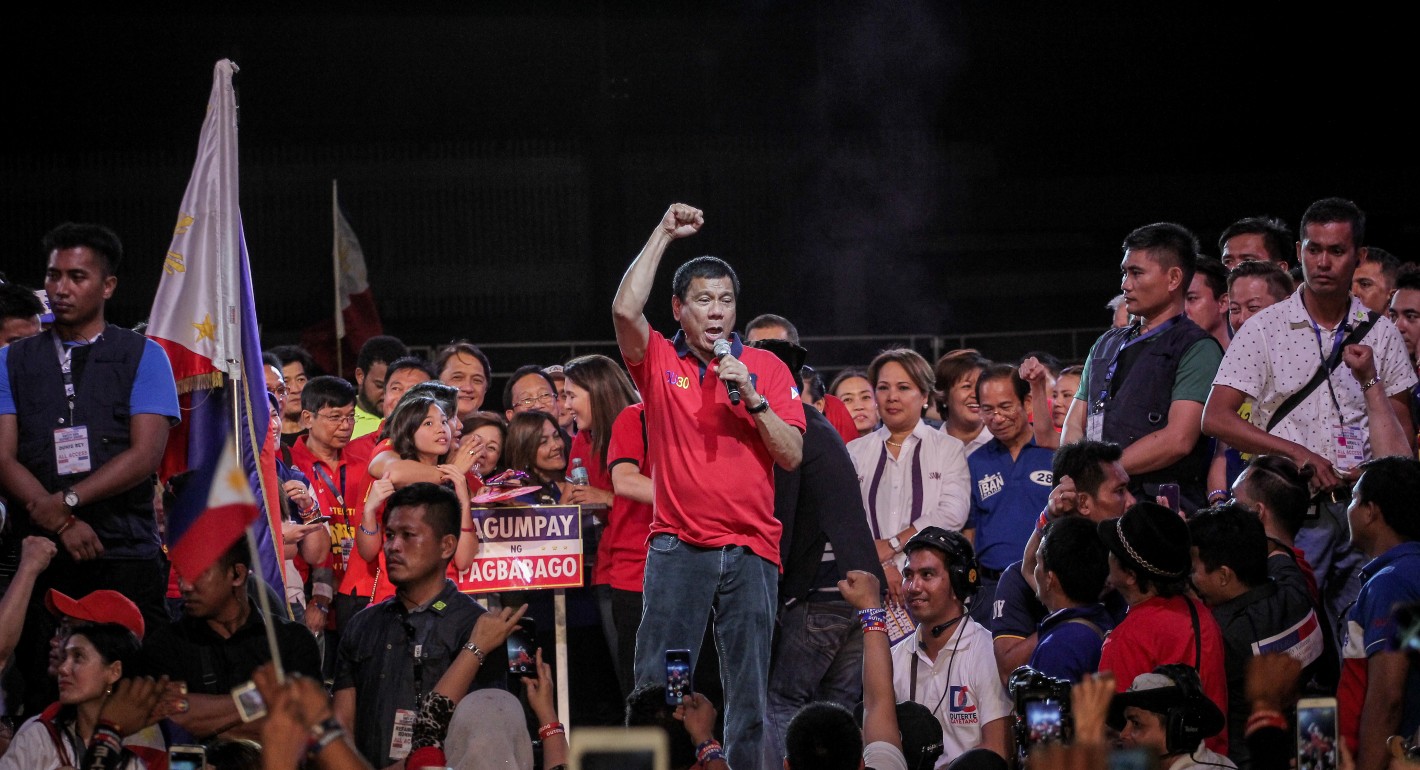
In the Philippines, Duterte-era discourse emphasizing sovereignty, anti-Western skepticism, and strongman diplomacy mirrors tenets of populist foreign policy around the world.
Aries A. Arugay

Europe has been standing by while its Southern neighborhood is being redrawn by force. To establish a path to peace between Israel and Lebanon, it’s time for Europeans to get involved with hard power.
Rym Momtaz