

Paper
Argentina’s president blends libertarian populism with leader-centric diplomacy, transnational right-wing networks, and selective disengagement from multilateral institutions.
Federico Merke
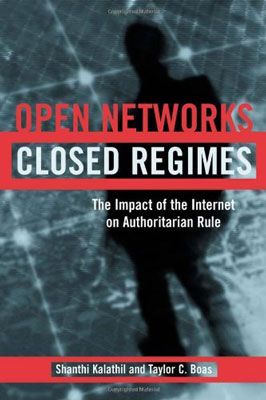
With case studies from China, Cuba, Singapore, Vietnam, Burma, the United Arab Emirates, Saudi Arabia, and Egypt, this book tests the assumption that the Internet poses a threat to authoritarian regimes.
Source: Washington
As the Internet diffuses across the globe, many have come to believe that the technology poses an insurmountable threat to authoritarian rule. Grounded in the Internet's early libertarian culture and predicated on anecdotes pulled from diverse political climates, this conventional wisdom has informed the views of policy makers, business leaders, and media pundits alike. Yet few studies have sought to systematically analyze the exact ways in which Internet use may lay the basis for political change.
Open Networks, Closed Regimes, the authors take a comprehensive look at how a broad range of societal and political actors in eight authoritarian and semi-authoritarian countries employ the Internet. Based on methodical assessment of evidence from these cases—China, Cuba, Singapore, Vietnam, Burma, the United Arab Emirates, Saudi Arabia, and Egypt—the study contends that the Internet is not necessarily a threat to authoritarian regimes.
"Many hope that information technology will generate new opportunities for global communications, breaking down national barriers even in dictatorial regimes with minimal freedom of the press. Kalathil and Boas provide a path-breaking and thoughtful analysis of this issue. A fascinating study, this should be widely read by all concerned with understanding and promoting democratization, regime change, and new information technology."
—Pippa Norris, John F. Kennedy School of Government, Harvard University
"This is must reading for anyone interested in learning from evidence, rather than widely accepted assumptions, how the influence of the Internet is used."
—The ZGram
"An important guide to scholars and policy makers concerned with understanding the conditions under which the Internet may foster democratic change."
—Larry Diamond, Hoover Institution, Stanford University
"...provides a timely, welcome and overdue counter to simplistic claims for the politically liberating effects of the Internet."
—Survival
"...fascinating and extremely useful."
—The Washington Monthly
"Kalathil and Boas explore a key proposition of the information age: that the growth of the Internet will weaken dictators and foster democracy. Their research is solid, their analysis stimulating, and their findings should make us pause, rethink, and refocus…The study should be read by policy makers, business exponents, and civil-society activists who want to make the world more open."
—David Ronfeldt, coauthor of Networks and Netwars: The Future of Terror, Crime, and Militancy
"A useful summary and analysis of the current debate over whether the Internet is a tool for liberalization or repression. This work will aid policy makers as we examine the issue over the coming months and years."
—Senator Max Baucus (D-MT), Congressional-Executive Commission on China
"An articulate and well-researched analysis of the current role of the Internet in authoritarian societies. The conclusion is a sobering one-the Internet is by no means a guaranteed 'silver-bullet' in eluding and indeed, defeating, the control of authoritarian rulers."
—Jennifer L. Windsor, Executive Director, Freedom House
"Through a country-by-country analysis, Kalathil and Boas shed light on practices formerly known only by anecdote, and their findings chip away at the apocryphal notion that going digital necessarily means going democratic. Their work answers a number of important questions, and frames a worthy challenge to those who wish to deploy technology for the cause of political openness."
—Jonathan Zittrain, Berkman Center for Internet & Society, Harvard University
Former Associate
Former Project Associate
Carnegie does not take institutional positions on public policy issues; the views represented herein are those of the author(s) and do not necessarily reflect the views of Carnegie, its staff, or its trustees.

Argentina’s president blends libertarian populism with leader-centric diplomacy, transnational right-wing networks, and selective disengagement from multilateral institutions.

Federico Merke

The India AI Impact Summit offers a timely opportunity to experiment with and formalize new models of cooperation.


Lakshmee Sharma, Jane Munga

When democracies and autocracies are seen as interchangeable targets, the language of democracy becomes hollow, and the incentives for democratic governance erode.


Sarah Yerkes, Amr Hamzawy

Geological complexity and years of mismanagement mean the Venezuelan oil industry is not the big prize officials in Moscow and Washington appear to believe.

Sergey Vakulenko
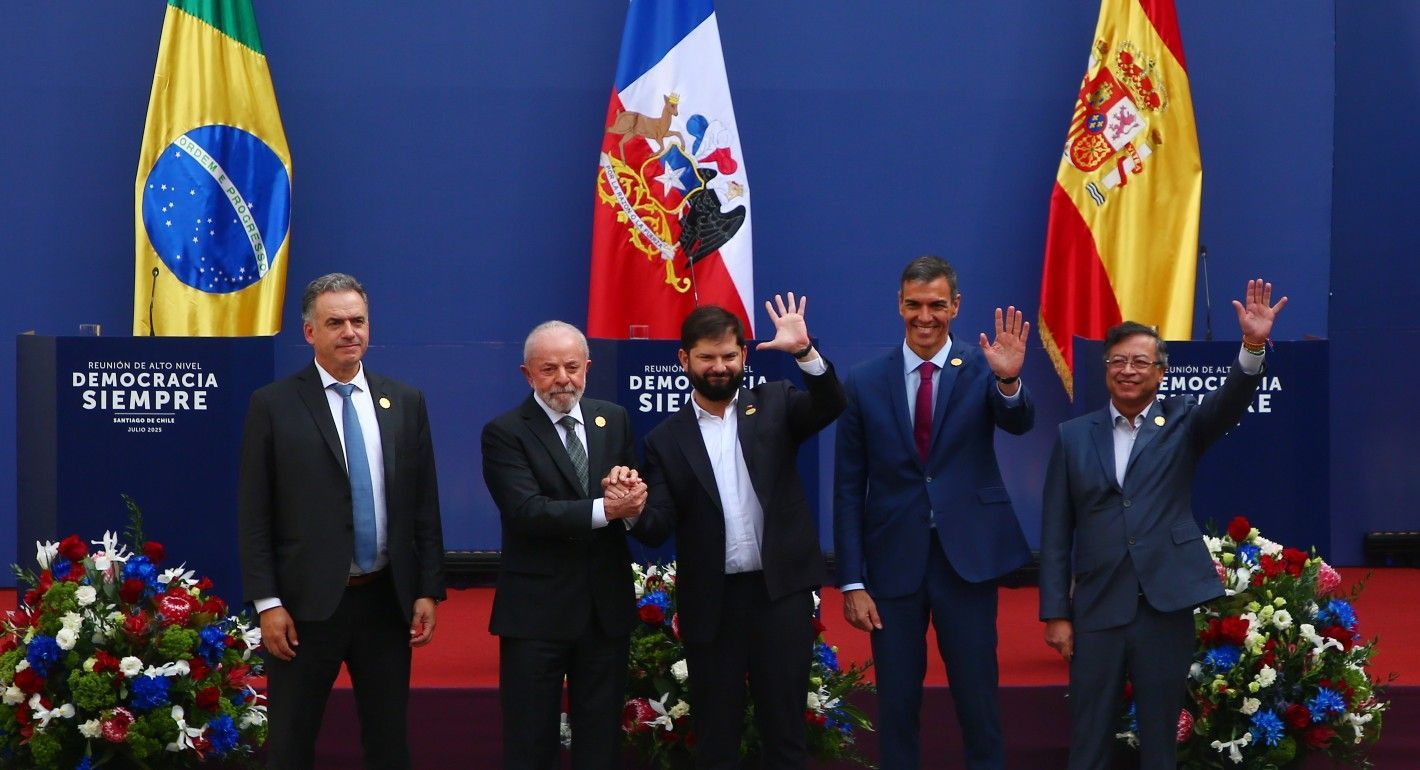
With U.S. democracy support receding, progressive leaders from Spain and Latin America have pioneered a global initiative to combat backsliding. Can it succeed?

Oliver Stuenkel, Adrian Feinberg