

Paper
Douglas H. Paal
Source: Getty
Google’s public dispute with China is likely just the beginning of a challenging year for U.S.-China relations, as ongoing tensions over Taiwan arms sales, trade disputes, and UN sanctions will continue to hamper bilateral cooperation.
Google’s executives deserve praise for finally standing up to Chinese hacking of its customers and demand for self-censorship. Moreover, Google’s share of the world’s largest internet market was stagnating. So if it leaves China, Google will repair its tarnished reputation for censorship while losing relatively little. Conceivably, China might compromise eventually and Google would be a double winner, remaining in the market on better terms and fixing its brand name. But don’t count on it.
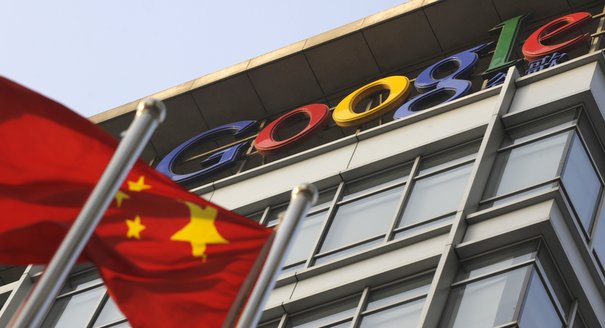
This is going to be a hard year for U.S. relations with China. Just last week, China openly announced a successful shot by its anti-missile system, something that starkly contradicts China’s “principled position” of opposing anti-missile systems and weapons in space. Now, Google has pointed unambiguously to China as the source of a massive hacking operation against many corporations, individuals, and human rights activists in particular.
Over the next two months, President Obama can be expected to meet with His Holiness the Dalai Lama in the White House and to announce a sizeable if not terribly controversial package of arms sales to Taiwan. And Beijing’s diplomats are openly warning that there will be a strong Chinese reaction to these events. Most likely, China’s President Hu Jintao will at the very least refuse to attend next April’s Nuclear Security Summit to be hosted by Obama.
And the downbeat news won’t stop there. The U.S. is preparing a resolution toughening sanctions on Iran for a vote by the UN Security Council. The U.S. wants China’s vote, but the Chinese UN envoy says it is premature. Increasingly, Beijing rather than Moscow is the principal impediment to squeezing the Iranian nuclear weapons program. China has prepared to invest heavily in Iran’s energy sector, and one suspects that foreign ministry worries are heavily outweighed by domestic economic interests at Chinese leadership councils.
On top of this, despite China’s sizeable increase in imports from the U.S., as its exports have declined, bilateral trade disputes appear likely to proliferate as we approach the November mid-term elections.
President Obama used his first year to build a positive relationship with Beijing seeking cooperation on the financial crisis, climate change and non-proliferation. So far, Beijing has done more good than harm on the global economy. The climate change outcome is a muddle, but somewhat more than nothing. And reining in the nukes in North Korea and Iran remains a work in progress, or at least lots of work.
Too much has been made of the “G-2” concept, where the U.S. and China can be imagined to make the major decisions in the world together. Neither capital is ready for that. But on almost every major issue, from arms control to humanitarian assistance to peace keeping, there will not be progress if the U.S. and China cannot cooperate.
The challenge in the year ahead is for the two countries’ political elites to strengthen their capacity to handle both disputes and cooperation at the same time, and not have the former cancel out the latter. China’s millennia of complex governance and America’s dynamism suggest this is possible, but it will require looking beyond this year’s mounting troubles and demands.
Given the hardening of China’s internal controls over the past two years, the prospects for an enlightened compromise with Google and the other items on the agenda seem problematic. But if China stays hunkered down in grumpy resistance to the free flow of information, this will damage its ambitions to expand high value information technology industries. Secretary of State Hillary Clinton’s call today for adding internet freedom to the diplomatic agenda will accentuate this reality. The competing risks of turning a cold shoulder to the world’s concerns or relaxing its stance and freeing the flow of information into China should promote a lively debate in Beijing.

Distinguished Fellow, Asia Program
Paal previously served as vice chairman of JPMorgan Chase International and as unofficial U.S. representative to Taiwan as director of the American Institute in Taiwan.
Recent Work
Douglas H. Paal


Douglas H. Paal, Tong Zhao, Chen Qi, …
Carnegie does not take institutional positions on public policy issues; the views represented herein are those of the author(s) and do not necessarily reflect the views of Carnegie, its staff, or its trustees.

The Plaza Accord was not an externally imposed punishment of Japan but part of a broader restructuring that Japanese economists and policymakers themselves recognized was necessary. Its effects were undermined, however, when Tokyo responded to the resulting slowdown with policies that exacerbated investment, credit expansion, and the very imbalances the adjustment was intended to resolve.

Michael Pettis

Trump has promised Belarus a massive potash deal. But Minsk is seeking something greater: restored Western transit and greater room for maneuver from Russia.

Balázs Jarábik

The real test may come after the leaders leave the room.



Sheena Chestnut Greitens, Oriana Skylar Mastro, Yukon Huang, …

The Horn of Africa countries are among those facing a new security calculus.


Andrew Leber, Lesley Anne Warner

The new U.S.–Denmark–Greenland agreement will help Washington exert political, economic, and financial dominance under the guise of security. Yet, it acknowledged Copenhagen’s and Nuuk’s sovereignty on the island.

Marc Pierini