Reactions to Jordan’s proposed constitutional amendments from a committee appointed by King Abdullah II have ranged between two extremes—hailed as a quantum leap forward by some and rejected as merely cosmetic by others. These amendments still have to go through the legislative process before they are adopted, but the proper way to read the amendments and decipher their significance is to understand the wider context. Do they constitute a first step in a much larger roadmap toward total separation of the legislative, judicial, and executive powers? Will they redistribute these powers (strengthening the first two and diluting the third)? Or do they represent the end of the road for Jordan’s political reform process? A clear answer to the questions helps pass judgment on the measures in a more objective and less ideological manner.
To be sure, many of the amendments address demands long put forth by reform groups and the general public. Some of the major amendments proposed include:
- The establishment of a constitutional court to monitor the constitutionality of laws and regulations. The court replaces a high tribunal for the interpretation of such laws that was headed by the speaker of the Senate and widely considered less than totally independent.
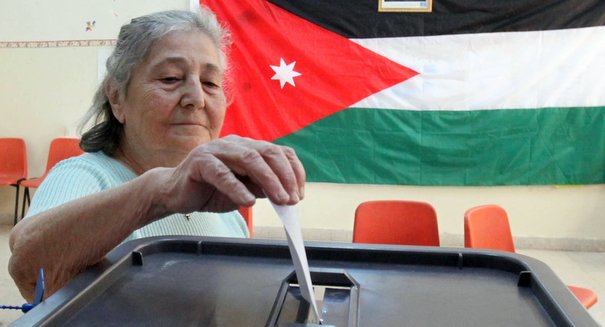
- The establishment of an independent commission to oversee elections instead of the Ministry of Interior that has previously been in charge of the electoral process. All electoral contestations will be referred to the judiciary instead of parliament.
- The enhancement of civil liberties, including the criminalization of any infringement on rights and public freedoms or on the sanctity of Jordanians’ private life; prohibition of torture in any form; and a declaration that all forms of communication between citizens shall be treated as secret and not subject to censorship, suspension, or confiscation except by judicial order.
- The limitation of the government’s ability to issue temporary laws during the absence of parliament, a practice that governments exercised at will in the past.
- The limitation of the State Security Court’s jurisdiction to cases of high treason, espionage, and terrorism, with citizens being otherwise tried in civilian courts; this includes ministers, who were previously tried by a parliamentary high tribunal.
- The limitation of the government’s ability to dissolve parliament without having to resign itself.
The amendments stopped short, however, of several other measures. Other than limiting the king’s ability to indefinitely postpone elections, his powers have been left intact. For example, even though it would be difficult to change the practice immediately without party-based parliaments, the king still appoints and dismisses the prime minister and the upper house of parliament. The constitutional committee also debated adding gender to the list of categories of laws that are forbidden to discriminate against, but it opted to keep gender off of the list for religious and political reasons. Finally, the role of the security services in the political affairs of the country was limited through some amendments, but hardly curbed completely.
Still, the amendments are an important first step and the fact that they will go through the constitutional process in only a few weeks is positive. This indicates that the constitution will witness its first major en masse overhaul since it was adopted in 1952.
These amendments should be followed by a more comprehensive, institutional, inclusive, and measurable reform process that offers a more extensive political and economic vision for Jordan’s future. The process should include a time frame for when governments will be formed through a parliamentary majority and for when the selection of a prime minister will be determined by who is the head of that majority. This will only happen once political parties are given a chance to organize and be represented in parliament. The proposed amendments to the electoral law, for example, offer a modest improvement over the current one, but will not lead to the development of political-party based parliaments for the foreseeable future.
The other pressing challenge is the actions the regime needs to take in the interim period until a party-based political scene matures, a process that could take several years. The gap between the regime and the people is widening due to pressing issues: a perceived increase in the level of corruption and the lack of seriousness in dealing with it; the need for the rule of law to be applied fairly and equitably; the continued interference by the intelligence services in the non-security aspects of political life in the country and their resistance to reform efforts; and the need for a different mechanism to choose prime ministers and governments that have more credibility until that choice can be made through elected representatives. Until fully accountable governments emerge, much of the load in leading that process falls on the king. He needs to help restore the credibility gap that exists today.
A recent visit to Jordan leaves me convinced that the population—with all of its ethnic and social classes and their various political and economic aspirations—strongly support the monarch leading that process. But they do expect the process to be more serious and lead to concrete results, rather than go through another experience where promises are left largely unfulfilled. The king seems well aware of the challenge, even as he recognizes that he must counter the many forces actively working against change and for the preservation of the status quo—forces that often come from within the political elite and traditional constituency of the regime.