

Commentary
Much has been said of the changes Brussels is trying to make to the EU enlargement process. Here’s why gradual integration might—or might not—be the answer.
Dimitar Bechev
Source: Getty
As the world order evolves, Europe must continue to nurture and fortify its strategic partnerships, both in its neighborhood and worldwide.
Speaking on ABC’s Good Morning America twenty-two years ago, Gennadi Gerasimov, the spokesman of the Soviet Foreign Ministry, coined the term “the Frank Sinatra doctrine” to denote the green light that Moscow was giving to its former satellites to choose their future geopolitical orientation. Gerasimov referred to Sinatra’s song “I Did It My Way,” reading more into the song’s title than its lyrics, which are about having no regrets about one’s choices and living “a life that is full.”
Europe has always wanted to do things its way. In the last few decades, it had one dominant idea about how to organize the world and this was to make it resemble Europe. The experiment of sovereignty-sharing that Europe embarked on after the Second World War was seen as a blueprint for how to organize the international community. The more norms, the better. The concept became known as effective multilateralism and functioned as the moral and political spine of the European Union’s first Security Strategy in 2003. It soon became clear, however, that it was based on an overoptimistic reading of the international dynamic. In the meantime, Europe’s own power as an example suffered as a result, initially, of the constitutional and subsequently the financial and sovereign debt crises.
As this was happening, the world rapidly entered a period of recalibration, with the rise of China, India, and Brazil but also with an intermediate category of mid-sized powers such as Turkey or Indonesia, making the international scene more crowded. Shocking as the pace of developments may seem, it is still curious why it took so long for some of the new actors to emerge. What we know very little about is how this emancipated world will behave. It may well be that the battle of international egos is just beginning. The new powers will want to increase their room for maneuver. Old powers will cling to the vestiges of their power. More checks and balances will be necessary. The level playing field will have to be hard fought.
In economic terms, the global emancipation process is gathering speed. The division of labor in which high value-added goods and services were to be delivered by the advanced economies and low value-added goods by the emerging ones no longer holds. Competitiveness will in the future depend on a broad range of factors, including transparency, education, and infrastructure. More factors than just sustainability will be important for the world economy. Not simply defending the status quo but also anticipating the way the economic model will change will be crucial.
In spite of its gloom and doom, Europe remains well positioned to swim upstream in this emerging world order. Its immediate task is to look after itself—perhaps most importantly—when it comes to the quality of its democracy. It may well be that in the world of tomorrow rating agencies will ask organizations like Freedom House to contribute vital data when making their assessments of economies’ durability and vitality. The challenge for Europe is that it has taken for granted the way its democracy has functioned, only occasionally drawing attention to the more obvious cases of individual leaders challenging the accepted norm. The future of democracy will be at least partly decided by the sense of inclusion that our citizens feel and the way we go about handling marginalized minorities. It is only on the basis of a rejuvenated democratic ferment that we can hope to take on the autocracies of the world.
Issue number two will be the economic vitality of Europe, understood more broadly than simply through the prism of gross national product levels. One of the areas to focus on is cross-generational cohesion. If Europe is torn apart, it may be more likely to happen between generations rather than nations. Both ends of the age pyramid will be squeezed. The younger generation already cries for better prospects. The older generation will face falling pension levels. And yet the European way of life reserved for the middle-aged is not an appealing proposition.
Outside of its borders, the EU will need to do much more organic work, befriending new actors and socializing them back in the old corridors of international power, which in real life will mean power-sharing. Last year’s flagship EU concept of strategic partnerships is intellectually the right way to go. In practical terms, the mountains have brought forth a mouse. The EU would need to undertake a massive reallocation of resources, including from the national diplomatic services and embassies, for this concept to fly. Each strategic partner should have a high-profile coordinator at the EU level, selected from among the former heads of state or government, recycling wisdom and experience back into the system. There should be top-notch staff at the European External Action Service and out in the field, together with several echelons of dialogue.
Whatever progress can be achieved with the strategic partners, the EU’s immediate challenge lies in its neighborhood. Events in North Africa can be as formative for the EU’s foreign policy as the Balkan wars in the 1990s, which compelled the EU to launch its Common Foreign and Security Policy. They are an open invitation for Europe to return to what it has always done best: the transformative agenda. A Strategic Europe will be one that can successfully zoom in to the neighborhood and zoom out to the strategic partners. Doing it its own way.
Paweł Świeboda is president of demosEUROPA—Centre for European Strategy in Warsaw.
To reinvigorate debate over European foreign policy and Europe’s role in the world, Carnegie Europe is publishing a series of essays from leading policymakers, diplomats, experts, and journalists on Strategic Europe over the coming weeks. A new essay will appear every day.
Paweł Świeboda
demosEUROPA
Carnegie does not take institutional positions on public policy issues; the views represented herein are those of the author(s) and do not necessarily reflect the views of Carnegie, its staff, or its trustees.

Much has been said of the changes Brussels is trying to make to the EU enlargement process. Here’s why gradual integration might—or might not—be the answer.

Dimitar Bechev

The European Commissioner for Trade is headed to China. But after President Xi’s bridge-building visit to Washington, can a more isolated EU overcome Beijing’s stranglehold on critical raw materials? Who will blink first?

Rym Momtaz, ed.
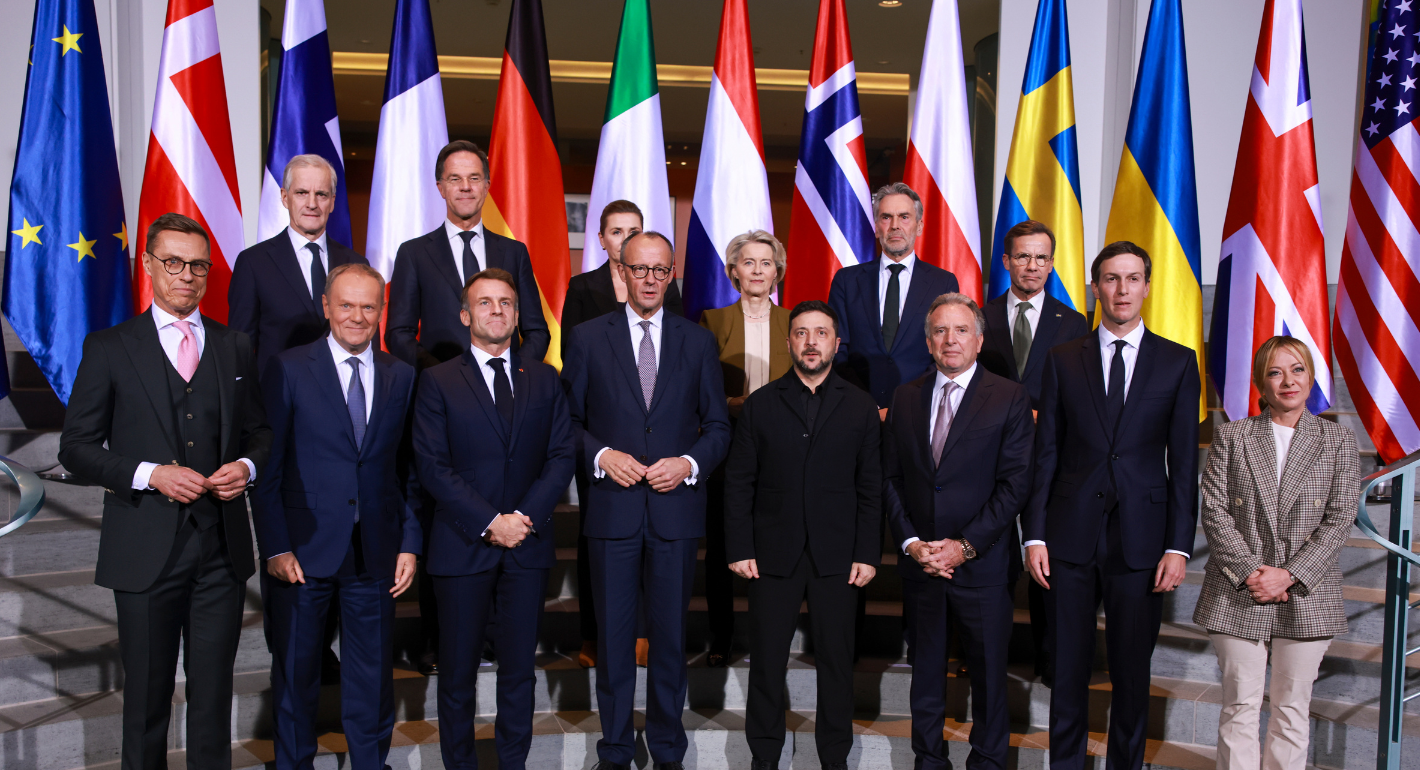
European NATO countries are wrestling with the possibility of U.S. disengagement from the alliance. With the continent’s security increasingly uncertain, governments must restore the credibility of their collective defense.



Hans-Dieter Lucas, Adam Thomson, Pierre Vimont

The domestic impacts of how long it is taking to end the war in Ukraine have pushed the French electorate to the political extremes and compromised the country’s diplomatic capacity.
Rym Momtaz
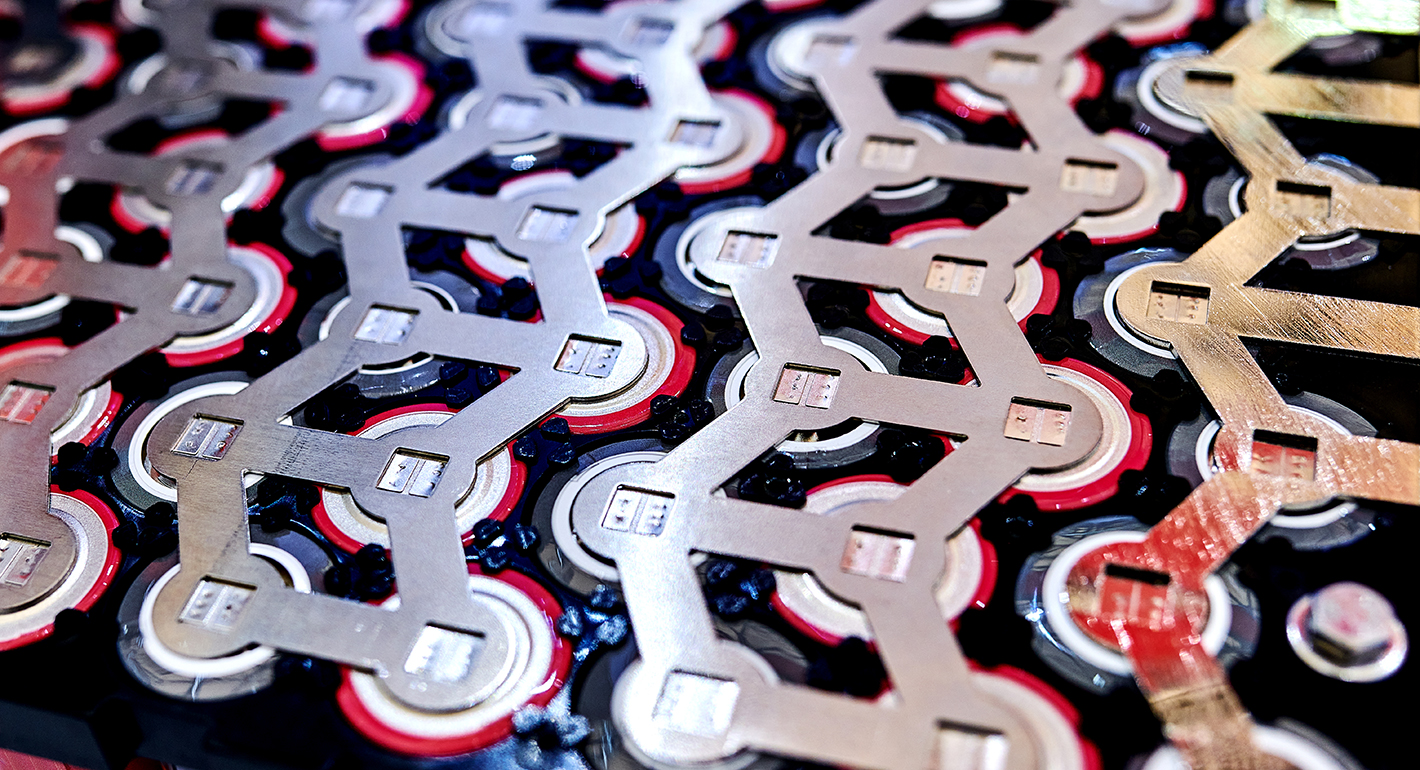
A deep dive into the policy ecosystems behind battery development in China, South Korea, Japan, the European Union (including some of its member states), the United States, Canada, and India.



Milo McBride, Herbert Crowther, Darcie Draudt-Véjares, …