

Commentary
The acknowledgment has sparked fears of a new arms race with China and Russia.
Chris O’Meara
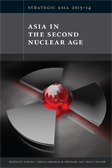
It is important to understand the role of nuclear weapons in the grand strategies of key Asian states and the impact of these capabilities—both established and latent—on regional and international stability.
Source: National Bureau of Asian Research
Co-edited and introduced by Ashley J. Tellis, the 2013-14 Strategic Asia volume examines the role of nuclear weapons in the grand strategies of key Asian states and assesses the impact of these capabilities—both established and latent—on regional and international stability. In each chapter, a leading expert explores the historical, strategic, and political factors that drive a country's calculations vis-a-vis nuclear weapons and draws implications for American interests.
Order this book, or read the introduction by Ashley J. Tellis for free.
Ashley J. Tellis is a Senior Associate at the Carnegie Endowment for International Peace and Research Director of the Strategic Asia Program at NBR, served in the U.S. Department of State as senior adviser to the Undersecretary of State of Public Affairs, and previously as senior adviser to the Ambassador at the U.S. Embassy in India. He also served on the National Security Council Staff as special assistant to the President and senior director for Strategic Planning and Southwest Asia. He is the author of India’s Emerging Nuclear Posture (2001) and co-author of Interpreting China’s Grand Strategy: Past, Present, and Future (2000), as well as the co-editor of the ten most recent volumes of Strategic Asia, published by NBR.
Abraham Denmark is Vice President for Political and Security Affairs at the National Bureau of Asian Research.
Travis Tanner was the Senior Project Director and Director of the Pyle Center for Northeast Asian Studies at the National Bureau of Asian Research.
Former Senior Fellow
Ashley J. Tellis was a senior fellow at the Carnegie Endowment for International Peace.
Abraham M. Denmark
National Bureau of Asian Research
Travis Tanner
NBR
Carnegie does not take institutional positions on public policy issues; the views represented herein are those of the author(s) and do not necessarily reflect the views of Carnegie, its staff, or its trustees.

The acknowledgment has sparked fears of a new arms race with China and Russia.

Chris O’Meara

Smaller powers cannot go it alone, but Canadian history shows that integration with the United States will not always be benign.
Paul Samson

The European Commissioner for Trade is headed to China. But after President Xi’s bridge-building visit to Washington, can a more isolated EU overcome Beijing’s stranglehold on critical raw materials? Who will blink first?

Rym Momtaz, ed.
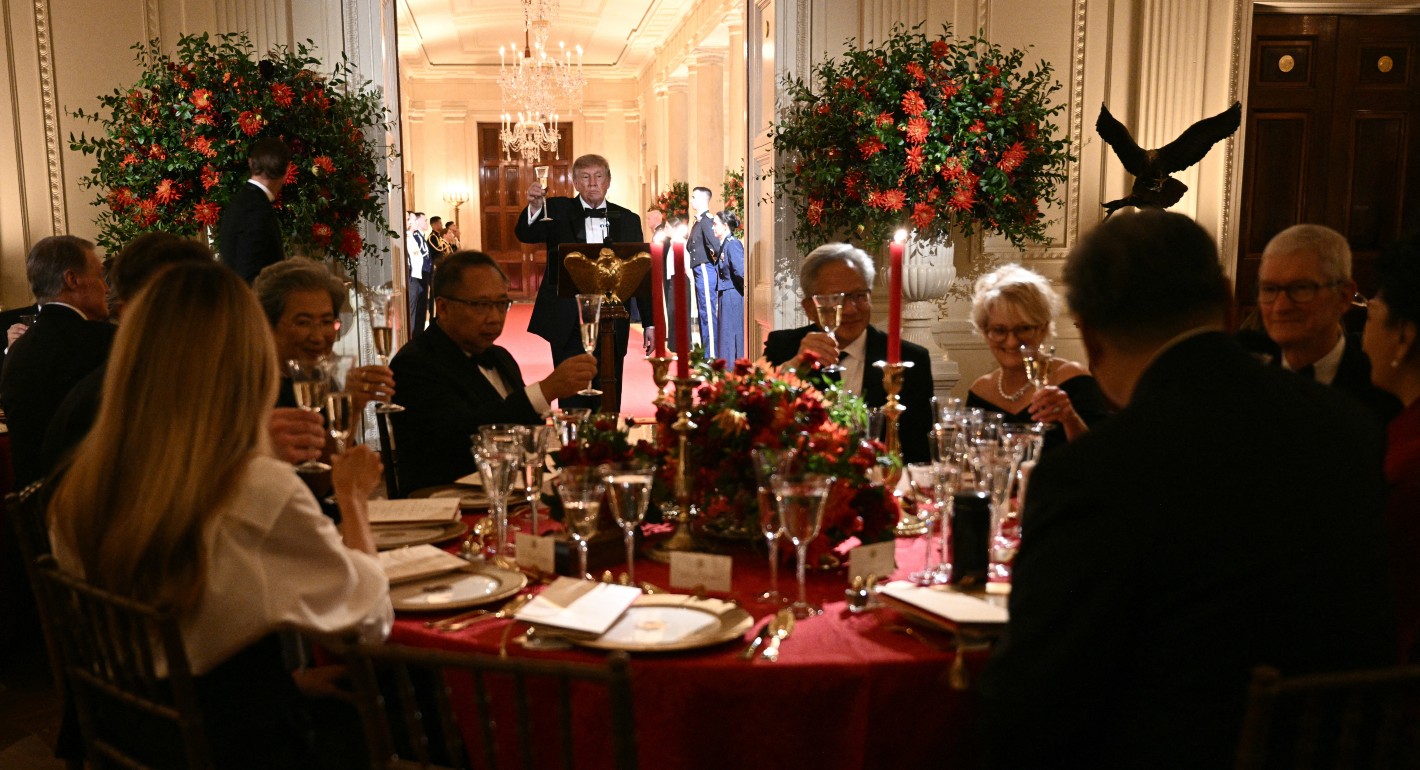
The summit may be remembered as a fatal blunder, when Washington, Beijing, and the AI industry collectively chose ceremony over action.

Jeffrey Prescott

European NATO countries are wrestling with the possibility of U.S. disengagement from the alliance. With the continent’s security increasingly uncertain, governments must restore the credibility of their collective defense.



Hans-Dieter Lucas, Adam Thomson, Pierre Vimont