• Research
  • Emissary
  • About
  • Experts
Carnegie Global logoCarnegie lettermark logo
DemocracyIran
  • Donate
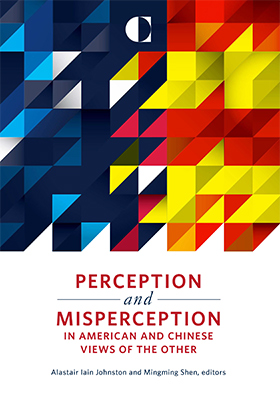
Perception and Misperception in American and Chinese Views of the Other
Report

Perception and Misperception in American and Chinese Views of the Other

The underlying beliefs that people in the United States and China hold toward each other in the security realm are likely to influence, directly or indirectly, each side’s foreign policy with regard to the bilateral relationship.

Link Copied
Published on Sep 22, 2015

Additional Links

BriefFull Text
Program mobile hero image

Program

Asia

The Asia Program in Washington studies disruptive security, governance, and technological risks that threaten peace, growth, and opportunity in the Asia-Pacific region, including a focus on China, Japan, and the Korean peninsula.

Learn More

The underlying beliefs that people in the United States and China hold toward each other in the security realm are likely to influence, directly or indirectly, each side’s foreign policy with regard to the bilateral relationship. In-depth analyses of elite and public opinion survey data from the United States and China on a wide range of security issues provide nuanced and far-reaching insights into the potential effects of these attitudes on the U.S.-China relationship.

Key Findings

  • There are substantial gaps in American and Chinese perceptions of the basic traits and characteristics that each side exhibits. However, at the individual level, strong in-group exceptionalism does not necessarily predict out-group denigration.
     
  • A considerable part of the Chinese population appears to believe that China should not take on a world leadership role, or if it does, it should jointly lead the world with the United States. These attitudes are associated both with older respondents and with those in their thirties and early forties.
     
  • In general, mistrust of the external world on the Chinese side stems from educational socialization and media messaging.
     
  • Tea Party supporters in the United States demonstrate very low levels of trust toward China and, as a result, advocate much tougher economic and military policies. However, the Tea Party is less interested in interfering in the internal affairs of China than other elements of the population.

Analyzing the Results

  • Credible reassurance signals from the United States may be well received if aimed at individuals in the Chinese government, even if said individuals espouse a strong belief in Chinese exceptionalism.
     
  • The younger cohort of Chinese citizens has yet to influence Chinese politics and policy, and there may be some basis for expecting that this group could be more accepting of a continued, dominant U.S. role in international politics.
     
  • Efforts to affect Chinese beliefs about the United States may be limited by the powerful socializing effects of the Chinese government–controlled education and propaganda systems.
     
  • If the U.S. Congress and the next president are beholden to the Tea Party for electoral success, then there might be more conflict in the security and economic realms but somewhat less support for the United States’ cost-imposing policies on China’s internal affairs.
Read Full Text
North AmericaUnited StatesEast AsiaChinaForeign Policy

Carnegie does not take institutional positions on public policy issues; the views represented herein are those of the author(s) and do not necessarily reflect the views of Carnegie, its staff, or its trustees.

More Work from Carnegie Endowment for International Peace

  • Xi walking into a room with people standing and applauding around him
    Commentary
    Emissary
    The Xi Doctrine Zeros in on “High-Quality Development” for China’s Economic Future

    In the latest Five-Year Plan, the Chinese president cements the shift to an innovation-driven economy over a consumption-driven one.

      • Damien Ma

      Damien Ma

  • apan's 8,900-ton Maritime Self-Defense Force supply ship Oosumi leaves Muroran port escorted by the 4,550-ton destroyer Murasame bound for Kuwait February 20, 2004 in Muroran, Japan.
    Article
    Japan’s Security Policy Is Still Caught Between the Alliance and Domestic Reality

    Japan’s response to U.S. pressure over Hormuz highlights a broader dilemma: How to preserve the alliance while remaining bound by legal limits, public opinion, and an Asia-centered security agenda. Tokyo gained diplomatic space through an alliance-embracing strategy, but only under conditions that may not endure.

      • Ryo Sahashi

      Ryo Sahashi

  • Article
    Kenya’s Health Deal Is a Stress Test for the America First Global Health Strategy

    U.S. agreements must contend with national data protection laws to make durable foreign policy instruments.

      • A Black woman with long hair wears a black blazer

      Jane Munga, Rose Mosero

  • Commentary
    Diwan
    Trump’s Plan for Gaza Is Not Irrelevant. It’s Worse.

    The simple conclusion is that the scheme will bring neither peace nor prosperity, but will institutionalize devastation.

      Nathan J. Brown

  • Trump seated and gesturing while speaking
    Commentary
    Emissary
    The Iran War Is Making America Less Safe

    A conflict launched in the name of American security is producing the opposite effect.

      • Sarah Yerkes

      Sarah Yerkes

Get more news and analysis from
Carnegie Endowment for International Peace
Carnegie global logo, stacked
1779 Massachusetts Avenue NWWashington, DC, 20036-2103Phone: 202 483 7600Fax: 202 483 1840
  • Research
  • Emissary
  • About
  • Experts
  • Donate
  • Programs
  • Events
  • Blogs
  • Podcasts
  • Contact
  • Annual Reports
  • Careers
  • Privacy
  • For Media
  • Government Resources
Get more news and analysis from
Carnegie Endowment for International Peace
© 2026 Carnegie Endowment for International Peace. All rights reserved.