Drawing on ten public discussions from the India AI Impact Summit 2026, this article highlights key outlooks on open source in AI that are likely to shape policy and governance conversations going forward.
Shruti Mittal
Effectively steering outcomes for and through AI will require thoughtful, evidence-based policy development. Though it may seem self-evident that evidence should inform policy, this is far from inevitable in the inherently messy policy process.
Rishi Bommasani
Sanjeev Arora
Jennifer Chayes
Yejin Choi
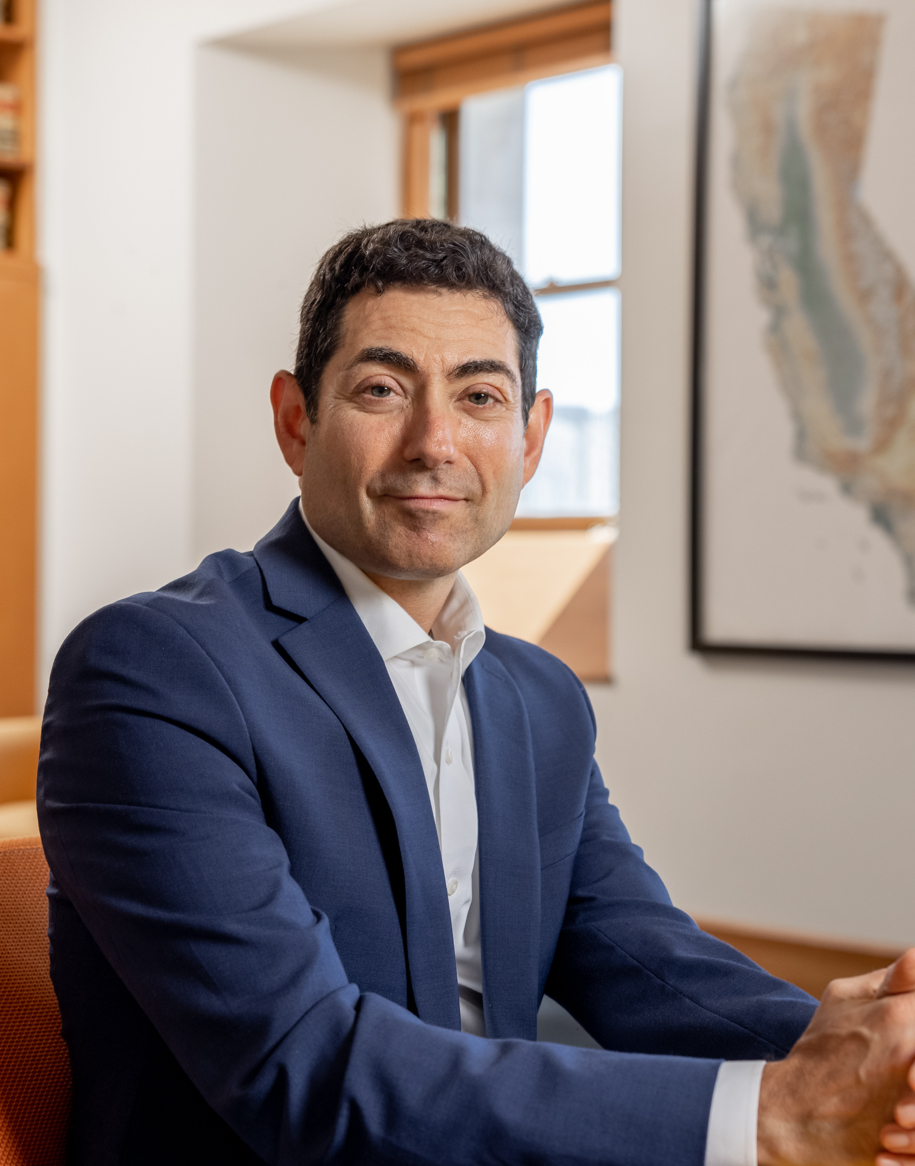
President, Carnegie Endowment for International Peace
Mariano-Florentino (Tino) Cuéllar is the tenth president of the Carnegie Endowment for International Peace. A former justice of the Supreme Court of California, he has served three U.S. presidential administrations at the White House and in federal agencies, and was the Stanley Morrison Professor at Stanford University, where he held appointments in law, political science, and international affairs and led the university’s Freeman Spogli Institute for International Studies.
Li Fei-Fei
Daniel E. Ho
Dan Jurafsky
Sanmi Koyejo
Hima Lakkaraju
Arvind Narayanan
Alondra Nelson
Emma Pierson
Joelle Pineau
Fellow, Technology and International Affairs
Scott Singer is a fellow in the Technology and International Affairs Program at the Carnegie Endowment for International Peace, where he works on global AI development and governance with a focus on China.
Gaël Varoquaux
Suresh Venkatasubramanian
Ion Stoica
Professor in the EECS Department at the University of California at Berkeley and the Director of Sky Computing Lab
Ion Stoica is a professor in the EECS Department at the University of California at Berkeley, and the Director of Sky Computing Lab. He is currently doing research on cloud computing and AI systems. Current and past work includes ChatBot Arena, vLLM, Ray, Apache Spark, Apache Mesos, Tachyon, Chord DHT, and Dynamic Packet State (DPS). He is a Member of NAE, an Honorary Member of the Romanian Academy, an ACM Fellow and has received numerous awards, including the Mark Weiser Award (2019), SIGOPS Hall of Fame Award (2015), and several "Test of Time" awards. He also co-founded three companies, Anyscale (2019), Databricks (2013) and Conviva (2006).
Percy Liang
Dawn Song
Carnegie does not take institutional positions on public policy issues; the views represented herein are those of the author(s) and do not necessarily reflect the views of Carnegie, its staff, or its trustees.
Drawing on ten public discussions from the India AI Impact Summit 2026, this article highlights key outlooks on open source in AI that are likely to shape policy and governance conversations going forward.
Shruti Mittal
If U.S. policymakers continue down the path of restricting China’s access to frontier AI, they will eventually have to implement some sort of restriction on cloud access.
Noah Tan
The debate over AI and work too often centers on displacement. Facing aging populations and shrinking workforces, East Asian policymakers view AI not as a threat, but as a cross-sectoral workforce strategy.
Darcie Draudt-Véjares, Sophie Zhuang
In its version of an AI middle power strategy, Seoul is pursuing alignment with the United States not as an endpoint but as a strategy to build industrial and geopolitical leverage. Whether this balance holds remains an open question.
Darcie Draudt-Véjares, Seungjoo Lee
This collection of essays by scholars from Carnegie India’s Technology and Society program traces the evolution of the AI summit series and examines India’s framing around the three sutras of people, planet, and progress. Scholars have catalogued and assessed the concrete deliverables that emerged and assessed what the precedent of a Global South country hosting means for the future of the multilateral conversation.
Nidhi Singh, Tejas Bharadwaj, Shruti Mittal, …