Inside the Swap Mart: How Thailand’s Domestic Digital Repression Enables Transnational Repression
Thailand is no longer safe for regional activists; neither are Cambodia, Laos, or Vietnam for Thai dissidents who had typically sought refuge in those countries.
Link Copied
By Janjira Sombatpoonsiri
Published on Jul 2, 2026
This essay is part of a series from Carnegie’s Digital Democracy Network, a diverse group of thinkers and activists engaged in work on technology and politics. The series is produced by Carnegie’s Democracy, Conflict, and Governance Program. The full set of essays is scheduled for publication in summer 2026.
On November 23, 2019, Tor Nimol, an exiled opposition activist from Cambodia, was arrested along with his wife, Chen Lim, by at least eight plainclothes Thai police officers at a Bangkok mall. The officers shoved the couple into a van and drove them around the city for two hours before handing them off to Cambodian government officials waiting in another vehicle. Nimol’s phone was confiscated, as was his UN Refugee Agency (UNHCR) refugee card—the document that was supposed to protect him. He was sent back to Cambodia that same day. In December 2022, Nimol was one of twenty-two Cambodia National Rescue Party (CNRP) supporters sentenced to five years’ imprisonment for violating Article 453 of the 2009 Criminal Code, which covers plotting a felony.
Nimol was among hundreds of dissidents caught up in what Human Rights Watch would later call a “swap mart”: a quid pro quo arrangement in which Thailand helps partner governments silence exiled critics, in exchange for those governments targeting Thai dissidents abroad. The swap mart is part of broader transnational repression (TNR) patterns and what scholars have termed “authoritarian innovations”; these include deals struck across borders between like-minded leaders to suppress threats to regime survival.
Digital tools used for domestic repression are increasingly leveraged for transnational repression, including interception technologies and social media monitoring, coordinated social media campaigns targeting exiled dissidents, and distributed denial-of-service (DDoS) attacks. While existing analyses focus on how origin states use these tools to target diasporas in largely democratic host states, this article instead examines how an autocratic host state—Thailand—is using its own digital repression infrastructure to supercharge transnational repression on its own soil.
Transnational Repression on Thai Soil
In Southeast Asia, and in Thailand specifically, transnational repression intensified after 2014, when the country, which many exiles had believed to be a safe haven, entered a period of authoritarian rule. In May 2014, the army staged a coup and governed directly until 2019, when a general election was held. Despite the return of electoral politics, the junta-drafted constitution and junta-aligned institutions, such as the Senate, Election Commission, and Constitutional Court, enabled military leader General Prayuth Chan-Ocha, and his party, Palang Pracharath, to remain in power until the 2023 elections, when the former opposition party, Pheu Thai, returned to government. The military rule left behind an enduring authoritarian legacy, which has included a persistent role in transnational repression that successive elected governments have been compelled and incentivized to maintain.
Facing “soft sanctions” from the United States and the European Union, the 2014–2019 junta turned to autocratic allies in the region, particularly Cambodia, China, and Vietnam. Beyond trade ties and diplomatic coordination against Western criticism, these relationships aided the Thai government’s crackdowns on Thai dissidents exiled in neighboring countries, including Cambodia and Laos, even when they were transiting through these countries before resettling in third countries. While Thai dissidents murdered or arrested abroad have been well documented, the inverse flow of transnational repression on Thai soil directed at the dissidents of Thailand’s autocratic allies has received far less attention.
This analysis draws on Freedom House’s Transnational Repression Project Dataset (v.6), which documents 219 TNR incidents occurring in Thailand between 2014 and 2024. I recoded the dataset by treating each TNR victim as a single case, rather than counting the TNR types they experienced separately.1 Further, I excluded cases of mass deportations and detentions of involving individuals who may not have been activists or linked to opposition parties—such as the deportations of groups of seventeen and 109 Uyghurs to China in 2014 and 2015 respectively, and the detention of two Uyghurs who died in custody in 2023—thereby focusing on clearer cases of TNR directed at oppositional actors. I also introduced additional variables of analysis such as type of TNR activity and the site where each incident occurred, and I cross-checked information that was insufficiently detailed in the Freedom House dataset against news reports and human rights documentation. The recoded dataset comprises eighty-one cases and reveals several patterns relevant to Thailand’s role in transnational repression.
First, twenty-six cases, the largest cluster, occurred in 2024, one year after the general election brought the Pheu Thai Party–led government to power. After the junta-appointed Senate blocked the opposition Move Forward Party’s prime ministerial candidate, Pheu Thai formed a ruling coalition with junta-aligned parties, such as Palang Pracharath and United Thai Nation, leaving Move Forward—the party that won the largest share of the popular vote—in opposition. The new civilian government continued several policies from the previous military regime, including a 2018 bilateral arrangement with Cambodia that permitted the exchange of each country’s fugitives.2
Second, forty-two of the eighty-one targets (51.9 percent) originated from Cambodia, far exceeding the numbers from China (fifteen individuals, or 18.5 percent), Russia (seven individuals, or 8.6 percent), and Vietnam (six individuals, or 7.4 percent). This likely reflects Thailand’s long-standing role as a refuge for Cambodian political dissidents, combined with the Cambodian government’s aggressive reach abroad, especially after the 2017 dissolution of the opposition CNRP. While TNR cases involving other origin countries are distributed across the 2014-to-2024 time span, Russia is a notable exception. All seven Russian cases in the dataset are members of the Russian-Belarusian pop-rock band Bi-2, known for its anti-war stance. On January 24, 2024, while touring in Thailand, the group was arrested and detained by Thai authorities on the grounds that its members had failed to obtain work permits. Prior to the arrests, Russian lawmakers had accused the group of harboring an “anti-Russian” attitude.
Third, arrest and deportation constitute the most common forms of transnational repression occurring on Thai soil. Of the recorded cases, eighteen involved arrests by Thai authorities alone, thirteen were deportations alone, and ten involved both detention and deportation. Violent tactics such as assault or assassination are comparatively rare, accounting for only six cases in total, suggesting the primary mechanism of repression relies more on legal-adjacent coercion than overt violence. At least thirty-one cases involved individuals who either held UNHCR refugee status or were active in the UNHCR asylum-seeking process at the time they experienced transnational repression, yet were nevertheless deported or forcibly returned to their countries of origin. In at least four instances, exiled dissidents were arrested and deported either before or after a visit to the UNHCR office in Bangkok. This pattern points to Thailand’s failure to uphold the rights of recognized refugees and asylum seekers, in part due to the country’s nonsignatory status to the 1951 Refugee Convention.
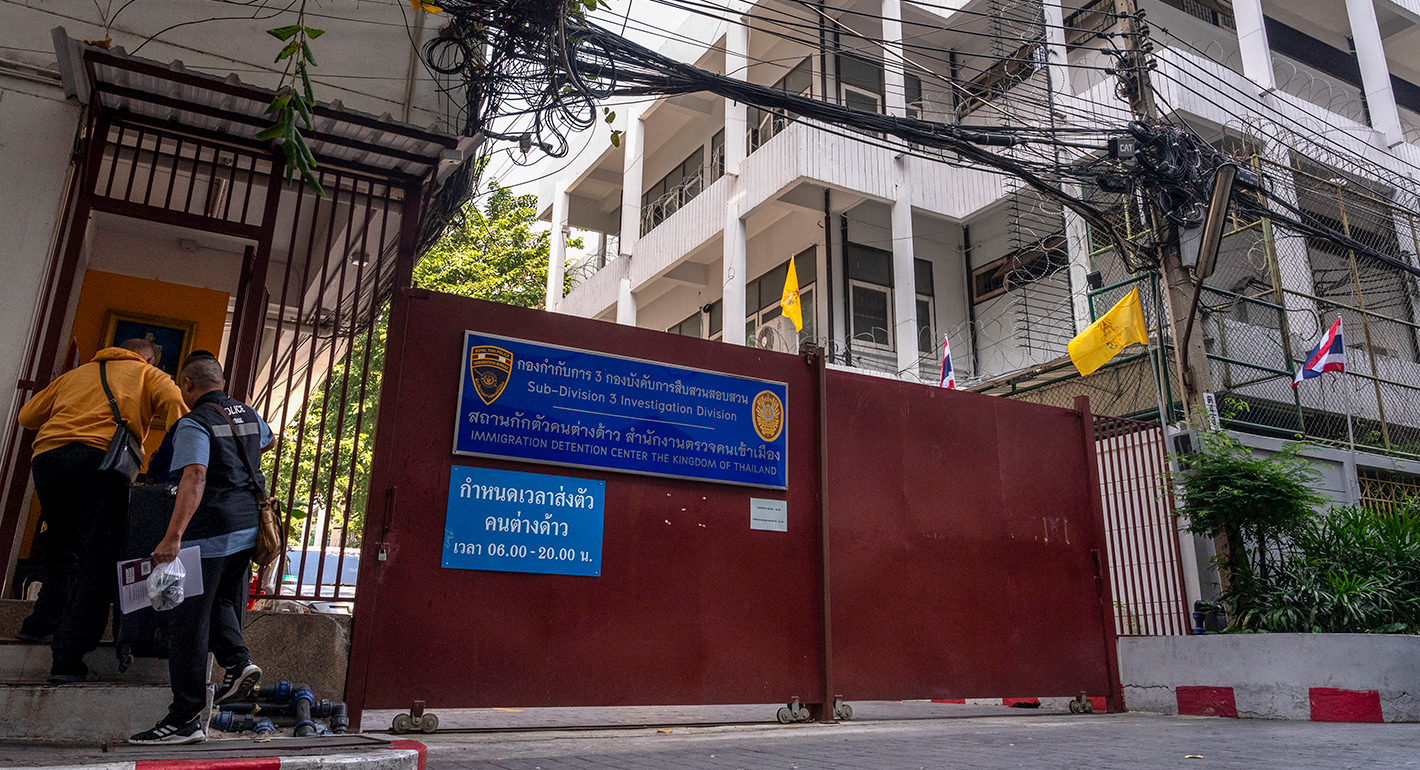
This observation brings us to the fourth pattern: TNR incidents frequently occurred while targets were going about everyday activities in public or at personal sites, like a department store, hospital, or apartment. Nearly a quarter of incidents (twenty cases) took place at residences or nearby areas. Strikingly, Buddhist temples appeared in ten cases, likely linked to the Cambodian dissident community’s use of temples as gathering points. Individuals targeted for assassination or assault were often followed by assailants on their way home from work or other routine activities, and news reports suggest these assailants sometimes spoke the same language as their targets. Targets were apprehended at or on their way home, while commuting to work, strolling through a mall, and visiting a hospital.
Transnational repression incidents proceed through three mechanisms. First, cases involving legal procedures are presumably facilitated through bilateral, and often unwritten, agreements. Thai authorities have detained and extradited exiled dissidents at the request of counterparts in Cambodia, Vietnam, and Malaysia. While the Thai-Cambodian agreement on exchanging fugitives is formalized, cooperation with Vietnam and Malaysia appears to rely more heavily on economic interdependence, particularly cross-border trade and labor flows. Second, beyond these bilateral channels, Amnesty International and legal experts have alleged that influential states, including China and more recently Russia, misuse multilateral mechanisms such as Interpol’s ability to issue red notices that Thai immigration officers act upon when targets pass through immigration controls. The third mechanism operates less through formal cooperation than through the inaction or permissiveness of Thai authorities. In cases of assassination and enforced disappearance, where foreign agents operate on Thai soil in clear violation of Thai sovereignty, Thai authorities often “lack awareness about the threat of transnational repression.” At worst, they have turned a blind eye in investigations into at least two cases of enforced disappearance and killing of Laotian dissidents.
Domestic Digital Surveillance for Transnational Repression: Three Pathways
The most revealing set of data concerns arrests, deportations, and other forms of intimidation targeting exiled dissidents during their daily routines. What makes these cases unique is that exiled dissidents were going about their daily lives when Thai authorities suddenly intercepted them, raising the question of how their whereabouts were identified, absent some form of tracking. While establishing a link between domestic surveillance and transnational repression would require firsthand accounts from both TNR targets and the authorities involved, the current dataset, together with the existing evidence on Thailand’s surveillance infrastructure, suggests several ways in which this apparatus may be leveraged for transnational repression.
Since the onset of military rule and accelerating in response to the youth-led anti-government protests of 2020–2021, Thailand’s surveillance apparatus has become increasingly sophisticated, combining manual monitoring of dissident activity on social media and at protest sites with surveillance technologies such as “social media listening” tools, CCTVs, Global Positioning System (GPS) trackers, and spyware. During periods of mass mobilization, authorities cross-check data from different sources for complementary ends. Intrusive tools such as spyware and GPS trackers geolocate targeted activists and access private information. Key figures within protest movements, both leaders and individuals in administrative or logistical roles, have reportedly been closely monitored to extract information about funding sources and protest plans. In late 2020 and 2021, devices belonging to at least thirty dissidents involved in anti-government protests were infected with Pegasus spyware.
Although information gathered through interception devices is inadmissible in Thai courts unless authorities obtain a warrant, such intelligence serves two main purposes. First, protest-related data allow authorities to anticipate and preempt protest activity, thereby minimizing its impact. Second, by identifying persons of interest through intrusive surveillance, authorities can assemble charges against these individuals using other forms of admissible evidence. This is where broader surveillance practices, particularly CCTV and social media monitoring, become relevant. As of 2025, approximately 65,015 CCTV cameras were installed across the greater metropolitan area of Bangkok, equating to about 3.6 to 12.5 cameras per 1,000 inhabitants.3 Meanwhile, Thailand’s security forces have established cyber units staffed by thousands of officers, who play overlapping roles: monitoring online content, orchestrating influence operations, and, in the case of the police, filing computer crime charges against digital activists. Visual records and social media posts associated with prominent dissidents are often cross-referenced to implicate them in activities deemed criminal.
In addition, digital surveillance is extended through two channels: institutional cooperation with internet service providers (ISPs) and informal collaboration with pro-establishment social media outlets and activists. Thailand’s ISPs have a track record of complying with authorities’ requests for IP addresses of dissidents, which has also been linked to the enforced disappearance of the Thai exiled dissident Wanchalerm Satsaksit in Cambodia. Further, through online vigilantism, pro-government outlets and social media personalities coordinate smear campaigns targeting the opposition. These actors also engage in judicial harassment of dissidents by screenshotting their controversial posts, sharing these posts on their pages, and submitting these images to the police as evidence for criminal charges.
These domestic surveillance practices point to three possible ways in which the same infrastructure may be used for transnational repression. First, the use of CCTV footage to track the whereabouts of exiled dissidents may be central in cases such as Truong Duy Nhat (originally from Vietnam), Nimol and Lim (from Cambodia), Voeun Veasna and Voeung Samnang (from Cambodia), and Lù A Da (from Vietnam). Thai authorities reportedly appeared unannounced, intercepting these individuals in public spaces or en route to their homes, arresting them for visa overstays or transferring them to authorities from their countries of origin. Visual data from CCTV systems installed in public areas around Bangkok may have allowed authorities to reconstruct their routines, which in turn would facilitate physical surveillance and apprehension. Alternative explanations are possible: Origin-state informants or social media tracking could also account for some of these interceptions. However, the speed and precision with which Thai authorities located targets in unscheduled public locations appear most consistent with access to Thailand’s existing CCTV network.
Second, Thai authorities may employ interception technologies or IP address tracking to monitor exiled dissidents’ private communications and identify their undisclosed locations. A case in point are the arrests of Cambodian opposition activists Lem Sokha, Phan Phana, Kung Raiya, Chhorn Sokhoeun, and Chhorn Chorn Ny approximately one week before Cambodian Prime Minister Hun Manet’s official visit to Thailand in February 2024. In the days before Hun Manet’s arrival, the police went directly to the activists’ apartments and transferred them to an immigration detention center. One activist, Raiya, suspected that the police might have identified his location by tapping his phone or tracking his IP address. Thai authorities had already used such tactics—preemptive arrest based on intercepted communications—against domestic protesters and appear to have extended them to dissidents from allied autocracies. Other cases follow the same pattern: The case of the wife and two daughters of detained Chinese human rights lawyer Wang Quanzhang, who fled to Thailand; Lanh Thavry of the dissolved Cambodian opposition CNRP; and the Vietnamese dissident Bach Hong Quyen. In each case, the targets reportedly concealed their locations while in transit to third countries, which leaves IP address tracking or other interception devices, possibly in conjunction with informants, as the most plausible explanation for their being found by authorities.
The third possible pathway concerns social media monitoring that helps enable crackdowns on gatherings organized or attended by exiled dissidents. The late-December 2023 arrest of So Meta and nine other Cambodian opposition figures illustrates this dynamic. On December 2, 2023, Cambodian opposition activists held a workshop on democracy and human rights in Bangkok, attended by nearly 100 people. Several days later, a pro-government Thai outlet—one that routinely monitors the official account of the opposition Move Forward Party (MFP)—reposted images of Cambodian dissidents from that workshop, accusing the MFP of providing “a safe haven” for activity against the Hun Sen regime. The post prompted a coordinated push from Cambodian counterparts: Nine pro-establishment parties urged Thai authorities to monitor opposition activists in Thailand, and the leadership of one pro–Hun Sen party, the Khmer Unity Great Nation Party, reportedly contacted the office of the Thai prime minister directly. On December 29, 2023, Thai immigration police intercepted a separate training workshop briefing Cambodian workers in Thailand on the 1991 Paris Peace Agreement—the UN-brokered settlement that ended Cambodia’s civil war and laid the foundations for parliamentary democracy. Police arrived shortly after the workshop began and arrested ten participants, all UNHCR refugees or asylum seekers, including activist So Meta and her two sisters, for organizing the workshop without a permit. This series of events shows how public exposure of dissident networks, amplified through pro-establishment media and channeled into bilateral pressure, translates into enforcement against UNHCR-recognized refugees on Thai soil.
Conclusion
Thailand’s role in the swap mart suggests a broader pattern: In regions where multiple autocracies neighbor one another, transnational repression is not merely a function of bilateral agreements or weak refugee frameworks. It rests on host states’ own domestic repression infrastructures, including surveillance networks, cyber units, ISP cooperation, and prosecutorial capacity, which can be repurposed to target dissidents from allied regimes. In the Mekong sub-region, the pact among Thailand, Cambodia, Laos, and Vietnam to support one another’s domestic crackdowns has produced exactly this outcome. Thailand is no longer safe for regional activists; neither are Cambodia, Laos, or Vietnam for Thai dissidents who had typically sought refuge there. Addressing these challenges will require international engagement directed not just toward origin states, but also toward the host states whose security apparatuses enable transnational repression. Moreover, democratic governments and international organizations should press Thailand to uphold the principle of non-refoulement in practice and establish rapid-resettlement channels for exiles facing imminent return. Lastly, the export of surveillance technology to autocratic host states should be treated as a contributor to transnational repression.
About the Author
Janjira Sombatpoonsiri
Research Fellow, German Institute for Global and Area Studies
Janjira Sombatpoonsiri is a research fellow at the German Institute for Global and Area Studies and an assistant professor at Thailand's Chulalongkorn University. Her current research focuses on autocratic weaponization of disinformation laws, digital propaganda and conflict narratives in Southeast Asia, and digital repression of protest movements. Her academic articles appear in, for instance, International Journal of Communication, Journal of Contemporary Asia, Voluntas, and Journal of Peace Research. She is a regional manager for the Digital Society Project.
Carnegie does not take institutional positions on public policy issues; the views represented herein are those of the author(s) and do not necessarily reflect the views of Carnegie, its staff, or its trustees.
More Work from Carnegie Endowment for International Peace
AI technology has proliferated extensively and offers authoritarian leaders three crucial advantages: scale, speed, and efficiency. As a result, it has undoubtedly become a crucial tool of repression. But AI tools also give individuals and activists the means to organize, resist, and hold their governments accountable. Today, it is far more difficult for autocratic leaders to hide their corrupt practices and govern in darkness.
As the experiences of India and the UAE suggest, attaining complete sovereignty is unrealistic for most nations. But that doesn’t mean they must depend on the United States or China.
Beijing’s AI diplomacy is pivoting from infrastructure and associated technical standards toward a more comprehensive effort aimed at recrafting global norms and institutions of AI governance.
AI in warfare has numerous impacts, including how they shape human responses to target recommendations and how they increase the speed at which lawful targets can be recommended.