

Commentary
Despite its flop at the box office, the film raises important questions for the climate community to answer.
Leonardo Martinez-Diaz
Source: Getty
Investments in a climate-friendly cooling system known as geothermal district cooling will help rapidly urbanizing societies resist dangerous heat indexes.
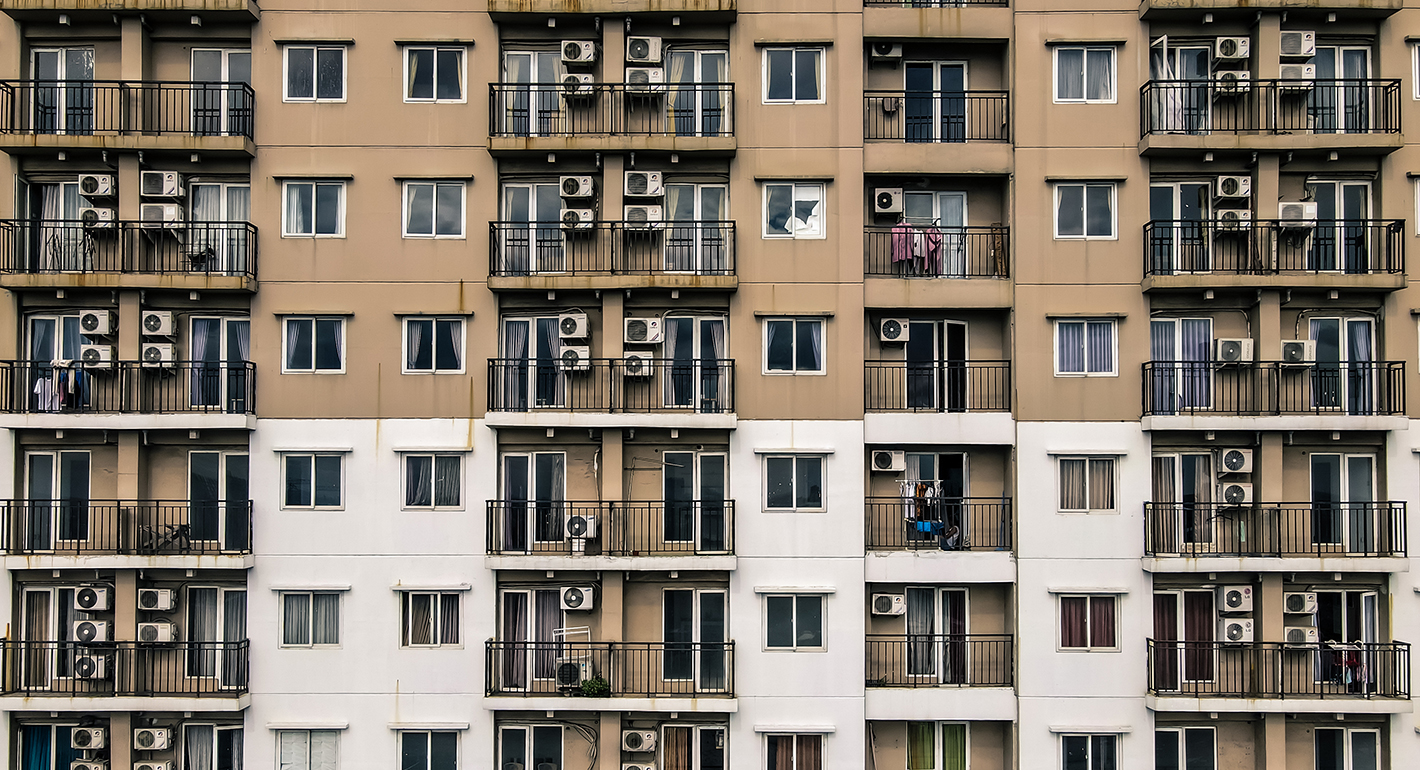
There are 1.5 billion air conditioners in use around the world today. By 2050, as incomes and temperatures rise, that number could hit 5.5 billion. The International Energy Agency (IEA) projects that from 2025 to 2035, the global increase in power demand will be primarily driven by cooling demand in emerging markets and developing economies. Most of the growth will be in the hottest regions of the world, where only a third of people currently own a cooling device. To satisfy the growth in cooling demand (which, together with heating, already accounts for around 50 percent of global final energy consumption), the world will need to add 697 terawatt hours—as much generation capacity as currently exists in Brazil, the world’s sixth-largest electricity producer.
In some regions of the world, air conditioners have historically been treated as luxuries rather than as necessities. That is an increasingly unrealistic view. In cities like New Delhi, the number of extreme heat days is expected to increase from the current rate of thirty-six days a year to forty-eight days a year by 2050. Access to cooling technology will mean the difference between life and death, not just degrees of comfort. But air conditioning comes with costs—and not just financial ones. It is electricity-intensive (and therefore fossil-fuel-intensive), it often fails to tackle humidity effectively, and air conditioner refrigerants contribute to climate change.
Access to cooling technology will mean the difference between life and death, not just degrees of comfort.
A more efficient and climate-friendly alternative to individual household investments in air conditioners is to expand district energy systems. In a district energy system, a hot or cold fluid is produced at a single, central location. It is then circulated via a network of pipes through the buildings connected to the central site. District energy requires less electricity than conventional air conditioning—in the case of district cooling, energy savings could be up to 50 percent. Such systems are more efficient at both cooling and heating buildings, including by making use of energy sources such as waste heat, which can be generated from sources including data centers or municipal solid waste processing facilities.
Rapid advances in ground-source heat pump manufacturing and geothermal drilling technology increasingly allow district heating and cooling systems to be highly effective in combination with geothermal energy. The following article takes stock of where and how district heating and cooling could prove optimal for long-term planning considerations, especially in emerging markets facing the dual challenges of urbanization and climate stress.
District energy systems offer a compelling value proposition in an increasingly warming world. District energy systems are unique in delivering on both climate adaptation and mitigation goals. In reducing power demand and associated fuel imports for generation, they also offer a unique form of energy security. Existing air conditioners are electricity-intensive and fail to effectively cool their environments in hot and humid climates—exactly where cooling demand is growing. Air conditioners must run at higher levels for longer to decrease both humidity and heat, consuming more electricity and reducing their efficacy. Moreover, the increased usage of fossil-fuel-based electricity generation to power air conditioning will only serve to exacerbate warming conditions. Between fossil-fuel-based electricity generation and refrigerants, air conditioning accounted for 3.2 percent of global greenhouse gas emissions in 2022, and this number will only increase as global usage skyrockets. Air conditioner units themselves also exude heat as part of the cooling process, exchanging cooler homes for a warmer planet.
The solution is not to discourage cooling devices. Cooling technology is an essential form of climate adaptation in many regions of the world. Without cooling technology, rising temperatures can be deadly, especially for the elderly and vulnerable. Extreme heat conditions also lead to economic disruptions. One study estimates that between 1992 to 2013, $16 trillion was lost to the effects of extreme heat. This number will only continue to grow globally. In the United States alone, loss of productivity from heat exposure is expected to grow to $500 billion by 2050. These numbers could prove more severe in countries facing weaker access to adaptive infrastructure and government capacity. The solution is to introduce alternatives that reduce load growth and help ensure that communities—especially those in the Global South—can be ready for the extreme shocks of hotter days.
District energy systems were historically developed as heating infrastructure, using pipes to distribute heat from a central location to a networked collection of buildings. Later developments utilize a similar principle to deliver chilled water for district cooling, with some systems able to support both heating and cooling simultaneously. In conventional district heating systems, different mediums are utilized to convey heat. Generation I systems use steam, Generation II systems use superheated water, and Generation III systems use hot water to carry and exchange heat. In Generation IV systems, lower-temperature water is used and both heating and cooling are possible. In Generation V systems, heat pumps are added at every building in the network, making the system more efficient.
Thermal energy networks (TENs) are decarbonized district energy systems akin to Generation V systems that combine heating and cooling. TENs draw on multiple sources of heat and move thermal energy in multiple directions between networked structures. The average TEN is three times more efficient than air-source heat pumps and six times more efficient than electric baseboard heaters, two other climate-friendly options.
Geothermal TENs use a network of geothermal boreholes and ground-source heat pumps to heat and cool homes. They have lower rates of heat loss compared to traditional district heating systems, can integrate non-geothermal heat, and store thermal energy in their boreholes. Geothermal TENs are cheaper to operate than their conventional competition. A 2021 study found that a typical Massachusetts household on a geothermal TEN could spend up to 60 percent less annually on heating compared to a similar home using a gas furnace.
How does geothermal heat provide both heating and cooling? Ground-source heat pumps are able to utilize the stability of subsurface temperatures to operate more efficiently. In cold weather, it is easier to draw heat from warm rock to a cool space than from the cold air; in warm weather, it is easier to store heat in a borehole in cool rock than in warm air. Absorption chillers, an additional technology option for geothermal TENs, can run on low-grade geothermal or waste heat (without electricity) to dissipate latent heat in water through heat transfer (using refrigerants), lowering temperatures to the point that the water can be piped through a building with a cooling effect.
Geothermal TENs can be deployed across a wide range of geological settings. For district cooling applications, there is likely a preference for permeable and porous rock formations that can improve thermal exchange efficiency. Boreholes for district-scale systems typically need to reach depths of a several hundred feet, shallow enough that conventional drilling rigs can perform the work. While the required technology builds on existing expertise, and the geological flexibility of geothermal TENs provides an advantage for scaling the technology globally, local conditions and the effectiveness of drilling operations will vary, with implications for deployment timelines and costs in regions with less-developed drilling expertise.
The first modern geothermal district heating system was invented in Boise, Idaho, in the 1890s. It still operates in expanded form today. Beginning in the 1930s, Iceland began to widely deploy geothermal for district heating. In the 1970s, in the wake of the first oil crisis, more American municipalities and European countries began to invest in geothermal district heating systems. The recent shock of Russia’s invasion of Ukraine, and the ensuing reduction in flows of natural gas to Europe, have triggered similar reactions in countries such as Germany, which plans to double its geothermal thermal capacity to 850 megawatts thermal (MWt) in 2030. While the expansion of geothermal in Europe will come from both low-temperature and high-temperature sources, the shift illustrates the slowly rising policymaking awareness of the uses of geothermal for space heating and cooling.
While geothermal district energy systems were first deployed at scale in the United States, they have historically been most common in Europe, where in 2014 there were an estimated 250 geothermal district heating systems in use. The largest system in Europe by nameplate capacity is The Hague’s 66.3 MWt network, while the most intensively used is that of Szeged, Hungary. In the United States, too, money is flowing with the temperature gradient. Geothermal district heating and cooling systems can now be found on a number of college campuses. In Framingham, Massachusetts, a natural gas district heating system was converted to geothermal heat in 2024 as part of a pilot program by the heating utility Eversource.
The largest market for geothermal district energy systems is China, where such systems can now be found in a reported seventy cities across eleven provinces. The value of investing in geothermal district energy has begun to be recognized in other parts of the developing world. The International Finance Corporation, an arm of the World Bank Group, has signed agreements to support the deployment of geothermal district energy systems in Bishkek, Kyrgyzstan, and Dushanbe, Tajikistan. It has also solicited proposals related to projects in Pakistan and Jordan.
Most development of geothermal district heating and cooling and of TENs has focused on temperate regions. To an extent, this is sensible thermodynamics. Ground-source heat is more effective when there is a significant temperature differential between soil and air, as there is in temperate regions with multiple seasons. But most population growth and cooling demand over the remainder of this century will come from the tropics or subtropics—areas without significant seasonal temperature differentials. This does not preclude the use of geothermal TENs.
In hot and humid parts of the United States, ground-source heat pumps perform well for cooling and have costs that compare favorably to those of air-source heat pumps. Other conditions, such as the presence of groundwater reservoirs that increase the differential between the ground temperature and the ambient air temperature, may increase the effectiveness of ground-source heat pumps and TENs for district cooling. Greater clarity on the precise costs and benefits will emerge as utilization proceeds.
To illustrate the countries that could benefit most from investing in geothermal TENs, we mapped population growth and warming trends to show intersections that will create opportunities for cooling networks by 2040 (see figure 1). Using data from the World Bank Group and United Nations Population Prospects, TEN potential was calculated as the product of two factors: the country’s urbanization rate in 2040 and the number of days in a year in which the heat index will exceed 35 degrees Celsius in 2040. The map clearly shows that populous, developing countries will face by far the greatest cooling demand by 2040.
The first variable included in the analysis is a heat index to indicate where temperatures are expected to be hottest. In our calculations, we used the number of days for which the heat index is projected to be above 35 degrees Celsius. The heat index is “what the temperature feels like to the human body when relative humidity is combined with the air temperature,” according to the U.S. National Weather Service. This index serves as a de facto measurement of human discomfort. When the heat index is high, there are potentially adverse consequences for human health as the body loses its ability to thermoregulate.1 The heat index therefore better captures temperatures bodies are experiencing when they are in places where deploying cooling technology is feasible: The solutions to cooling people at work in a field are fundamentally different from cooling a shopkeeper or an apartment building.
The second variable, urbanization rate, indicates the share of a country’s population living in a nation’s defined urban areas, which tend to feature higher building and population density. Higher densities of buildings and people make TENs more cost-effective because the area through which piping must be laid decreases and the number of people who can be reached at a low cost increases.
In the Global South, the process of urbanization is often characterized by initial slum settlements and then the periodic redevelopment of these informally settled areas. It can also include the establishment of new cities in densely populated metropolitan areas that are designed as integrated communities. Both of these processes lend themselves to deploying TENs. Building out TENs during a redevelopment is more economically advantageous compared to retrofitting buildings in built-up areas, which can require a developer to navigate litigation, manage multiple stakeholders, create plans to reduce local economic disruption, and offer compensation for land value.
Areas with rapid urbanization and development in the coming years will be the ideal candidates for TEN deployment, as they offer the greatest opportunity to integrate such infrastructure into new, planned development with minimal disruption and the lowest marginal cost. While national urbanization rates can serve as a proxy for site-level deployment potential, what ultimately matters is the density and scale of a development, whether a university campus, business district, or planned urban development. However, countries with an increase in urbanization rates are more likely to feature large-scale developments where TENs can be cost-effectively integrated. Urbanization rates thus serve as a country-level proxy for these conditions, while recognizing that project-level feasibility will depend on the chosen site.
By multiplying urbanization and heat index days together, we calculated a score that shows not just where there will be cooling demand but where cooling demand will be best aligned with conditions for implementing district energy solutions specifically—urbanized populations in areas more likely to feature the building density needed for district energy deployment. The darkest-red countries collectively represent the majority of the world’s population by 2040. In table 1, we display the ten most populous countries (in 2040) with the most potential for geothermal TENs cooling. These are the countries in the highest score band, where the majority of the population in need of cooling will live densely, not necessarily the countries with the greatest number of heat index days.
A few countries will be especially in need of cooling that can be satisfied through geothermal TENs. The United Arab Emirates, Oman, and Qatar will face a dire need for cooling as daily heat index temperatures cross 35 degrees Celsius for a third or more of the year. Cambodia and Thailand will face the same problem, though with less urbanization and more days of high temperatures. And in Latin America, Brazil’s and Venezuela’s overwhelmingly urban populations in 2040 will intersect with an increase in high heat index temperatures to more than double geothermal TEN potential compared to today. In other parts of the world, especially South Asia and West Africa, making district cooling accessible will help to solve pressing development challenges—ensuring heat waves do not shave percentage points off of GDP—even at lower urbanization rates than other high-TEN-potential countries. The precise critical mass of buildings required for a geothermal TEN to be viable varies between climates, geologies, and local cooling needs, so site-level feasibility assessments will be a necessary part of the planning process.
An important dimension of meeting cooling demand that is not captured by our mapping is a country’s subsurface or geothermal-specific permitting regime. For geothermal development, permitting regimes that either permit subsurface drilling to access water sources for thermal transfer with minimal regulation or permit geothermal drilling under tailored environmental impact and review schemes are a significant plus compared to fragmentary, nonspecific, or nonexistent drilling regulatory schemes.
In our July 2025 paper, “Unlocking Global Geothermal Energy: Pathways to Scaling International Deployment of Next-Generation Geothermal,” we identified the optimal permitting regimes for geothermal development for electricity generation. While this is not a one-to-one match with district heating and cooling needs, many of the elements of our analysis are transferable. Several of the countries we highlighted as having favorable permitting regimes—the Philippines, Mexico, and Colombia among them—are also high potential areas for geothermal TEN development, which opens the door to synergy between projected demand and ease of development, as tailored permitting regimes reduce construction costs and financial risk.
Currently, the only operational geothermal district cooling project in the Global South is in Abu Dhabi, where the Emirati companies ADNOC and Tabreed have added geothermal district cooling to G2COOL, the district cooling network in Masdar City. Water from two geothermal wells is run through an absorption cooling system to meet 10 percent of the development’s cooling demand. In Saudi Arabia, the healthcare company Naba Alsaha and geothermal cooling company Strataphy are reportedly partnering on the development of a geothermal cooling network for a planned hospital complex.
In Latin America, several thermal districts are under development in Colombia as part of initiatives like the Global Energy Districts Program (GEDP), a UN Industrial Development Organization initiative that was launched in Colombia and is funded by Switzerland. GEDP aims to deploy urban and industrial-scale thermal energy districts that interconnect buildings for heating and cooling, integrating production, recovery and supply systems, and achieving energy efficiency gains of 30–50 percent through renewable‑energy‑driven district energy systems. The scope of the project includes an initial pilot in Medellín, followed by four other developments across key cities. Colombia’s program is a notable example of bilateral coordination and investment to spur district energy development, something that could be considered for future work.
In Southeast Asia, progress is being made on exploring geothermal for cooling needs. Scientists in Singapore recently announced the discovery of high geothermal resource potential at the country’s northern Sembawang site, which researchers have suggested could be utilized with existing district cooling technologies. In Bali, Indonesia, a U.S. firm and an Indonesian company have reported plans to develop a district heating and cooling system using advanced geothermal technology. The Danish Board of District Heating has also reported that Thailand is exploring the possibility of using geothermal for district cooling in some areas.
Ensuring that district energy systems can permeate equitably across these key nations will require a multifaceted approach that blends strategic urban planning, access to multilateral development finance, and exchange of know-how from key countries that have developed and innovated district energy systems at their present scale.
The first step to a larger-scale deployment of district energy systems would require increased awareness of their inherent value proposition. These district energy systems, when powered by geothermal heat, are ideal solutions to address mitigation, adaptation, and energy security goals. Potential first movers for this space will likely be high-density, integrated building systems like airports, convention centers, business districts, and university campuses. While residential district energy systems are high opportunity targets, especially for a large-scale new urban development, the complexities of managing such stakeholders render it an unlikely pilot program for the Global South. More effort should hence target the first movers for district energy systems buildout, through measures such as targeted information campaigns and knowledge-sharing programs.
Urban planners in countries new to district energy systems would benefit from knowledge-sharing exchanges with those countries that have long histories of district energy deployment. Such exchanges are not novel, and are already used to facilitate deployment in the Global South: The well for the G2COOL project in Abu Dhabi was drilled by an Icelandic firm, and Switzerland has supported district energy systems in Colombia. For a larger-scale deployment of district energy, there needs to be increased bilateral partnerships and investment pathways to facilitate integrating district energy into urban planning and development agendas for the Global South.
Encouraging such investments may be tricky from the outset: Many banks and project finance entities shy away from geothermal projects because of their unfamiliarity with project economics. A similar funding hesitancy exists for urban redevelopment plans, which may bear political risks. Multilateral regional development banks, revolving loan funds, and sovereign wealth funds should be open to underwriting geothermal district energy as part of future urban planning investments. Geothermal district energy systems do not significantly increase costs for wholesale redevelopment or virgin land development projects, can align with environmental objectives, and support the long-term livability of urban areas. But different financing models will be necessary for different geothermal TEN build-outs. For example, drilling boreholes leads to higher up-front costs for a district energy system, but lower operating costs. Detailed cost data for geothermal TEN deployment, including how the technology might change the cost-benefit calculus of new developments such as a university campus, are largely not publicly available. Greater transparency on project-level economics will help development finance institutions and urban planners assess the viability of such developments and help structure investment pathways.
Greater transparency on project-level economics will help development finance institutions and urban planners.
Finally, national governments need to invest in subsurface mapping to build out a knowledge bank that can be used to assess the viability and uses of geothermal boreholes for direct use.
Ultimately, geothermal-powered district energy remains a niche, emerging technology today, with a handful of operational projects worldwide. While nascent, it is clear that the underlying factors driving such projects’ adoption will only continue to grow in the coming years. This technology uniquely addresses a dual function of meeting both climate mitigation and adaptation goals, while also enhancing a nation’s energy security. To ignore its potential would be a missed opportunity for the Global South.

PhD Candidate, University of California, Berkeley
Daevan Mangalmurti is a PhD candidate in political science at the University of California, Berkeley. He was a James C. Gaither Junior Fellow at CEIP in the Sustainability, Climate and Geopolitics Program from 2024–2025.

Research Assistant, Sustainability, Climate and Geopolitics Program
Debbra Goh is a research assistant in the Sustainability, Climate and Geopolitics Program.

Fellow, Sustainability, Climate, and Geopolitics Program
Milo McBride is a fellow in the Sustainability, Climate, and Geopolitics Program at the Carnegie Endowment for International Peace.
Carnegie does not take institutional positions on public policy issues; the views represented herein are those of the author(s) and do not necessarily reflect the views of Carnegie, its staff, or its trustees.

Despite its flop at the box office, the film raises important questions for the climate community to answer.

Leonardo Martinez-Diaz

A deep dive into the policy ecosystems behind battery development in China, South Korea, Japan, the European Union (including some of its member states), the United States, Canada, and India.


Milo McBride, Herbert Crowther, Darcie Draudt-Véjares, …
They face an uphill climb, but they could draw on a strategy that other diplomats have used in the past.


Shana Tabak, Alejandro Martin Rodriguez

Understanding the climatic pain points is necessary for policymakers hoping to minimize the war’s negative environmental consequences.


Alejandro Martin Rodriguez, Joy Arkeh, Sarah Yerkes
Congress needs to step up and make EXIM a low-carbon financing powerhouse.

Jesse Young