

Q&A
- +1
Amr Hamzawy, Andrew Leber, Eric Lob, …
Source: Getty
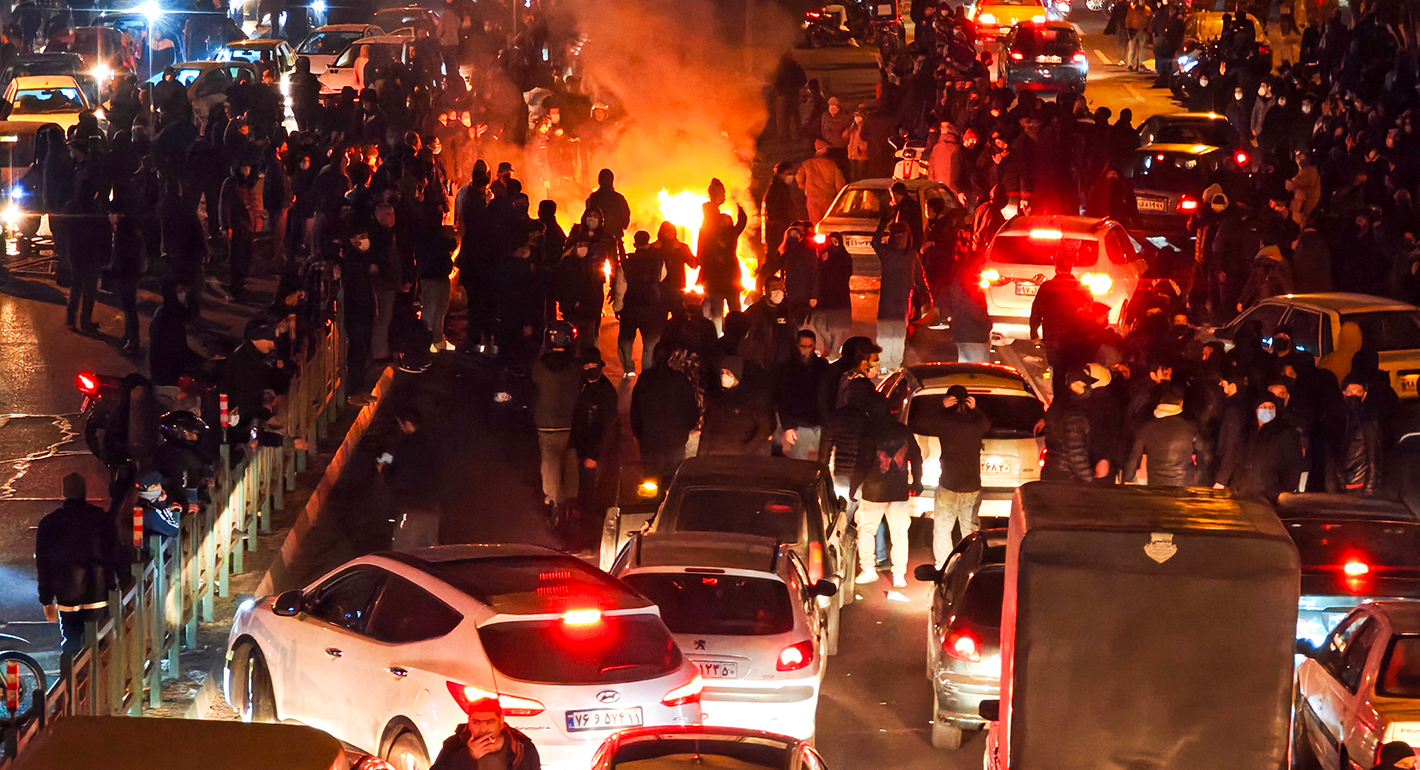
Protests in Iran follow a similar pattern: Economic grievances turn into political protests that spread nationwide. But increased state repression has begun to shift the arrangement.
Between late December 2025 and January 2026, protests erupted in Iran. They began over economic grievances in Tehran before swiftly becoming politicized and spreading to other cities around the country. The protests were the largest since the 2022–2023 Woman, Life, Freedom protests and perhaps those of the Iranian Revolution in 1979 when the shah was forced to flee Iran and when the Islamic Republic was subsequently established.1 During and after this year’s protests, the Islamic Republic has confronted a serious legitimacy crisis and significant international pressure, including threats from U.S. President Donald Trump of military intervention that culminated in the American and Israeli war against Iran that started in February 2026.2
As in the past, the Iranian regime responded to the protests by resorting to repression, including internet blackouts and mass arrests. It did so in an unprecedented manner through a crackdown that caused massacres of civilians.3 The statistics of the dead, wounded, and arrested were staggering and far exceeded those of previous protests.
However, similar to the past, the protests were provoked by economic issues. Particularly since 2017, these issues instigated Iranians to take to the streets and participate in periodic protests. The regime consistently responded to the protests with repression while making cosmetic concessions to appease angry citizens. This repression was the byproduct of political and military elites stopping at nothing to preserve their prodigious power and wealth, starting with the late supreme leader and revolutionary guardsmen. It also instilled outrage in Iranians and inspired them to organize and join future protests. Without substantive and systemic change, the cycle of protest and repression is likely to continue. All indications suggest the regime has not only survived the current conflict but has also emerged stronger from the war in some ways, with the supreme leader’s son supposedly in charge and the Islamic Republic’s newfound control of the Strait of Hormuz.4
Understand the world with the latest from our scholars around the world.
Starting in 2017, Iran’s economic issues ignited episodic protests. These issues included increased inflation, drastic currency devaluation, and elevated unemployment. Iranians blamed these problems not only on economic sanctions and regional conflicts but also on government mismanagement and corruption. According to Transparency International’s Corruption Perceptions Index, Iran ranked 151 among 180 countries by perceived level of public sector corruption, with a score of 23 out of 100 (where a lower score correlates to higher corruption).5
Many protests followed a familiar pattern by erupting in one city over economic grievances and then expanding to other cities with politicized slogans and popular demands for regime change. They included the protests in 2017–2018 over the state’s economic policies, those in 2018–2019 over difficult living conditions, the ones in 2019–2020 over fuel prices, and those in 2025–2026 over rising inflation and record devaluation. Demonstrations against the compulsory hijab law in 2017–2019 and the protests in 2022–2023 over the dress code and police brutality were outliers since they were provoked by noneconomic problems.6 In the latter instance, Iranians took issue with the killing of a young Iranian Kurdish woman named Jina Mahsa Amini by the so-called morality police for purportedly improperly wearing the hijab.7 Except for those two movements, every protest since 2017 was provoked by economic problems.
These recurring protests showed that the state suffered a serious legitimacy crisis and that Iranians had lost trust in their political institutions. In the 2017 presidential election, which secured a second term for the reformist or centrist president, Hassan Rouhani (who served 2013–2021), voter turnout was above 73 percent.8 In the next two elections, which brought to power the ultraconservative president, Ebrahim Raisi (2021–2024), and then the reformist one, Masoud Pezeshkian (2024–present), that turnout dropped to historic lows of around 49 percent in 2021 and 40 percent in the first round in 2024.9 Such low turnout levels demonstrated that Iranians were equally disillusioned with conservative and reformist elites and highly skeptical of their capacity to solve the country’s political, economic, and social problems. Instead of voting, Iranians opted to organize and join periodic protests.
Instead of voting, Iranians opted to organize and join periodic protests.
Between 2017 and 2026, protesters blamed their economic issues on government mismanagement and apparent corruption by individuals and institutions across the political spectrum, starting with the late supreme leader Ali Khamenei and the Islamic Revolutionary Guard Corps (IRGC). They also blamed state spending, international sanctions, and economic instability—which were the consequence of Iran’s intervention in regional conflicts and its support for quasi- or non-state actors in Iraq, Lebanon, Palestine, Syria, and Yemen. During this period, protesters increasingly chanted slogans that supported Reza Pahlavi, the son of the deposed shah and a political dissident in exile.10 While Pahlavi remains a prominent figure among certain circles of the Iranian diaspora, the level of popular support for him and the cohesiveness of his political movement inside Iran remain uncertain.11
Demographically, from 2017 to 2026, the protesters primarily consisted of young working-class men with an increasing share of Iranians of other ages, genders, and classes, including merchants and professionals. Contrary to the urban middle-class demonstrations of the 2009 Green Movement, the protests during this period, particularly those in 2017–2018 and 2019–2020, were more diverse when it came to class and social composition.12 They included both the educated and unemployed, frustrated lower-middle-class and poor youth, and other residents of urban slums, settlements, and shanty towns. Geographically, the protests were characterized by a wider scope in the sense that they were not confined to the cities; they also included towns and villages.
The protests did not always possess a clear and absolute beginning or end, especially between 2017 and 2020. Rather, they were often followed by smaller protests and strikes before increasing in size and intensity again during the next economic crisis. The relative continuity, longevity, and persistence of the protests were a byproduct of political elites being unwilling and unable to improve the situation. They were also the outcome of residual grievances, anger, and outrage among the public as these elites resorted to greater repression to suppress the protests.
At times, the protests, particularly those in 2017–2018, were provoked and exacerbated by intra-elite factionalism and attempts by certain leaders and officials to embarrass and undermine their rivals. However, when the protests became more widespread and threatening to the ruling system (nezam), with episodes and incidents of rioting and violence, the elites confronted them from a unified position by closing ranks, even if reformists or centrists occasionally condemned state repression and adopted a conciliatory tone toward the protests. Regardless, the protesters did not differentiate between conservatives and hardliners, on one side, and reformists and centrists, on the other. If anything, they were just as disappointed with the reformists and centrists, if not more so, for failing to deliver on their promises of political and socioeconomic change (though delivering was difficult given the disproportionate power of the conservatives and hardliners).
Between 2017 and 2026, the Islamic Republic’s growing legitimacy crisis was corroborated not only by lower voter turnout, but also by its rising repression of protests that were occurring with greater frequency and intensity. This repression by the regime was the result of political and military elites led by Khamenei and the IRGC refusing to relinquish power and wealth. After serving as the third president of Iran (1981–1989), Khamenei was the supreme leader for thirty-seven years. Since the shah, he was the head of state for the longest period not just in Iran, but the Middle East. In this capacity, he commanded the armed forces; appointed the head of the judiciary; supervised the state media, the Islamic Republic of Iran Broadcasting (IRIB); and possessed a parallel advisory body called the Expediency Discernment Council.13 Through the Guardian Council, he vetoed parliamentary legislation and vetted candidates for presidential and parliamentary elections, not to mention those for the Assembly of Experts, which appoints and oversees the supreme leader.14
Beyond preserving political power, Khamenei had incentives to put down the protests to protect the prodigious assets under his control. Setad-e Ejrai-ye Farman-e Hazrat-e Emam, a quasi-state organization that was under his direct control, manages assets in real estate, oil, telecommunications, and finance, among other industries, and was estimated to be worth $95 billion in 2013.15 The assets under Khamenei’s control also accrued through religious foundations (bonyad), charitable trusts established by the shah. Over time, they became opaque conglomerates that operated in sectors such as business and real estate, and they increasingly benefited the wealthy instead of the poor. Demonstrating continuity before and after the revolution, they ultimately answered to the supreme leader as they had the shah and lacked any financial transparency or governmental oversight while benefiting from state subsidies and tax exemptions.16 Since the foundations under Khamenei could earn these special privileges, they swiftly became a source of public scrutiny and scorn.
Like their pre-revolutionary predecessors, the foundations under Khamenei offered less charity to the poor and morphed into parastatal and private monopolies in sectors such as manufacturing, trade, and real estate. In the process, they created market inefficiencies and distortions, alongside obvious government corruption, and crowded out the private sector. The largest one, worth billions of dollars, is the Mostazafan Foundation.17 The Astan Quds Razavi is also massive and wealthy as the manager of the Imam Reza Shrine in Mashhad with large land holdings and commercial assets.18 The foundations control an estimated 20 to 50 percent of GDP and provide welfare and employment to millions of people.19
As with Khamenei, the IRGC ruthlessly repressed protests for political and economic reasons. Particularly under the hardline president Mahmoud Ahmadinejad (who served 2005–2013), the IRGC played an increasingly prominent role in politics and the economy. During his presidency, it solidified and expanded its presence inside the cabinet, bureaucracy, and parliament. Under the guise of privatization and as stipulated by Article 44 of the constitution,20 the government approved the sale and transfer of state-owned enterprises and other assets to the IRGC. In the process, the IRGC accumulated an expansive and diverse portfolio of corporations.
In the end, the IRGC has evolved into a multibillion dollar commercial and industrial empire with enormous economic wealth and political clout.21 While the religious foundations have remained under the purview of the supreme leader, some are headed and influenced by the IRGC.22 Through a series of subsidiaries and trusts, the IRGC has a stake of somewhere between 10 percent and over 50 percent of GDP.23 It has earned billions of dollars in revenues and contracts in sectors such as construction, energy, infrastructure, and telecommunications.24 The IRGC’s engineering firm, Khatam al-Anbiya (Seal of the Prophet) Construction Headquarters, has become a primary contractor for large-scale government projects in industries that include agriculture, infrastructure, mining, petroleum, and transportation. It employs tens of thousands of people, manages thousands of projects, and has registered hundreds of companies inside and outside Iran.25
Iran’s economic crisis was years in the making, but 2017 was a critical juncture. In June, Iranians elected Rouhani to a second term. During his first term in 2015, Tehran had signed the Iran nuclear deal, called the Joint Comprehensive Plan of Action (JCPOA), with the five permanent members of the UN Security Council, including the United States, plus Germany. The JCPOA offered Iran sanctions relief in exchange for nuclear restrictions. That year, Iranians celebrated in the streets with the belief that the economic future would be brighter.
Rouhani’s reelection campaign promised to build on the JCPOA by strengthening the economy and pursuing a conciliatory foreign policy toward the United States. After his reelection, many Iranians, especially those who were educated and unemployed, became disillusioned with Rouhani for failing to deliver on his promise.26 Following the signing of the JCPOA, they expected greater prosperity from sanctions relief.27 Instead, Iranians struggled economically, with the highest poverty rate in four decades at over 42 percent and with the income gap between the rich and poor widening.28
Moreover, most of the economic benefits from the JCPOA did not trickle down to ordinary Iranians. Rather, they went to the state and parastatal entities under the purview of Khamenei.29 As with other presidents, Rouhani’s ability to effect political and economic change was constrained by Khamenei and his praetorian guard, the IRGC. Starting in his first term, Rouhani tried to reduce the IRGC’s extensive role in the economy. To this end, he and his government withheld contracts from the IRGC and canceled the controversial sale of the state-owned telecommunications company to the organization.30 However, Rouhani was unable to force the IRGC to sell its sizeable assets due to resistance from Khamenei, who prioritized preserving its loyalty.
As with other presidents, Rouhani’s ability to effect political and economic change was constrained by Khamenei and his praetorian guard, the IRGC.
On December 28, during the Iranian month of Dey, protests started in Mashhad (the second-most-populous city in the country) and quickly became the largest since the campaign led by the Green Movement following Ahmadinejad’s fraudulent reelection in June 2009.31 The Dey protests were sparked by popular discontent concerning government corruption and economic hardship—especially the sudden and sharp rise of food prices—exacerbated by international sanctions and Iranian intervention in conflicts in Iraq, Lebanon, Palestine, Syria, and Yemen.32 The protests seem to have been provoked by conservative and hardline politicians, who blamed Rouhani for the crisis and tried to turn the public against him.33 As an unintended consequence, the protests subsequently spread to other cities and grew to challenge the entire establishment.
Prompted by economic grievances, the protests were chiefly composed of workers under the age of twenty-five.34 As such, the protesters used slogans that complained of economic hardship, income inequality, and government mismanagement and corruption, with some participants chanting “people are paupers while the mullahs live like gods.”35 Iranians expressed outrage over the proposed cuts to cash and fuel subsidies in the 2018 state budget.36 Consequently, they chanted “we regret (our vote for Rouhani)” in cities across the country. Iranians were also angered that the state spent substantial sums of money on proxies and partners in the region rather than on social programs inside the country. Finally, they were frustrated that the funding for the IRGC remained high and the religious foundations’ budgets increased.37 Prior to the protests, Rouhani had complained about more public funds being allocated to the foundations.38
The protests soon spread to other cities and became politicized with some slogans that sought the removal of the reformist government and supreme leader.39 Other slogans supported the return of the prerevolutionary monarchy, as Pahlavi posted messages on social media supporting the protests.40 They turned violent with attacks and arson against banks, mosques, government buildings, police stations, and military installations.41 The protests prompted an internet shutdown and state repression that resulted in twenty-some deaths and at least 3,700 arrests by the time they largely subsided on January 7, 2018.42
Between April 2018 and May 2019, after the 2017–2018 movement ended, smaller protests and a general strike occurred in sites around the country, including the major marketplaces such as Tehran’s Grand Bazaar, over the economic and political situation.43 As with the previous protests, from which outrage over state policy and repression continued, these protests and the strike endeavored to end economic hardship, combat government corruption, and inhibit Iranian intervention in regional conflicts that increased international isolation and economic instability.44 They specifically sought to reduce inflation for Iranians and increase the salaries and improve the rights of teachers and transportation workers.45 The regime again responded to the protests and strike by killing and arresting dozens of people.46
After the 2018–2019 protests and strike ended, the 2019–2020 protests started in November (the Iranian month of Aban). Their immediate cause was a fuel price hike that the government announced on November 15.47 The price rose from 10,000 rials per liter ($0.90 per gallon) for up to 250 liters a month to 15,000 rials per liter ($1.35 per gallon) for the first 60 liters and 30,000 rials per liter ($2.70 per gallon) after that amount, for a total increase of 50 to 200 percent.48 The state posited that the purpose of the policy was to reduce the budget deficit and fund subsidies and distributions to millions of Iranians. At the same time, and as acknowledged by Khamenei himself, the inflationary impact of the increase, combined with the pre-existing and parallel currency devaluation and high inflation, offset most, if not all, of the gains for families.49
During the protests, an Iranian parliamentarian stated she had not deliberated or voted on the increase.50 She criticized the supreme leader and other officials for making the decision without consulting the Islamic Consultative Assembly (also called the Majles).51 She also condemned the state for being unsympathetic to Iranians, particularly low-income ones, and for subjecting them to hardship and repression.52 Such statements contradicted the state’s populist and pious slogans of serving the oppressed and dispossessed (mostazafin va mahrumin)—which have been ingrained in the Islamic Republic’s ideology and identity since its inception.53
As with the protests in 2017–2018 and 2018–2019, the ones in 2019–2020 were inspired by underlying economic issues before becoming politicized with criticism of the state and calls for regime change. These issues included increased inflation, elevated unemployment, and low wages and pensions. They worsened with Trump’s withdrawal from the JCPOA and his reimposition of sanctions against Iran under the guise of maximum pressure on May 8, 2018. Afterward, Iran experienced elevated inflation.54 That month, the inflation rate was 9.7 percent. Between August 2018 and November 2019, when the protests began, the rate fluctuated from over 20 to 50 percent, reaching a high of 52 percent in May 2019. During the year leading up to the protests, persistent inflation pushed an estimated 500,000 to 1.6 million Iranians into poverty.55 This figure was confirmed by reporting from one of the regime’s own religious foundations, the Imam Khomeini Relief Foundation, a charitable organization that ostensibly assists the poor inside and outside Iran.56
Amid high inflation and other hardships, Iranians were resentful of the economic privileges that political and military elites received from parastatal foundations and corporations that were privy to tax exemptions and government contracts. In September 2019, two months before the protests started, an Iranian parliamentarian claimed that through such opaque entities, Khamenei and the IRGC controlled 60 percent of the economy.57 Regardless of its accuracy, the statement reinforced public perceptions of government corruption.
As in 2017–2018, the initial impetus for the protests was economic, with citizens expressing outrage over the government’s gasoline rationing and fuel price hike. The protests again started in Mashhad before spreading to more than one hundred other cities around the country.58 They quickly became politicized against Rouhani and Khamenei.59 As with the previous protests, Iranians criticized the state for spending money on regional conflicts while citizens struggled economically.
Some Iranians shouted slogans supporting the return of the shah’s son, who, once again, encouraged the protests from exile, as the security forces arrested monarchists (and by doing so admitted to their popularity).60 As had happened the previous year, some protesters purportedly set fire to military bases, government buildings, and banks.61 After their height in November, the protests persisted until July 16, 2020, albeit at lower levels of frequency and intensity, and Iran’s economic issues were further exacerbated by the COVID-19 pandemic and environmental crisis. As in the past, Iranians considered government mismanagement, corruption at home, and a confrontational posture and policy abroad as the central causes of these economic issues.
As the regime had done during the previous protests, it subdued and suppressed the movement by imposing an internet blackout that lasted for one week.62 It also relied on extensive repression that resulted in approximately 1,500 deaths and more than 7,000 arrests, according to Iranian officials.63 In the process, and under the orders of Khamenei, the security forces were particularly punitive and vindictive.64 They deliberately shot protesters in the head with machine gun fire at close range and from helicopters and rooftops.65 In addition to arresting the injured at hospitals, the security forces carried away corpses from the streets and morgues, with the apparent aim of concealing the casualty count.66 They also attempted to pay off families of the deceased to discourage them from talking to reporters.67 Even after the protests, the security forces continued arresting citizens, including activists, journalists, and students, following a pattern from their response to the prior movements.68
After the 2019–2020 protests concluded, sociopolitical grievances drove the 2022–2023 Woman, Life, Freedom protests. They started after Amini died in police custody after allegedly violating the national dress code. Raisi’s ultraconservative government had reimposed religious restrictions, including more stringently enforcing the mandatory hijab law. While the initial impetus for the protests was sociopolitical rather than economic, they also spread around the country and prompted the regime to respond with repression in the form of a government crackdown that caused at least 551 deaths and 19,262 arrests.69 After these protests, the number of executions steadily increased and doubled between 2024 and 2025.70
Between the time the Gaza war started in October 2023, and the Twelve-Day U.S.-Israel-Iran War transpired in June 2025,71 Iran continued to encounter economic adversity, with the inflation rate remaining above 30 percent.72 Due to the economic uncertainty and the currency devaluation of approximately 40 percent caused by the Twelve-Day War, inflation increased further from 39.4 percent in June to 42.4 percent in August. The Islamic Republic attempted to negotiate a nuclear deal with the United States and persuade the EU states to refrain from implementing snapback sanctions for enriching uranium at levels that exceeded those required for a peaceful nuclear program, but diplomatic efforts failed.73 After the EU states went ahead with the sanctions in September 2025, inflation increased even further from 45.3 percent that month to 48.6 percent in October.74
At the end of 2025, the snapback sanctions had been in place for several months, and Iran experienced an unprecedented rise in the exchange rate and a dramatic depreciation of the currency, which reached a record low of 1.45 million rials per U.S. dollar in December.75 Consequently, food prices precipitously rose by 72 percent, while health and medical prices rose by 50 percent.76 As prices soared, merchants and shopkeepers were unable to sell their products to strained and stressed consumers.
Apart from adversely affecting domestic consumption, the drastic currency devaluation and exchange rate volatility made it difficult for many merchants and shopkeepers to continue their economic activities, such as securing supplies and setting prices.77 These individuals worried that the declining value of the rial and rising exchange rate with the dollar, coupled with general market instability, would bankrupt their businesses. As in the past, they considered the culprit of their challenges to be government mismanagement, particularly as it pertained to fiscal and monetary policy, alongside international sanctions. To manage these challenges, they demanded that the government intervene to provide financial assistance, stabilize the exchange rate, and reduce market volatility and economic pressure precipitated by international sanctions and regional conflicts.78 They specifically called for the adoption of a single exchange rate and stronger money supply controls.79
Iranian merchants and shopkeepers also opposed the state’s proposed budget, which sought to raise taxes in response to a bloated budget deficit from declining oil revenues caused by conflict and sanctions. Alongside the merchants and shopkeepers, other citizens were equally concerned and enraged by the proposed budget, as was the case in 2017–2018, while they struggled to survive and make ends meet amid record devaluation and runaway inflation levels. To add insult to injury, the revenues from the tax increase would be used to fund foundations and other institutions affiliated with the supreme leader and IRGC—which already received tax exemptions.
Against the backdrop of this economic adversity, on December 27 (almost the same date that the Dey protests started in 2017–2018), the merchants and shopkeepers in Tehran’s markets and commercial centers participated in protests and went on strike.80 It was significant that the protests and strike were started by the merchants and shopkeepers because they had tended to be conservative and cozy with the state, at least before the protests and strike of 2018–2019. It was also significant because this same segment of society had helped mobilize public support against the shah during the revolution in 1979. Several days into the protests and strike, on December 31, the government appointed a former economy minister to serve as the new central bank governor after the former one resigned.81 However, the measure did not appease the merchants, shopkeepers, or other Iranians, for that matter.
Within days, what started as economic protests concentrated in the capital swiftly spread to other cities and became increasingly politicized. Similar to the previous protests (with the exception of Woman, Life, Freedom), young men played a prominent role in the 2025–2026 movement.82 University students and other protesters in and outside Tehran chanted slogans against Pezeshkian’s reformist government and Khamenei’s state system. They also called for more freedom, less interventionism, and regime change.83 Some attacked and burned state symbols (including flags, mosques, and statues), police stations, and government buildings.84 Others chanted slogans supporting the return of the monarchy under Reza Pahlavi. On January 8, Pahlavi himself called on ostensibly leaderless activists and other citizens to protest.85 That evening and the following day, several million Iranians supposedly came to the streets of Tehran and other cities across the country.86
What started as economic protests concentrated in the capital swiftly spread to other cities and became increasingly politicized.
As with the low voter turnout during the 2021 and 2024 presidential elections, the slogans and demands of the 2025–2026 protests demonstrated that Iranians did not distinguish between reformist and conservative/hardline leaders and officials. Rather, they believed all of them were responsible for the country’s political, economic, and social problems. Along with demanding the deposal and death of Khamenei, Iranian protesters rejected Pezeshkian’s offer of dialogue while he recognized their right to peacefully protest.87 They were resigned to his inability to restrain the security forces and reverse the internet blackouts—even as his son urged the regime to restore connectivity.88 The blackouts disrupted not just the protests, but also the economy and society by preventing the functioning of banks, bureaus, businesses, hospitals, and pharmacies.89 Iranians also dismissed Pezeshkian’s plan to reform foreign-exchange subsidies as a ploy to pacify protesters instead of supporting stressed consumers.90 Additionally, they doubted that his government’s distribution of monthly payments to citizens in the amount of $7 would alleviate or offset the skyrocketing inflation and currency devaluation and deteriorating living conditions.91
Before and during the protests, Iranians criticized Pezeshkian for failing to deliver on his campaign promises to provide good governance on critical issues like the economy and environment. During his presidency, Pezeshkian conceded he could not do much to solve the country’s economic challenges.92 He also responded to a historic drought caused by the climate crisis by cutting electricity and water and by considering an evacuation of the capital, causing citizens to view him with greater discontent and distrust.93 Many Iranians blamed the crisis on mismanagement and inefficiency rather than sanctions and other factors.94
At the start of the protests, Iranian leaders and officials, including Khamenei himself, rhetorically validated protester grievances and singled out rioters.95 However, protesters expressed their distrust of the regime and perceived its pleas for dialogue as deceptive and self-serving.96 As the protests grew, Khamenei and other leaders and officials took a more threatening tone. They referred to protesters as foreign-backed terrorists and vandals and promised to punish them with the death penalty.97 As in the past, officials also portrayed the protests as a plot by the United States and Israel to destabilize Iran.98 They did so seemingly to delegitimize protesters and incentivize the security apparatus to show less restraint in repressing them.99 After the Pahlavi-inspired protests on January 8 and 9, the regime transitioned from disrupting to throttling the internet and telecommunications.100 It seemingly did so to prevent demonstrators from further mobilizing and coordinating through social media and to limit the amount of information about the protests circulating inside and outside the country, particularly as the regime became more repressive.
As the protests continued, the regime again resorted to brute force, first using tear gas to disperse demonstrators, then arresting, beating, and firing on protesters.101 After the internet blackout starting on January 8, the security forces significantly increased their use of live ammunition against protesters, leading to thousands dead or wounded within hours and days.102 As such, streets and morgues were filled with dead bodies while hospitals were inundated with injured patients suffering from gunshot wounds.103 Although a complete and accurate picture was unavailable due to ongoing internet and telecommunications outages by the state, a human rights organization reported that, as of February 15, at least 7,015 people were killed (including 6,508 protesters and 226 minors under eighteen years old) while 25,845 civilians were injured and 53,552 were arrested (including 144 students)—figures that far exceeded past protests.104
The regime’s tactics this time were even more indiscriminate, brutal, punitive, and vindictive. Aside from using live ammunition that littered the streets with dead bodies and overwhelmed hospitals with injured individuals, the security forces blinded hundreds, possibly thousands, of citizens by shooting them in the eyes, apparently deliberately.105 To add insult to injury, the regime required the families of dead protesters to agree to repeat its revisionist narrative of the protests before receiving the body for burial.106 It reportedly expanded the ranks of the security forces by recruiting nearly 5,000 Shia militia fighters from Iraq.107 It purportedly paid them $600 each to join the security forces and repress the protests, perhaps in an attempt to reduce the risk of defections (since foreign fighters presumably have fewer qualms about killing Iranians).108 Like the regime’s narratives about the protests being a foreign conspiracy, and regardless of the accuracy of such reports, they defined the discourse of dissidents to discredit the state for depending on outsiders to suppress dissent.109
After the protests ended on January 16 with a bloody and brutal crackdown by the regime (for which Pezeshkian publicly apologized on February 11),110 they resumed in cities like Tehran and Mashhad for several days starting on February 21.111 The protests were organized and led by university students, on their campuses and at the memorials of protesters who were slain by the state in January and whose deaths were being mourned for forty days.112 They used the same slogans and chants that opposed the supreme leader and supported Reza Pahlavi.113 The regime again responded with repression, as the security forces clashed with student protesters.114
The regime’s severe repression of the 2025–2026 protests could be because it faced far more international pressure than it had during the previous protests. It also confronted increased strain from political and economic factors, including Khamenei’s succession, low voter turnout, and high inflation and currency devaluation. Since the end of the Woman, Life, Freedom protests and the start of the Gaza war in 2023, Iran found itself increasingly isolated, and its regional proxies and partners in the Axis of Resistance, including Hamas and Hezbollah, were being degraded by Israel and the United States. Iran’s isolation further intensified after the fall of the Bashar al-Assad regime in Syria in December 2024.115
In 2024 and 2025, the Islamic Republic’s new phase of direct confrontation with Israel and the United States subjected Iran not just to more sanctions, but also to military strikes on its own soil, culminating in the devastating Twelve-Day War in June 2025. The conflict killed at least a dozen nuclear scientists and senior commanders, claimed the lives of 1,190 people, and wounded and displaced thousands more.116 Iranians feared the renewal of conflict between Iran, Israel, and the United States, which added to economic uncertainty and market instability inside the country.117
Any rally-around-the-flag effect the war may have created rapidly dissipated with the 2025–2026 protests. Protesters again partially attributed the country’s economic challenges to its intervention in regional conflicts.118 As in the past, these protests utilized chants such as “Neither Gaza nor Lebanon, I will sacrifice my life for Iran.”119 By chanting such slogans, protesters criticized the regime for prioritizing proxies like Hamas and Hezbollah over the population’s needs.120 They also blamed these organizations for subjecting Iran to more sanctions over what the United States and its allies and partners have perceived as nefarious and expansionist activities in the region.
After the protests started, Trump attempted to exert greater pressure on the Islamic Republic by threatening to attack it again if it reconstituted its nuclear program and repressed peaceful protesters.121 He also claimed that help was on the way while calling on Iranian citizens to come to the streets and take over state institutions—which some protesters interpreted as a call to attack police stations and government buildings.122 Although Trump’s remarks inspired Iranians to demonstrate, they also reinforced the regime’s delegitimizing narrative that protesters were foreign agents.
Some Iranians took seriously Trump’s promise to come to their rescue during the protests. They believed his statements that he would be willing to intervene. After all, during the Twelve-Day War, he had approved Israeli airstrikes against Iranian military and nuclear personnel and infrastructure, as well as deployed American B-2 bombers and bunker busters to bomb three Iranian nuclear sites.123 Several days into the protests on January 3, Trump ordered the U.S. military to capture a longtime ally of the Islamic Republic, Venezuelan president Nicolás Maduro.124 The operation affected the Iranian situation in two ways. First, it emboldened Iranians to join the protests in the hope that Trump would intervene in Iran just as he had done in Venezuela. Second, it caused the Iranian regime to perceive the protests as a serious, if not existential, threat and to crack down on them harder than ever.
As the uprising and repression continued into mid-January, it seemed Trump was going to take military action against Iran when he evacuated U.S. personnel from Al Udeid Air Base in Qatar, the largest base in the region.125 However, he subsequently backed off due to a lack of preparedness (though he claimed he had convinced Iranian officials to refrain from executing 800 protesters on death row—a story the officials vehemently denied in terms of Trump restraining them from executing protesters).126 Regardless of the truth, Iranians were disappointed with Trump and felt betrayed by him, as thousands of dead bodies were strewn in the streets and piled in the morgues.127 That said, Iranians in the country and diaspora were divided over the issue of American intervention. While some supported a forceful intervention against an authoritarian and repressive regime, others feared a repeat of the carnage and collateral damage from the Twelve-Day War, if not worse.
In late January and February, Trump amassed the largest amount of military assets in the region since the U.S. invasion of Iraq in 2003, including an armada of two carrier strike groups and numerous other warships and fighter jets.128 At the same time, America’s Arab Gulf allies and partners, which host U.S. bases that could be targeted by Iranian missiles and drones, appealed to Trump to deescalate tensions in the region.129 Meanwhile, on the diplomatic front, Trump declared he wanted to make a deal with Iran. In February, Trump and his administration participated in three rounds of negotiations with Tehran in Oman and Geneva.130 However, it was unclear what would mark the start or end of these negotiations, especially if Trump’s announcement proved true that U.S. strikes during the Twelve-Day War had completely obliterated Iran’s nuclear program (though that assessment was disputed by domestic and international agencies).131
At the same time, Trump did not take the military option off the table, in a move known as gunboat diplomacy. Analysts speculated that an American attack against Iran could range from interdicting its oil tankers or imposing a naval blockade, to conducting punitive strikes against its military and political personnel and infrastructure, to decapitating the regime by assassinating or apprehending Khamenei, as the United States had done with Maduro. Such scenarios came with two major risks that might have deterred Trump from intervening. The first was Iran’s deterrence capability in the form of a robust arsenal of combat drones and cruise and ballistic missiles. During the Twelve-Day War, Iranian drones and missiles increasingly penetrated Israeli airspace,132 with several targeting Al Udeid,133 using up American and Israeli interceptors and prompting Trump to call for a ceasefire.134 Tehran clearly communicated it would respond to another attack by targeting not just American and Israeli assets, but the region as a whole, even as domestic protests continued.135
The second risk was the possible and unintended consequence of regime change in a country of over 90 million people in one of the world’s most strategically consequential regions. Iran could destabilize global energy markets by following through on its threat to close the Strait of Hormuz, through which 20 percent of global oil and natural gas transited.136 Such an action by Tehran, particularly in the long term, would adversely affect its already fragile economy, not to mention those of its allies and partners that import Iranian oil (like China). However, Iran might close the strait if the regime’s survival were at stake.
Despite these risks and his promises to end America’s so-called forever wars in the region, Trump went to war with Israel against Iran on February 28, 2026. On the first day, the United States and Israel decapitated the Iranian regime by assassinating Khamenei and other senior leaders and officials.137 However, the regime has since remained intact and is more hardline, militarized, and securitized than before—which does not bode well for political activists inside Iran or for American allies and partners in the region.138 Additionally, although Iran sustained a lot of death and destruction, it retaliated with drone and missile attacks against not only the United States and Israel, but also the Arab Gulf states. These attacks, combined with Iran’s closing of the Strait of Hormuz to commercial traffic, increased petroleum prices and imposed an economic cost on the United States and other countries.
During the initial and most intense phase of the war, between February 28 and March 31 when the United States and Israel conducted daily airstrikes against Iran, protests continued across the country despite the heavy security presence and renewed internet shutdown.139 After the United States and Israel assassinated Khamenei on the first day of the war, demonstrators held public gatherings and celebrations, and risked being attacked and arrested by the security forces.140 After the Assembly of Experts appointed Khamenei’s son Mojtaba as the next supreme leader on March 8, the protesters switched their slogan from “death to the dictator” and “death to Khamenei” to “death to Mojtaba.”141 During festivities for the Persian New Year Nowruz, on March 17, demonstrators defied the state by congregating in the streets, and were forcibly dispersed with gunfire apparently from the security forces.142
As the regime cracked down on the protests, demonstrators chanted anti-government slogans at night from the windows and rooftops of residential buildings to reduce the risk of getting killed in the streets by the security forces or, in this case, American and Israeli airstrikes.143 Although Reza Pahlavi still seemed to have many supporters inside and outside Iran, he became increasingly controversial by continuing to implore Iranians to risk their lives and rise up against the regime, and by supporting the American and Israeli war.144 According to a human rights organization, the war killed 3,636 Iranians (including at least 1,701 civilians and 254 children), as of April 7, 2026.145 In addition to the human cost, the conflict, combined with the U.S. naval blockade of Iranian ports, has exacerbated the underlying economic conditions that sparked the 2025–2026 protests including rising inflation and currency collapse.146 For the regime, the longer the conflict continues and the worse the economy gets, the greater the chances of social unrest resuming.
In addition to the human cost, the conflict . . . has exacerbated the underlying economic conditions that sparked the 2025–2026 protests.
Particularly since 2017, protests in Iran have become a problematic pattern for the state by parlaying economic grievances into political ones. Confronting a legitimacy crisis and international pressure, the regime has responded with intensifying repression that momentarily puts down protests, as long as the security forces refuse to defect. However, if the past is any indicator, the state will only succeed in further enraging and emboldening Iranian activists and other citizens to come back out to the streets. So far, the regime has refused to accept this reality, as evidenced by its actions before and during the most recent war with the United States and Israel. Its disproportionate and unprecedented repression in January 2026 did not deter university students and other Iranians from subsequently protesting against the state.
On the first day of the war on February 28, just like he did during the protests on January 14, Trump urged Iranians to rise up and take back their country.147 However, they found themselves in a more precarious position. On one side, Iranians were subjected to international sanctions and daily American and Israeli airstrikes that increasingly hit civilian infrastructure and killed thousands of civilians.148 On the other side, Iranians were residing under a regime that was more hardline, militarized, and securitized than its predecessor after high-level leaders and officials were assassinated by the United States and Israel. As in the past, the state shut down the internet and cracked down on dissent during the conflict.
Even if high intensity hostilities do not restart soon, the surviving state confronts greater economic and environmental challenges exacerbated by the pre-existing currency devaluation and high inflation and billions of dollars in damage and destruction to civilian and energy infrastructure. This infrastructure includes schools, universities, hospitals, clinics, residential buildings, power grids, communications networks, transportation systems, oil installations, and industrial plants. Environmentally, the American and Israeli airstrikes on fuel depots and desalination plants, among other structures, have aggravated air pollution and water insecurity.149 For the state, such serious structural issues, coupled with persistent popular discontent, point to the perfect storm of more periodic protests in the post-war phase.150 Absent any substantive reform or a systemic overhaul, the Islamic Republic will likely find itself in the same position of struggling to survive and subduing the next round of protests, continually caught with citizens in a vicious cycle of mobilization and repression for the foreseeable future.
Nonresident Scholar, Middle East Program
Eric Lob is a nonresident scholar in the Carnegie Middle East Program and an associate professor of politics and international relations at Florida International University.
Recent Work
Amr Hamzawy, Andrew Leber, Eric Lob, …
Carnegie does not take institutional positions on public policy issues; the views represented herein are those of the author(s) and do not necessarily reflect the views of Carnegie, its staff, or its trustees.
Why Pakistan, Saudi Arabia, and Turkey are joining forces on regional security.
Alper Coşkun, Amr Hamzawy
Despite public disputes over trade and immigration, the strategic partnership’s foundations remain sturdy.
Sameer Lalwani
Russia spent years building a “sovereign internet,” concentrating web infrastructure exclusively within Russian territory. Ukrainian drone attacks have shown how vulnerable that approach has left the Russian internet.
Maria Kolomychenko
It signals a new era of tech diffusion and warfare.
Steve Feldstein
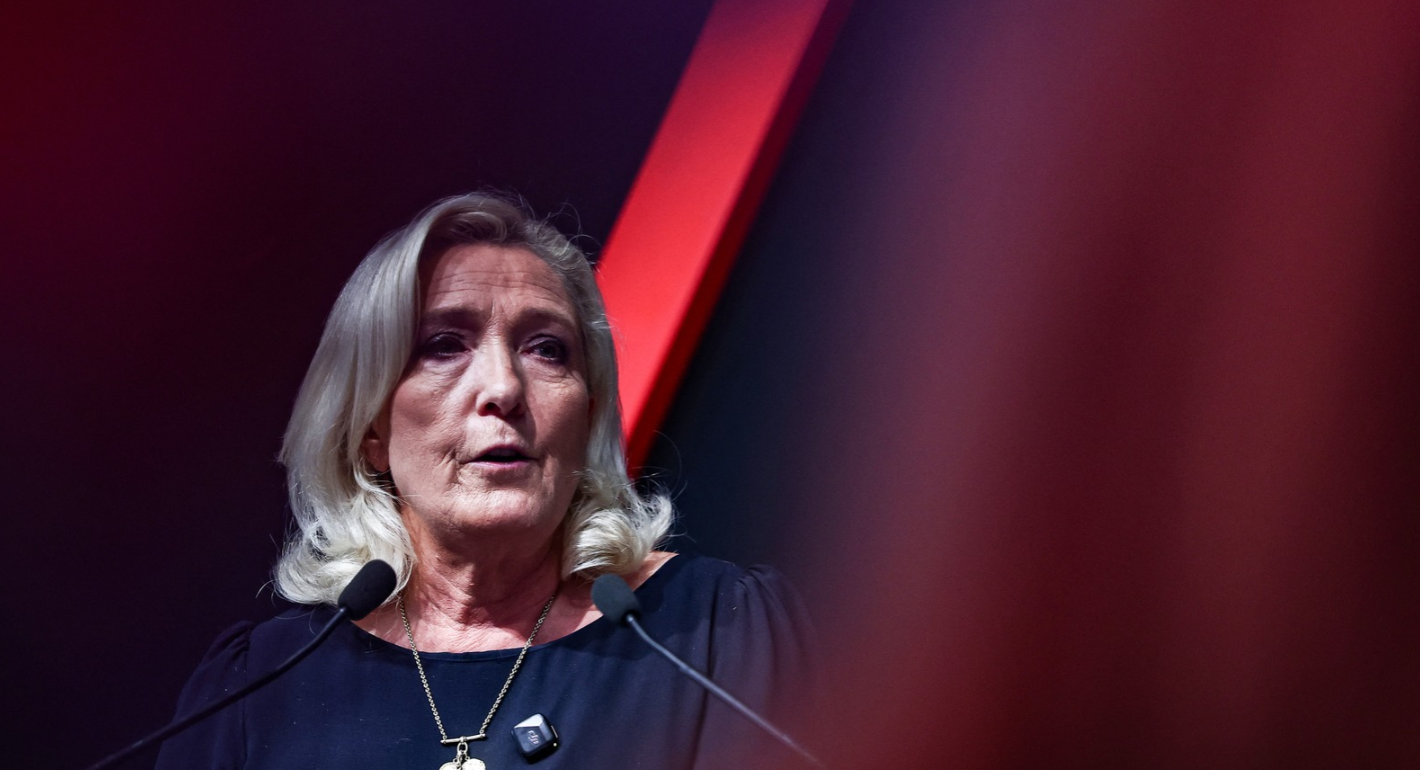
With its public finances in shambles, the far right polling at 35 percent ahead of the 2027 presidential election, and a growing protest movement, is France’s crisis a threat to the EU’s geopolitical awakening?

Rym Momtaz, ed.