

Commentary
China has expanded its presence in the global halal economy, opening new avenues for Sino-Arab cooperation and competition.
Zaynab El Bernoussi, Najwa Belkziz
{
  "authors": [
    "Omar al-Shehabi"
  ],
  "type": "commentary",
  "blog": "Sada",
  "centerAffiliationAll": "",
  "centers": [
    "Carnegie Endowment for International Peace"
  ],
  "collections": [],
  "englishNewsletterAll": "",
  "nonEnglishNewsletterAll": "",
  "primaryCenter": "Carnegie Endowment for International Peace",
  "programAffiliation": "",
  "programs": [],
  "projects": [],
  "regions": [
    "Gulf",
    "Bahrain"
  ],
  "topics": []
}

REQUIRED IMAGE
The “native-foreigner” issue has a long history in Bahrain and implications for stability in countries throughout the Gulf.
The introduction of GCC troops into Bahrain has been labeled a foreign “occupation” by the opposition, while the government has hailed it as brotherly support from its neighbors. In fact, this “native-foreigner” issue has a long history in the country and serious political implications not only in Bahrain but also throughout the Gulf.
The Bahraini monarchy has long relied on foreigners not only as military and police forces, but also to shift the political balance in the island kingdom. The opposition in Bahrain, drawing primarily but not exclusively on support from the country’s majority of Shi’i Muslims, has accused the government of fast-tracking the citizenship of carefully selected foreigners in order to change the demographic makeup of the country. The “politically naturalized,” as they are called, are Sunni Muslims mainly from Bedouin tribes in Saudi Arabia, Syria, Yemen, Jordan, and Baluchistan. They are seen as having close ethnic and cultural links to the local rulers. Estimates of their numbers range from 50,000 to 200,000, constituting between one-tenth and one-third of the total number of citizens.
The politically naturalized are mainly employed in the security and defense forces, increasing the perception that they have been brought in to contain the local population. The graphic videos surfacing of the recent attacks by security forces against protestors show actions that involved some foreign or politically naturalized individuals.
This systematic use of foreign forces is a tradition that goes back decades. It was first used in the region by the British in the nineteenth century, when divisions composed of individuals from Baluchistan and the Indian sub-continent were brought in to help establish control over the Trucial coast. It limits the risk of identification with locals and of defection. Fears about loyalty are less of an issue, as long as the right material incentives are provided.
These demographic tensions have come to the fore in the latest protests in Bahrain. There have been fights between local students and their recently naturalized counterparts at schools. A major scuffle broke out recently between local and politically naturalized youth in a suburban town of mixed composition, leaving several injured.
This issue is not only sect-based, however. Political naturalization has caused friction and aroused complaints from locals across the spectrum. One well-known incident two years ago involved clashes between members of a Sunni family and some of the politically naturalized, with the event becoming a cause célèbre on the island. Indeed, Sunnis frequently complain that they have been the most to suffer from the effects, as the politically naturalized tend to take up jobs in the security forces and live in areas that historically have been predominantly Sunni.
The regime has also tried to use some of the expatriate workforce on the island for explicitly political purposes. Groups of expatriates have attended the pro-regime demonstrations, whether willingly or not, helping to swell the size of the demonstrations. The majority, however, remain apolitical, with their interests largely confined to the economic domain.
The demographic makeup has also been used as a way to limit dependence on the local population in the economic sphere, helping the regime to avoid the labor unrest that has been a constant feature of Bahrain's modern history. Bahrainis currently constitute less than a quarter of the labor force, so their impact on the economy production-wise (should they choose to strike) is much more contained. They also make up less than half of the 1.2 million residents of the island (down from roughly two-thirds a decade ago).
While the problem is most intense in Bahrain due to the clear political ramifications, the foreigner-native issue is rooted in the institutionalized rentier-state system that prevails throughout the Gulf. It is based on a ruling elite who use the large oil revenues at their disposal to appease local residents through an extensive welfare state, while ensuring that they are marginalized on the political and economic fronts. Productive economic activity is carried out mainly by an expatriate workforce that is tightly controlled and has limited labor rights. Under this structure, it is much easier for locals to lay the blame on foreigners and vice versa. Unless the current rentier-state structure changes drastically, the demographic interplay between foreigners and locals—already playing a pivotal role in the current disturbances in Bahrain and Libya—will eventually affect the stability of other Gulf States as well.
Omar al-Shehabi is director of the Gulf Centre for Policy Studies.
Omar al-Shehabi

China has expanded its presence in the global halal economy, opening new avenues for Sino-Arab cooperation and competition.
Zaynab El Bernoussi, Najwa Belkziz
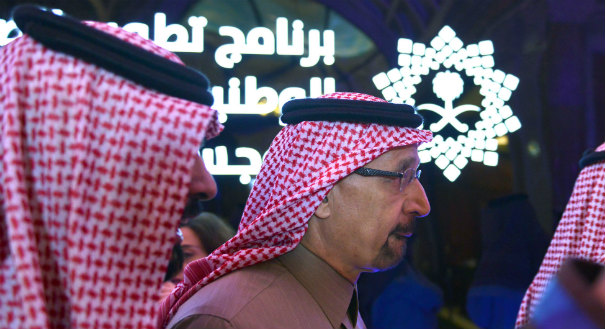
The implementation of Vision 2030 is bypassing state institutions, creating a public policy crisis and further weakening government institutions.
Hadi Fathallah
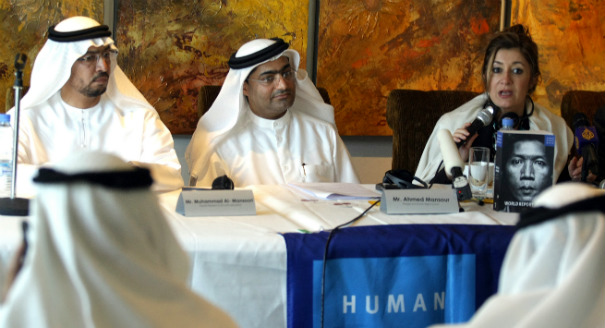
The repression of political dissidents such as Ahmed Mansoor belies the UAE’s attempts to brand itself as a promoter of tolerance.
Joe Stork
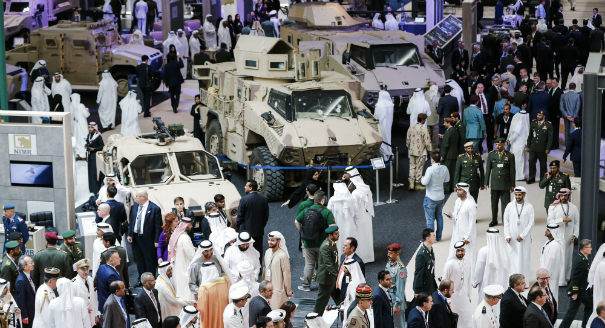
The UAE’s focus on developing a local defense industry highlights its goals of becoming a global arms supplier for niche markets.
Jean-Loup Samaan
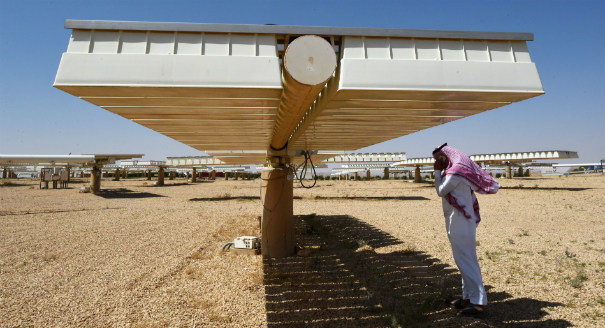
Although cooperation with China can help Saudi Arabia boost production of solar power, global trade dynamics may complicate the kingdom’s renewable energy goals.
Juergen Braunstein, Oliver McPherson-Smith