

Commentary
China has expanded its presence in the global halal economy, opening new avenues for Sino-Arab cooperation and competition.
Zaynab El Bernoussi, Najwa Belkziz
{
  "authors": [
    "Toby C. Jones"
  ],
  "type": "commentary",
  "blog": "Sada",
  "centerAffiliationAll": "",
  "centers": [
    "Carnegie Endowment for International Peace"
  ],
  "collections": [],
  "englishNewsletterAll": "",
  "nonEnglishNewsletterAll": "",
  "primaryCenter": "Carnegie Endowment for International Peace",
  "programAffiliation": "",
  "programs": [],
  "projects": [],
  "regions": [
    "Gulf",
    "Bahrain"
  ],
  "topics": []
}

REQUIRED IMAGE
Since protests began in Bahrain, the island’s rulers have employed harsh measures in order to silence all opposition and create an uncontested narrative of events.
An eerie silence and a paralyzing sense of fear currently grip Bahrain. Since mid-March, when tens of thousands of protesters last took to the streets demanding political reform, Bahraini security and military forces have engaged in an ongoing, systematic, and brutal campaign to crush the country’s pro-democracy forces. The crackdown has been sweeping and shocking. Dozens of activists have been killed. Hundreds more have been imprisoned and tortured. Bahrain’s leading independent newspaper, al-Wasat, is expected to close down on May 10.
Provocative government actions belie claims that all the monarchy seeks is to re-establish law and order. It is apparent, instead, that the government is using martial law to carry out a vendetta against those who challenged the authority of the ruling al-Khalifa. Checkpoints have been set up to harass the country’s Shi’i citizens, who make up the majority of Bahrain’s native population and of its political opposition. Security forces have laid siege to the island’s hospitals and arrested scores of medical personnel, in what appears to be an especially inhumane and spiteful kind of intimidation. For weeks police and pro-regime supporters roamed the streets of Shi’i villages destroying cars and other property. Those who supported the protests now fear leaving their homes, lest they be publicly accosted or, worse, arrested and disappeared.
The regime is also taking dramatic steps to quiet critics. Authorities have targeted newspapers, journalists, and bloggers in order to stymie public criticism, to control reporting about the scale of the crackdown, and to frighten into silence those who might speak out. In the last few weeks Bahraini blogs and twitter feeds that are normally vibrant have gone quiet, stunned into submission by the brutality of what is happening around them.
And they have reason to fear. Those who have spoken out or who have attempted to report events going on around them are paying a high price.
The Cautionary Tale of al-Wasat
In early April government officials took aim at Bahrain’s largest independent newspaper, al-Wasat, and accused it of “deliberate news fabrication and falsification.” Al-Wasat’s editor Mansoor al-Jamri resigned in an effort to deflect criticism from the newspaper. Instead, al-Jamri and two of his staff members will likely face a politically motivated trial. Al-Jamri was replaced with the pro-government Obaidly al-Obaidly. On April 5 authorities arrested Karim Fakhrawi, one of the newspaper’s founders and a member of the opposition political society al-Wefaq; on April 12 Fakhrawi died mysteriously while in police custody. On April 22 police extended their assault on al-Wasat by beating and arresting the columnist Haidar Muhammad al-Naimi, whose whereabouts and fate remain unknown. In light of these pressures, members of al-Wasat’s board of directors and the paper’s investors have reportedly decided to cease publication as of May 10.
Those associated with opposition political groups have been hit the hardest, but they are not the only ones to have felt the brunt of the regime’s assault on speech. Two of Bahrain’s most prominent bloggers, Mahmood al-Yousef and Muhammad al-Maskati, were arrested in early April for bearing witness to developments in the country. Although both have been critical of the violence deployed by state security, neither belongs to the country’s opposition. For weeks they routinely appealed for calm and encouraged the government and protesters to avoid provocation and escalation. Their detentions sent a clear signal that the regime’s tolerance for being off message was very low.
Mobilizing State Media
In addition to serving as a form of punishment, the regime’s crackdown on public and social media reflects its struggle to control the narrative. Alongside the silencing of critical voices, authorities have also mobilized state-controlled media to assert their dominance and to offer an alternative view of the country’s domestic conflict. Bahrain’s national TV station led the way in detailing the public case against al-Wasat on April 2 when it broadcast a program outlining charges that the paper had published fake news. The station has launched similar campaigns against prominent activists as well, including the human rights advocate Nabeel Rajab.
Bahrain TV’s most important role has been to frame the country’s domestic struggle not as a contest of democracy versus autocracy, but as a sectarian clash. The state media has used the specters of Iranian meddling and the potential empowerment of the country’s Shi’i population to frighten the smaller Sunni community into supporting the political status quo and the current crackdown.
Bahraini state media have also, however, served to expose the regime’s extreme tactics. On April 28 authorities revealed that four activists had been sentenced to death and three others to life imprisonment for their alleged roles in the deaths of two Bahraini policemen. The seven men were tried in closed military courts. Sensitive to claims that the government had not given the men a fair trial, Bahraini officials released a video of the men allegedly confessing to the murders.
More damning than the purported confessions, which were likely extracted under pressure, was the appearance of an eighth man, Ali Isa Saqer, on the video. Saqer died in police custody on April 9. After announcing his death, authorities claimed that he had created “chaos in the detention center.” An unruly prisoner or not, the images of Saqer’s body showed signs of devastating physical abuse. Whether Saqer’s presence on the video was intended or not, the message of his treatment was unmistakable. And it is the same message that the regime has been sending through its abuse of the media.
The regime has few powerful challengers when it comes to the media. The domestic independent media has been cowed. The regional media, most notably the two most widely-watched satellite news stations, Qatar-based al-Jazeera and Dubai-based al-Arabiya, have kept their distance from Bahrain, apparently due to Qatari and Saudi support for the crackdown. Although the Bahraini government has allowed a handful of Western journalists into the country, many others have been forbidden entry. And journalists who maintain contacts with Bahrainis report that they are increasingly unwilling to go public with their stories out of fear of retribution.
Despite Bahraini rulers’ claims to be exposing the true nature of the uprising as an Iranian plot to destabilize the kingdom, it is clear that they are solely concerned with protecting themselves and punishing their rivals—and that they will use any means necessary to accomplish both. For the present, Bahraini citizens are left to with little to do other than ponder their fate and do so in silence. The current quiet is misleading, however: the conflict between a monarchy determined to preserve authoritarian rule and a majority population keen to secure a voice for itself is far from over.
Toby C. Jones is assistant professor of Middle East history at Rutgers University. He is the author of Desert Kingdom: How Oil and Water Forged Modern Saudi Arabia (Harvard, 2010) and is an editor at Middle East Report.
Toby C. Jones
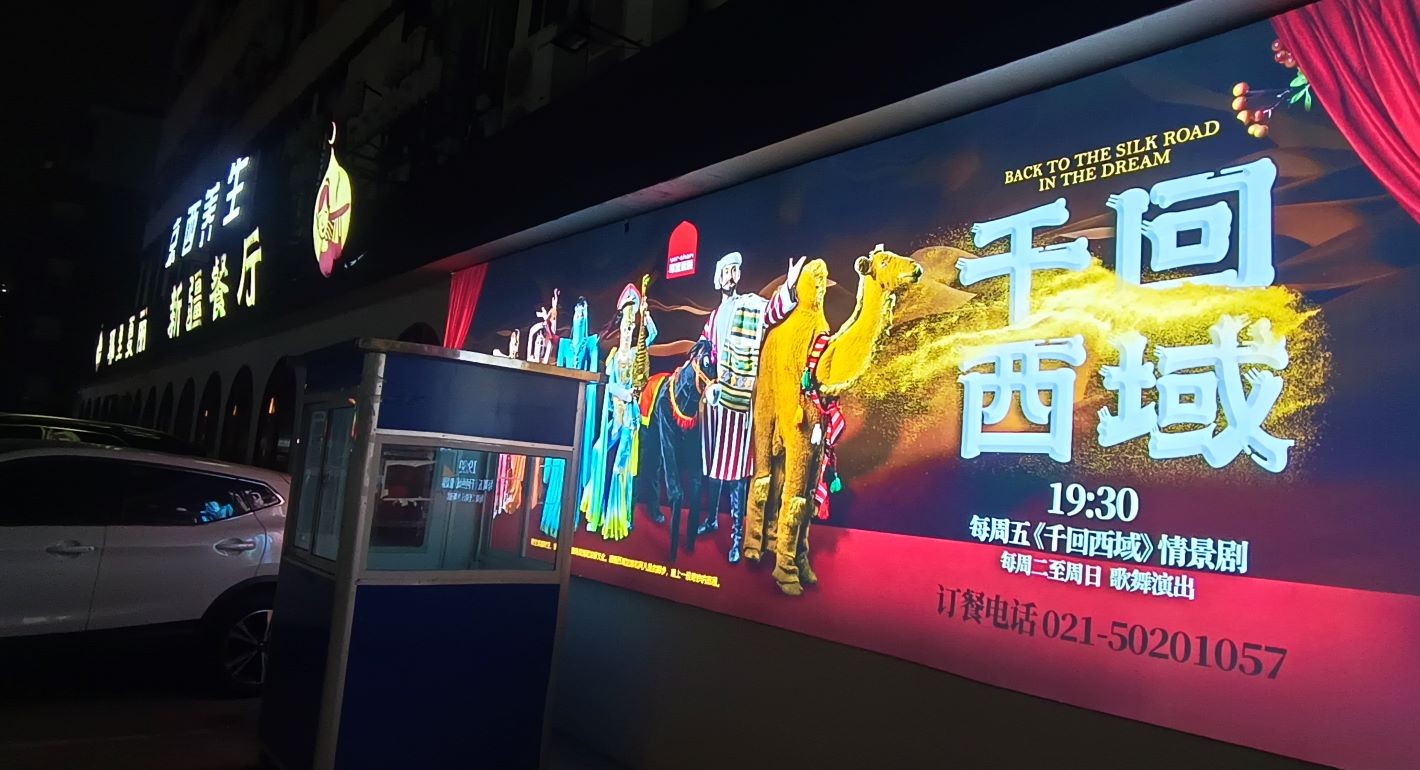
China has expanded its presence in the global halal economy, opening new avenues for Sino-Arab cooperation and competition.
Zaynab El Bernoussi, Najwa Belkziz
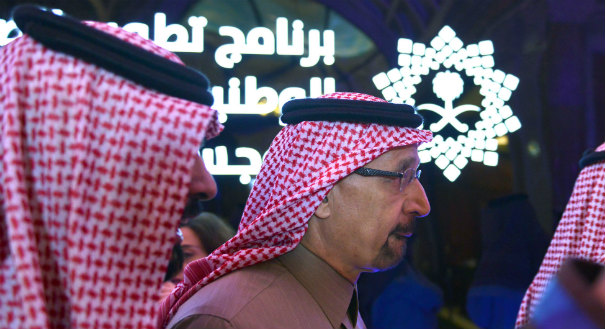
The implementation of Vision 2030 is bypassing state institutions, creating a public policy crisis and further weakening government institutions.
Hadi Fathallah
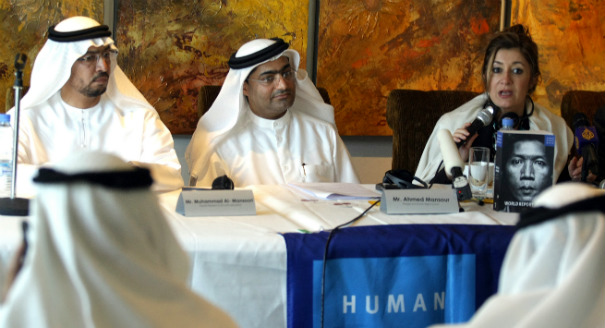
The repression of political dissidents such as Ahmed Mansoor belies the UAE’s attempts to brand itself as a promoter of tolerance.
Joe Stork
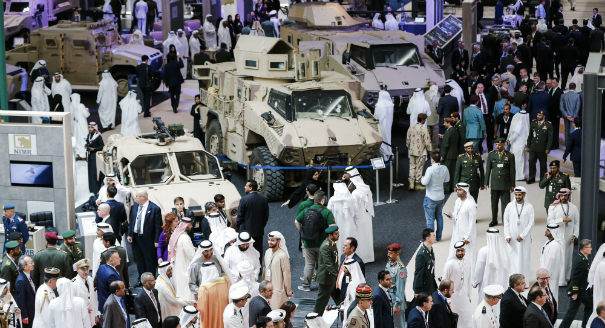
The UAE’s focus on developing a local defense industry highlights its goals of becoming a global arms supplier for niche markets.
Jean-Loup Samaan
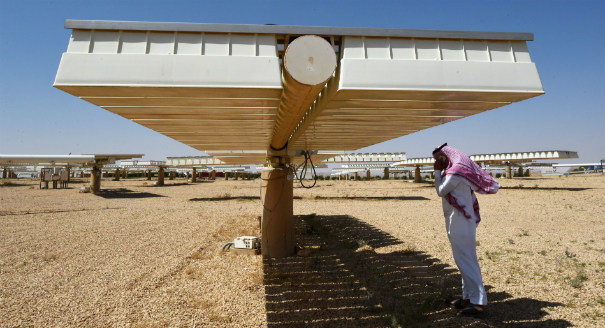
Although cooperation with China can help Saudi Arabia boost production of solar power, global trade dynamics may complicate the kingdom’s renewable energy goals.
Juergen Braunstein, Oliver McPherson-Smith