

Commentary
Syria's transition promised a fresh start. But are old habits of power making a comeback? This analysis looks at the warning signs and what it will take to build a more accountable state.
Sima Beitinjaneh
{
  "authors": [
    "Tom Westcott"
  ],
  "type": "commentary",
  "blog": "Sada",
  "centerAffiliationAll": "",
  "centers": [
    "Carnegie Endowment for International Peace"
  ],
  "collections": [],
  "englishNewsletterAll": "",
  "nonEnglishNewsletterAll": "",
  "primaryCenter": "Carnegie Endowment for International Peace",
  "programAffiliation": "",
  "programs": [],
  "projects": [],
  "regions": [
    "North Africa",
    "Libya"
  ],
  "topics": [
    "Democracy"
  ]
}
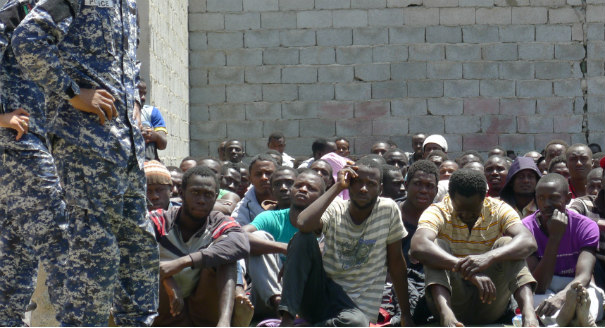
Source: Getty
African migrants making their way to Europe are caught in Libya in a humanitarian crisis of insufficient aid and worsening detention conditions.


Libya has long been a departure point for desperate migrants—many of whom are from war-torn sub-Saharan African countries—hoping to reach European shores. Since the overthrow of Muammar al-Qaddafi and Libya’s fall into chaos, the number of migrants has skyrocketed within the security vacuum. Over 2,000 migrants have died so far this year trying to cross the Mediterranean, according to estimates by the International Organization for Migration (IOM) based only on boats and bodies that have been found. And those arrested in Libya are sent to the country’s already overcrowded detention centers, becoming part of the country’s growing humanitarian crisis.
At the Sikka Road detention center in central Tripoli, several hundred men sit in a parking lot in the searing midday sun on May 24, 2015. “We have been out here for hours, we are thirsty, please help us,” says Kooshin, who is from Somalia.1 “You should see where we sleep, it’s terrible. We sleep sitting up and are then left to sit in the sun all day.” One guard insists that the men had just been brought outside and given breakfast. Another guard walks toward the men, carrying a nine-pack of half-liter water bottles. “Who wants water?” he shouts, holding up one of the bottles. A sea of hands stretch out and the guard tosses bottles toward the lucky few. The rest go without.
Many of these men were among the six hundred the Department for Combating Illegal Immigration arrested a few days earlier at a building in Tripoli’s Abu Salim district. The building was a halfway house for those who had already paid people-smugglers for spots on Europe-bound boats, explained spokesman for the Sikka center, Lieutenant Abu Nasser Azam. A firefight ensued between security personnel and the six armed men employed to guard the building, who were trying to prevent migrants from being forcibly removed from the halfway house. “Fortunately, it hasn’t yet reached the stage that we are dealing with large armed groups,” Azam said. Several of the migrants suffered leg and spinal injuries after trying to escape by jumping from the upper floors of the building, and one of the detainees claimed that several of the migrants had died as a result.
The presence of halfway houses shows how organized the people-smuggling gangs in Libya have become. “It was well-equipped for hundreds of people, with a place to make international calls, and even a shop where the migrants could buy food and cigarettes,” Azam said. Once prospective migrants paid their fees and were transferred to the premises, they were not allowed to leave, so everything had to be provided. Among the items seized from the house in Abu Salim were a computer, a receiver box for WiMax (Libya’s internet system), GPS devices, and eleven satellite mobile phones. (In recent years, the “captain” of each boat has typically been a migrant himself, often without any nautical experience, but his position garners him a satellite phone and the Italian Coast Guard’s number.)
Other items included leather or beaded belts and a homemade shirt with talismanic Arabic phrases scrawled across it in marker. Europe-bound migrants believed these charms would offer protection during the perilous journey—a pitiful alternative to desperately needed life vests. “They believe these things will protect them from drowning or will help if the boat capsizes,” said Colonel Mohamed Abubreda, deputy head of the Department for Combating Illegal Immigration. Most migrants are acutely aware of the risks of setting sail from Libya on overcrowded inflatable dinghies or ill-equipped wooden fishing vessels. Standing in a room with over a hundred other men in the detention center, 27-year-old Patrick from the Democratic Republic of the Congo stretched out his white shirt to show the email addresses and telephone numbers written across it. “These are contacts for my family and some people I know here in Libya,” Patrick says. “If I die and my body washes up on a beach, at least there is a chance my family will be told what happened to me,” he adds.
The immigration department is conducting ongoing investigations into the illegal and lucrative people-smuggling trade in Libya, of which the raid in Abu Salim was part. But the success of such investigations remains limited, and Abubreda’s department is overstretched and underfunded. One of its main tasks continues to be arresting migrants who do not have the correct paperwork to be in Libya, then transferring these individuals to one of the country’s chronically overcrowded detention centers. “In the media, we see Libya [portrayed] as a country not even trying to lift a finger to help, but we are doing our best and, in reality, Libya is the first country being damaged by illegal immigration,” Abubreda said. He complained that since the 2011 revolution, both Italy and the European Union at large had made “empty promises” of support. “I cannot be sure that help was not given, but it never reached this administration. We have not received any international assistance,” Abubreda said. “Libya is not responsible for securing the EU against this problem but, with proper capabilities and assistance, it could contribute much more. And this department is willing to work with any country or organization wishing to give a helping hand,” he added.
The overcrowded detention centers continue to receive more migrants almost daily. A guard at one detention center said they were sometimes obliged to release migrants because the conditions were so dire and the resources so slim that it was a “humanitarian decision.” The situation at the detention centers has worsened since fighting in Tripoli in July and August 2014 prompted most embassies and international NGOs to pull out of Libya. “Now the only [NGOs] still working here are the UN Refugee Agency (UNHCR) and the International Medical Corps (IMC), and they can’t provide enough,” explained Abdulrahman Al-Fituri, IMC’s national coordinator in Libya. “The Ministry of Health also used to provide some support but now it has no money, and still the migrants are coming,” Fituri said. “We do what we can, distributing mattresses, blankets, and hygiene kits—including on behalf of the International Organization for Migration (IOM), which donates a lot. But whatever we can provide is not enough.” With inadequate resources, Fituri admitted that IMC’s reach is limited, not least because its mandate also includes helping internally-displaced Libyans, which now total more than 434,000.
The Krareem detention center near Misrata is one of many where migrants have been allegedly mistreated. Six young men, whom journalists saw were in good health when they were arrested by the Libyan Coast Guard in May, were badly beaten within a week at the center. A month earlier, a Dutch television crew had caught a guard brutally beating migrants with a baton on camera. Mohamed Ahmed Al-Baghar, head of the Krareem detention center, said that the baton-wielding guard had been disciplined, but he conceded that it was difficult for his 30–40 staff to maintain order, given that Krareem holds well over 1,000 migrants on any given day. Hundreds share limited facilities and food rations, and discontent runs high.
For the migrants detained in Libya’s 20 official detention centers, their desperation to reach Europe has been eclipsed, for now, with only one concern: escaping from the detention center. Few want to return to their impoverished and war-torn home countries in sub-Saharan Africa, and people are willing to endure extreme hardship and risk death just to reach the Libyan shore. Many even view incarceration in European detention centers as preferable to life in their homelands. “We are between the devil and hell. We urgently need to get out of this prison but we can’t go back,” said Bubaker, a 24-year-old from Eritrea. “Boko Haram killed seven people in my family, including my father and mother,” said 26-year-old Jeffrey, who fled from Nigeria to Libya in March. But even sitting on a mattress in a darkened room where over 140 men sleep side-by-side in the detention center, he still clings to his dreams. “I have a diploma in business administration,” he says. “I hope there is a future for me somewhere.”
Tom Westcott is a Libya-based British journalist and writer.
1. At the migrants’ request, some names have been changed to protect identities.
Tom Westcott
Carnegie does not take institutional positions on public policy issues; the views represented herein are those of the author(s) and do not necessarily reflect the views of Carnegie, its staff, or its trustees.
Syria's transition promised a fresh start. But are old habits of power making a comeback? This analysis looks at the warning signs and what it will take to build a more accountable state.
Sima Beitinjaneh
From anime heroes to online gaming communities, Morocco’s Gen Z is building a new protest culture. What does this digital imagination reveal about youth politics, and how should institutions respond?
Abdelilah Farah
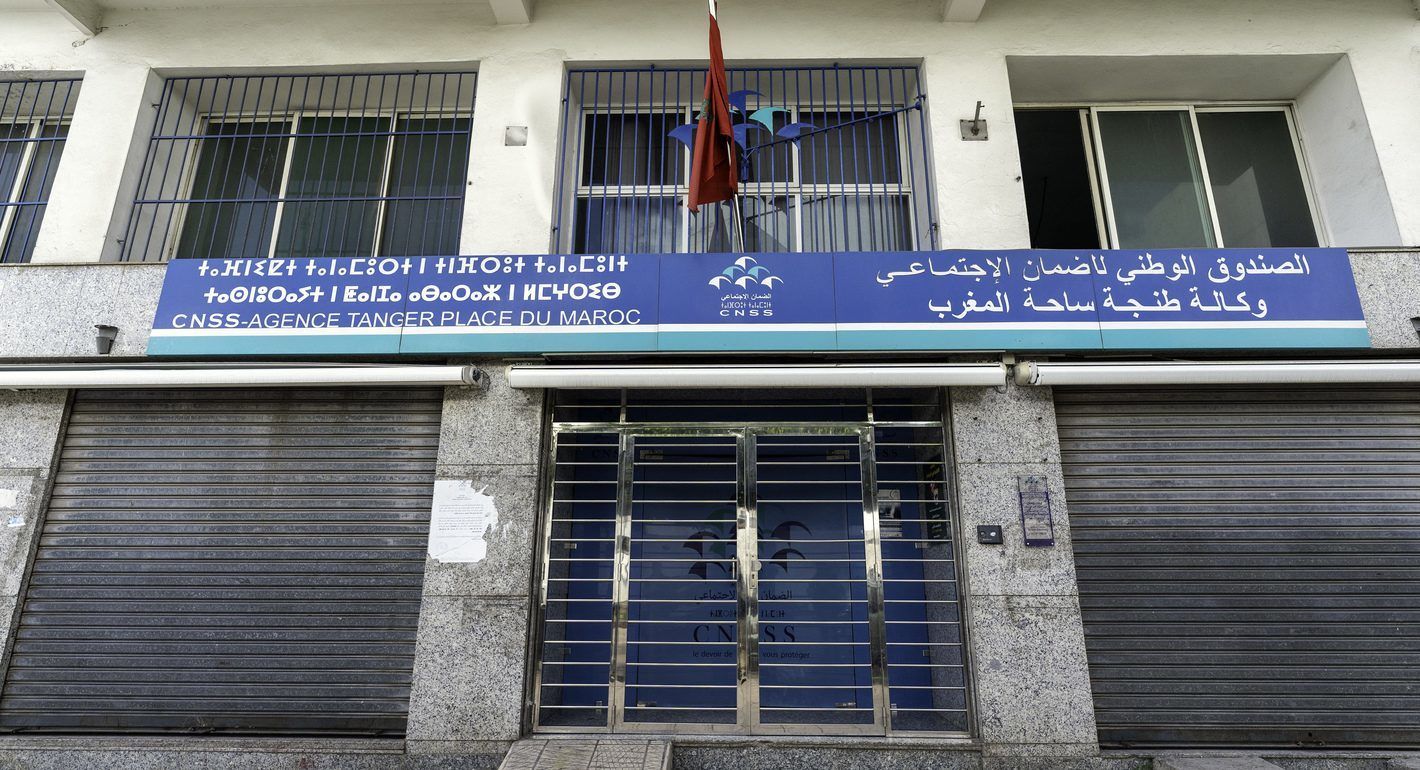
While Morocco’s shift to a digitized social targeting system improves efficiency and coordination in social programs, it also poses risks of exclusion and reinforces austerity policies. The new system uses algorithms based on socioeconomic data to determine eligibility for benefits like cash transfers and health insurance. However, due to technical flaws, digital inequality, and rigid criteria, many vulnerable families are unfairly excluded.
Abderrafie Zaanoun
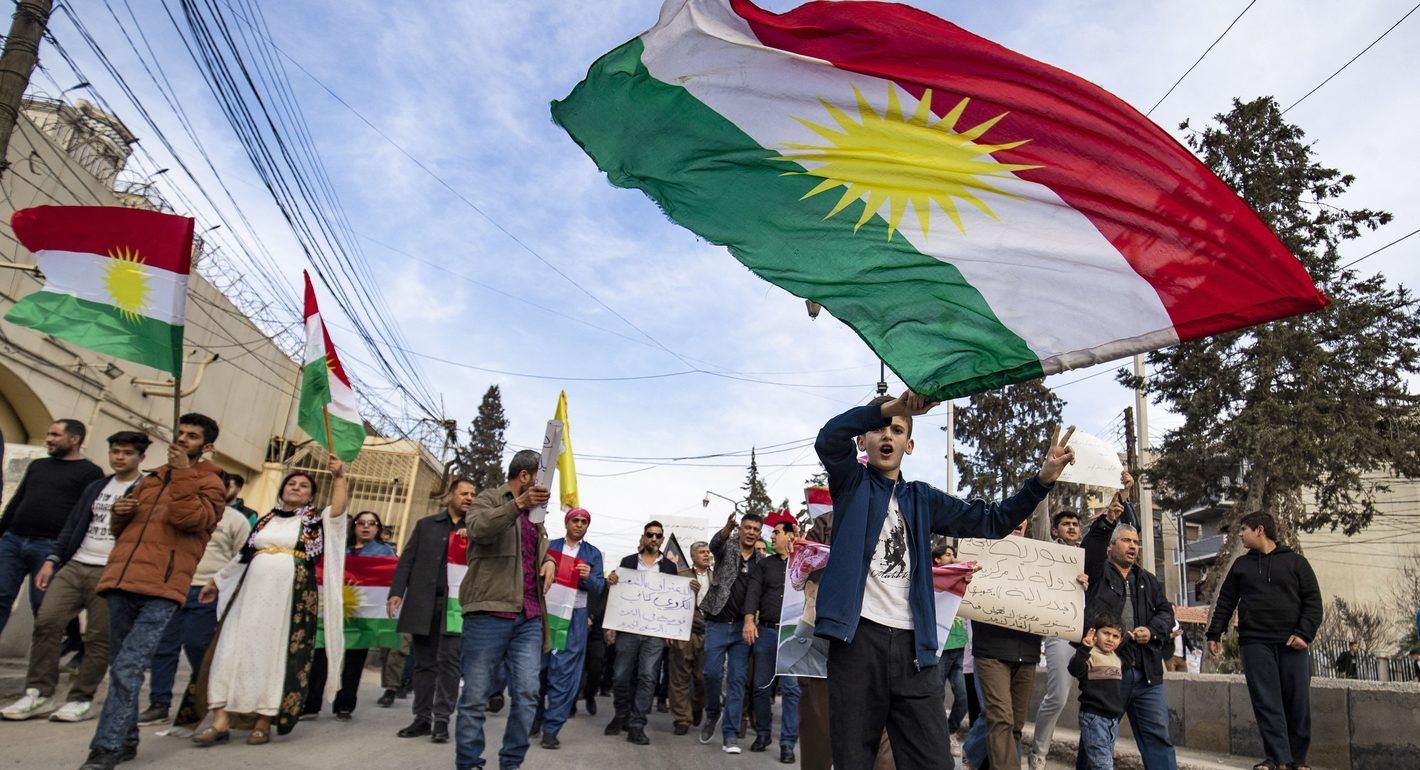
Saudi Arabia’s cautious stance on the Syrian Kurds reflects a delicate balance between leveraging Kurdish autonomy to counter Iran’s influence and managing the risks of destabilizing Syria’s territorial integrity. While Saudi Arabia seeks to safeguard its interests in the region, it remains wary of the potential internal and external consequences of supporting Kurdish autonomy.
Mohammad Salami
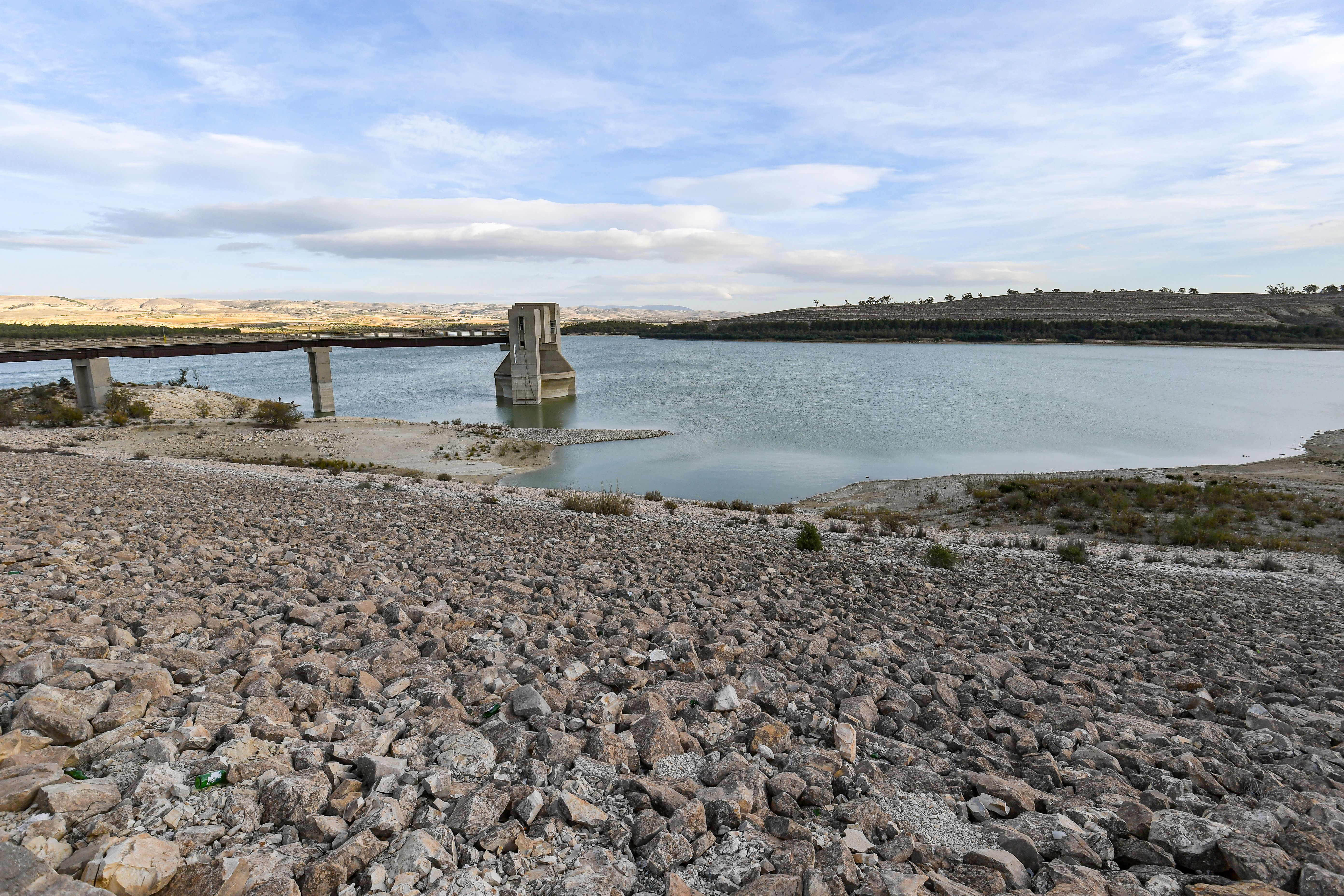
Tunisia is facing a worsening water crisis characterized by widespread protests over access to potable water, particularly in rural areas with underdeveloped supply networks. This situation is exacerbated by climate change, outdated agricultural policies, and industrial water consumption, necessitating comprehensive policy reforms to secure Tunisians’ constitutional right to water and ensure equitable access across the country.
Noura Omar