While the digitization of social data in Morocco—particularly through the development of the Unified Social Register—promises to enhance the efficiency of social targeting mechanisms, the underlying policy framework shaping its design makes it a vehicle for legitimizing austerity measures, leading to reduced social spending and a narrowing of the population eligible for social protection.
Since 2021, Morocco has progressively relied on a digitized targeting methodology to determine eligibility for social protection and assistance programs. Based on the digital processing of data collected through the Unified Social Register (USR) decisions are made to either include or exclude families seeking to benefit from direct social transfers and free health insurance services. The deployment of information technologies in managing social data has also served broader political and economic objectives, aligning with the strategic interests of the government and its key stakeholders.
In this context, a central question emerges: What are the benefits and risks associated with the digitization of Morocco’s social targeting system, particularly in light of the preliminary outcomes of implementing the Unified Social Register (USR) as a tool for redesigning the country’s social safety nets?
To answer this question, the following analysis will draw on national and international reports and reference frameworks to examine the contexts and challenges shaping the digital management of Morocco’s social targeting system. Particular attention will be given to how these developments intersect with the political dynamics of restructuring state-led social action. The study also aims to propose potential approaches for mitigating the exclusionary tendencies embedded in 'social algorithms.'
Informatics Engineering of Social Data in Morocco: Causes and Motives
The initial efforts to apply information technology to the storage and analysis of social data in Morocco date back to the rollout of the Medical Assistance System for the Poor (RAMED) in 2012. RAMED’s digital platform served as a foundational tool for identifying target populations across various social programs, including the Tayseer initiative to reduce school dropout rates and the financial support program for widowed women. It also played a central role in identifying eligible recipients of emergency aid during the COVID-19 pandemic in 2020. However, persistent shortcomings in verification and processing mechanisms led to systemic inequities—benefiting relatively affluent individuals while excluding many of the most vulnerable. These challenges necessitated a redesign of the social targeting system, grounded in a more robust informatics architecture that incorporates the principles of fairness and merit.
In this context, digital technologies have emerged as a central pillar in supporting the new trajectory of Morocco’s social policy, reflecting a fundamental shift in targeting strategies—from universal or broad-based approaches to statistical targeting limited to the poorest segments of the population. To facilitate this transition, efforts have been made to develop a unified information system capable of collecting and processing demographic, economic, and social data, with the aim of establishing a centralized database to identify individuals eligible for state support.
International financial institutions have played a significant role in promoting this shift by advocating for 'exemplary' global models—such as India’s biometric identification system (Aadhaar)—and by providing both technical assistance and financial backing for the digitization of Morocco’s targeting mechanisms, aligning them more closely with the principles of a minimal state. Within the framework of the World Bank's Identification for Development (ID4D) initiative, Morocco secured a $100 million loan in 2017 to support the Identity and Targeting for Social Protection Project, followed by a series of additional loans aimed at reinforcing the digital governance of its social programs.
To lay the groundwork for the informatics architecture of the single interface for social data, the Ministry of Interior has, since 2018, engaged in a participatory process with the World Bank and the International Institute for Information Technology Bangalore (IIIT-B). This collaboration led to the development of the digital infrastructure of the targeting system, structured around two interrelated platforms:
- National Population Registry (RNP):
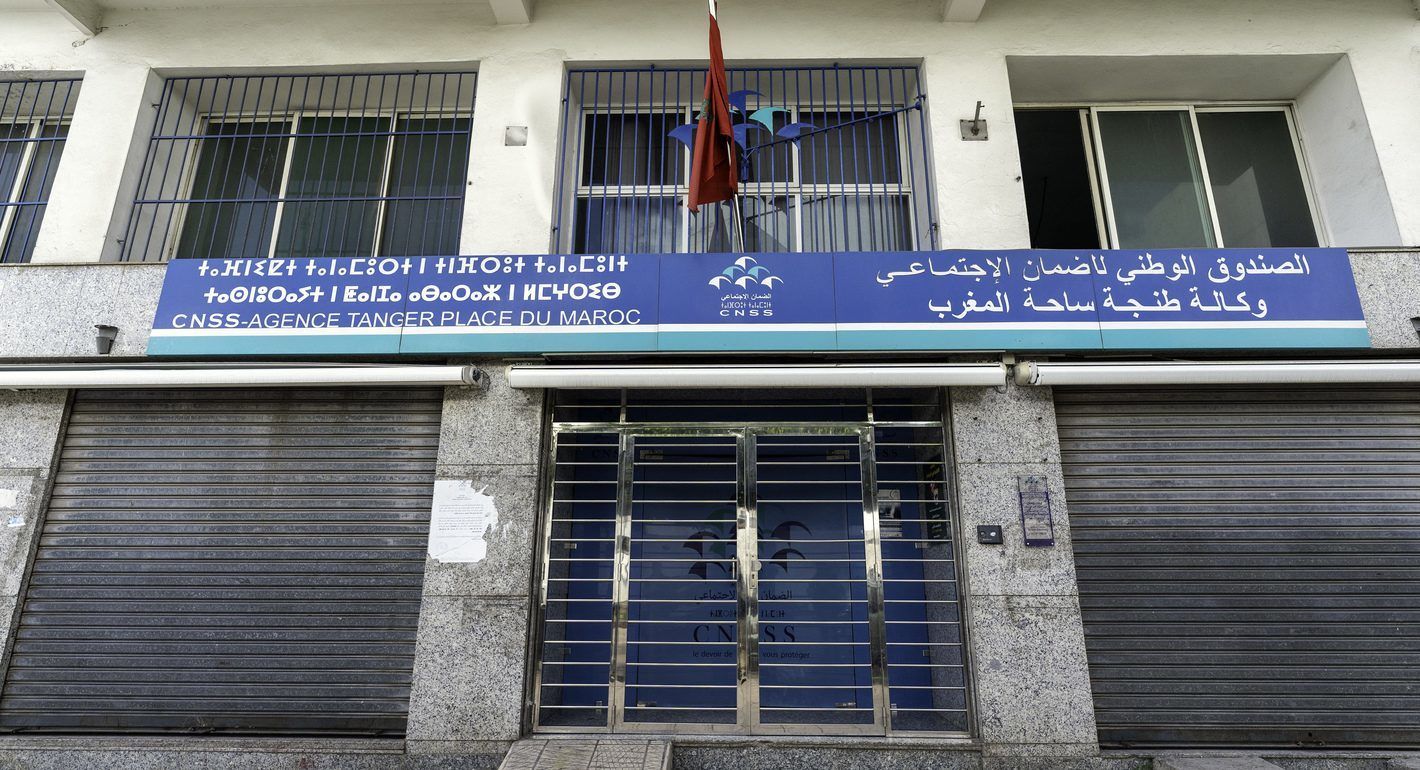
The RNP serves as a centralized digital database for demographic data, secured through the use of iris-based biometric technology. Each individual registered in the system is assigned a Civic and Social Digital Identifier (IDCS), which functions as a unique key for linking the databases of national and local government entities responsible for administering social support programs. - Unified Social Register (RSU):
The RSU functions as a comprehensive digital interface for identifying beneficiaries of social assistance programs. Based on the algorithmic processing of socio-economic data, the RSU automatically determines the eligibility threshold for targeted cash transfers at 9.74- any household exceeding this threshold is excluded from the list of those eligible for direct social support. A similar scoring mechanism applies to the eligibility index for healthy nutrition programs: households must fall within a score range of 9.32 to 9.74 to qualify for free participation. Otherwise, the head of the household is required to pay monthly contributions to the National Social Security Fund (CNSS), with contribution amounts varying according to the degree of deviation from the benchmark index.
An examination of official statements and discourse surrounding the dematerialization of social data reveals several political stakes—some explicitly stated, others more implicit. The government presents the digitization of social databases as an urgent necessity to enhance the effectiveness of social protection programs, particularly in response to the disorder that characterized the targeting system in earlier phases. However, from a political perspective, this digital shift also serves as a 'technical' mechanism for legitimizing neoliberal approaches to social governance. It aligns with the preferences of international financial institutions, which have consistently advocated for narrowing the scope of social safety nets to low-cost, targeted interventions that minimize the number of beneficiaries and effectively expose the majority of citizens to the uncertainties of the market.
The role of digital solutions in enhancing the efficiency of the social targeting system
The data infrastructure of Morocco’s social safety net has undergone significant progressive expansion, driven by the increasing digitization of the target demographic base since November 2021, when the initial data infrastructure for the targeting system was established. As a result, the number of individuals registered in the National Population Registry has steadily grown to approximately 22 million, while the Unified Social Register has registered nearly 19 million individuals, representing around 5.2 million households.
This “data infrastructure” has served as a foundational platform enabling the digital processing of social data to facilitate the automated identification of beneficiaries for direct social support programs, whose number - according to the latest official figures- has reached 12 million. Meanwhile, the number of individuals benefiting from the unified solidarity health coverage (AMO-Tadamon) has exceeded 10 million. Digital solutions have also enhanced accountability and improved the 'filtering' process in both directions: integrating previously excluded groups after updating eligibility threshold indicators based on improved socio-economic conditions, while removing categories from the Unified Social Register lists following the results of the Proxy Means Tests.
Simultaneously, information linkages have been established between various social databases, such as the National Agricultural Register, which documents individuals engaged in agricultural activities, and the National Handicraft Register, which includes over half a million artisans. Under the algorithmic logic of the Unified Social Register, a person's inclusion in one of these sub-registers may result in their exclusion from the solidarity-based scope of social safety nets. But at the same time, the removal of a household head from one of these registers may qualify them and their family as candidates for care and protection programs, because of the subsequent reduction in their socio-economic status.
Additionally, digitization promises to enhance the governance of social protection by generating quantitative indicators on the number of beneficiary households, the scale of benefits distributed, and the impact of government measures on the living conditions of targeted populations. It also enables the establishment of an electronic dashboard for the social security system, offering data related to the processing of medical pre-authorization requests, hospitalization records, and medical services. This will also assist a shift toward the dematerialization of healthcare procedures, including the introduction of electronic medical forms and the digital processing of complaints and appeals submitted by individuals excluded from social protection programs.
The expanded implementation of these digital measures is expected to contribute significantly to the rationalization of the targeting system, particularly by controlling the operational costs of social programs. The centralization of social data has served as the foundation for integrating over 100 social programs into consolidated clusters, enabling the government to save an estimated 15 billion dirhams. This integration has also reduced instances of individuals and families receiving multiple benefits from different programs, while supporting the unification of the social services basket across state agencies, public institutions, and territorial communities. The deployment of specialized software has further played a direct role in combating fraud and false declarations aimed at securing undue benefits.
In this context, both the government and international institutions financing projects to improve targeting efficiency take pride in the fact that the use of digital technologies has, in practice, enabled the most vulnerable groups to gain better access to social protection services compared to previous phases. Consolidating this approach could further enhance the role of electronic processing of social data in reducing social inequalities.
Implications of Algorithmic Processing on the Right to Social Protection
Despite the promised prospects, digitization presents a host of challenges that may appear technical on the surface but, in reality, carry significant political repercussions for the right to social protection. Chief among these is the issue of digital justice. Limited internet connectivity in remote areas, combined with a lack of digital tools and skills among poor and vulnerable groups, often results in their exclusion from accessing digitized social services and benefiting from social protection platforms. Moreover, the substantial costs charged by private agencies contracted to manage applications for these services further raise financial barriers.
This is where the dilemma of effectiveness becomes evident. Technical flaws in the design and operation of digital social welfare platforms have led to frequent service disruptions, resulting in significant backlogs and delays in processing applications. Moreover, the limited capacity of information systems to accurately document and analyze socio-economic data has contributed to the unjust exclusion of a considerable number of eligible individuals. Added to this is the dehumanizing nature of the eligibility algorithm, which—by applying a narrowly defined “extreme poverty line” as the threshold for minimum subsidy qualification—fails to meaningfully “recognize the impoverished.”
Then there is the question of the credibility of the social data collected through the Unified Social Register, particularly regarding how accurately it reflects the socio-economic realities of beneficiary households and potential recipients of social programs. This concern is heightened by the limited visibility into applicants’ financial life—mainly because of the low rate of bancarization among vulnerable populations—and the challenges associated with electronically tracking the social data of informal workers, who represent over 60% of the national labor force.
On the other hand, the algorithms employed in the Unified Social Register (USR) have been criticized—particularly by opposition sources—for systematically excluding tens of thousands of families from eligibility for targeted transfers, simply because they own modest or unused assets, such as small plots of agricultural land, a motorcycle, or because they’re engaged in low-income informal crafts. The algorithm is also faulted for its overly simplistic interpretation of household living conditions. For example, the possession of a large gas cylinder, recharging a mobile phone with a balance of less than two dollars, or exceeding a monthly electricity bill of $10 may be sufficient to disqualify a household from receiving direct social support, solely because its calculated social index surpasses the eligibility threshold of 9.74.
A similar issue arises within the social insurance system, where electronic sorting mechanisms reveal significant imbalances between individuals granted free access to health coverage and those required to pay contributions after exceeding the eligibility threshold of 9.32. According to data from the Economic, Social, and Environmental Council, 92% of those obligated to contribute fall within the narrow range of 9.32 to 9.51—indicating that they, in fact, belong to economically vulnerable groups. Nonetheless, the algorithmic decision-making process—rigid and unyielding— shifts these individuals from the solidarity-based model to a contributory scheme, under the direction of the political leadership.
And while the electronic management of social programs may contribute to the rationalization of service delivery, it also carries significant implications for the rights of intended beneficiaries. The information architecture of the targeting system is designed in an intersecting manner that automatically leads either to full benefit or to complete exclusion from the range of assistance and protection programs. As a result, a person denied access to social security due to a high numerical eligibility index is also automatically excluded from direct cash transfers, and other forms of support including educational grants for pupils and students, and food assistance provided by institutions such as the Mohammed V Foundation for Solidarity. For instance, a small-scale farmer who receives a discount on certain agricultural materials or tools may, by that fact alone, find himself and his family excluded from all social assistance programs.
Based on the above, the political stakes behind the digital processing of social data are increasingly evident. Incomplete, outdated, or uncorrected data inevitably lead to a reduction in the number of beneficiaries. Moreover, the failure to activate the role of the National Agency for Registers—tasked with verifying the information submitted—creates space for potential political manipulation of social data, serving fiscal objectives by reinforcing an austerity-driven approach to financing protection and assistance programs. Additionally, there is the potential politicization of the social index itself. In electoral contexts, for instance, the algorithmic threshold of the index may be strategically lowered to expand the base of beneficiaries— a practice that risks entrenching political clientelism in the governance of social safety nets.
Digitizing Social Data in Morocco: Balancing Inclusion and Exclusion
To mitigate the adverse effects of digitizing the targeting system on the right to social protection, it is essential to adopt a holistic approach that can broaden the scope of beneficiaries covered by social safety nets and curb the austerity tendencies in the financing of social programs. This can be achieved, in part, by drawing on some global best practices:
- Embedding the targeting algorithms within a human rights framework to prevent the “systematic exclusion” of many eligible groups. This requires careful scrutiny of the socio-economic variables used in the eligibility calculation formula to ensure they remain meaningful and relevant. A cautionary example can be found in Bangladesh's experience—sponsored by the World Bank—where declining technical support for the unified registry rendered its data obsolete, undermining the credibility of the targeting system. In light of this, Morocco’s eligibility formula, designed by the High Commission for Planning, should be revisited and revised to make it more inclusive of poor and vulnerable populations
- Leveraging technological innovation to unify the governance of social programs in a way that ensures effective data sharing across relevant departments to enable the design of coordinated and integrated social protection programs. This could draw on International experiences—such as Brazil’s Social Registry- which facilitated the progressive expansion of targeted transfers to cover approximately 56% of the population.
- Enhancing the credibility of social data by reinforcing data protection measures to safeguard the personal information contained in social databases. This is essential to prevent the misuse of civil and financial data of individuals and families in ways that could compromise their rights and interests—as is the case in India where ongoing breaches continue to plague the country’s unified identification system.
- Humanizing the digital management of social data in order to transform it into a tool for enabling rights, rather than a political tool for systemic exclusion. This requires anchoring the digitization of social safety net databases in a human rights–based approach, in order to counteract political tendencies that oversimplify people’s lived realities. It also calls for the adoption of more flexible eligibility standards that allow for the inclusion of the widest possible range of citizens. A relevant example is South Africa’s experience, where the design of digital solutions for targeted groups is grounded in constitutional guarantees that uphold the principles of justice and dignity and focuses on individual rather than household entitlement, as a more credible assessment of living conditions.
- Increasing awareness of the socio-economic implications of digitization, particularly concerning the informal economy. A significant concern among informal workers is that the exposure of their financial data may disqualify them from social programs, which in turn fosters resistance to formalization efforts. Lessons from experiences such as Egypt’s Takaful and Karama (TKP) program demonstrate this dynamic, where the informal economy actually expanded following the large-scale digitization of social data.
- Ensuring that the digitization efforts extend beyond data analysis to encompass all aspects of social program management. Valuable examples can be found in the experiences of leading Global South countries, such as Indonesia and Kenya, where targeted transfers have been implemented via mobile phones, and e-vouchers have been issued to beneficiaries of care programs. Moreover, the full digitization of procedures related to the payment and reimbursement of medical expenses for those covered by solidarity health insurance should be expedited to enhance efficiency and accessibility.
Conclusion
Preliminary findings indicate that the digitization of the targeting system facilitates the implementation of an eligibility-based approach in the design of social programs. This shift aims to curtail the “social rent”, that has historically benefited undeserving groups, while simultaneously supporting efforts to consolidate the financial framework of social policies, thereby enhancing coordination among stakeholders and maximizing the effectiveness and sustainability of support and protection programs. However, algorithmic processing risks reinforcing narrowly defined targeting schemes that exclude significant segments of poor households from accessing health coverage and targeted transfers, due to technical inaccuracies in the collection and analysis of socio-economic data. Moreover, the political instrumentalization of digital technologies often consolidates austerity-driven agendas through the computational formulas used to determine beneficiary lists, resulting in reduced coverage. This is compounded by the persistent digital divide, which continues to hinder equitable access to social safety nets.
In light of these considerations, the digitization of social data must be framed within a human rights–based framework that safeguards both its credibility and its functionality. This includes the adoption of equitable eligibility formulas that reflect the requirements of a dignified life, rather than relying solely on macroeconomic indicators or donor-driven recommendations. It is equally important to ensure the regular updating of socio-economic data for targeted households to maintain the accuracy and relevance of the system. Furthermore, automated data processing must be balanced with flexible human oversight that addresses the needs of individuals adversely affected by algorithmic exclusion. Digital inclusion should also accompany social inclusion, ensuring that targeted populations have equitable and user-friendly access to digitized social services. Such an approach would enable the state to develop an integrated electronic dashboard to monitor social programs based on the principles of justice, efficiency, and sustainability.